Ten Market Experts… One A.I. Trading Engine… And the "Breakaway" Stocks It Flags Minutes After the Opening Bell.
Hi, I’m Emily Turner.
For the past 2 decades, I’ve uncovered the stories CEOs, Wall Street players, and politicians never wanted out in the open.
Followed leads to the T, no matter where it led me.
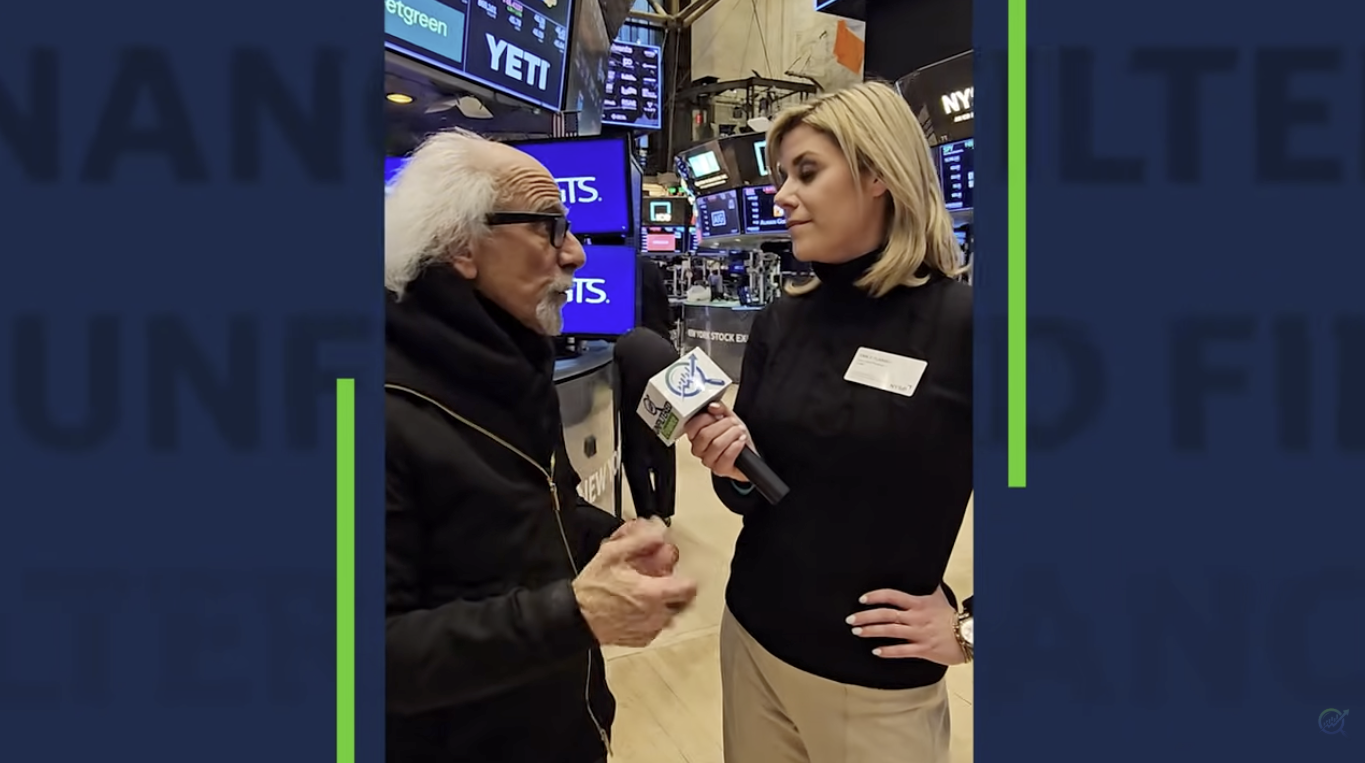
But my recent quest beats anything I’ve done before.
I spent months behind closed doors with former hedge fund managers, a former Nasdaq manager, and elite traders…
Extracting secrets they've spent ages putting together and using them to brainstorm an unusual way to target payouts in the market.
The results were shocking!
The team and I stumbled upon a breakthrough that helps flag breakaway stocks minutes after the opening bell…
Stocks outperforming the S&P, Nasdaq, and other indexes…
Because Wall Street was piling on their weight at the open…
Giving you the chance to target same-day double- and even triple-digit returns.
I’m talking about 75% on CVS in 5 minutes on June 4th…
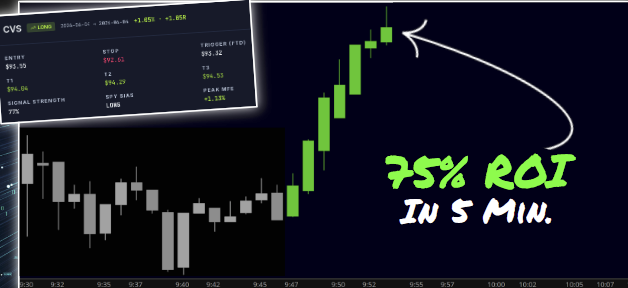
The same day stocks ended lower.

Or 97% on NET in 17 minutes that same day!
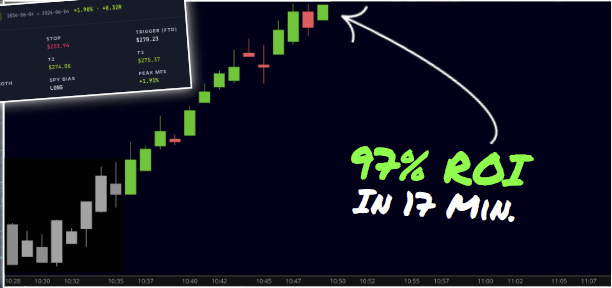
Sure, there were smaller wins and those that didn’t work and we won’t make reckless promises when it comes to trading…
But this approach has locked in a stunning 77.2% win rate across 400 live tests!
The next breakaway stocks could fire up as soon as the next opening bell…
If you’re interested, tap here to watch the breakdown.
Emily Turner.
AI Insider Activity: Are Sales Across 3 Key Stocks Noteworthy or Just Noise?
Written by Leo Miller. Published: 7/7/2026.

Key Points
- Alibaba’s recent insider selling was dominated by one large discretionary sale from President J. Michael Evans.
- Cerebras insiders have sold shares after the company’s IPO, but the volume appears limited relative to the shares eligible for sale.
- CoreWeave’s insider sales are much larger and more persistent, creating a more meaningful overhang for investors.
- Special Report: Everyone wanted SpaceX. Smart money wants this.
Insiders are selling three key names involved in very different parts of the artificial intelligence (AI) value chain. These include one of the world’s largest AI model developers, the newest AI chip developer to go public, and the market’s largest neocloud. However, insider sales can often send messy and unclear signals. So, are these latest moves simply noise, or do they tell investors something significant?
Alibaba Sees Spike in Sales, But Only One Matters
Alibaba Group (NYSE: BABA) is best known for its massive Chinese e-commerce platform. However, outside the United States, Alibaba is also one of the world’s largest investors in AI. The company has developed its Qwen family of models. Although not necessarily considered a “frontier model,” Qwen has shown strong capabilities from an intelligence perspective.
I endorsed someone else's model for the first time (Ad)
Porter Stansberry spent 30 years ignoring outside investment systems - until he met Emmet Savage in Dublin. Savage's model, built on Hamiltonian mechanics applied to equity analysis, has delivered nearly 2,000% returns over 17 years with only one losing year.
What convinced Porter wasn't the returns. It was the sell discipline - a framework that identifies the exact moment a position's energy begins to decay, signaling an exit before the decline. He calls it the most rigorous sell system he has ever seen, comparing its edge to RenTech's famed Medallion Fund.
Watch Porter's full breakdown of Project Prophet and Emmet's systemNotably, Alibaba has recently seen a spike in insider sales. Sales came in at nearly $71 million in Q2, all in late June. Notably, none of these sales came under a predetermined 10b5-1 plan, indicating that they were discretionary in nature. However, in many of these transactions, that turns out not to be the case. Other than company president Michael Evans' $68.3 million sale, insiders sold shares to pay taxes on restricted stock units. As a result, those sales were neither discretionary nor worrisome. Evans' sales, however, were by far the largest and were discretionary. Notably, on June 29, 2026, Evans sold nearly all of his held shares in two transactions, dropping his stake from 720,000 to just 28,000 shares.
Overall, this extremely large sale is moderately concerning. However, only one individual made a sale like this. Going forward, investors may want to monitor whether other insiders reduce their holdings to a similar degree, which would indicate significant trepidation among insiders.
Insider Sales Eclipse $20 Million After Cerebras IPO
Cerebras Systems (NASDAQ: CBRS) went public in May 2026, arriving in the market with a very unique product in the AI semiconductor space. The industry recognizes the company for its “wafer-level” chips. Many semiconductors are typically cut from a single wafer during chip manufacturing. In Cerebras’ case, each chip is the size of a full wafer. The company argues that this increases efficiency and has signed deals with OpenAI and Amazon.com (NASDAQ: AMZN) to supply chips.
However, shares have tanked since going public, down well over 30%. Notably, Cerebras uses a staggered IPO lock-up expiration, allowing insiders to sell shares before the typical 90- to 180-day waiting period. In turn, insiders have sold approximately $21 million worth of shares over recent weeks. None of these sales came under 10b5-1 plans. Overall, these insiders are clearly looking for liquidity even as shares have fallen significantly, a somewhat concerning sign at first glance.
It is also important to note that nearly 28 million shares held by directors, officers and nonemployee investors became eligible for sale after Cerebras’ latest earnings report. Actual reported insider sales so far, however, represent only a small fraction of that amount, indicating insiders may be showing restraint despite having a much larger potential selling window.
CoreWeave’s Sales Reach All-Time High Levels in Q2
CoreWeave (NASDAQ: CRWV) is AI’s most well-known neocloud. CoreWeave has experienced a high level of insider selling since going public in March 2025. Overall, MarketBeat has tracked nearly $8.5 billion in insider sales in the last 12 months. Notably, CoreWeave saw its insider sales drop significantly to $396 million in Q1 2026. This compares with sales above $2 billion in each of the prior two quarters, indicating that CoreWeave’s sales may be trending down. However, Q2 2026 ended up being CoreWeave’s largest quarter of insider sales yet, with the figure coming in at $3.27 billion.
The vast majority of CoreWeave’s insider sales come through 10b5-1 plans. While this is often a mitigating factor when it comes to insider sales, the company’s raw sales are so large that it doesn’t change the picture much. Insiders have shown a pattern of selling this stock in large quantities. That is a real warning sign for investors. Additionally, as shares rose by 28% in Q2 2026, insider sales soared, putting pressure on the rally as insiders sold into it. Overall, the insider sales at CoreWeave are not only bearish indicators but also create a structural overhang on appreciation.
CoreWeave Sales Raise Red Flags; Monitor Alibaba and Cerebras
Taken together, CoreWeave’s insider sales are the only ones that should elicit real concern among investors at this point. The scale and persistence of the selling create a structural overhang that is difficult to ignore, even if many transactions were executed under 10b5-1 plans.
Alibaba and Cerebras still deserve monitoring, but their recent insider activity looks more isolated or restrained by comparison. For investors, the real signal is not that AI insiders are selling. It is whether those sales are routine liquidity events, post-IPO monetization, or evidence that insiders see limited upside after a powerful run.
Meta Platforms’ Cloud Push: Growth Opportunity Versus AI Concerns
Written by Leo Miller. Published: 7/8/2026.

Key Points
- Meta Platforms stock rose 8.8% on July 1 following reports that the company may begin selling excess compute capacity to outside firms.
- Comparisons to CoreWeave and a SpaceX-Alphabet leasing deal suggest Meta's potential cloud business could scale quickly and ease concerns over rising capital spending.
- CFO Susan Li recently said Meta has consistently underestimated its compute needs, casting doubt on how much excess capacity actually exists for the cloud push.
- Special Report: Everyone wanted SpaceX. Smart money wants this.
Shares of Magnificent Seven giant Meta Platforms (NASDAQ: META) recently got a meaningful boost after reports suggested its potential cloud push is moving closer to reality. Shares jumped 8.8% on July 1 on news that the company may sell excess compute capacity to third parties.
While the market’s reaction was clearly positive, the move carries both potential benefits and risks for investors. Although Meta’s cloud push could become a significant source of revenue and profit, it also raises questions about the long-term competitiveness of its AI products.
Positives of Selling Compute: AI Monetization and Spending Signals
I endorsed someone else's model for the first time (Ad)
Porter Stansberry spent 30 years ignoring outside investment systems - until he met Emmet Savage in Dublin. Savage's model, built on Hamiltonian mechanics applied to equity analysis, has delivered nearly 2,000% returns over 17 years with only one losing year.
What convinced Porter wasn't the returns. It was the sell discipline - a framework that identifies the exact moment a position's energy begins to decay, signaling an exit before the decline. He calls it the most rigorous sell system he has ever seen, comparing its edge to RenTech's famed Medallion Fund.
Watch Porter's full breakdown of Project Prophet and Emmet's systemOne of the biggest reasons markets responded positively to Meta’s cloud computing push is what it could mean for the company’s ability to generate new AI revenue. By renting computing capacity to other firms, Meta may be able to earn strong margins on its capital expenditures (CapEx).
When considering Meta’s positioning in the cloud computing space, neoclouds like CoreWeave (NASDAQ: CRWV) provide a useful comparison. CoreWeave focuses exclusively on AI infrastructure demand, while more established players like Microsoft (NASDAQ: MSFT) serve both AI and non-AI demand.
Because Meta’s AI infrastructure is heavily concentrated in graphics processing units, the company would be operating in a similar space to CoreWeave. As a result, CoreWeave offers a helpful glimpse into how much Meta could benefit from entering the cloud computing market.
Last quarter, CoreWeave generated revenue of $2.08 billion. On that, the company’s adjusted earnings before interest, taxes, depreciation and amortization (EBITDA) were approximately $1.2 billion. Achieving something similar could provide a meaningful lift for Meta, whose calculated Q1 2026 EBITDA was approximately $28.87 billion. Still, as Meta enters the market, added competition could ضغط down margins in this space.
However, with overall demand for compute still rising, Meta could see meaningful growth from this opportunity. In addition, the recent deal SpaceX (NASDAQ: SPCX) signed with Alphabet (NASDAQ: GOOGL) suggests Meta could scale cloud revenue significantly faster than CoreWeave. Alphabet will pay SpaceX $920 million per month to lease computing assets, implying $2.76 billion in quarterly revenue.
Another important implication is what the move could signal about Meta’s future CapEx spending. If Meta already believes it has excess compute, that suggests the company may not need to spend as heavily on CapEx going forward. Meta’s elevated and rising CapEx spending has arguably been the biggest overhang on its stock price. In turn, any indication that this trend may reverse would be positive for many investors.
The Negatives: Selling Compute Could Signal AI Product Weakness
On the negative side, Meta’s willingness to sell compute suggests it may not have enough strong internal use cases for that capacity, raising questions about its broader competitiveness in delivering AI products.
The timing of this pivot is notable given the release of Meta’s Muse Spark model several months ago, which is far more advanced than its predecessors. The move to sell excess compute suggests development of Muse Spark-related products may not be progressing as quickly as hoped. Those products would likely require more compute to support usage. In fact, recent reports say CEO Mark Zuckerberg told employees that the pace of the company’s AI agent development has been slower than expected.
It is also important to note that the details of Meta’s cloud push are still very limited. At this point, it is unclear how much of Meta’s compute the company considers excess to its internal needs. That matters, since the amount of excess capacity would directly determine how much revenue Meta could generate from the initiative.
Notably, comments made during Meta’s most recent earnings call push back against the idea that the company has significant excess compute. Chief Financial Officer Susan Li said, “Our experience so far has been that we have continued to underestimate our compute needs.” She added, "Our expectation is that compute will become even more central to the business going forward.”
Meta’s Next Earnings Call Could Provide Key Clarity on Cloud Ambitions
Overall, Meta has yet to provide any concrete details about its cloud push. Given the significant implications for the company’s outlook, it will likely be a key topic of discussion during its next earnings call.
When Meta addresses cloud computing directly, investors should watch for guidance on how much compute the company plans to provide to third parties. That should offer more insight into Meta’s revenue opportunity and its confidence in marketing its own AI solutions.
This message is a sponsored message for ProsperityPub, a third-party advertiser of DividendStocks.com and MarketBeat.
We develop strategies to the best of our ability, but we cannot guarantee a future return. There is always a risk of loss when trading. Past performance is not indicative of future results. All performance results are from the signals generated from 2/13/26 to 6/9/26, which went 295-92 with a 76.2% overall win rate, an average return on the underlying stock of 0.9%, an average winner of 1.4% in same-day returns, and a 5.86 profit factor across all signals. Today's examples show returns typically ranging from 25% to 200% for the winners. Since this is a tool for traders and not a trading service, profits and performance will vary among users.
If you have questions about your account, please feel free to email our U.S. based support team at [email protected].
If you no longer wish to receive email from DividendStocks.com, you can unsubscribe.
© 2006-2026 MarketBeat Media, LLC. All rights protected.
345 N Reid Pl. #620, Sioux Falls, S.D. 57103. United States of America..