I've spent two decades tracking the forces that move gold... For 20 years I've lived inside the data, the cycles, the macro shifts... And what's happening right now between Saudi Arabia and the Chinese is a turning point that will move the price of gold in a way we haven't seen in generations. Because the Saudis have quietly walked away from a pact it struck with the U.S. in 1974... A pact that quietly ran the global financial system for the past half-century. The arrangement was simple: Saudi Arabia would price its oil only in U.S. dollars — which meant every nation on the planet had to stockpile U.S. Treasuries just to buy energy. That single agreement is the bedrock American financial supremacy has rested on for fifty years. And now, it's gone. The mainstream press barely covered the unwinding of this deal... And in the beginning, the surface looked calm. But the cracks are now impossible to ignore... Saudi Arabia inked a $7 billion currency swap with Beijing… Started clearing oil transactions in digital yuan… And plugged itself into mBridge, China's cross-border settlement network. Conflict with Iran is pushing Gulf states toward yuan-denominated oil contracts... And vessels moving through the Strait of Hormuz are now paying tolls in yuan, in crypto, in anything other than the greenback... On both shores of the Persian Gulf, the dollar's grip is loosening... and something else is taking its place. The collapse of this enormous, built-in global demand for dollars will rewrite how money works. Because if crude no longer requires dollars, then the world has no reason to warehouse U.S. currency. And when dollar demand softens… Treasury demand softens right alongside it. Ten-year yields are already creeping toward 4.4% — the level where the machinery starts to seize up. Weaker Treasury demand → climbing yields → Fed steps in → the printers fire up → and the dollars in your account quietly lose their muscle. That's the chain reaction unfolding in front of us. As the dollar weakens and foreign buyers walk away from American debt, gold has nowhere to go but up. A sinking dollar is the most powerful tailwind gold has ever known. But the smartest way to position for the dollar's decline isn't to load up on bullion… There's a different vehicle for capturing gold's next leg higher... An asset that's still priced at a dramatic discount to where gold itself is trading today. It's gold exposure at a fraction of the cost... Click here to see how it works. Best, Garrett Goggin, CFA, CMT
Chief Analyst and Founder, Golden Portfolio
This Month's Featured News Uncle Sam Plugs In: Nuclear Energy’s Cash Flow Moment Is Finally HereAuthor: Jeffrey Neal Johnson. Originally Published: 6/26/2026. 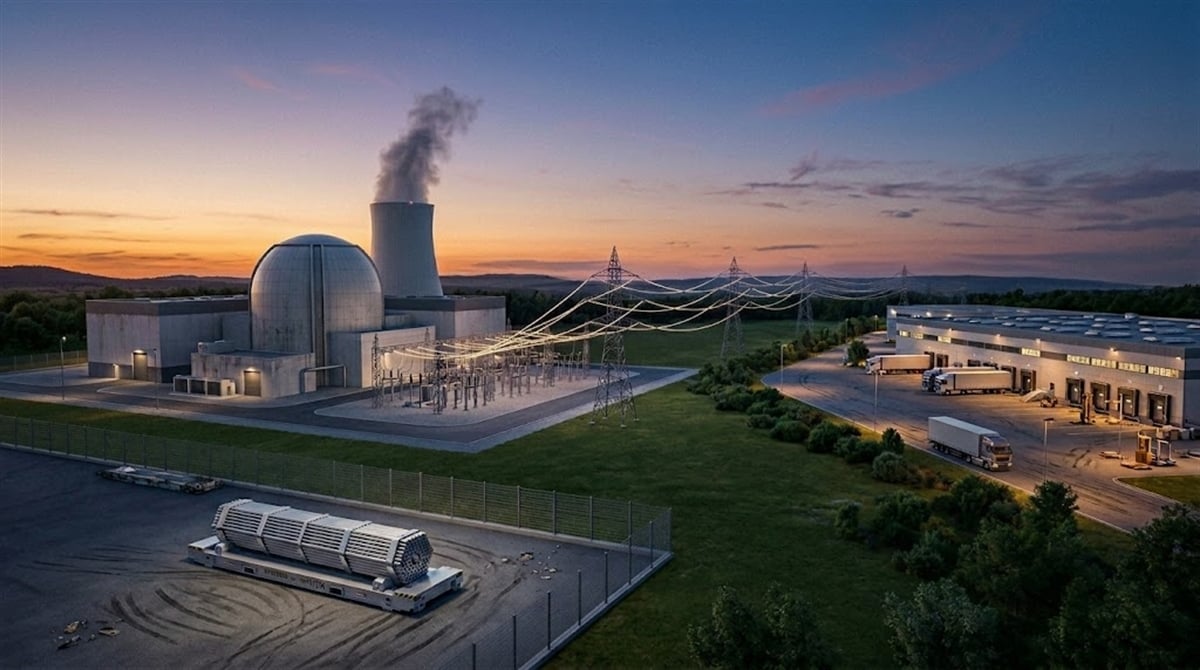
Key Points- The U.S. Department of Energy issued a $17.5 billion conditional loan commitment to accelerate construction of 10 Westinghouse AP1000 reactors nationwide.
- Walmart signed a 15-year power purchase agreement with Constellation Energy for 176 MW of clean electricity, signaling nuclear demand is expanding beyond tech.
- Cameco's 49% stake in Westinghouse and strong balance sheet position it to capitalize on a multi-decade backlog driven by federal nuclear investment programs.
- Special Report: Free today, paid tomorrow
The modern electric grid faces a serious supply challenge. As automated industries and distribution hubs expand and create massive power demand, traditional energy networks are reaching their limits. Investors who once viewed clean energy as a speculative, high-cost venture are now witnessing a structural realignment. A powerful combination of state-backed credit and long-term corporate commitments is driving this change. By examining the capital structures behind these energy systems, a clear picture emerges: the financial risks that historically weighed on the nuclear sector are fading. This shift is turning clean energy investments into highly visible, compounding cash flow engines. How Government Backstops Protect Private EquityThe main hurdle for any nuclear project is the immense upfront capital expenditure, or CapEx. To address this bottleneck, the U.S. Department of Energy's Office of Energy Dominance Financing recently issued a $17.5 billion conditional loan commitment under the American Nuclear Supply Chain Loans program. This program funds up to five key projects, accelerating the construction of 10 Westinghouse AP1000 reactors nationwide. Rather than providing direct government handouts, the program relies on a co-investment structure. To access low-interest federal capital, both Westinghouse and its utility partners must establish joint-venture special-purpose vehicles, with each partner committing $500 million in upfront cash equity. This structure ensures that only highly capitalized players can participate. By matching $1 billion in private equity per project site with low-cost federal debt, the program lowers the weighted average cost of capital (WACC) for new reactors. This financial de-risking makes nuclear projects attractive to institutional funds seeking stable, long-term returns. Cameco Powers Up Westinghouse to Capture the Supply FlowThis federal program directly benefits the nuclear supply chain, starting with fuel providers. Through its 49% ownership of Westinghouse, Cameco (NYSE: CCJ) gains access to a highly visible, multi-decade backlog of orders for reactor equipment, services, and fuel-cycle services. To assess Cameco's ability to fund its share of these joint-venture equity requirements, investors can look to its exceptionally strong balance sheet. Cameco maintains a debt-to-equity ratio of 0.14 and a current ratio of 3.08. This minimal debt burden allows Cameco to meet its upfront cash commitments without diluting equity or relying on expensive commercial loans. While its trailing price-to-earnings ratio of 97 represents a premium valuation, that premium is supported by structural supply-side moves, including its acquisition of an increased 57.4% stake in the high-grade Cigar Lake mine and the full production restart of its McArthur River assets. These moves help ensure that Cameco retains strong pricing power as fuel demand accelerates. Walmart Plugs Into Constellation Energy for PowerWhile federal loans address front-end construction risk, long-term corporate contracts are securing backend revenues. A major retail sector giant recently confirmed this trend. Walmart (NYSE: WMT) signed a historic 15-year power purchase agreement, or PPA, with Constellation Energy (NASDAQ: CEG) to buy 176 MW of clean electricity from the Dresden Clean Energy Center in Illinois. This agreement spans two staggered terms beginning in 2029 and 2030, supporting Walmart's automated distribution facility in Belvidere, Illinois. This agreement shows that the race for secure, around-the-clock power is expanding beyond major tech firms like Microsoft (NASDAQ: MSFT) and into mainstream retail logistics. From a fundamental standpoint, the deal is highly efficient. It includes 30 MW of expanded capacity generated through planned uprates, which are efficiency upgrades that increase output from existing, fully licensed reactors. This approach allows Constellation Energy to expand power generation with minimal capital outlay, boosting operating earnings and its current return on equity of 16.81%. This high-return model supports Constellation Energy's impressive projections, with free cash flow expected to rise from $8.4 billion in 2026–2027 to $11.5 billion-$13.0 billion in 2028–2029. Separating Headline Noise From Structural Balance SheetsAny long-term energy investment faces real-world hurdles. Regulatory approvals, grid connection queues, and regional supply chain bottlenecks can still slow reactor construction. In the near term, utility stocks have faced some downward pressure. For example, Constellation Energy's stock price has declined 22% year-to-date, driven by 2026 earnings guidance of $11 to $12 per share, which came in slightly below the most optimistic Wall Street projections. In another development, a federal grand jury recently indicted engineering manager Casey Muggleston of Constellation Energy in connection with a $1.4 million insider trading scheme related to the Three Mile Island restart. While this creates temporary headline risk, it does not alter Constellation Energy's underlying cash flows or its long-term corporate contracts. Investors should focus on the fundamental cash-generation power of these operating fleets rather than short-term headline volatility. Securing Strategic Value as the Nuclear Cycle Powers UpThe structural shift in the energy sector is real, complex, and volatile. The combination of state-backed capital and long-term corporate demand is turning nuclear energy from a complex, high-cost option into a highly reliable asset class with predictable, recurring revenue streams. For long-term investors, the fundamental health of these operators and suppliers suggests that the current pullback may offer a strong entry point. Investors might consider adding these nuclear operators and fuel suppliers to their watchlists as long-term cash flow metrics continue to strengthen. . |