
|
 |


In today’s newsletter:
The great fragmentation
Devolution or delegation?
The most important thing to happen in 1776
The Great Fragmentation: Why the institutions of liberal democracy must be reinvented
The received wisdom held that the world was converging. Globalisation, the internet, mass migration — all were supposed to flatten differences and draw humanity toward a shared modernity. Yet the reality unfolding around us tells a fundamentally different story. Our societies may be converging in many respects. Yet, at the same time, they are fracturing in much more others. The forces reshaping the modern world are producing not homogenisation but an accelerating diversification of values, identities, and ways of life. The institutions we rely on to hold them together were designed for a world that is rapidly disappearing.
This is not a political observation but a structural one, with implications that go far beyond the culture wars dominating our current moment.
Technology Divides as Much as It Connects
Consider technology. We tend to think of it as a universalising force — same platforms, same devices, same global culture. But digital technology is not homogenising society. It is fracturing it into sharply distinct new groups, each cohering around its own identity, vocabulary, and conception of reality.
Generational fault lines have never run deeper. A digitally native young adult — globally networked, algorithmically educated, fluid in identity — inhabits a cognitive and moral universe that is essentially alien to an older worker in a hollowed-out industrial town. These are not merely different preferences; they represent different psychological formations, different relationships to authority, community, and truth. Technology is generating new collective identities — and new political tribes — with a force and speed that older forms of social differentiation rarely matched.
New occupational classes are crystallising with equal speed. The remote knowledge worker, the platform entrepreneur, the gig worker, the content creator — each now constitutes a distinct cultural world with its own sensibility and political instincts. Algorithmically curated environments ensure that these worlds rarely encounter one another. Technology is not dissolving social cleavages. It is minting entirely new ones — generational, professional, cultural, existential — faster than our institutions can comprehend.
The Demographic Revolution
Immigration and differential birth rates are compounding this transformation. Europe is the most striking case in point. Natality rates across the EU have remained well below replacement level for decades, while life expectancy continues to rise. The continent requires significant inward migration simply to sustain its workforce and fund its welfare states. Yet the demographic arithmetic generates projections that European political debate has been remarkably reluctant to confront.
Take the academic modelling seriously and the numbers are arresting. Under scenarios that merely sustain current immigration levels, populations of relatively recent non-European origin could account for a very substantial share of European populations within fifty years. Some projections arrive at ratios in the order of three to one in favour of migrant-origin populations in certain countries by century’s end. These are the foreseeable consequences of trends already in motion.
Institutions Built for a Different World
Whether or not one views these projections with alarm, their governance implications are unavoidable. The institutional architecture of the European nation-state was built on assumptions of relative demographic and cultural homogeneity — presupposing a broadly shared civic identity rooted in common historical experience. That assumption is becoming untenable with every passing decade.
The strain is already visible. Electoral systems calibrated for majoritarian politics are struggling with the proliferation of competing identities. Social contracts premised on cultural solidarity are fraying. The EU’s own governance architecture faces a profound dilemma when national populations are changing faster than any previous model anticipated.
The question, stripped to its technical core, is this: what kinds of institutions and governance arrangements are actually capable of maintaining order, freedom, and prosperity in conditions of profound and accelerating social heterogeneity?
The Imagination We Owe the Future
The honest answer is that we do not yet know — and that, precisely, is the problem.
This is not an argument for or against immigration, nor a call to abolish nation-states. It is a call for institutional imagination of the kind that previous generations brought to their defining challenges. But irrespective of the directions we want to take with our approaches to these major challenges, the classical liberal idea of modus vivendi — live and let live, the coexistence of incompatible ways of life within a common framework of rules — must become central to how we approach policies and institutional design.
We are not without intellectual resources. Three Nobel laureates in economics have developed precisely the conceptual tools this challenge demands. Hayek showed how societies can coordinate through shared rules rather than shared ultimate ends — free social orders are held together by process, not common purpose. Buchanan’s constitutional economics demonstrated that stable governance can rest on frameworks that people with fundamentally different values nonetheless accept, not because they share ends, but because the rules themselves are considered fair or at lest acceptable to all. Ostrom’s pioneering work on polycentric governance proved that communities can coexist across deep differences through adaptive, layered institutional arrangements. Their collective body of thought is, if anything, more applicable to the plural, fragmented societies of this century than to the homogeneous world in which it was first conceived.
What is urgently needed is a serious effort on three fronts: first, to recognise the true scale of the transformation underway; second, to rethink the conceptual frameworks through which we understand governance and democratic legitimacy; and third, to develop institutional proposals adequate to twenty-first-century conditions. Our theoretical toolkit needs to be rebuilt almost from the ground up.
The institutions of liberal democracy were among the modern world’s greatest achievements. Preserving them — perhaps reinventing them for conditions utterly unlike those of their founding — is the defining challenge ahead. We have been slow to recognise it as such. That must change now.
Paul Dragos Aligica is a Visiting Senior Research Fellow in the Department of Political Economy, King’s College London, and a Senior Research Fellow at the F. A. Hayek Program for Advanced Study in Philosophy, Politics, and Economics at George Mason University’s Mercatus Center.
The best way to never miss out on IEA work, get access to exclusive content, and support our research and educational programmes is to become a paid IEA Insider.
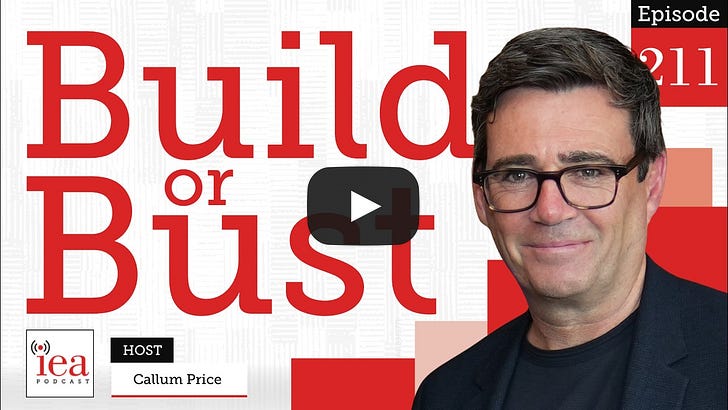
IEA Podcast: Director of Communications Callum Price is joined by Editorial Director Kristian Niemietz and Director General Lord Hannan to discuss Burnham’s plans for devolution, a drop in UK wealth, and how to turbocharge housebuilding in London, IEA YouTube
This week on Economic Affairs
Sir John Redwood shows why re-nationalisation is not the answer for British steel
 |
|
Matt Ridley argues Watt’s first practical steam engine outdoes the Declaration of Independence and Smith’s Wealth of Nations in the same year
 |
|
Lord Hannan examines the real problem behind our merry-go-roud of Prime Ministers
 |
|
Dr Valentin Boboc assess the good and the bad in Burnham’s plans for devolution:
 |
|
William Atkinson introduces Economic Affairs
 |
|
News and Views from the IEA
Will devolution mean responsibilities as well as powers?
Responding to Andy Burnham’s speech, Senior Economist at the Institute of Economic Affairs Dr Valentin Boboc said:
“Andy Burnham is right that growth cannot be legislated into existence from Whitehall. His call for a more streamlined state, with decisions pushed towards local governments, is welcome.
“The question is whether we are willing to give local governments responsibilities as well as powers, together with regulatory independence. After all, the key to devolution enabling growth is the ability of regions to test different regulatory environments and fiscal programmes, and compete to discover which setups work best, incentivised by the fact that the gains from growth are retained locally.
“If devolution means handing out funds whilst keeping everything else bound by the same rules, it won’t make a material difference to the obstacles to growth we currently face.”
How to make Brexit a success? Lord Hannan and Senior Policy Fellow Lord Frost both took part in a Telegraph debate about how to make the most of Brexit ten years on, The Telegraph
Bye bye Beeb? Dr Chris Snowdon writes on how to save the BBC, The Critic
“The BBC is no longer a public good as an economist understands the term. Public goods are non-excludable: you cannot prevent people from using them. When all you needed was a TV aerial, the BBC could only make you pay to watch its programmes by sending you threatening letters. By switching to a Netflix-style subscription model, the BBC could exclude those who do not pay.”
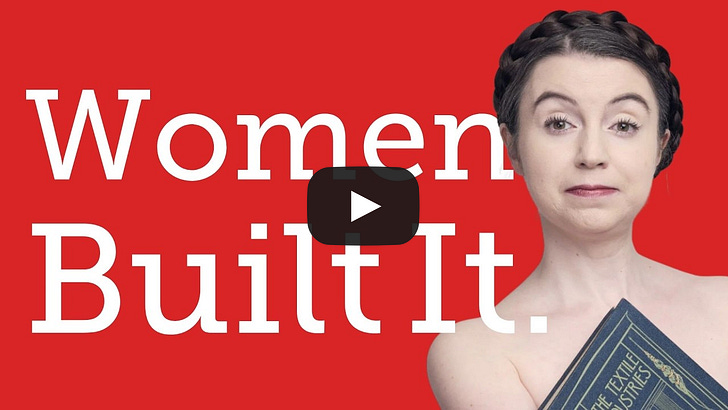
Did Women’s Freedom Build the Modern Economy? Managing Editor Daniel Freeman speaks to author and economic historian Dr Victoria Bateman, IEA YouTube
Is Burnham’s plan for Britain devolution or delegation? Callum Price examines the arguments for devolution and the choices that Burnham has to make, ConservativeHome
How to save the BBC. Christopher Snowdon explains to Ian Collins how a subscription model could resuce Auntie Beeb from irrelavance.
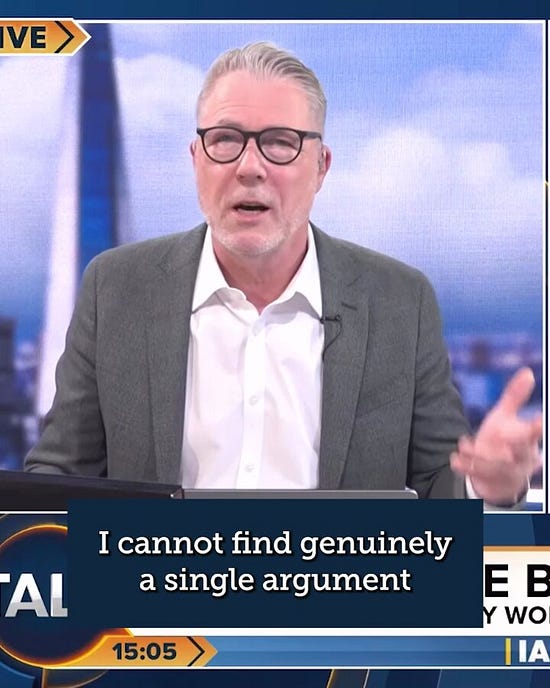
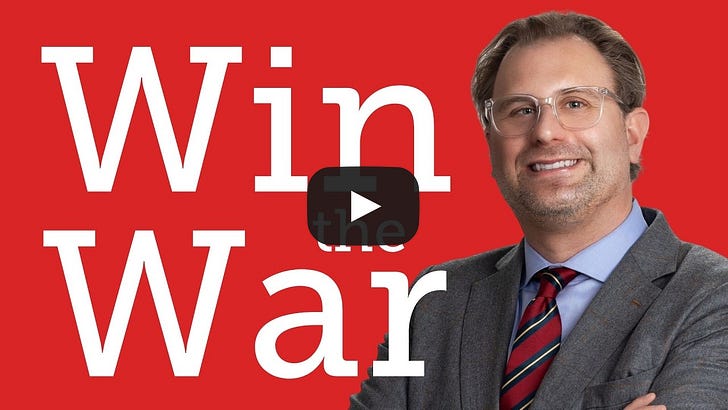
How to win the war of ideas, Callum Price talks to Young Voices Executive Director Casey Given, IEA YouTube
Education, Events and Opportunities
London Academy of Excellence Tottenham Conference
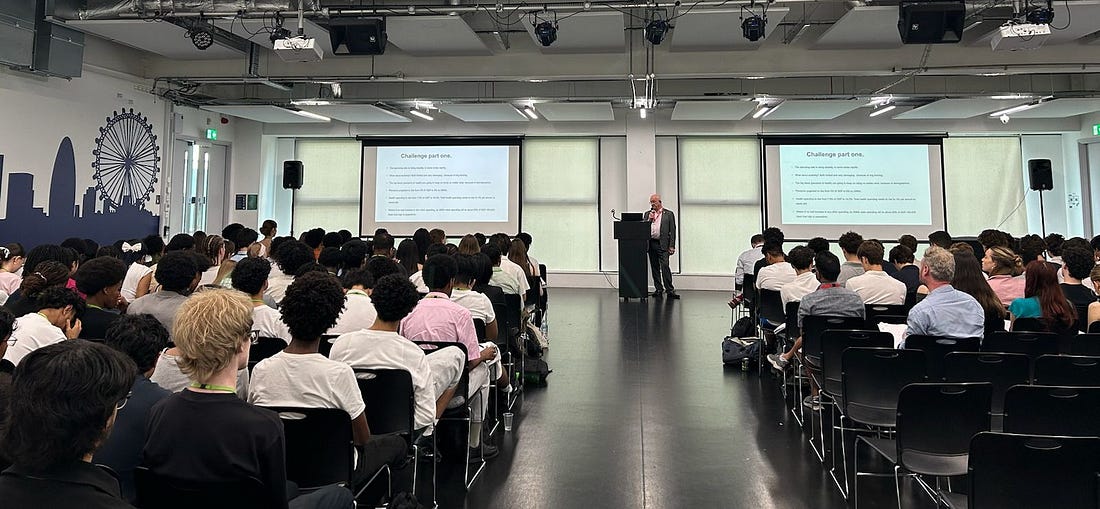
On 25 June, the IEA hosted a Sixth Form conference at the London Academy of Excellence Tottenham, bringing together around 175 students from the London Academy of Excellence and Woodhouse College. Throughout the day, students introduced each of the speakers before hearing from Andy Mayer (Chief Operating Officer), who spoke on environmental economics and the UK’s push to Net Zero; Dr Stephen Davies (Senior Education Fellow), who explored fiscal policy and UK debt; and Dr Kristian Niemietz (Editorial Director and Head of Political Economy), who discussed social health insurance and alternatives to the NHS. Each session was followed by thoughtful questions from students, leading to lively discussions on some of the biggest economic policy issues facing the UK today. The IEA also gave out over 300 free-market publications to the students.
 |
St Dominic’s Sixth Form College conference
Then on the 26th of June, the IEA hosted another Sixth Form Conference at St Dominic’s Sixth Form College reaching over 200 students studying economics. The students head from Dr Steve Davies, who spoke on the fiscal position of the UK, followed by Dr Valentine Boboc, who outlined the UK’s growth problem, before Dr Kristian Nietmietz spoke about replacing the NHS with a Social Insurance Model. The IEA again gave out over 300 free market publications to the students.
 |
Summer Sixth form Future Thought Leaders
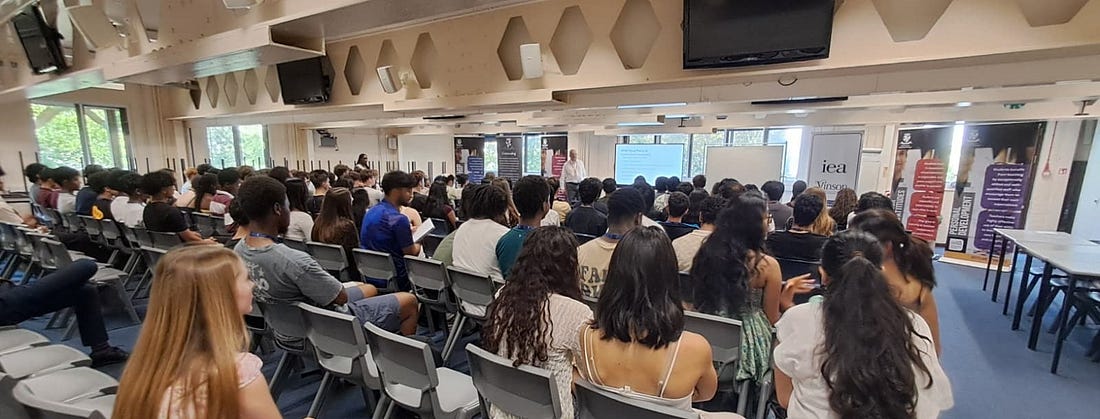
Over the next fortnight, the IEA welcomes two waves of talented sixth form students to our London offices for our Future Thought Leaders programme. Across four intensive days, these young minds will explore classical liberal philosophy and free market economics through expert lectures, lively speed debates, and their own think-tank elevator pitches. Selected from a highly competitive field, they represent the next generation of liberty-minded thinkers. Thanks to your support, we’re equipping bright students with the ideas and confidence to champion free markets for years to come.
Applications are open for our 2026 Beloff Conference
We are delighted to invite applications for our 2026 Beloff Conference, a three-day residential programme taking place at the Vinson Centre, University of Buckingham from 14–16 September 2026.
You’re currently a free subscriber to Economic Affairs. For the full experience, upgrade your subscription.
Paid subscribers support the work of Economic Affairs and the IEA's charitable mission and receive special invites to exclusive events.
| ||||||||||


