Hello,
Thanks for signing up for MarketBeat Daily Ratings—we’re excited to have you on board.
Every weekday, you’ll get a curated summary of new “Buy” and “Sell” ratings from Wall Street’s top-rated analysts, the latest stock news, and bonus investing content—all delivered straight to your inbox.
You’re just two quick steps away from completing your sign-up:
1. Make sure our emails go to your inbox
Gmail users:
Mobile: Tap the three dots (…) in the top right and select Move to Inbox or Move to Primary
Desktop: Click the folder icon at the top and select Move to Inbox or Primary
Apple Mail users:
Tap our email address at the top (next to From: on mobile), then select Add to VIP
Other providers:
Reply to this message and add [email protected] to your contacts
2. Confirm your subscription
Click this link to confirm your subscription. This verifies your account and ensures you receive your newsletters without interruption instead of getting stuck in your spam filter.
Confirm your subscription here.
After you confirm, feel free to download our popular free report, "7 Stocks to Buy and Hold Forever" with this link.
Thanks again for subscribing—we look forward to being part of your investing journey.

Matthew Paulson
Founder and CEO, MarketBeat.
P.S. If you didn’t mean to subscribe, no problem—you can unsubscribe here.
Further Reading from MarketBeat Costco’s Secret Growth Engine May Be Running Out of GasBy Dan Schmidt. Publication Date: 6/28/2026. 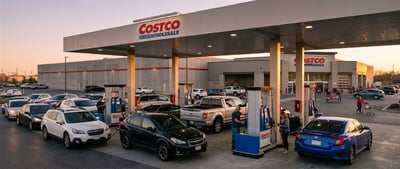
Key Points- Costco's comparable sales growth was significantly inflated by high gas prices, with fuel-adjusted comps running roughly 4 to 5 percentage points below reported figures.
- COST shares fell more than 10% from their May 19 all-time high of $1,096 as gas prices retreated, breaking below the 50-day moving average in early June.
- Bulls point to Costco's 90% membership retention rates as a durable growth driver, but the stock's 46x forward earnings valuation leaves little margin for a slowdown.
- Special Report: The company SpaceX cannot operate without
The Iran war caused many price spikes across the commodity spectrum, and consumers felt one every time they needed to fill up their tanks. Gas prices are posted at every intersection and street corner, serving as a painful daily reminder of our diminishing purchasing power.
One company that turned garbage into gold during the spike was Costco Wholesale Corp. (NASDAQ: COST).
Goldman Sachs and Morgan Stanley are now predicting what could be the worst news for the U.S. stock market in 50 years - and it has nothing to do with a single stock.
According to multiple Wall Street banks, a coming crisis could keep your portfolio in the red for 10 years or longer. Keith Kaplan, CEO of TradeSmith, is sharing what you can do to protect your wealth before it hits. Learn how to prepare your portfolio for what's coming next Rising numbers on gas price signs became flashing billboards for the company, which sells gas at razor-thin margins to entice sign-ups and drive store traffic.
However, retail gasoline prices have started to pull back from their late-May highs, and front-month RBOB gasoline futures have fallen even more sharply.
That suggests the fuel-price tailwind Costco enjoyed may be nearing an end, even if the full effect has not yet shown up at the pump.
Can Costco continue drawing record numbers of members, or will oil and gas price normalization limit the impact of its traffic-driving strategy?
Fading Macro Tailwind Forces Results to Stand on Their OwnThe charts for the average retail gas price and the COST share price have been mirror images over the last month. COST notched its latest all-time high of $1096 on May 19, the day after gas prices peaked in the United States.
But now the stock is down more than 10% from that high, and the gas-driven growth tailwind is starting to fade.
The key question is whether Costco’s recent growth reflects durable store-level demand or a temporary boost from higher fuel sales. Comparable sales, or comps, help answer that because they measure sales at stores open for more than one year, excluding the noise from new openings and closures. On the surface, Costco’s trend looked powerful, with comps rising 9.4% in March, 11.6% in April, and 12.5% in May on a year-over-year (YOY) basis.
But the headline numbers need context. Costco also reports comparable sales excluding the impact of gasoline prices and currency fluctuations, and those adjusted figures showed a more moderate trend. Excluding those factors, comps rose 6.2% in March, 7.8% in April, and 8.0% in May. That still points to healthy demand, but it also shows how much the fuel-price environment helped amplify Costco’s reported sales growth.
Record-high gas volume did indeed drive organic sales growth, but the rate of that growth appears to be approaching a ceiling.
The bear case is fairly simple: the gas tailwind is fading, and comp sales growth will likely have peaked by the time June numbers are released.
The bull case is that these new ‘recruits’ have become part of a membership base that consistently reports 90% retention rates, and this added membership revenue, combined with margin growth from declining gas prices, will show the stock is still worth its premium valuation.
However, that valuation continues to weigh on the stock, which now trades at about 46x forward earnings.
Stock May Have Found Short-Term Bottom, But Momentum Remains WeakIt’s already been a tumultuous year for COST shares following a parabolic run in early January.
The stock’s long-term technical outlook remains positive, but certain indicators are wavering in ways they haven’t shown yet in 2026. The 50-day moving average had been a strong support level for the stock price ever since it surpassed the 200-day moving average in March, forming a bullish signal known as a Golden Cross. The share price traded in a tight range for two months after the Golden Cross, but other indicators, such as the Relative Strength Index (RSI), confirmed that the trend remained bullish and that buyers were in control.
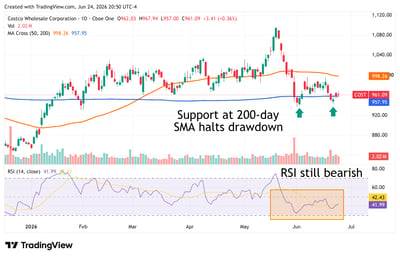
As gas prices approached their peak in mid-May, COST shares broke out of that tight range and soared to a new all-time high. But the reversal came almost as quickly as the breakout. Once gas prices began retreating, so did the COST share price, which fell below the 50-day moving average during a volatile first week of June. The RSI dipped below the bullish threshold of 50 during the drawdown, and the price is now testing the 200-day moving average for the first time since early February.
The stock has found new support at the 200-day moving average, but this price action looks more like a digestion period than a buyable bottom. The gas tailwind is starting to unwind, and Costco will need to post blowout earnings numbers to prove it’s still worth paying 46x forward earnings for a stock with retailer margins.
An RSI move back above 50 will likely be the first clue that buying momentum has resumed, and the stock will need to push back above the 50-day moving average before any sustained breakout can occur.
The market will get a better read on how quickly the gas tailwind is fading when June sales figures are released in the first week of July, but the holding pattern for COST investors is likely to continue until the next earnings report drops on Sept. 24. |