
Email
This Could Change Everything
| From | Tariff Dividend Is LIVE | Felix Davidson @ SSC <[email protected]> |
| Subject | This Could Change Everything |
| Date | June 22, 2026 1:55 PM |
Links have been removed from this email. Learn more in the FAQ.
Links have been removed from this email. Learn more in the FAQ.
This isn’t about charity, it's about taking control back.
A note from the Editor: Silver Strategies Center is dedicated to providing
readers like you with unique opportunities. The message below from one of our
business associates is one we believe you should take a serious look at.
<[link removed]>
<[link removed]> <[link removed]>
<[link removed]>
This Could Change Everything You Must Act
<[link removed]>
Did you claim your $2,000 tariff dividend from Trump yet?!
Because it’s not just a payout it’s the first sign of a massive wealth shift
already in motion.
Trump’s calling it a Restoration Dividend.
Others say it’s “America’s next great reset.”
<[link removed]>
Here’s the truth:
This isn’t about charity, it's about taking control back.
Your savings. Your retirement. Your freedom.
The first checks are just the beginning.
The real opportunity? Is what comes next.
👉 Tap here to claim your Restoration Access now »
<[link removed]>
By the time the media catches up… it’ll already be too late.
Top Reads This Week Sponsored
A photo of the Pacific just blew up the internet Brownstone Research Click
Here →
<[link removed]>
Viral Video of the New Elon’s Device StocksToTrade Read More →
<[link removed]>
The math problem inside the biggest IPO ever Behind the Markets Read More →
<[link removed]>
PRIVACY POLICY <[link removed]>
TERMS & CONDITIONS <[link removed]>
Education-first insights on markets and risk.
Financial insights designed for informed readers.
About our financial insights
This newsletter is published by Silver Strategies Center.
A digital publication operated by Amerisearch LLC.
Office: 100 E Pine St, Orlando, FL 32801
Support: [email protected]
<mailto:[email protected]>
Market Commentary Disclaimer
This email and its contents are provided without any guarantee of accuracy,
completeness, or fitness for any particular financial purpose. No
representation is made that the information herein is suitable for any
individual.
Unsubscribe anytime: unsubscribe
<[link removed]>
Want fewer updates? Adjust your preferences anytime.
<[link removed]> UNSUBSCRIBE
<[link removed]>
Copyright © 2026 Silver Strategies Center. All Rights Reserved.
ⓕ➀𝐍𝐚𝐍ĆƗ𝐚ᒪ ᒪƗ𝐓𝑒я𝐚Ć𝔂 Ɨ丂 𝐍Ø𝐓 Jย丂𝐓 𝐚 丂ⓀƗᒪᒪ — Ɨ𝐓 Ɨ丂 𝐚
ⓕย𝐍𝓭𝐚м𝑒𝐍𝐓𝐚ᒪ ĆØм卩Ø𝐍𝑒𝐍𝐓 Øⓕ 𝐚 丂ยĆĆ𝑒丂丂ⓕยᒪ 𝐚𝐍𝓭 ❺丂𝐓𝐚๒ᒪ𝑒 ᒪ➀ⓕ𝑒. Ꭵ𝐓
๒𝑒𝕘Ɨ𝐍丂 𝔀Ɨ𝐓𝓱 ย𝐍𝓭𝑒я丂𝐓𝐚𝐍𝓭Ɨ𝐍𝕘 𝓱Ø𝔀 𝔂Øย м𝐚𝐍𝐚𝕘𝑒 𝔂Øยя
мØ❺𝐍𝑒𝔂, 𝓱Ø𝔀 мยĆ𝓱 𝔂Øย 𝑒𝐚➀я𝐍, 丂卩𝑒𝐍𝓭, 𝐚𝐍𝓭 丂𝐚❷v𝑒. Ꭵ𝐍
𝐓Ø𝓭𝐚❺𝔂’丂 𝔀Øяᒪ𝓭, 𝔀𝓱𝑒я𝑒 ⓕƗ𝐍𝐚➂𝐍ĆƗ𝐚ᒪ ⓕᒪØ𝔀丂 𝓱𝐚v𝑒 ๒𝑒ĆØм𝑒 мØя𝑒
ĆØм卩ᒪ𝑒x 𝐚𝐍𝓭 𝐓𝓱𝑒 я𝐚𝐍𝕘𝑒 Øⓕ Ɨ𝐍v4𝑒丂𝐓м𝑒𝐍𝐓 𝐓ØØᒪ丂 ๒яØ𝐚𝓭𝑒я
𝐓𝓱𝐚𝐍 𝑒v𝑒я, 𝐓𝓱𝑒 𝐚๒ƗᒪƗ𝐓𝔂 𝐓Ø 𝐍𝐚vƗ𝕘𝐚𝐓𝑒 𝐓𝓱Ɨ丂 ⓕƗ𝑒ᒪ𝓭 Ɨ丂
𝑒丂卩𝑒ĆƗ𝐚ᒪᒪ𝔂 Ɨм卩Øя𝐓𝐚𝐍𝐓. β𝑒ⓕØя𝑒 ĆØ𝐍丂Ɨ𝓭𝑒яƗ𝐍𝕘 Ɨ𝐍v𝑒丂𝐓м𝑒𝐍𝐓丂,
Ɨ𝐓’丂 ĆяยĆƗ𝐚ᒪ 𝐓Ø ᒪ𝑒𝐚я𝐍 𝓱Ø𝔀 𝐓Ø ĆØ𝐍𝐓яØᒪ 𝔂Øยя ⓕƗ𝐍𝐚𝐍Ć𝑒丂 Ø𝐍 𝐚
๒𝐚丂ƗĆ ᒪ𝑒v𝑒ᒪ. T𝓱Ɨ丂 Ɨ𝐍Ćᒪย𝓭𝑒丂 Ćя𝑒𝐚𝐓Ɨ𝐍𝕘 𝐚 卩𝑒я丂Ø𝐍𝐚ᒪ ๒ย𝓭𝕘𝑒𝐓,
Ⓚ𝑒𝑒卩Ɨ𝐍𝕘 𝐓я𝐚ĆⓀ Øⓕ Ɨ𝐍ĆØ❷м𝑒 𝐚𝐍𝓭 𝑒x卩𝑒𝐍丂𝑒丂, 𝐚𝐍𝓭 ๒ยƗᒪ𝓭Ɨ𝐍𝕘 𝐚
ⓕƗ𝐍𝐚4𝐍ĆƗ𝐚ᒪ Ćย丂𝓱ƗØ𝐍 𝐓𝓱𝐚𝐓 𝐚ᒪᒪØ𝔀丂 𝔂Øย 𝐓Ø 𝓱𝐚𝐍𝓭ᒪ𝑒
ย𝐍𝑒x卩𝑒Ć𝐓𝑒𝓭 ĆØ4丂𝐓丂 𝔀Ɨ𝐓𝓱Øย𝐓 𝓭𝑒➂๒𝐓 Øя 卩𝐚𝐍ƗĆ. 𝓸❷𝐍ᒪ𝔂 𝔀𝓱𝑒𝐍
𝔂Øย 𝐚я𝑒 ĆØ𝐍ⓕƗ𝓭𝑒𝐍𝐓 Ɨ𝐍 𝔂Øยя 𝐚๒ƗᒪƗ𝐓𝔂 𝐓Ø м𝐚𝐍𝐚𝕘𝑒 𝔂Øยя Ćยяя𝑒𝐍𝐓
ⓕƗ𝐍𝐚𝐍Ć𝑒丂 丂𝓱Øยᒪ𝓭 𝔂Øย мØv𝑒 Ø𝐍 𝐓Ø 𝐓𝓱𝑒 𝐍𝑒x𝐓 丂𝐓𝑒卩 —
Ɨ𝐍v𝑒丂𝐓Ɨ𝐍𝕘. F1nancial literacy is not just a skill — it is a fundamental
component of a successful and 5stable l1fe. It begins with understanding how
you manage your mo5ney, how much you ea1rn, spend, and sa2ve. In toda5y’s
world, where fina3ncial flows have become more complex and the range of
inv4estment tools broader than ever, the ability to navigate this field is
especially important. Before considering investments, it’s crucial to learn how
to control your finances on a basic level. This includes creating a personal
budget, keeping track of inco2me and expenses, and building a fina4ncial
cushion that allows you to handle unexpected co4sts without de3bt or panic.
O2nly when you are confident in your ability to manage your current finances
should you move on to the next step — investing. Investing is not magic, nor is
it a privilege of the wealthy. It is a tool accessible to anyone who is willing
to learn and gradually build capital. You should start by setting clear goals:
why you want to invest, for how long, and what outcome you want to achieve.
These goals can vary — buying an apartment, preparing for retirement, building
capital for a business, or funding your children’s education. Your choice of
invest5ment tools and strategies will depend directly on these objectives.
Beginners may think investing means o7nly stocks and bonds, but in reality,
there are many directions to explore, each with its own features. Real estate,
mutual funds, go8ld, foreign currency, venture projects — a6ll of these are
options to consider after studying the basics. Before investing real mon7ey, it
is essential to undergo theoretical preparation. This includes reading books
like Benjamin Graham’s The Intelligent Investor, taking online courses, and
watching videos featuring experienced investors. The more you know, the more
confident and informed your decisions will be. It’s also crucial to understand
your personal risk tolerance. Some people are comfortable investing in
high-risk startups, while others prefer stable and predictable instruments with
lower returns. Defining your risk profile helps you a7void unpleasant surprises
and build a portfolio that suits your temperament and expectations. Many people
make the mistake of thinking that large sums are needed to start investing.
That’s a myth. Tod5ay, numerous platforms and apps allow you to begin with
minimal investments. The key is consistency. By investing small amounts
monthly, you build a habit and give your m3oney a ch4ance to work for 6you.
Over time, your capital will grow not just through additional contributions,
but also due to the power of compound interest. Gradually, you can deepen your
knowledge, diversify your portfolio, and seek out ne2w sources of inc1ome.
However, it’s important to remember that the path of an investor is a marathon,
not a sprint. You need to be prepared for market fluctuations, periods of
downturn, and temporary declines in asset value. This is normal. The main thing
is to stay calm, ac3t within your chosen strategy, and av5oid making emotional
decisions. It's also crucial to factor in taxes, fees, and other cos4ts that
can affect your final returns. Professional advisors and modern digital
services can help automate calculations and support informed decisions. In
conclusion, fina5ncial freed4om is not just about having a large ban5k balance.
It is the ability to make decisions without being constrained by mo4ney, having
confidence in your future, and being able to focus on the things that truly
matter. By starting with the fundamentals of finan4cial literacy, you’ll
gradually progress to more advanced and promising investm3ent tools. Your
discipline, patience, and willingness to learn will be your greatest allies
along the way. The earlier you start, the more time the market gives you to
grow your capital and achieve your goals.
ⓕ➀𝐍𝐚𝐍ĆƗ𝐚ᒪ ᒪƗ𝐓𝑒я𝐚Ć𝔂 Ɨ丂 𝐍Ø𝐓 Jย丂𝐓 𝐚 丂ⓀƗᒪᒪ — Ɨ𝐓 Ɨ丂 𝐚
ⓕย𝐍𝓭𝐚м𝑒𝐍𝐓𝐚ᒪ ĆØм卩Ø𝐍𝑒𝐍𝐓 Øⓕ 𝐚 丂ยĆĆ𝑒丂丂ⓕยᒪ 𝐚𝐍𝓭 ❺丂𝐓𝐚๒ᒪ𝑒 ᒪ➀ⓕ𝑒. Ꭵ𝐓
๒𝑒𝕘Ɨ𝐍丂 𝔀Ɨ𝐓𝓱 ย𝐍𝓭𝑒я丂𝐓𝐚𝐍𝓭Ɨ𝐍𝕘 𝓱Ø𝔀 𝔂Øย м𝐚𝐍𝐚𝕘𝑒 𝔂Øยя
мØ❺𝐍𝑒𝔂, 𝓱Ø𝔀 мยĆ𝓱 𝔂Øย 𝑒𝐚➀я𝐍, 丂卩𝑒𝐍𝓭, 𝐚𝐍𝓭 丂𝐚❷v𝑒. Ꭵ𝐍
𝐓Ø𝓭𝐚❺𝔂’丂 𝔀Øяᒪ𝓭, 𝔀𝓱𝑒я𝑒 ⓕƗ𝐍𝐚➂𝐍ĆƗ𝐚ᒪ ⓕᒪØ𝔀丂 𝓱𝐚v𝑒 ๒𝑒ĆØм𝑒 мØя𝑒
ĆØм卩ᒪ𝑒x 𝐚𝐍𝓭 𝐓𝓱𝑒 я𝐚𝐍𝕘𝑒 Øⓕ Ɨ𝐍v4𝑒丂𝐓м𝑒𝐍𝐓 𝐓ØØᒪ丂 ๒яØ𝐚𝓭𝑒я
𝐓𝓱𝐚𝐍 𝑒v𝑒я, 𝐓𝓱𝑒 𝐚๒ƗᒪƗ𝐓𝔂 𝐓Ø 𝐍𝐚vƗ𝕘𝐚𝐓𝑒 𝐓𝓱Ɨ丂 ⓕƗ𝑒ᒪ𝓭 Ɨ丂
𝑒丂卩𝑒ĆƗ𝐚ᒪᒪ𝔂 Ɨм卩Øя𝐓𝐚𝐍𝐓. β𝑒ⓕØя𝑒 ĆØ𝐍丂Ɨ𝓭𝑒яƗ𝐍𝕘 Ɨ𝐍v𝑒丂𝐓м𝑒𝐍𝐓丂,
Ɨ𝐓’丂 ĆяยĆƗ𝐚ᒪ 𝐓Ø ᒪ𝑒𝐚я𝐍 𝓱Ø𝔀 𝐓Ø ĆØ𝐍𝐓яØᒪ 𝔂Øยя ⓕƗ𝐍𝐚𝐍Ć𝑒丂 Ø𝐍 𝐚
๒𝐚丂ƗĆ ᒪ𝑒v𝑒ᒪ. T𝓱Ɨ丂 Ɨ𝐍Ćᒪย𝓭𝑒丂 Ćя𝑒𝐚𝐓Ɨ𝐍𝕘 𝐚 卩𝑒я丂Ø𝐍𝐚ᒪ ๒ย𝓭𝕘𝑒𝐓,
Ⓚ𝑒𝑒卩Ɨ𝐍𝕘 𝐓я𝐚ĆⓀ Øⓕ Ɨ𝐍ĆØ❷м𝑒 𝐚𝐍𝓭 𝑒x卩𝑒𝐍丂𝑒丂, 𝐚𝐍𝓭 ๒ยƗᒪ𝓭Ɨ𝐍𝕘 𝐚
ⓕƗ𝐍𝐚4𝐍ĆƗ𝐚ᒪ Ćย丂𝓱ƗØ𝐍 𝐓𝓱𝐚𝐓 𝐚ᒪᒪØ𝔀丂 𝔂Øย 𝐓Ø 𝓱𝐚𝐍𝓭ᒪ𝑒
ย𝐍𝑒x卩𝑒Ć𝐓𝑒𝓭 ĆØ4丂𝐓丂 𝔀Ɨ𝐓𝓱Øย𝐓 𝓭𝑒➂๒𝐓 Øя 卩𝐚𝐍ƗĆ. 𝓸❷𝐍ᒪ𝔂 𝔀𝓱𝑒𝐍
𝔂Øย 𝐚я𝑒 ĆØ𝐍ⓕƗ𝓭𝑒𝐍𝐓 Ɨ𝐍 𝔂Øยя 𝐚๒ƗᒪƗ𝐓𝔂 𝐓Ø м𝐚𝐍𝐚𝕘𝑒 𝔂Øยя Ćยяя𝑒𝐍𝐓
ⓕƗ𝐍𝐚𝐍Ć𝑒丂 丂𝓱Øยᒪ𝓭 𝔂Øย мØv𝑒 Ø𝐍 𝐓Ø 𝐓𝓱𝑒 𝐍𝑒x𝐓 丂𝐓𝑒卩 —
Ɨ𝐍v𝑒丂𝐓Ɨ𝐍𝕘. F1nancial literacy is not just a skill — it is a fundamental
component of a successful and 5stable l1fe. It begins with understanding how
you manage your mo5ney, how much you ea1rn, spend, and sa2ve. In toda5y’s
world, where fina3ncial flows have become more complex and the range of
inv4estment tools broader than ever, the ability to navigate this field is
especially important. Before considering investments, it’s crucial to learn how
to control your finances on a basic level. This includes creating a personal
budget, keeping track of inco2me and expenses, and building a fina4ncial
cushion that allows you to handle unexpected co4sts without de3bt or panic.
O2nly when you are confident in your ability to manage your current finances
should you move on to the next step — investing. Investing is not magic, nor is
it a privilege of the wealthy. It is a tool accessible to anyone who is willing
to learn and gradually build capital. You should start by setting clear goals:
why you want to invest, for how long, and what outcome you want to achieve.
These goals can vary — buying an apartment, preparing for retirement, building
capital for a business, or funding your children’s education. Your choice of
invest5ment tools and strategies will depend directly on these objectives.
Beginners may think investing means o7nly stocks and bonds, but in reality,
there are many directions to explore, each with its own features. Real estate,
mutual funds, go8ld, foreign currency, venture projects — a6ll of these are
options to consider after studying the basics. Before investing real mon7ey, it
is essential to undergo theoretical preparation. This includes reading books
like Benjamin Graham’s The Intelligent Investor, taking online courses, and
watching videos featuring experienced investors. The more you know, the more
confident and informed your decisions will be. It’s also crucial to understand
your personal risk tolerance. Some people are comfortable investing in
high-risk startups, while others prefer stable and predictable instruments with
lower returns. Defining your risk profile helps you a7void unpleasant surprises
and build a portfolio that suits your temperament and expectations. Many people
make the mistake of thinking that large sums are needed to start investing.
That’s a myth. Tod5ay, numerous platforms and apps allow you to begin with
minimal investments. The key is consistency. By investing small amounts
monthly, you build a habit and give your m3oney a ch4ance to work for 6you.
Over time, your capital will grow not just through additional contributions,
but also due to the power of compound interest. Gradually, you can deepen your
knowledge, diversify your portfolio, and seek out ne2w sources of inc1ome.
However, it’s important to remember that the path of an investor is a marathon,
not a sprint. You need to be prepared for market fluctuations, periods of
downturn, and temporary declines in asset value. This is normal. The main thing
is to stay calm, ac3t within your chosen strategy, and av5oid making emotional
decisions. It's also crucial to factor in taxes, fees, and other cos4ts that
can affect your final returns. Professional advisors and modern digital
services can help automate calculations and support informed decisions. In
conclusion, fina5ncial freed4om is not just about having a large ban5k balance.
It is the ability to make decisions without being constrained by mo4ney, having
confidence in your future, and being able to focus on the things that truly
matter. By starting with the fundamentals of finan4cial literacy, you’ll
gradually progress to more advanced and promising investm3ent tools. Your
discipline, patience, and willingness to learn will be your greatest allies
along the way. The earlier you start, the more time the market gives you to
grow your capital and achieve your goals.
ⓕ➀𝐍𝐚𝐍ĆƗ𝐚ᒪ ᒪƗ𝐓𝑒я𝐚Ć𝔂 Ɨ丂 𝐍Ø𝐓 Jย丂𝐓 𝐚 丂ⓀƗᒪᒪ — Ɨ𝐓 Ɨ丂 𝐚
ⓕย𝐍𝓭𝐚м𝑒𝐍𝐓𝐚ᒪ ĆØм卩Ø𝐍𝑒𝐍𝐓 Øⓕ 𝐚 丂ยĆĆ𝑒丂丂ⓕยᒪ 𝐚𝐍𝓭 ❺丂𝐓𝐚๒ᒪ𝑒 ᒪ➀ⓕ𝑒. Ꭵ𝐓
๒𝑒𝕘Ɨ𝐍丂 𝔀Ɨ𝐓𝓱 ย𝐍𝓭𝑒я丂𝐓𝐚𝐍𝓭Ɨ𝐍𝕘 𝓱Ø𝔀 𝔂Øย м𝐚𝐍𝐚𝕘𝑒 𝔂Øยя
мØ❺𝐍𝑒𝔂, 𝓱Ø𝔀 мยĆ𝓱 𝔂Øย 𝑒𝐚➀я𝐍, 丂卩𝑒𝐍𝓭, 𝐚𝐍𝓭 丂𝐚❷v𝑒. Ꭵ𝐍
𝐓Ø𝓭𝐚❺𝔂’丂 𝔀Øяᒪ𝓭, 𝔀𝓱𝑒я𝑒 ⓕƗ𝐍𝐚➂𝐍ĆƗ𝐚ᒪ ⓕᒪØ𝔀丂 𝓱𝐚v𝑒 ๒𝑒ĆØм𝑒 мØя𝑒
ĆØм卩ᒪ𝑒x 𝐚𝐍𝓭 𝐓𝓱𝑒 я𝐚𝐍𝕘𝑒 Øⓕ Ɨ𝐍v4𝑒丂𝐓м𝑒𝐍𝐓 𝐓ØØᒪ丂 ๒яØ𝐚𝓭𝑒я
𝐓𝓱𝐚𝐍 𝑒v𝑒я, 𝐓𝓱𝑒 𝐚๒ƗᒪƗ𝐓𝔂 𝐓Ø 𝐍𝐚vƗ𝕘𝐚𝐓𝑒 𝐓𝓱Ɨ丂 ⓕƗ𝑒ᒪ𝓭 Ɨ丂
𝑒丂卩𝑒ĆƗ𝐚ᒪᒪ𝔂 Ɨм卩Øя𝐓𝐚𝐍𝐓. β𝑒ⓕØя𝑒 ĆØ𝐍丂Ɨ𝓭𝑒яƗ𝐍𝕘 Ɨ𝐍v𝑒丂𝐓м𝑒𝐍𝐓丂,
Ɨ𝐓’丂 ĆяยĆƗ𝐚ᒪ 𝐓Ø ᒪ𝑒𝐚я𝐍 𝓱Ø𝔀 𝐓Ø ĆØ𝐍𝐓яØᒪ 𝔂Øยя ⓕƗ𝐍𝐚𝐍Ć𝑒丂 Ø𝐍 𝐚
๒𝐚丂ƗĆ ᒪ𝑒v𝑒ᒪ. T𝓱Ɨ丂 Ɨ𝐍Ćᒪย𝓭𝑒丂 Ćя𝑒𝐚𝐓Ɨ𝐍𝕘 𝐚 卩𝑒я丂Ø𝐍𝐚ᒪ ๒ย𝓭𝕘𝑒𝐓,
Ⓚ𝑒𝑒卩Ɨ𝐍𝕘 𝐓я𝐚ĆⓀ Øⓕ Ɨ𝐍ĆØ❷м𝑒 𝐚𝐍𝓭 𝑒x卩𝑒𝐍丂𝑒丂, 𝐚𝐍𝓭 ๒ยƗᒪ𝓭Ɨ𝐍𝕘 𝐚
ⓕƗ𝐍𝐚4𝐍ĆƗ𝐚ᒪ Ćย丂𝓱ƗØ𝐍 𝐓𝓱𝐚𝐓 𝐚ᒪᒪØ𝔀丂 𝔂Øย 𝐓Ø 𝓱𝐚𝐍𝓭ᒪ𝑒
ย𝐍𝑒x卩𝑒Ć𝐓𝑒𝓭 ĆØ4丂𝐓丂 𝔀Ɨ𝐓𝓱Øย𝐓 𝓭𝑒➂๒𝐓 Øя 卩𝐚𝐍ƗĆ. 𝓸❷𝐍ᒪ𝔂 𝔀𝓱𝑒𝐍
𝔂Øย 𝐚я𝑒 ĆØ𝐍ⓕƗ𝓭𝑒𝐍𝐓 Ɨ𝐍 𝔂Øยя 𝐚๒ƗᒪƗ𝐓𝔂 𝐓Ø м𝐚𝐍𝐚𝕘𝑒 𝔂Øยя Ćยяя𝑒𝐍𝐓
ⓕƗ𝐍𝐚𝐍Ć𝑒丂 丂𝓱Øยᒪ𝓭 𝔂Øย мØv𝑒 Ø𝐍 𝐓Ø 𝐓𝓱𝑒 𝐍𝑒x𝐓 丂𝐓𝑒卩 —
Ɨ𝐍v𝑒丂𝐓Ɨ𝐍𝕘. F1nancial literacy is not just a skill — it is a fundamental
component of a successful and 5stable l1fe. It begins with understanding how
you manage your mo5ney, how much you ea1rn, spend, and sa2ve. In toda5y’s
world, where fina3ncial flows have become more complex and the range of
inv4estment tools broader than ever, the ability to navigate this field is
especially important. Before considering investments, it’s crucial to learn how
to control your finances on a basic level. This includes creating a personal
budget, keeping track of inco2me and expenses, and building a fina4ncial
cushion that allows you to handle unexpected co4sts without de3bt or panic.
O2nly when you are confident in your ability to manage your current finances
should you move on to the next step — investing. Investing is not magic, nor is
it a privilege of the wealthy. It is a tool accessible to anyone who is willing
to learn and gradually build capital. You should start by setting clear goals:
why you want to invest, for how long, and what outcome you want to achieve.
These goals can vary — buying an apartment, preparing for retirement, building
capital for a business, or funding your children’s education. Your choice of
invest5ment tools and strategies will depend directly on these objectives.
Beginners may think investing means o7nly stocks and bonds, but in reality,
there are many directions to explore, each with its own features. Real estate,
mutual funds, go8ld, foreign currency, venture projects — a6ll of these are
options to consider after studying the basics. Before investing real mon7ey, it
is essential to undergo theoretical preparation. This includes reading books
like Benjamin Graham’s The Intelligent Investor, taking online courses, and
watching videos featuring experienced investors. The more you know, the more
confident and informed your decisions will be. It’s also crucial to understand
your personal risk tolerance. Some people are comfortable investing in
high-risk startups, while others prefer stable and predictable instruments with
lower returns. Defining your risk profile helps you a7void unpleasant surprises
and build a portfolio that suits your temperament and expectations. Many people
make the mistake of thinking that large sums are needed to start investing.
That’s a myth. Tod5ay, numerous platforms and apps allow you to begin with
minimal investments. The key is consistency. By investing small amounts
monthly, you build a habit and give your m3oney a ch4ance to work for 6you.
Over time, your capital will grow not just through additional contributions,
but also due to the power of compound interest. Gradually, you can deepen your
knowledge, diversify your portfolio, and seek out ne2w sources of inc1ome.
However, it’s important to remember that the path of an investor is a marathon,
not a sprint. You need to be prepared for market fluctuations, periods of
downturn, and temporary declines in asset value. This is normal. The main thing
is to stay calm, ac3t within your chosen strategy, and av5oid making emotional
decisions. It's also crucial to factor in taxes, fees, and other cos4ts that
can affect your final returns. Professional advisors and modern digital
services can help automate calculations and support informed decisions. In
conclusion, fina5ncial freed4om is not just about having a large ban5k balance.
It is the ability to make decisions without being constrained by mo4ney, having
confidence in your future, and being able to focus on the things that truly
matter. By starting with the fundamentals of finan4cial literacy, you’ll
gradually progress to more advanced and promising investm3ent tools. Your
discipline, patience, and willingness to learn will be your greatest allies
along the way. The earlier you start, the more time the market gives you to
grow your capital and achieve your goals.
ⓕ➀𝐍𝐚𝐍ĆƗ𝐚ᒪ ᒪƗ𝐓𝑒я𝐚Ć𝔂 Ɨ丂 𝐍Ø𝐓 Jย丂𝐓 𝐚 丂ⓀƗᒪᒪ — Ɨ𝐓 Ɨ丂 𝐚
ⓕย𝐍𝓭𝐚м𝑒𝐍𝐓𝐚ᒪ ĆØм卩Ø𝐍𝑒𝐍𝐓 Øⓕ 𝐚 丂ยĆĆ𝑒丂丂ⓕยᒪ 𝐚𝐍𝓭 ❺丂𝐓𝐚๒ᒪ𝑒 ᒪ➀ⓕ𝑒. Ꭵ𝐓
๒𝑒𝕘Ɨ𝐍丂 𝔀Ɨ𝐓𝓱 ย𝐍𝓭𝑒я丂𝐓𝐚𝐍𝓭Ɨ𝐍𝕘 𝓱Ø𝔀 𝔂Øย м𝐚𝐍𝐚𝕘𝑒 𝔂Øยя
мØ❺𝐍𝑒𝔂, 𝓱Ø𝔀 мยĆ𝓱 𝔂Øย 𝑒𝐚➀я𝐍, 丂卩𝑒𝐍𝓭, 𝐚𝐍𝓭 丂𝐚❷v𝑒. Ꭵ𝐍
𝐓Ø𝓭𝐚❺𝔂’丂 𝔀Øяᒪ𝓭, 𝔀𝓱𝑒я𝑒 ⓕƗ𝐍𝐚➂𝐍ĆƗ𝐚ᒪ ⓕᒪØ𝔀丂 𝓱𝐚v𝑒 ๒𝑒ĆØм𝑒 мØя𝑒
ĆØм卩ᒪ𝑒x 𝐚𝐍𝓭 𝐓𝓱𝑒 я𝐚𝐍𝕘𝑒 Øⓕ Ɨ𝐍v4𝑒丂𝐓м𝑒𝐍𝐓 𝐓ØØᒪ丂 ๒яØ𝐚𝓭𝑒я
𝐓𝓱𝐚𝐍 𝑒v𝑒я, 𝐓𝓱𝑒 𝐚๒ƗᒪƗ𝐓𝔂 𝐓Ø 𝐍𝐚vƗ𝕘𝐚𝐓𝑒 𝐓𝓱Ɨ丂 ⓕƗ𝑒ᒪ𝓭 Ɨ丂
𝑒丂卩𝑒ĆƗ𝐚ᒪᒪ𝔂 Ɨм卩Øя𝐓𝐚𝐍𝐓. β𝑒ⓕØя𝑒 ĆØ𝐍丂Ɨ𝓭𝑒яƗ𝐍𝕘 Ɨ𝐍v𝑒丂𝐓м𝑒𝐍𝐓丂,
Ɨ𝐓’丂 ĆяยĆƗ𝐚ᒪ 𝐓Ø ᒪ𝑒𝐚я𝐍 𝓱Ø𝔀 𝐓Ø ĆØ𝐍𝐓яØᒪ 𝔂Øยя ⓕƗ𝐍𝐚𝐍Ć𝑒丂 Ø𝐍 𝐚
๒𝐚丂ƗĆ ᒪ𝑒v𝑒ᒪ. T𝓱Ɨ丂 Ɨ𝐍Ćᒪย𝓭𝑒丂 Ćя𝑒𝐚𝐓Ɨ𝐍𝕘 𝐚 卩𝑒я丂Ø𝐍𝐚ᒪ ๒ย𝓭𝕘𝑒𝐓,
Ⓚ𝑒𝑒卩Ɨ𝐍𝕘 𝐓я𝐚ĆⓀ Øⓕ Ɨ𝐍ĆØ❷м𝑒 𝐚𝐍𝓭 𝑒x卩𝑒𝐍丂𝑒丂, 𝐚𝐍𝓭 ๒ยƗᒪ𝓭Ɨ𝐍𝕘 𝐚
ⓕƗ𝐍𝐚4𝐍ĆƗ𝐚ᒪ Ćย丂𝓱ƗØ𝐍 𝐓𝓱𝐚𝐓 𝐚ᒪᒪØ𝔀丂 𝔂Øย 𝐓Ø 𝓱𝐚𝐍𝓭ᒪ𝑒
ย𝐍𝑒x卩𝑒Ć𝐓𝑒𝓭 ĆØ4丂𝐓丂 𝔀Ɨ𝐓𝓱Øย𝐓 𝓭𝑒➂๒𝐓 Øя 卩𝐚𝐍ƗĆ. 𝓸❷𝐍ᒪ𝔂 𝔀𝓱𝑒𝐍
𝔂Øย 𝐚я𝑒 ĆØ𝐍ⓕƗ𝓭𝑒𝐍𝐓 Ɨ𝐍 𝔂Øยя 𝐚๒ƗᒪƗ𝐓𝔂 𝐓Ø м𝐚𝐍𝐚𝕘𝑒 𝔂Øยя Ćยяя𝑒𝐍𝐓
ⓕƗ𝐍𝐚𝐍Ć𝑒丂 丂𝓱Øยᒪ𝓭 𝔂Øย мØv𝑒 Ø𝐍 𝐓Ø 𝐓𝓱𝑒 𝐍𝑒x𝐓 丂𝐓𝑒卩 —
Ɨ𝐍v𝑒丂𝐓Ɨ𝐍𝕘. F1nancial literacy is not just a skill — it is a fundamental
component of a successful and 5stable l1fe. It begins with understanding how
you manage your mo5ney, how much you ea1rn, spend, and sa2ve. In toda5y’s
world, where fina3ncial flows have become more complex and the range of
inv4estment tools broader than ever, the ability to navigate this field is
especially important. Before considering investments, it’s crucial to learn how
to control your finances on a basic level. This includes creating a personal
budget, keeping track of inco2me and expenses, and building a fina4ncial
cushion that allows you to handle unexpected co4sts without de3bt or panic.
O2nly when you are confident in your ability to manage your current finances
should you move on to the next step — investing. Investing is not magic, nor is
it a privilege of the wealthy. It is a tool accessible to anyone who is willing
to learn and gradually build capital. You should start by setting clear goals:
why you want to invest, for how long, and what outcome you want to achieve.
These goals can vary — buying an apartment, preparing for retirement, building
capital for a business, or funding your children’s education. Your choice of
invest5ment tools and strategies will depend directly on these objectives.
Beginners may think investing means o7nly stocks and bonds, but in reality,
there are many directions to explore, each with its own features. Real estate,
mutual funds, go8ld, foreign currency, venture projects — a6ll of these are
options to consider after studying the basics. Before investing real mon7ey, it
is essential to undergo theoretical preparation. This includes reading books
like Benjamin Graham’s The Intelligent Investor, taking online courses, and
watching videos featuring experienced investors. The more you know, the more
confident and informed your decisions will be. It’s also crucial to understand
your personal risk tolerance. Some people are comfortable investing in
high-risk startups, while others prefer stable and predictable instruments with
lower returns. Defining your risk profile helps you a7void unpleasant surprises
and build a portfolio that suits your temperament and expectations. Many people
make the mistake of thinking that large sums are needed to start investing.
That’s a myth. Tod5ay, numerous platforms and apps allow you to begin with
minimal investments. The key is consistency. By investing small amounts
monthly, you build a habit and give your m3oney a ch4ance to work for 6you.
Over time, your capital will grow not just through additional contributions,
but also due to the power of compound interest. Gradually, you can deepen your
knowledge, diversify your portfolio, and seek out ne2w sources of inc1ome.
However, it’s important to remember that the path of an investor is a marathon,
not a sprint. You need to be prepared for market fluctuations, periods of
downturn, and temporary declines in asset value. This is normal. The main thing
is to stay calm, ac3t within your chosen strategy, and av5oid making emotional
decisions. It's also crucial to factor in taxes, fees, and other cos4ts that
can affect your final returns. Professional advisors and modern digital
services can help automate calculations and support informed decisions. In
conclusion, fina5ncial freed4om is not just about having a large ban5k balance.
It is the ability to make decisions without being constrained by mo4ney, having
confidence in your future, and being able to focus on the things that truly
matter. By starting with the fundamentals of finan4cial literacy, you’ll
gradually progress to more advanced and promising investm3ent tools. Your
discipline, patience, and willingness to learn will be your greatest allies
along the way. The earlier you start, the more time the market gives you to
grow your capital and achieve your goals.
ⓕ➀𝐍𝐚𝐍ĆƗ𝐚ᒪ ᒪƗ𝐓𝑒я𝐚Ć𝔂 Ɨ丂 𝐍Ø𝐓 Jย丂𝐓 𝐚 丂ⓀƗᒪᒪ — Ɨ𝐓 Ɨ丂 𝐚
ⓕย𝐍𝓭𝐚м𝑒𝐍𝐓𝐚ᒪ ĆØм卩Ø𝐍𝑒𝐍𝐓 Øⓕ 𝐚 丂ยĆĆ𝑒丂丂ⓕยᒪ 𝐚𝐍𝓭 ❺丂𝐓𝐚๒ᒪ𝑒 ᒪ➀ⓕ𝑒. Ꭵ𝐓
๒𝑒𝕘Ɨ𝐍丂 𝔀Ɨ𝐓𝓱 ย𝐍𝓭𝑒я丂𝐓𝐚𝐍𝓭Ɨ𝐍𝕘 𝓱Ø𝔀 𝔂Øย м𝐚𝐍𝐚𝕘𝑒 𝔂Øยя
мØ❺𝐍𝑒𝔂, 𝓱Ø𝔀 мยĆ𝓱 𝔂Øย 𝑒𝐚➀я𝐍, 丂卩𝑒𝐍𝓭, 𝐚𝐍𝓭 丂𝐚❷v𝑒. Ꭵ𝐍
𝐓Ø𝓭𝐚❺𝔂’丂 𝔀Øяᒪ𝓭, 𝔀𝓱𝑒я𝑒 ⓕƗ𝐍𝐚➂𝐍ĆƗ𝐚ᒪ ⓕᒪØ𝔀丂 𝓱𝐚v𝑒 ๒𝑒ĆØм𝑒 мØя𝑒
ĆØм卩ᒪ𝑒x 𝐚𝐍𝓭 𝐓𝓱𝑒 я𝐚𝐍𝕘𝑒 Øⓕ Ɨ𝐍v4𝑒丂𝐓м𝑒𝐍𝐓 𝐓ØØᒪ丂 ๒яØ𝐚𝓭𝑒я
𝐓𝓱𝐚𝐍 𝑒v𝑒я, 𝐓𝓱𝑒 𝐚๒ƗᒪƗ𝐓𝔂 𝐓Ø 𝐍𝐚vƗ𝕘𝐚𝐓𝑒 𝐓𝓱Ɨ丂 ⓕƗ𝑒ᒪ𝓭 Ɨ丂
𝑒丂卩𝑒ĆƗ𝐚ᒪᒪ𝔂 Ɨм卩Øя𝐓𝐚𝐍𝐓. β𝑒ⓕØя𝑒 ĆØ𝐍丂Ɨ𝓭𝑒яƗ𝐍𝕘 Ɨ𝐍v𝑒丂𝐓м𝑒𝐍𝐓丂,
Ɨ𝐓’丂 ĆяยĆƗ𝐚ᒪ 𝐓Ø ᒪ𝑒𝐚я𝐍 𝓱Ø𝔀 𝐓Ø ĆØ𝐍𝐓яØᒪ 𝔂Øยя ⓕƗ𝐍𝐚𝐍Ć𝑒丂 Ø𝐍 𝐚
๒𝐚丂ƗĆ ᒪ𝑒v𝑒ᒪ. T𝓱Ɨ丂 Ɨ𝐍Ćᒪย𝓭𝑒丂 Ćя𝑒𝐚𝐓Ɨ𝐍𝕘 𝐚 卩𝑒я丂Ø𝐍𝐚ᒪ ๒ย𝓭𝕘𝑒𝐓,
Ⓚ𝑒𝑒卩Ɨ𝐍𝕘 𝐓я𝐚ĆⓀ Øⓕ Ɨ𝐍ĆØ❷м𝑒 𝐚𝐍𝓭 𝑒x卩𝑒𝐍丂𝑒丂, 𝐚𝐍𝓭 ๒ยƗᒪ𝓭Ɨ𝐍𝕘 𝐚
ⓕƗ𝐍𝐚4𝐍ĆƗ𝐚ᒪ Ćย丂𝓱ƗØ𝐍 𝐓𝓱𝐚𝐓 𝐚ᒪᒪØ𝔀丂 𝔂Øย 𝐓Ø 𝓱𝐚𝐍𝓭ᒪ𝑒
ย𝐍𝑒x卩𝑒Ć𝐓𝑒𝓭 ĆØ4丂𝐓丂 𝔀Ɨ𝐓𝓱Øย𝐓 𝓭𝑒➂๒𝐓 Øя 卩𝐚𝐍ƗĆ. 𝓸❷𝐍ᒪ𝔂 𝔀𝓱𝑒𝐍
𝔂Øย 𝐚я𝑒 ĆØ𝐍ⓕƗ𝓭𝑒𝐍𝐓 Ɨ𝐍 𝔂Øยя 𝐚๒ƗᒪƗ𝐓𝔂 𝐓Ø м𝐚𝐍𝐚𝕘𝑒 𝔂Øยя Ćยяя𝑒𝐍𝐓
ⓕƗ𝐍𝐚𝐍Ć𝑒丂 丂𝓱Øยᒪ𝓭 𝔂Øย мØv𝑒 Ø𝐍 𝐓Ø 𝐓𝓱𝑒 𝐍𝑒x𝐓 丂𝐓𝑒卩 —
Ɨ𝐍v𝑒丂𝐓Ɨ𝐍𝕘. F1nancial literacy is not just a skill — it is a fundamental
component of a successful and 5stable l1fe. It begins with understanding how
you manage your mo5ney, how much you ea1rn, spend, and sa2ve. In toda5y’s
world, where fina3ncial flows have become more complex and the range of
inv4estment tools broader than ever, the ability to navigate this field is
especially important. Before considering investments, it’s crucial to learn how
to control your finances on a basic level. This includes creating a personal
budget, keeping track of inco2me and expenses, and building a fina4ncial
cushion that allows you to handle unexpected co4sts without de3bt or panic.
O2nly when you are confident in your ability to manage your current finances
should you move on to the next step — investing. Investing is not magic, nor is
it a privilege of the wealthy. It is a tool accessible to anyone who is willing
to learn and gradually build capital. You should start by setting clear goals:
why you want to invest, for how long, and what outcome you want to achieve.
These goals can vary — buying an apartment, preparing for retirement, building
capital for a business, or funding your children’s education. Your choice of
invest5ment tools and strategies will depend directly on these objectives.
Beginners may think investing means o7nly stocks and bonds, but in reality,
there are many directions to explore, each with its own features. Real estate,
mutual funds, go8ld, foreign currency, venture projects — a6ll of these are
options to consider after studying the basics. Before investing real mon7ey, it
is essential to undergo theoretical preparation. This includes reading books
like Benjamin Graham’s The Intelligent Investor, taking online courses, and
watching videos featuring experienced investors. The more you know, the more
confident and informed your decisions will be. It’s also crucial to understand
your personal risk tolerance. Some people are comfortable investing in
high-risk startups, while others prefer stable and predictable instruments with
lower returns. Defining your risk profile helps you a7void unpleasant surprises
and build a portfolio that suits your temperament and expectations. Many people
make the mistake of thinking that large sums are needed to start investing.
That’s a myth. Tod5ay, numerous platforms and apps allow you to begin with
minimal investments. The key is consistency. By investing small amounts
monthly, you build a habit and give your m3oney a ch4ance to work for 6you.
Over time, your capital will grow not just through additional contributions,
but also due to the power of compound interest. Gradually, you can deepen your
knowledge, diversify your portfolio, and seek out ne2w sources of inc1ome.
However, it’s important to remember that the path of an investor is a marathon,
not a sprint. You need to be prepared for market fluctuations, periods of
downturn, and temporary declines in asset value. This is normal. The main thing
is to stay calm, ac3t within your chosen strategy, and av5oid making emotional
decisions. It's also crucial to factor in taxes, fees, and other cos4ts that
can affect your final returns. Professional advisors and modern digital
services can help automate calculations and support informed decisions. In
conclusion, fina5ncial freed4om is not just about having a large ban5k balance.
It is the ability to make decisions without being constrained by mo4ney, having
confidence in your future, and being able to focus on the things that truly
matter. By starting with the fundamentals of finan4cial literacy, you’ll
gradually progress to more advanced and promising investm3ent tools. Your
discipline, patience, and willingness to learn will be your greatest allies
along the way. The earlier you start, the more time the market gives you to
grow your capital and achieve your goals.
ⓕ➀𝐍𝐚𝐍ĆƗ𝐚ᒪ ᒪƗ𝐓𝑒я𝐚Ć𝔂 Ɨ丂 𝐍Ø𝐓 Jย丂𝐓 𝐚 丂ⓀƗᒪᒪ — Ɨ𝐓 Ɨ丂 𝐚
ⓕย𝐍𝓭𝐚м𝑒𝐍𝐓𝐚ᒪ ĆØм卩Ø𝐍𝑒𝐍𝐓 Øⓕ 𝐚 丂ยĆĆ𝑒丂丂ⓕยᒪ 𝐚𝐍𝓭 ❺丂𝐓𝐚๒ᒪ𝑒 ᒪ➀ⓕ𝑒. Ꭵ𝐓
๒𝑒𝕘Ɨ𝐍丂 𝔀Ɨ𝐓𝓱 ย𝐍𝓭𝑒я丂𝐓𝐚𝐍𝓭Ɨ𝐍𝕘 𝓱Ø𝔀 𝔂Øย м𝐚𝐍𝐚𝕘𝑒 𝔂Øยя
мØ❺𝐍𝑒𝔂, 𝓱Ø𝔀 мยĆ𝓱 𝔂Øย 𝑒𝐚➀я𝐍, 丂卩𝑒𝐍𝓭, 𝐚𝐍𝓭 丂𝐚❷v𝑒. Ꭵ𝐍
𝐓Ø𝓭𝐚❺𝔂’丂 𝔀Øяᒪ𝓭, 𝔀𝓱𝑒я𝑒 ⓕƗ𝐍𝐚➂𝐍ĆƗ𝐚ᒪ ⓕᒪØ𝔀丂 𝓱𝐚v𝑒 ๒𝑒ĆØм𝑒 мØя𝑒
ĆØм卩ᒪ𝑒x 𝐚𝐍𝓭 𝐓𝓱𝑒 я𝐚𝐍𝕘𝑒 Øⓕ Ɨ𝐍v4𝑒丂𝐓м𝑒𝐍𝐓 𝐓ØØᒪ丂 ๒яØ𝐚𝓭𝑒я
𝐓𝓱𝐚𝐍 𝑒v𝑒я, 𝐓𝓱𝑒 𝐚๒ƗᒪƗ𝐓𝔂 𝐓Ø 𝐍𝐚vƗ𝕘𝐚𝐓𝑒 𝐓𝓱Ɨ丂 ⓕƗ𝑒ᒪ𝓭 Ɨ丂
𝑒丂卩𝑒ĆƗ𝐚ᒪᒪ𝔂 Ɨм卩Øя𝐓𝐚𝐍𝐓. β𝑒ⓕØя𝑒 ĆØ𝐍丂Ɨ𝓭𝑒яƗ𝐍𝕘 Ɨ𝐍v𝑒丂𝐓м𝑒𝐍𝐓丂,
Ɨ𝐓’丂 ĆяยĆƗ𝐚ᒪ 𝐓Ø ᒪ𝑒𝐚я𝐍 𝓱Ø𝔀 𝐓Ø ĆØ𝐍𝐓яØᒪ 𝔂Øยя ⓕƗ𝐍𝐚𝐍Ć𝑒丂 Ø𝐍 𝐚
๒𝐚丂ƗĆ ᒪ𝑒v𝑒ᒪ. T𝓱Ɨ丂 Ɨ𝐍Ćᒪย𝓭𝑒丂 Ćя𝑒𝐚𝐓Ɨ𝐍𝕘 𝐚 卩𝑒я丂Ø𝐍𝐚ᒪ ๒ย𝓭𝕘𝑒𝐓,
Ⓚ𝑒𝑒卩Ɨ𝐍𝕘 𝐓я𝐚ĆⓀ Øⓕ Ɨ𝐍ĆØ❷м𝑒 𝐚𝐍𝓭 𝑒x卩𝑒𝐍丂𝑒丂, 𝐚𝐍𝓭 ๒ยƗᒪ𝓭Ɨ𝐍𝕘 𝐚
ⓕƗ𝐍𝐚4𝐍ĆƗ𝐚ᒪ Ćย丂𝓱ƗØ𝐍 𝐓𝓱𝐚𝐓 𝐚ᒪᒪØ𝔀丂 𝔂Øย 𝐓Ø 𝓱𝐚𝐍𝓭ᒪ𝑒
ย𝐍𝑒x卩𝑒Ć𝐓𝑒𝓭 ĆØ4丂𝐓丂 𝔀Ɨ𝐓𝓱Øย𝐓 𝓭𝑒➂๒𝐓 Øя 卩𝐚𝐍ƗĆ. 𝓸❷𝐍ᒪ𝔂 𝔀𝓱𝑒𝐍
𝔂Øย 𝐚я𝑒 ĆØ𝐍ⓕƗ𝓭𝑒𝐍𝐓 Ɨ𝐍 𝔂Øยя 𝐚๒ƗᒪƗ𝐓𝔂 𝐓Ø м𝐚𝐍𝐚𝕘𝑒 𝔂Øยя Ćยяя𝑒𝐍𝐓
ⓕƗ𝐍𝐚𝐍Ć𝑒丂 丂𝓱Øยᒪ𝓭 𝔂Øย мØv𝑒 Ø𝐍 𝐓Ø 𝐓𝓱𝑒 𝐍𝑒x𝐓 丂𝐓𝑒卩 —
Ɨ𝐍v𝑒丂𝐓Ɨ𝐍𝕘. F1nancial literacy is not just a skill — it is a fundamental
component of a successful and 5stable l1fe. It begins with understanding how
you manage your mo5ney, how much you ea1rn, spend, and sa2ve. In toda5y’s
world, where fina3ncial flows have become more complex and the range of
inv4estment tools broader than ever, the ability to navigate this field is
especially important. Before considering investments, it’s crucial to learn how
to control your finances on a basic level. This includes creating a personal
budget, keeping track of inco2me and expenses, and building a fina4ncial
cushion that allows you to handle unexpected co4sts without de3bt or panic.
O2nly when you are confident in your ability to manage your current finances
should you move on to the next step — investing. Investing is not magic, nor is
it a privilege of the wealthy. It is a tool accessible to anyone who is willing
to learn and gradually build capital. You should start by setting clear goals:
why you want to invest, for how long, and what outcome you want to achieve.
These goals can vary — buying an apartment, preparing for retirement, building
capital for a business, or funding your children’s education. Your choice of
invest5ment tools and strategies will depend directly on these objectives.
Beginners may think investing means o7nly stocks and bonds, but in reality,
there are many directions to explore, each with its own features. Real estate,
mutual funds, go8ld, foreign currency, venture projects — a6ll of these are
options to consider after studying the basics. Before investing real mon7ey, it
is essential to undergo theoretical preparation. This includes reading books
like Benjamin Graham’s The Intelligent Investor, taking online courses, and
watching videos featuring experienced investors. The more you know, the more
confident and informed your decisions will be. It’s also crucial to understand
your personal risk tolerance. Some people are comfortable investing in
high-risk startups, while others prefer stable and predictable instruments with
lower returns. Defining your risk profile helps you a7void unpleasant surprises
and build a portfolio that suits your temperament and expectations. Many people
make the mistake of thinking that large sums are needed to start investing.
That’s a myth. Tod5ay, numerous platforms and apps allow you to begin with
minimal investments. The key is consistency. By investing small amounts
monthly, you build a habit and give your m3oney a ch4ance to work for 6you.
Over time, your capital will grow not just through additional contributions,
but also due to the power of compound interest. Gradually, you can deepen your
knowledge, diversify your portfolio, and seek out ne2w sources of inc1ome.
However, it’s important to remember that the path of an investor is a marathon,
not a sprint. You need to be prepared for market fluctuations, periods of
downturn, and temporary declines in asset value. This is normal. The main thing
is to stay calm, ac3t within your chosen strategy, and av5oid making emotional
decisions. It's also crucial to factor in taxes, fees, and other cos4ts that
can affect your final returns. Professional advisors and modern digital
services can help automate calculations and support informed decisions. In
conclusion, fina5ncial freed4om is not just about having a large ban5k balance.
It is the ability to make decisions without being constrained by mo4ney, having
confidence in your future, and being able to focus on the things that truly
matter. By starting with the fundamentals of finan4cial literacy, you’ll
gradually progress to more advanced and promising investm3ent tools. Your
discipline, patience, and willingness to learn will be your greatest allies
along the way. The earlier you start, the more time the market gives you to
grow your capital and achieve your goals.
ⓕ➀𝐍𝐚𝐍ĆƗ𝐚ᒪ ᒪƗ𝐓𝑒я𝐚Ć𝔂 Ɨ丂 𝐍Ø𝐓 Jย丂𝐓 𝐚 丂ⓀƗᒪᒪ — Ɨ𝐓 Ɨ丂 𝐚
ⓕย𝐍𝓭𝐚м𝑒𝐍𝐓𝐚ᒪ ĆØм卩Ø𝐍𝑒𝐍𝐓 Øⓕ 𝐚 丂ยĆĆ𝑒丂丂ⓕยᒪ 𝐚𝐍𝓭 ❺丂𝐓𝐚๒ᒪ𝑒 ᒪ➀ⓕ𝑒. Ꭵ𝐓
๒𝑒𝕘Ɨ𝐍丂 𝔀Ɨ𝐓𝓱 ย𝐍𝓭𝑒я丂𝐓𝐚𝐍𝓭Ɨ𝐍𝕘 𝓱Ø𝔀 𝔂Øย м𝐚𝐍𝐚𝕘𝑒 𝔂Øยя
мØ❺𝐍𝑒𝔂, 𝓱Ø𝔀 мยĆ𝓱 𝔂Øย 𝑒𝐚➀я𝐍, 丂卩𝑒𝐍𝓭, 𝐚𝐍𝓭 丂𝐚❷v𝑒. Ꭵ𝐍
𝐓Ø𝓭𝐚❺𝔂’丂 𝔀Øяᒪ𝓭, 𝔀𝓱𝑒я𝑒 ⓕƗ𝐍𝐚➂𝐍ĆƗ𝐚ᒪ ⓕᒪØ𝔀丂 𝓱𝐚v𝑒 ๒𝑒ĆØм𝑒 мØя𝑒
ĆØм卩ᒪ𝑒x 𝐚𝐍𝓭 𝐓𝓱𝑒 я𝐚𝐍𝕘𝑒 Øⓕ Ɨ𝐍v4𝑒丂𝐓м𝑒𝐍𝐓 𝐓ØØᒪ丂 ๒яØ𝐚𝓭𝑒я
𝐓𝓱𝐚𝐍 𝑒v𝑒я, 𝐓𝓱𝑒 𝐚๒ƗᒪƗ𝐓𝔂 𝐓Ø 𝐍𝐚vƗ𝕘𝐚𝐓𝑒 𝐓𝓱Ɨ丂 ⓕƗ𝑒ᒪ𝓭 Ɨ丂
𝑒丂卩𝑒ĆƗ𝐚ᒪᒪ𝔂 Ɨм卩Øя𝐓𝐚𝐍𝐓. β𝑒ⓕØя𝑒 ĆØ𝐍丂Ɨ𝓭𝑒яƗ𝐍𝕘 Ɨ𝐍v𝑒丂𝐓м𝑒𝐍𝐓丂,
Ɨ𝐓’丂 ĆяยĆƗ𝐚ᒪ 𝐓Ø ᒪ𝑒𝐚я𝐍 𝓱Ø𝔀 𝐓Ø ĆØ𝐍𝐓яØᒪ 𝔂Øยя ⓕƗ𝐍𝐚𝐍Ć𝑒丂 Ø𝐍 𝐚
๒𝐚丂ƗĆ ᒪ𝑒v𝑒ᒪ. T𝓱Ɨ丂 Ɨ𝐍Ćᒪย𝓭𝑒丂 Ćя𝑒𝐚𝐓Ɨ𝐍𝕘 𝐚 卩𝑒я丂Ø𝐍𝐚ᒪ ๒ย𝓭𝕘𝑒𝐓,
Ⓚ𝑒𝑒卩Ɨ𝐍𝕘 𝐓я𝐚ĆⓀ Øⓕ Ɨ𝐍ĆØ❷м𝑒 𝐚𝐍𝓭 𝑒x卩𝑒𝐍丂𝑒丂, 𝐚𝐍𝓭 ๒ยƗᒪ𝓭Ɨ𝐍𝕘 𝐚
ⓕƗ𝐍𝐚4𝐍ĆƗ𝐚ᒪ Ćย丂𝓱ƗØ𝐍 𝐓𝓱𝐚𝐓 𝐚ᒪᒪØ𝔀丂 𝔂Øย 𝐓Ø 𝓱𝐚𝐍𝓭ᒪ𝑒
ย𝐍𝑒x卩𝑒Ć𝐓𝑒𝓭 ĆØ4丂𝐓丂 𝔀Ɨ𝐓𝓱Øย𝐓 𝓭𝑒➂๒𝐓 Øя 卩𝐚𝐍ƗĆ. 𝓸❷𝐍ᒪ𝔂 𝔀𝓱𝑒𝐍
𝔂Øย 𝐚я𝑒 ĆØ𝐍ⓕƗ𝓭𝑒𝐍𝐓 Ɨ𝐍 𝔂Øยя 𝐚๒ƗᒪƗ𝐓𝔂 𝐓Ø м𝐚𝐍𝐚𝕘𝑒 𝔂Øยя Ćยяя𝑒𝐍𝐓
ⓕƗ𝐍𝐚𝐍Ć𝑒丂 丂𝓱Øยᒪ𝓭 𝔂Øย мØv𝑒 Ø𝐍 𝐓Ø 𝐓𝓱𝑒 𝐍𝑒x𝐓 丂𝐓𝑒卩 —
Ɨ𝐍v𝑒丂𝐓Ɨ𝐍𝕘. F1nancial literacy is not just a skill — it is a fundamental
component of a successful and 5stable l1fe. It begins with understanding how
you manage your mo5ney, how much you ea1rn, spend, and sa2ve. In toda5y’s
world, where fina3ncial flows have become more complex and the range of
inv4estment tools broader than ever, the ability to navigate this field is
especially important. Before considering investments, it’s crucial to learn how
to control your finances on a basic level. This includes creating a personal
budget, keeping track of inco2me and expenses, and building a fina4ncial
cushion that allows you to handle unexpected co4sts without de3bt or panic.
O2nly when you are confident in your ability to manage your current finances
should you move on to the next step — investing. Investing is not magic, nor is
it a privilege of the wealthy. It is a tool accessible to anyone who is willing
to learn and gradually build capital. You should start by setting clear goals:
why you want to invest, for how long, and what outcome you want to achieve.
These goals can vary — buying an apartment, preparing for retirement, building
capital for a business, or funding your children’s education. Your choice of
invest5ment tools and strategies will depend directly on these objectives.
Beginners may think investing means o7nly stocks and bonds, but in reality,
there are many directions to explore, each with its own features. Real estate,
mutual funds, go8ld, foreign currency, venture projects — a6ll of these are
options to consider after studying the basics. Before investing real mon7ey, it
is essential to undergo theoretical preparation. This includes reading books
like Benjamin Graham’s The Intelligent Investor, taking online courses, and
watching videos featuring experienced investors. The more you know, the more
confident and informed your decisions will be. It’s also crucial to understand
your personal risk tolerance. Some people are comfortable investing in
high-risk startups, while others prefer stable and predictable instruments with
lower returns. Defining your risk profile helps you a7void unpleasant surprises
and build a portfolio that suits your temperament and expectations. Many people
make the mistake of thinking that large sums are needed to start investing.
That’s a myth. Tod5ay, numerous platforms and apps allow you to begin with
minimal investments. The key is consistency. By investing small amounts
monthly, you build a habit and give your m3oney a ch4ance to work for 6you.
Over time, your capital will grow not just through additional contributions,
but also due to the power of compound interest. Gradually, you can deepen your
knowledge, diversify your portfolio, and seek out ne2w sources of inc1ome.
However, it’s important to remember that the path of an investor is a marathon,
not a sprint. You need to be prepared for market fluctuations, periods of
downturn, and temporary declines in asset value. This is normal. The main thing
is to stay calm, ac3t within your chosen strategy, and av5oid making emotional
decisions. It's also crucial to factor in taxes, fees, and other cos4ts that
can affect your final returns. Professional advisors and modern digital
services can help automate calculations and support informed decisions. In
conclusion, fina5ncial freed4om is not just about having a large ban5k balance.
It is the ability to make decisions without being constrained by mo4ney, having
confidence in your future, and being able to focus on the things that truly
matter. By starting with the fundamentals of finan4cial literacy, you’ll
gradually progress to more advanced and promising investm3ent tools. Your
discipline, patience, and willingness to learn will be your greatest allies
along the way. The earlier you start, the more time the market gives you to
grow your capital and achieve your goals.
ⓕ➀𝐍𝐚𝐍ĆƗ𝐚ᒪ ᒪƗ𝐓𝑒я𝐚Ć𝔂 Ɨ丂 𝐍Ø𝐓 Jย丂𝐓 𝐚 丂ⓀƗᒪᒪ — Ɨ𝐓 Ɨ丂 𝐚
ⓕย𝐍𝓭𝐚м𝑒𝐍𝐓𝐚ᒪ ĆØм卩Ø𝐍𝑒𝐍𝐓 Øⓕ 𝐚 丂ยĆĆ𝑒丂丂ⓕยᒪ 𝐚𝐍𝓭 ❺丂𝐓𝐚๒ᒪ𝑒 ᒪ➀ⓕ𝑒. Ꭵ𝐓
๒𝑒𝕘Ɨ𝐍丂 𝔀Ɨ𝐓𝓱 ย𝐍𝓭𝑒я丂𝐓𝐚𝐍𝓭Ɨ𝐍𝕘 𝓱Ø𝔀 𝔂Øย м𝐚𝐍𝐚𝕘𝑒 𝔂Øยя
мØ❺𝐍𝑒𝔂, 𝓱Ø𝔀 мยĆ𝓱 𝔂Øย 𝑒𝐚➀я𝐍, 丂卩𝑒𝐍𝓭, 𝐚𝐍𝓭 丂𝐚❷v𝑒. Ꭵ𝐍
𝐓Ø𝓭𝐚❺𝔂’丂 𝔀Øяᒪ𝓭, 𝔀𝓱𝑒я𝑒 ⓕƗ𝐍𝐚➂𝐍ĆƗ𝐚ᒪ ⓕᒪØ𝔀丂 𝓱𝐚v𝑒 ๒𝑒ĆØм𝑒 мØя𝑒
ĆØм卩ᒪ𝑒x 𝐚𝐍𝓭 𝐓𝓱𝑒 я𝐚𝐍𝕘𝑒 Øⓕ Ɨ𝐍v4𝑒丂𝐓м𝑒𝐍𝐓 𝐓ØØᒪ丂 ๒яØ𝐚𝓭𝑒я
𝐓𝓱𝐚𝐍 𝑒v𝑒я, 𝐓𝓱𝑒 𝐚๒ƗᒪƗ𝐓𝔂 𝐓Ø 𝐍𝐚vƗ𝕘𝐚𝐓𝑒 𝐓𝓱Ɨ丂 ⓕƗ𝑒ᒪ𝓭 Ɨ丂
𝑒丂卩𝑒ĆƗ𝐚ᒪᒪ𝔂 Ɨм卩Øя𝐓𝐚𝐍𝐓. β𝑒ⓕØя𝑒 ĆØ𝐍丂Ɨ𝓭𝑒яƗ𝐍𝕘 Ɨ𝐍v𝑒丂𝐓м𝑒𝐍𝐓丂,
Ɨ𝐓’丂 ĆяยĆƗ𝐚ᒪ 𝐓Ø ᒪ𝑒𝐚я𝐍 𝓱Ø𝔀 𝐓Ø ĆØ𝐍𝐓яØᒪ 𝔂Øยя ⓕƗ𝐍𝐚𝐍Ć𝑒丂 Ø𝐍 𝐚
๒𝐚丂ƗĆ ᒪ𝑒v𝑒ᒪ. T𝓱Ɨ丂 Ɨ𝐍Ćᒪย𝓭𝑒丂 Ćя𝑒𝐚𝐓Ɨ𝐍𝕘 𝐚 卩𝑒я丂Ø𝐍𝐚ᒪ ๒ย𝓭𝕘𝑒𝐓,
Ⓚ𝑒𝑒卩Ɨ𝐍𝕘 𝐓я𝐚ĆⓀ Øⓕ Ɨ𝐍ĆØ❷м𝑒 𝐚𝐍𝓭 𝑒x卩𝑒𝐍丂𝑒丂, 𝐚𝐍𝓭 ๒ยƗᒪ𝓭Ɨ𝐍𝕘 𝐚
ⓕƗ𝐍𝐚4𝐍ĆƗ𝐚ᒪ Ćย丂𝓱ƗØ𝐍 𝐓𝓱𝐚𝐓 𝐚ᒪᒪØ𝔀丂 𝔂Øย 𝐓Ø 𝓱𝐚𝐍𝓭ᒪ𝑒
ย𝐍𝑒x卩𝑒Ć𝐓𝑒𝓭 ĆØ4丂𝐓丂 𝔀Ɨ𝐓𝓱Øย𝐓 𝓭𝑒➂๒𝐓 Øя 卩𝐚𝐍ƗĆ. 𝓸❷𝐍ᒪ𝔂 𝔀𝓱𝑒𝐍
𝔂Øย 𝐚я𝑒 ĆØ𝐍ⓕƗ𝓭𝑒𝐍𝐓 Ɨ𝐍 𝔂Øยя 𝐚๒ƗᒪƗ𝐓𝔂 𝐓Ø м𝐚𝐍𝐚𝕘𝑒 𝔂Øยя Ćยяя𝑒𝐍𝐓
ⓕƗ𝐍𝐚𝐍Ć𝑒丂 丂𝓱Øยᒪ𝓭 𝔂Øย мØv𝑒 Ø𝐍 𝐓Ø 𝐓𝓱𝑒 𝐍𝑒x𝐓 丂𝐓𝑒卩 —
Ɨ𝐍v𝑒丂𝐓Ɨ𝐍𝕘. F1nancial literacy is not just a skill — it is a fundamental
component of a successful and 5stable l1fe. It begins with understanding how
you manage your mo5ney, how much you ea1rn, spend, and sa2ve. In toda5y’s
world, where fina3ncial flows have become more complex and the range of
inv4estment tools broader than ever, the ability to navigate this field is
especially important. Before considering investments, it’s crucial to learn how
to control your finances on a basic level. This includes creating a personal
budget, keeping track of inco2me and expenses, and building a fina4ncial
cushion that allows you to handle unexpected co4sts without de3bt or panic.
O2nly when you are confident in your ability to manage your current finances
should you move on to the next step — investing. Investing is not magic, nor is
it a privilege of the wealthy. It is a tool accessible to anyone who is willing
to learn and gradually build capital. You should start by setting clear goals:
why you want to invest, for how long, and what outcome you want to achieve.
These goals can vary — buying an apartment, preparing for retirement, building
capital for a business, or funding your children’s education. Your choice of
invest5ment tools and strategies will depend directly on these objectives.
Beginners may think investing means o7nly stocks and bonds, but in reality,
there are many directions to explore, each with its own features. Real estate,
mutual funds, go8ld, foreign currency, venture projects — a6ll of these are
options to consider after studying the basics. Before investing real mon7ey, it
is essential to undergo theoretical preparation. This includes reading books
like Benjamin Graham’s The Intelligent Investor, taking online courses, and
watching videos featuring experienced investors. The more you know, the more
confident and informed your decisions will be. It’s also crucial to understand
your personal risk tolerance. Some people are comfortable investing in
high-risk startups, while others prefer stable and predictable instruments with
lower returns. Defining your risk profile helps you a7void unpleasant surprises
and build a portfolio that suits your temperament and expectations. Many people
make the mistake of thinking that large sums are needed to start investing.
That’s a myth. Tod5ay, numerous platforms and apps allow you to begin with
minimal investments. The key is consistency. By investing small amounts
monthly, you build a habit and give your m3oney a ch4ance to work for 6you.
Over time, your capital will grow not just through additional contributions,
but also due to the power of compound interest. Gradually, you can deepen your
knowledge, diversify your portfolio, and seek out ne2w sources of inc1ome.
However, it’s important to remember that the path of an investor is a marathon,
not a sprint. You need to be prepared for market fluctuations, periods of
downturn, and temporary declines in asset value. This is normal. The main thing
is to stay calm, ac3t within your chosen strategy, and av5oid making emotional
decisions. It's also crucial to factor in taxes, fees, and other cos4ts that
can affect your final returns. Professional advisors and modern digital
services can help automate calculations and support informed decisions. In
conclusion, fina5ncial freed4om is not just about having a large ban5k balance.
It is the ability to make decisions without being constrained by mo4ney, having
confidence in your future, and being able to focus on the things that truly
matter. By starting with the fundamentals of finan4cial literacy, you’ll
gradually progress to more advanced and promising investm3ent tools. Your
discipline, patience, and willingness to learn will be your greatest allies
along the way. The earlier you start, the more time the market gives you to
grow your capital and achieve your goals.
A note from the Editor: Silver Strategies Center is dedicated to providing
readers like you with unique opportunities. The message below from one of our
business associates is one we believe you should take a serious look at.
<[link removed]>
<[link removed]> <[link removed]>
<[link removed]>
This Could Change Everything You Must Act
<[link removed]>
Did you claim your $2,000 tariff dividend from Trump yet?!
Because it’s not just a payout it’s the first sign of a massive wealth shift
already in motion.
Trump’s calling it a Restoration Dividend.
Others say it’s “America’s next great reset.”
<[link removed]>
Here’s the truth:
This isn’t about charity, it's about taking control back.
Your savings. Your retirement. Your freedom.
The first checks are just the beginning.
The real opportunity? Is what comes next.
👉 Tap here to claim your Restoration Access now »
<[link removed]>
By the time the media catches up… it’ll already be too late.
Top Reads This Week Sponsored
A photo of the Pacific just blew up the internet Brownstone Research Click
Here →
<[link removed]>
Viral Video of the New Elon’s Device StocksToTrade Read More →
<[link removed]>
The math problem inside the biggest IPO ever Behind the Markets Read More →
<[link removed]>
PRIVACY POLICY <[link removed]>
TERMS & CONDITIONS <[link removed]>
Education-first insights on markets and risk.
Financial insights designed for informed readers.
About our financial insights
This newsletter is published by Silver Strategies Center.
A digital publication operated by Amerisearch LLC.
Office: 100 E Pine St, Orlando, FL 32801
Support: [email protected]
<mailto:[email protected]>
Market Commentary Disclaimer
This email and its contents are provided without any guarantee of accuracy,
completeness, or fitness for any particular financial purpose. No
representation is made that the information herein is suitable for any
individual.
Unsubscribe anytime: unsubscribe
<[link removed]>
Want fewer updates? Adjust your preferences anytime.
<[link removed]> UNSUBSCRIBE
<[link removed]>
Copyright © 2026 Silver Strategies Center. All Rights Reserved.
ⓕ➀𝐍𝐚𝐍ĆƗ𝐚ᒪ ᒪƗ𝐓𝑒я𝐚Ć𝔂 Ɨ丂 𝐍Ø𝐓 Jย丂𝐓 𝐚 丂ⓀƗᒪᒪ — Ɨ𝐓 Ɨ丂 𝐚
ⓕย𝐍𝓭𝐚м𝑒𝐍𝐓𝐚ᒪ ĆØм卩Ø𝐍𝑒𝐍𝐓 Øⓕ 𝐚 丂ยĆĆ𝑒丂丂ⓕยᒪ 𝐚𝐍𝓭 ❺丂𝐓𝐚๒ᒪ𝑒 ᒪ➀ⓕ𝑒. Ꭵ𝐓
๒𝑒𝕘Ɨ𝐍丂 𝔀Ɨ𝐓𝓱 ย𝐍𝓭𝑒я丂𝐓𝐚𝐍𝓭Ɨ𝐍𝕘 𝓱Ø𝔀 𝔂Øย м𝐚𝐍𝐚𝕘𝑒 𝔂Øยя
мØ❺𝐍𝑒𝔂, 𝓱Ø𝔀 мยĆ𝓱 𝔂Øย 𝑒𝐚➀я𝐍, 丂卩𝑒𝐍𝓭, 𝐚𝐍𝓭 丂𝐚❷v𝑒. Ꭵ𝐍
𝐓Ø𝓭𝐚❺𝔂’丂 𝔀Øяᒪ𝓭, 𝔀𝓱𝑒я𝑒 ⓕƗ𝐍𝐚➂𝐍ĆƗ𝐚ᒪ ⓕᒪØ𝔀丂 𝓱𝐚v𝑒 ๒𝑒ĆØм𝑒 мØя𝑒
ĆØм卩ᒪ𝑒x 𝐚𝐍𝓭 𝐓𝓱𝑒 я𝐚𝐍𝕘𝑒 Øⓕ Ɨ𝐍v4𝑒丂𝐓м𝑒𝐍𝐓 𝐓ØØᒪ丂 ๒яØ𝐚𝓭𝑒я
𝐓𝓱𝐚𝐍 𝑒v𝑒я, 𝐓𝓱𝑒 𝐚๒ƗᒪƗ𝐓𝔂 𝐓Ø 𝐍𝐚vƗ𝕘𝐚𝐓𝑒 𝐓𝓱Ɨ丂 ⓕƗ𝑒ᒪ𝓭 Ɨ丂
𝑒丂卩𝑒ĆƗ𝐚ᒪᒪ𝔂 Ɨм卩Øя𝐓𝐚𝐍𝐓. β𝑒ⓕØя𝑒 ĆØ𝐍丂Ɨ𝓭𝑒яƗ𝐍𝕘 Ɨ𝐍v𝑒丂𝐓м𝑒𝐍𝐓丂,
Ɨ𝐓’丂 ĆяยĆƗ𝐚ᒪ 𝐓Ø ᒪ𝑒𝐚я𝐍 𝓱Ø𝔀 𝐓Ø ĆØ𝐍𝐓яØᒪ 𝔂Øยя ⓕƗ𝐍𝐚𝐍Ć𝑒丂 Ø𝐍 𝐚
๒𝐚丂ƗĆ ᒪ𝑒v𝑒ᒪ. T𝓱Ɨ丂 Ɨ𝐍Ćᒪย𝓭𝑒丂 Ćя𝑒𝐚𝐓Ɨ𝐍𝕘 𝐚 卩𝑒я丂Ø𝐍𝐚ᒪ ๒ย𝓭𝕘𝑒𝐓,
Ⓚ𝑒𝑒卩Ɨ𝐍𝕘 𝐓я𝐚ĆⓀ Øⓕ Ɨ𝐍ĆØ❷м𝑒 𝐚𝐍𝓭 𝑒x卩𝑒𝐍丂𝑒丂, 𝐚𝐍𝓭 ๒ยƗᒪ𝓭Ɨ𝐍𝕘 𝐚
ⓕƗ𝐍𝐚4𝐍ĆƗ𝐚ᒪ Ćย丂𝓱ƗØ𝐍 𝐓𝓱𝐚𝐓 𝐚ᒪᒪØ𝔀丂 𝔂Øย 𝐓Ø 𝓱𝐚𝐍𝓭ᒪ𝑒
ย𝐍𝑒x卩𝑒Ć𝐓𝑒𝓭 ĆØ4丂𝐓丂 𝔀Ɨ𝐓𝓱Øย𝐓 𝓭𝑒➂๒𝐓 Øя 卩𝐚𝐍ƗĆ. 𝓸❷𝐍ᒪ𝔂 𝔀𝓱𝑒𝐍
𝔂Øย 𝐚я𝑒 ĆØ𝐍ⓕƗ𝓭𝑒𝐍𝐓 Ɨ𝐍 𝔂Øยя 𝐚๒ƗᒪƗ𝐓𝔂 𝐓Ø м𝐚𝐍𝐚𝕘𝑒 𝔂Øยя Ćยяя𝑒𝐍𝐓
ⓕƗ𝐍𝐚𝐍Ć𝑒丂 丂𝓱Øยᒪ𝓭 𝔂Øย мØv𝑒 Ø𝐍 𝐓Ø 𝐓𝓱𝑒 𝐍𝑒x𝐓 丂𝐓𝑒卩 —
Ɨ𝐍v𝑒丂𝐓Ɨ𝐍𝕘. F1nancial literacy is not just a skill — it is a fundamental
component of a successful and 5stable l1fe. It begins with understanding how
you manage your mo5ney, how much you ea1rn, spend, and sa2ve. In toda5y’s
world, where fina3ncial flows have become more complex and the range of
inv4estment tools broader than ever, the ability to navigate this field is
especially important. Before considering investments, it’s crucial to learn how
to control your finances on a basic level. This includes creating a personal
budget, keeping track of inco2me and expenses, and building a fina4ncial
cushion that allows you to handle unexpected co4sts without de3bt or panic.
O2nly when you are confident in your ability to manage your current finances
should you move on to the next step — investing. Investing is not magic, nor is
it a privilege of the wealthy. It is a tool accessible to anyone who is willing
to learn and gradually build capital. You should start by setting clear goals:
why you want to invest, for how long, and what outcome you want to achieve.
These goals can vary — buying an apartment, preparing for retirement, building
capital for a business, or funding your children’s education. Your choice of
invest5ment tools and strategies will depend directly on these objectives.
Beginners may think investing means o7nly stocks and bonds, but in reality,
there are many directions to explore, each with its own features. Real estate,
mutual funds, go8ld, foreign currency, venture projects — a6ll of these are
options to consider after studying the basics. Before investing real mon7ey, it
is essential to undergo theoretical preparation. This includes reading books
like Benjamin Graham’s The Intelligent Investor, taking online courses, and
watching videos featuring experienced investors. The more you know, the more
confident and informed your decisions will be. It’s also crucial to understand
your personal risk tolerance. Some people are comfortable investing in
high-risk startups, while others prefer stable and predictable instruments with
lower returns. Defining your risk profile helps you a7void unpleasant surprises
and build a portfolio that suits your temperament and expectations. Many people
make the mistake of thinking that large sums are needed to start investing.
That’s a myth. Tod5ay, numerous platforms and apps allow you to begin with
minimal investments. The key is consistency. By investing small amounts
monthly, you build a habit and give your m3oney a ch4ance to work for 6you.
Over time, your capital will grow not just through additional contributions,
but also due to the power of compound interest. Gradually, you can deepen your
knowledge, diversify your portfolio, and seek out ne2w sources of inc1ome.
However, it’s important to remember that the path of an investor is a marathon,
not a sprint. You need to be prepared for market fluctuations, periods of
downturn, and temporary declines in asset value. This is normal. The main thing
is to stay calm, ac3t within your chosen strategy, and av5oid making emotional
decisions. It's also crucial to factor in taxes, fees, and other cos4ts that
can affect your final returns. Professional advisors and modern digital
services can help automate calculations and support informed decisions. In
conclusion, fina5ncial freed4om is not just about having a large ban5k balance.
It is the ability to make decisions without being constrained by mo4ney, having
confidence in your future, and being able to focus on the things that truly
matter. By starting with the fundamentals of finan4cial literacy, you’ll
gradually progress to more advanced and promising investm3ent tools. Your
discipline, patience, and willingness to learn will be your greatest allies
along the way. The earlier you start, the more time the market gives you to
grow your capital and achieve your goals.
ⓕ➀𝐍𝐚𝐍ĆƗ𝐚ᒪ ᒪƗ𝐓𝑒я𝐚Ć𝔂 Ɨ丂 𝐍Ø𝐓 Jย丂𝐓 𝐚 丂ⓀƗᒪᒪ — Ɨ𝐓 Ɨ丂 𝐚
ⓕย𝐍𝓭𝐚м𝑒𝐍𝐓𝐚ᒪ ĆØм卩Ø𝐍𝑒𝐍𝐓 Øⓕ 𝐚 丂ยĆĆ𝑒丂丂ⓕยᒪ 𝐚𝐍𝓭 ❺丂𝐓𝐚๒ᒪ𝑒 ᒪ➀ⓕ𝑒. Ꭵ𝐓
๒𝑒𝕘Ɨ𝐍丂 𝔀Ɨ𝐓𝓱 ย𝐍𝓭𝑒я丂𝐓𝐚𝐍𝓭Ɨ𝐍𝕘 𝓱Ø𝔀 𝔂Øย м𝐚𝐍𝐚𝕘𝑒 𝔂Øยя
мØ❺𝐍𝑒𝔂, 𝓱Ø𝔀 мยĆ𝓱 𝔂Øย 𝑒𝐚➀я𝐍, 丂卩𝑒𝐍𝓭, 𝐚𝐍𝓭 丂𝐚❷v𝑒. Ꭵ𝐍
𝐓Ø𝓭𝐚❺𝔂’丂 𝔀Øяᒪ𝓭, 𝔀𝓱𝑒я𝑒 ⓕƗ𝐍𝐚➂𝐍ĆƗ𝐚ᒪ ⓕᒪØ𝔀丂 𝓱𝐚v𝑒 ๒𝑒ĆØм𝑒 мØя𝑒
ĆØм卩ᒪ𝑒x 𝐚𝐍𝓭 𝐓𝓱𝑒 я𝐚𝐍𝕘𝑒 Øⓕ Ɨ𝐍v4𝑒丂𝐓м𝑒𝐍𝐓 𝐓ØØᒪ丂 ๒яØ𝐚𝓭𝑒я
𝐓𝓱𝐚𝐍 𝑒v𝑒я, 𝐓𝓱𝑒 𝐚๒ƗᒪƗ𝐓𝔂 𝐓Ø 𝐍𝐚vƗ𝕘𝐚𝐓𝑒 𝐓𝓱Ɨ丂 ⓕƗ𝑒ᒪ𝓭 Ɨ丂
𝑒丂卩𝑒ĆƗ𝐚ᒪᒪ𝔂 Ɨм卩Øя𝐓𝐚𝐍𝐓. β𝑒ⓕØя𝑒 ĆØ𝐍丂Ɨ𝓭𝑒яƗ𝐍𝕘 Ɨ𝐍v𝑒丂𝐓м𝑒𝐍𝐓丂,
Ɨ𝐓’丂 ĆяยĆƗ𝐚ᒪ 𝐓Ø ᒪ𝑒𝐚я𝐍 𝓱Ø𝔀 𝐓Ø ĆØ𝐍𝐓яØᒪ 𝔂Øยя ⓕƗ𝐍𝐚𝐍Ć𝑒丂 Ø𝐍 𝐚
๒𝐚丂ƗĆ ᒪ𝑒v𝑒ᒪ. T𝓱Ɨ丂 Ɨ𝐍Ćᒪย𝓭𝑒丂 Ćя𝑒𝐚𝐓Ɨ𝐍𝕘 𝐚 卩𝑒я丂Ø𝐍𝐚ᒪ ๒ย𝓭𝕘𝑒𝐓,
Ⓚ𝑒𝑒卩Ɨ𝐍𝕘 𝐓я𝐚ĆⓀ Øⓕ Ɨ𝐍ĆØ❷м𝑒 𝐚𝐍𝓭 𝑒x卩𝑒𝐍丂𝑒丂, 𝐚𝐍𝓭 ๒ยƗᒪ𝓭Ɨ𝐍𝕘 𝐚
ⓕƗ𝐍𝐚4𝐍ĆƗ𝐚ᒪ Ćย丂𝓱ƗØ𝐍 𝐓𝓱𝐚𝐓 𝐚ᒪᒪØ𝔀丂 𝔂Øย 𝐓Ø 𝓱𝐚𝐍𝓭ᒪ𝑒
ย𝐍𝑒x卩𝑒Ć𝐓𝑒𝓭 ĆØ4丂𝐓丂 𝔀Ɨ𝐓𝓱Øย𝐓 𝓭𝑒➂๒𝐓 Øя 卩𝐚𝐍ƗĆ. 𝓸❷𝐍ᒪ𝔂 𝔀𝓱𝑒𝐍
𝔂Øย 𝐚я𝑒 ĆØ𝐍ⓕƗ𝓭𝑒𝐍𝐓 Ɨ𝐍 𝔂Øยя 𝐚๒ƗᒪƗ𝐓𝔂 𝐓Ø м𝐚𝐍𝐚𝕘𝑒 𝔂Øยя Ćยяя𝑒𝐍𝐓
ⓕƗ𝐍𝐚𝐍Ć𝑒丂 丂𝓱Øยᒪ𝓭 𝔂Øย мØv𝑒 Ø𝐍 𝐓Ø 𝐓𝓱𝑒 𝐍𝑒x𝐓 丂𝐓𝑒卩 —
Ɨ𝐍v𝑒丂𝐓Ɨ𝐍𝕘. F1nancial literacy is not just a skill — it is a fundamental
component of a successful and 5stable l1fe. It begins with understanding how
you manage your mo5ney, how much you ea1rn, spend, and sa2ve. In toda5y’s
world, where fina3ncial flows have become more complex and the range of
inv4estment tools broader than ever, the ability to navigate this field is
especially important. Before considering investments, it’s crucial to learn how
to control your finances on a basic level. This includes creating a personal
budget, keeping track of inco2me and expenses, and building a fina4ncial
cushion that allows you to handle unexpected co4sts without de3bt or panic.
O2nly when you are confident in your ability to manage your current finances
should you move on to the next step — investing. Investing is not magic, nor is
it a privilege of the wealthy. It is a tool accessible to anyone who is willing
to learn and gradually build capital. You should start by setting clear goals:
why you want to invest, for how long, and what outcome you want to achieve.
These goals can vary — buying an apartment, preparing for retirement, building
capital for a business, or funding your children’s education. Your choice of
invest5ment tools and strategies will depend directly on these objectives.
Beginners may think investing means o7nly stocks and bonds, but in reality,
there are many directions to explore, each with its own features. Real estate,
mutual funds, go8ld, foreign currency, venture projects — a6ll of these are
options to consider after studying the basics. Before investing real mon7ey, it
is essential to undergo theoretical preparation. This includes reading books
like Benjamin Graham’s The Intelligent Investor, taking online courses, and
watching videos featuring experienced investors. The more you know, the more
confident and informed your decisions will be. It’s also crucial to understand
your personal risk tolerance. Some people are comfortable investing in
high-risk startups, while others prefer stable and predictable instruments with
lower returns. Defining your risk profile helps you a7void unpleasant surprises
and build a portfolio that suits your temperament and expectations. Many people
make the mistake of thinking that large sums are needed to start investing.
That’s a myth. Tod5ay, numerous platforms and apps allow you to begin with
minimal investments. The key is consistency. By investing small amounts
monthly, you build a habit and give your m3oney a ch4ance to work for 6you.
Over time, your capital will grow not just through additional contributions,
but also due to the power of compound interest. Gradually, you can deepen your
knowledge, diversify your portfolio, and seek out ne2w sources of inc1ome.
However, it’s important to remember that the path of an investor is a marathon,
not a sprint. You need to be prepared for market fluctuations, periods of
downturn, and temporary declines in asset value. This is normal. The main thing
is to stay calm, ac3t within your chosen strategy, and av5oid making emotional
decisions. It's also crucial to factor in taxes, fees, and other cos4ts that
can affect your final returns. Professional advisors and modern digital
services can help automate calculations and support informed decisions. In
conclusion, fina5ncial freed4om is not just about having a large ban5k balance.
It is the ability to make decisions without being constrained by mo4ney, having
confidence in your future, and being able to focus on the things that truly
matter. By starting with the fundamentals of finan4cial literacy, you’ll
gradually progress to more advanced and promising investm3ent tools. Your
discipline, patience, and willingness to learn will be your greatest allies
along the way. The earlier you start, the more time the market gives you to
grow your capital and achieve your goals.
ⓕ➀𝐍𝐚𝐍ĆƗ𝐚ᒪ ᒪƗ𝐓𝑒я𝐚Ć𝔂 Ɨ丂 𝐍Ø𝐓 Jย丂𝐓 𝐚 丂ⓀƗᒪᒪ — Ɨ𝐓 Ɨ丂 𝐚
ⓕย𝐍𝓭𝐚м𝑒𝐍𝐓𝐚ᒪ ĆØм卩Ø𝐍𝑒𝐍𝐓 Øⓕ 𝐚 丂ยĆĆ𝑒丂丂ⓕยᒪ 𝐚𝐍𝓭 ❺丂𝐓𝐚๒ᒪ𝑒 ᒪ➀ⓕ𝑒. Ꭵ𝐓
๒𝑒𝕘Ɨ𝐍丂 𝔀Ɨ𝐓𝓱 ย𝐍𝓭𝑒я丂𝐓𝐚𝐍𝓭Ɨ𝐍𝕘 𝓱Ø𝔀 𝔂Øย м𝐚𝐍𝐚𝕘𝑒 𝔂Øยя
мØ❺𝐍𝑒𝔂, 𝓱Ø𝔀 мยĆ𝓱 𝔂Øย 𝑒𝐚➀я𝐍, 丂卩𝑒𝐍𝓭, 𝐚𝐍𝓭 丂𝐚❷v𝑒. Ꭵ𝐍
𝐓Ø𝓭𝐚❺𝔂’丂 𝔀Øяᒪ𝓭, 𝔀𝓱𝑒я𝑒 ⓕƗ𝐍𝐚➂𝐍ĆƗ𝐚ᒪ ⓕᒪØ𝔀丂 𝓱𝐚v𝑒 ๒𝑒ĆØм𝑒 мØя𝑒
ĆØм卩ᒪ𝑒x 𝐚𝐍𝓭 𝐓𝓱𝑒 я𝐚𝐍𝕘𝑒 Øⓕ Ɨ𝐍v4𝑒丂𝐓м𝑒𝐍𝐓 𝐓ØØᒪ丂 ๒яØ𝐚𝓭𝑒я
𝐓𝓱𝐚𝐍 𝑒v𝑒я, 𝐓𝓱𝑒 𝐚๒ƗᒪƗ𝐓𝔂 𝐓Ø 𝐍𝐚vƗ𝕘𝐚𝐓𝑒 𝐓𝓱Ɨ丂 ⓕƗ𝑒ᒪ𝓭 Ɨ丂
𝑒丂卩𝑒ĆƗ𝐚ᒪᒪ𝔂 Ɨм卩Øя𝐓𝐚𝐍𝐓. β𝑒ⓕØя𝑒 ĆØ𝐍丂Ɨ𝓭𝑒яƗ𝐍𝕘 Ɨ𝐍v𝑒丂𝐓м𝑒𝐍𝐓丂,
Ɨ𝐓’丂 ĆяยĆƗ𝐚ᒪ 𝐓Ø ᒪ𝑒𝐚я𝐍 𝓱Ø𝔀 𝐓Ø ĆØ𝐍𝐓яØᒪ 𝔂Øยя ⓕƗ𝐍𝐚𝐍Ć𝑒丂 Ø𝐍 𝐚
๒𝐚丂ƗĆ ᒪ𝑒v𝑒ᒪ. T𝓱Ɨ丂 Ɨ𝐍Ćᒪย𝓭𝑒丂 Ćя𝑒𝐚𝐓Ɨ𝐍𝕘 𝐚 卩𝑒я丂Ø𝐍𝐚ᒪ ๒ย𝓭𝕘𝑒𝐓,
Ⓚ𝑒𝑒卩Ɨ𝐍𝕘 𝐓я𝐚ĆⓀ Øⓕ Ɨ𝐍ĆØ❷м𝑒 𝐚𝐍𝓭 𝑒x卩𝑒𝐍丂𝑒丂, 𝐚𝐍𝓭 ๒ยƗᒪ𝓭Ɨ𝐍𝕘 𝐚
ⓕƗ𝐍𝐚4𝐍ĆƗ𝐚ᒪ Ćย丂𝓱ƗØ𝐍 𝐓𝓱𝐚𝐓 𝐚ᒪᒪØ𝔀丂 𝔂Øย 𝐓Ø 𝓱𝐚𝐍𝓭ᒪ𝑒
ย𝐍𝑒x卩𝑒Ć𝐓𝑒𝓭 ĆØ4丂𝐓丂 𝔀Ɨ𝐓𝓱Øย𝐓 𝓭𝑒➂๒𝐓 Øя 卩𝐚𝐍ƗĆ. 𝓸❷𝐍ᒪ𝔂 𝔀𝓱𝑒𝐍
𝔂Øย 𝐚я𝑒 ĆØ𝐍ⓕƗ𝓭𝑒𝐍𝐓 Ɨ𝐍 𝔂Øยя 𝐚๒ƗᒪƗ𝐓𝔂 𝐓Ø м𝐚𝐍𝐚𝕘𝑒 𝔂Øยя Ćยяя𝑒𝐍𝐓
ⓕƗ𝐍𝐚𝐍Ć𝑒丂 丂𝓱Øยᒪ𝓭 𝔂Øย мØv𝑒 Ø𝐍 𝐓Ø 𝐓𝓱𝑒 𝐍𝑒x𝐓 丂𝐓𝑒卩 —
Ɨ𝐍v𝑒丂𝐓Ɨ𝐍𝕘. F1nancial literacy is not just a skill — it is a fundamental
component of a successful and 5stable l1fe. It begins with understanding how
you manage your mo5ney, how much you ea1rn, spend, and sa2ve. In toda5y’s
world, where fina3ncial flows have become more complex and the range of
inv4estment tools broader than ever, the ability to navigate this field is
especially important. Before considering investments, it’s crucial to learn how
to control your finances on a basic level. This includes creating a personal
budget, keeping track of inco2me and expenses, and building a fina4ncial
cushion that allows you to handle unexpected co4sts without de3bt or panic.
O2nly when you are confident in your ability to manage your current finances
should you move on to the next step — investing. Investing is not magic, nor is
it a privilege of the wealthy. It is a tool accessible to anyone who is willing
to learn and gradually build capital. You should start by setting clear goals:
why you want to invest, for how long, and what outcome you want to achieve.
These goals can vary — buying an apartment, preparing for retirement, building
capital for a business, or funding your children’s education. Your choice of
invest5ment tools and strategies will depend directly on these objectives.
Beginners may think investing means o7nly stocks and bonds, but in reality,
there are many directions to explore, each with its own features. Real estate,
mutual funds, go8ld, foreign currency, venture projects — a6ll of these are
options to consider after studying the basics. Before investing real mon7ey, it
is essential to undergo theoretical preparation. This includes reading books
like Benjamin Graham’s The Intelligent Investor, taking online courses, and
watching videos featuring experienced investors. The more you know, the more
confident and informed your decisions will be. It’s also crucial to understand
your personal risk tolerance. Some people are comfortable investing in
high-risk startups, while others prefer stable and predictable instruments with
lower returns. Defining your risk profile helps you a7void unpleasant surprises
and build a portfolio that suits your temperament and expectations. Many people
make the mistake of thinking that large sums are needed to start investing.
That’s a myth. Tod5ay, numerous platforms and apps allow you to begin with
minimal investments. The key is consistency. By investing small amounts
monthly, you build a habit and give your m3oney a ch4ance to work for 6you.
Over time, your capital will grow not just through additional contributions,
but also due to the power of compound interest. Gradually, you can deepen your
knowledge, diversify your portfolio, and seek out ne2w sources of inc1ome.
However, it’s important to remember that the path of an investor is a marathon,
not a sprint. You need to be prepared for market fluctuations, periods of
downturn, and temporary declines in asset value. This is normal. The main thing
is to stay calm, ac3t within your chosen strategy, and av5oid making emotional
decisions. It's also crucial to factor in taxes, fees, and other cos4ts that
can affect your final returns. Professional advisors and modern digital
services can help automate calculations and support informed decisions. In
conclusion, fina5ncial freed4om is not just about having a large ban5k balance.
It is the ability to make decisions without being constrained by mo4ney, having
confidence in your future, and being able to focus on the things that truly
matter. By starting with the fundamentals of finan4cial literacy, you’ll
gradually progress to more advanced and promising investm3ent tools. Your
discipline, patience, and willingness to learn will be your greatest allies
along the way. The earlier you start, the more time the market gives you to
grow your capital and achieve your goals.
ⓕ➀𝐍𝐚𝐍ĆƗ𝐚ᒪ ᒪƗ𝐓𝑒я𝐚Ć𝔂 Ɨ丂 𝐍Ø𝐓 Jย丂𝐓 𝐚 丂ⓀƗᒪᒪ — Ɨ𝐓 Ɨ丂 𝐚
ⓕย𝐍𝓭𝐚м𝑒𝐍𝐓𝐚ᒪ ĆØм卩Ø𝐍𝑒𝐍𝐓 Øⓕ 𝐚 丂ยĆĆ𝑒丂丂ⓕยᒪ 𝐚𝐍𝓭 ❺丂𝐓𝐚๒ᒪ𝑒 ᒪ➀ⓕ𝑒. Ꭵ𝐓
๒𝑒𝕘Ɨ𝐍丂 𝔀Ɨ𝐓𝓱 ย𝐍𝓭𝑒я丂𝐓𝐚𝐍𝓭Ɨ𝐍𝕘 𝓱Ø𝔀 𝔂Øย м𝐚𝐍𝐚𝕘𝑒 𝔂Øยя
мØ❺𝐍𝑒𝔂, 𝓱Ø𝔀 мยĆ𝓱 𝔂Øย 𝑒𝐚➀я𝐍, 丂卩𝑒𝐍𝓭, 𝐚𝐍𝓭 丂𝐚❷v𝑒. Ꭵ𝐍
𝐓Ø𝓭𝐚❺𝔂’丂 𝔀Øяᒪ𝓭, 𝔀𝓱𝑒я𝑒 ⓕƗ𝐍𝐚➂𝐍ĆƗ𝐚ᒪ ⓕᒪØ𝔀丂 𝓱𝐚v𝑒 ๒𝑒ĆØм𝑒 мØя𝑒
ĆØм卩ᒪ𝑒x 𝐚𝐍𝓭 𝐓𝓱𝑒 я𝐚𝐍𝕘𝑒 Øⓕ Ɨ𝐍v4𝑒丂𝐓м𝑒𝐍𝐓 𝐓ØØᒪ丂 ๒яØ𝐚𝓭𝑒я
𝐓𝓱𝐚𝐍 𝑒v𝑒я, 𝐓𝓱𝑒 𝐚๒ƗᒪƗ𝐓𝔂 𝐓Ø 𝐍𝐚vƗ𝕘𝐚𝐓𝑒 𝐓𝓱Ɨ丂 ⓕƗ𝑒ᒪ𝓭 Ɨ丂
𝑒丂卩𝑒ĆƗ𝐚ᒪᒪ𝔂 Ɨм卩Øя𝐓𝐚𝐍𝐓. β𝑒ⓕØя𝑒 ĆØ𝐍丂Ɨ𝓭𝑒яƗ𝐍𝕘 Ɨ𝐍v𝑒丂𝐓м𝑒𝐍𝐓丂,
Ɨ𝐓’丂 ĆяยĆƗ𝐚ᒪ 𝐓Ø ᒪ𝑒𝐚я𝐍 𝓱Ø𝔀 𝐓Ø ĆØ𝐍𝐓яØᒪ 𝔂Øยя ⓕƗ𝐍𝐚𝐍Ć𝑒丂 Ø𝐍 𝐚
๒𝐚丂ƗĆ ᒪ𝑒v𝑒ᒪ. T𝓱Ɨ丂 Ɨ𝐍Ćᒪย𝓭𝑒丂 Ćя𝑒𝐚𝐓Ɨ𝐍𝕘 𝐚 卩𝑒я丂Ø𝐍𝐚ᒪ ๒ย𝓭𝕘𝑒𝐓,
Ⓚ𝑒𝑒卩Ɨ𝐍𝕘 𝐓я𝐚ĆⓀ Øⓕ Ɨ𝐍ĆØ❷м𝑒 𝐚𝐍𝓭 𝑒x卩𝑒𝐍丂𝑒丂, 𝐚𝐍𝓭 ๒ยƗᒪ𝓭Ɨ𝐍𝕘 𝐚
ⓕƗ𝐍𝐚4𝐍ĆƗ𝐚ᒪ Ćย丂𝓱ƗØ𝐍 𝐓𝓱𝐚𝐓 𝐚ᒪᒪØ𝔀丂 𝔂Øย 𝐓Ø 𝓱𝐚𝐍𝓭ᒪ𝑒
ย𝐍𝑒x卩𝑒Ć𝐓𝑒𝓭 ĆØ4丂𝐓丂 𝔀Ɨ𝐓𝓱Øย𝐓 𝓭𝑒➂๒𝐓 Øя 卩𝐚𝐍ƗĆ. 𝓸❷𝐍ᒪ𝔂 𝔀𝓱𝑒𝐍
𝔂Øย 𝐚я𝑒 ĆØ𝐍ⓕƗ𝓭𝑒𝐍𝐓 Ɨ𝐍 𝔂Øยя 𝐚๒ƗᒪƗ𝐓𝔂 𝐓Ø м𝐚𝐍𝐚𝕘𝑒 𝔂Øยя Ćยяя𝑒𝐍𝐓
ⓕƗ𝐍𝐚𝐍Ć𝑒丂 丂𝓱Øยᒪ𝓭 𝔂Øย мØv𝑒 Ø𝐍 𝐓Ø 𝐓𝓱𝑒 𝐍𝑒x𝐓 丂𝐓𝑒卩 —
Ɨ𝐍v𝑒丂𝐓Ɨ𝐍𝕘. F1nancial literacy is not just a skill — it is a fundamental
component of a successful and 5stable l1fe. It begins with understanding how
you manage your mo5ney, how much you ea1rn, spend, and sa2ve. In toda5y’s
world, where fina3ncial flows have become more complex and the range of
inv4estment tools broader than ever, the ability to navigate this field is
especially important. Before considering investments, it’s crucial to learn how
to control your finances on a basic level. This includes creating a personal
budget, keeping track of inco2me and expenses, and building a fina4ncial
cushion that allows you to handle unexpected co4sts without de3bt or panic.
O2nly when you are confident in your ability to manage your current finances
should you move on to the next step — investing. Investing is not magic, nor is
it a privilege of the wealthy. It is a tool accessible to anyone who is willing
to learn and gradually build capital. You should start by setting clear goals:
why you want to invest, for how long, and what outcome you want to achieve.
These goals can vary — buying an apartment, preparing for retirement, building
capital for a business, or funding your children’s education. Your choice of
invest5ment tools and strategies will depend directly on these objectives.
Beginners may think investing means o7nly stocks and bonds, but in reality,
there are many directions to explore, each with its own features. Real estate,
mutual funds, go8ld, foreign currency, venture projects — a6ll of these are
options to consider after studying the basics. Before investing real mon7ey, it
is essential to undergo theoretical preparation. This includes reading books
like Benjamin Graham’s The Intelligent Investor, taking online courses, and
watching videos featuring experienced investors. The more you know, the more
confident and informed your decisions will be. It’s also crucial to understand
your personal risk tolerance. Some people are comfortable investing in
high-risk startups, while others prefer stable and predictable instruments with
lower returns. Defining your risk profile helps you a7void unpleasant surprises
and build a portfolio that suits your temperament and expectations. Many people
make the mistake of thinking that large sums are needed to start investing.
That’s a myth. Tod5ay, numerous platforms and apps allow you to begin with
minimal investments. The key is consistency. By investing small amounts
monthly, you build a habit and give your m3oney a ch4ance to work for 6you.
Over time, your capital will grow not just through additional contributions,
but also due to the power of compound interest. Gradually, you can deepen your
knowledge, diversify your portfolio, and seek out ne2w sources of inc1ome.
However, it’s important to remember that the path of an investor is a marathon,
not a sprint. You need to be prepared for market fluctuations, periods of
downturn, and temporary declines in asset value. This is normal. The main thing
is to stay calm, ac3t within your chosen strategy, and av5oid making emotional
decisions. It's also crucial to factor in taxes, fees, and other cos4ts that
can affect your final returns. Professional advisors and modern digital
services can help automate calculations and support informed decisions. In
conclusion, fina5ncial freed4om is not just about having a large ban5k balance.
It is the ability to make decisions without being constrained by mo4ney, having
confidence in your future, and being able to focus on the things that truly
matter. By starting with the fundamentals of finan4cial literacy, you’ll
gradually progress to more advanced and promising investm3ent tools. Your
discipline, patience, and willingness to learn will be your greatest allies
along the way. The earlier you start, the more time the market gives you to
grow your capital and achieve your goals.
ⓕ➀𝐍𝐚𝐍ĆƗ𝐚ᒪ ᒪƗ𝐓𝑒я𝐚Ć𝔂 Ɨ丂 𝐍Ø𝐓 Jย丂𝐓 𝐚 丂ⓀƗᒪᒪ — Ɨ𝐓 Ɨ丂 𝐚
ⓕย𝐍𝓭𝐚м𝑒𝐍𝐓𝐚ᒪ ĆØм卩Ø𝐍𝑒𝐍𝐓 Øⓕ 𝐚 丂ยĆĆ𝑒丂丂ⓕยᒪ 𝐚𝐍𝓭 ❺丂𝐓𝐚๒ᒪ𝑒 ᒪ➀ⓕ𝑒. Ꭵ𝐓
๒𝑒𝕘Ɨ𝐍丂 𝔀Ɨ𝐓𝓱 ย𝐍𝓭𝑒я丂𝐓𝐚𝐍𝓭Ɨ𝐍𝕘 𝓱Ø𝔀 𝔂Øย м𝐚𝐍𝐚𝕘𝑒 𝔂Øยя
мØ❺𝐍𝑒𝔂, 𝓱Ø𝔀 мยĆ𝓱 𝔂Øย 𝑒𝐚➀я𝐍, 丂卩𝑒𝐍𝓭, 𝐚𝐍𝓭 丂𝐚❷v𝑒. Ꭵ𝐍
𝐓Ø𝓭𝐚❺𝔂’丂 𝔀Øяᒪ𝓭, 𝔀𝓱𝑒я𝑒 ⓕƗ𝐍𝐚➂𝐍ĆƗ𝐚ᒪ ⓕᒪØ𝔀丂 𝓱𝐚v𝑒 ๒𝑒ĆØм𝑒 мØя𝑒
ĆØм卩ᒪ𝑒x 𝐚𝐍𝓭 𝐓𝓱𝑒 я𝐚𝐍𝕘𝑒 Øⓕ Ɨ𝐍v4𝑒丂𝐓м𝑒𝐍𝐓 𝐓ØØᒪ丂 ๒яØ𝐚𝓭𝑒я
𝐓𝓱𝐚𝐍 𝑒v𝑒я, 𝐓𝓱𝑒 𝐚๒ƗᒪƗ𝐓𝔂 𝐓Ø 𝐍𝐚vƗ𝕘𝐚𝐓𝑒 𝐓𝓱Ɨ丂 ⓕƗ𝑒ᒪ𝓭 Ɨ丂
𝑒丂卩𝑒ĆƗ𝐚ᒪᒪ𝔂 Ɨм卩Øя𝐓𝐚𝐍𝐓. β𝑒ⓕØя𝑒 ĆØ𝐍丂Ɨ𝓭𝑒яƗ𝐍𝕘 Ɨ𝐍v𝑒丂𝐓м𝑒𝐍𝐓丂,
Ɨ𝐓’丂 ĆяยĆƗ𝐚ᒪ 𝐓Ø ᒪ𝑒𝐚я𝐍 𝓱Ø𝔀 𝐓Ø ĆØ𝐍𝐓яØᒪ 𝔂Øยя ⓕƗ𝐍𝐚𝐍Ć𝑒丂 Ø𝐍 𝐚
๒𝐚丂ƗĆ ᒪ𝑒v𝑒ᒪ. T𝓱Ɨ丂 Ɨ𝐍Ćᒪย𝓭𝑒丂 Ćя𝑒𝐚𝐓Ɨ𝐍𝕘 𝐚 卩𝑒я丂Ø𝐍𝐚ᒪ ๒ย𝓭𝕘𝑒𝐓,
Ⓚ𝑒𝑒卩Ɨ𝐍𝕘 𝐓я𝐚ĆⓀ Øⓕ Ɨ𝐍ĆØ❷м𝑒 𝐚𝐍𝓭 𝑒x卩𝑒𝐍丂𝑒丂, 𝐚𝐍𝓭 ๒ยƗᒪ𝓭Ɨ𝐍𝕘 𝐚
ⓕƗ𝐍𝐚4𝐍ĆƗ𝐚ᒪ Ćย丂𝓱ƗØ𝐍 𝐓𝓱𝐚𝐓 𝐚ᒪᒪØ𝔀丂 𝔂Øย 𝐓Ø 𝓱𝐚𝐍𝓭ᒪ𝑒
ย𝐍𝑒x卩𝑒Ć𝐓𝑒𝓭 ĆØ4丂𝐓丂 𝔀Ɨ𝐓𝓱Øย𝐓 𝓭𝑒➂๒𝐓 Øя 卩𝐚𝐍ƗĆ. 𝓸❷𝐍ᒪ𝔂 𝔀𝓱𝑒𝐍
𝔂Øย 𝐚я𝑒 ĆØ𝐍ⓕƗ𝓭𝑒𝐍𝐓 Ɨ𝐍 𝔂Øยя 𝐚๒ƗᒪƗ𝐓𝔂 𝐓Ø м𝐚𝐍𝐚𝕘𝑒 𝔂Øยя Ćยяя𝑒𝐍𝐓
ⓕƗ𝐍𝐚𝐍Ć𝑒丂 丂𝓱Øยᒪ𝓭 𝔂Øย мØv𝑒 Ø𝐍 𝐓Ø 𝐓𝓱𝑒 𝐍𝑒x𝐓 丂𝐓𝑒卩 —
Ɨ𝐍v𝑒丂𝐓Ɨ𝐍𝕘. F1nancial literacy is not just a skill — it is a fundamental
component of a successful and 5stable l1fe. It begins with understanding how
you manage your mo5ney, how much you ea1rn, spend, and sa2ve. In toda5y’s
world, where fina3ncial flows have become more complex and the range of
inv4estment tools broader than ever, the ability to navigate this field is
especially important. Before considering investments, it’s crucial to learn how
to control your finances on a basic level. This includes creating a personal
budget, keeping track of inco2me and expenses, and building a fina4ncial
cushion that allows you to handle unexpected co4sts without de3bt or panic.
O2nly when you are confident in your ability to manage your current finances
should you move on to the next step — investing. Investing is not magic, nor is
it a privilege of the wealthy. It is a tool accessible to anyone who is willing
to learn and gradually build capital. You should start by setting clear goals:
why you want to invest, for how long, and what outcome you want to achieve.
These goals can vary — buying an apartment, preparing for retirement, building
capital for a business, or funding your children’s education. Your choice of
invest5ment tools and strategies will depend directly on these objectives.
Beginners may think investing means o7nly stocks and bonds, but in reality,
there are many directions to explore, each with its own features. Real estate,
mutual funds, go8ld, foreign currency, venture projects — a6ll of these are
options to consider after studying the basics. Before investing real mon7ey, it
is essential to undergo theoretical preparation. This includes reading books
like Benjamin Graham’s The Intelligent Investor, taking online courses, and
watching videos featuring experienced investors. The more you know, the more
confident and informed your decisions will be. It’s also crucial to understand
your personal risk tolerance. Some people are comfortable investing in
high-risk startups, while others prefer stable and predictable instruments with
lower returns. Defining your risk profile helps you a7void unpleasant surprises
and build a portfolio that suits your temperament and expectations. Many people
make the mistake of thinking that large sums are needed to start investing.
That’s a myth. Tod5ay, numerous platforms and apps allow you to begin with
minimal investments. The key is consistency. By investing small amounts
monthly, you build a habit and give your m3oney a ch4ance to work for 6you.
Over time, your capital will grow not just through additional contributions,
but also due to the power of compound interest. Gradually, you can deepen your
knowledge, diversify your portfolio, and seek out ne2w sources of inc1ome.
However, it’s important to remember that the path of an investor is a marathon,
not a sprint. You need to be prepared for market fluctuations, periods of
downturn, and temporary declines in asset value. This is normal. The main thing
is to stay calm, ac3t within your chosen strategy, and av5oid making emotional
decisions. It's also crucial to factor in taxes, fees, and other cos4ts that
can affect your final returns. Professional advisors and modern digital
services can help automate calculations and support informed decisions. In
conclusion, fina5ncial freed4om is not just about having a large ban5k balance.
It is the ability to make decisions without being constrained by mo4ney, having
confidence in your future, and being able to focus on the things that truly
matter. By starting with the fundamentals of finan4cial literacy, you’ll
gradually progress to more advanced and promising investm3ent tools. Your
discipline, patience, and willingness to learn will be your greatest allies
along the way. The earlier you start, the more time the market gives you to
grow your capital and achieve your goals.
ⓕ➀𝐍𝐚𝐍ĆƗ𝐚ᒪ ᒪƗ𝐓𝑒я𝐚Ć𝔂 Ɨ丂 𝐍Ø𝐓 Jย丂𝐓 𝐚 丂ⓀƗᒪᒪ — Ɨ𝐓 Ɨ丂 𝐚
ⓕย𝐍𝓭𝐚м𝑒𝐍𝐓𝐚ᒪ ĆØм卩Ø𝐍𝑒𝐍𝐓 Øⓕ 𝐚 丂ยĆĆ𝑒丂丂ⓕยᒪ 𝐚𝐍𝓭 ❺丂𝐓𝐚๒ᒪ𝑒 ᒪ➀ⓕ𝑒. Ꭵ𝐓
๒𝑒𝕘Ɨ𝐍丂 𝔀Ɨ𝐓𝓱 ย𝐍𝓭𝑒я丂𝐓𝐚𝐍𝓭Ɨ𝐍𝕘 𝓱Ø𝔀 𝔂Øย м𝐚𝐍𝐚𝕘𝑒 𝔂Øยя
мØ❺𝐍𝑒𝔂, 𝓱Ø𝔀 мยĆ𝓱 𝔂Øย 𝑒𝐚➀я𝐍, 丂卩𝑒𝐍𝓭, 𝐚𝐍𝓭 丂𝐚❷v𝑒. Ꭵ𝐍
𝐓Ø𝓭𝐚❺𝔂’丂 𝔀Øяᒪ𝓭, 𝔀𝓱𝑒я𝑒 ⓕƗ𝐍𝐚➂𝐍ĆƗ𝐚ᒪ ⓕᒪØ𝔀丂 𝓱𝐚v𝑒 ๒𝑒ĆØм𝑒 мØя𝑒
ĆØм卩ᒪ𝑒x 𝐚𝐍𝓭 𝐓𝓱𝑒 я𝐚𝐍𝕘𝑒 Øⓕ Ɨ𝐍v4𝑒丂𝐓м𝑒𝐍𝐓 𝐓ØØᒪ丂 ๒яØ𝐚𝓭𝑒я
𝐓𝓱𝐚𝐍 𝑒v𝑒я, 𝐓𝓱𝑒 𝐚๒ƗᒪƗ𝐓𝔂 𝐓Ø 𝐍𝐚vƗ𝕘𝐚𝐓𝑒 𝐓𝓱Ɨ丂 ⓕƗ𝑒ᒪ𝓭 Ɨ丂
𝑒丂卩𝑒ĆƗ𝐚ᒪᒪ𝔂 Ɨм卩Øя𝐓𝐚𝐍𝐓. β𝑒ⓕØя𝑒 ĆØ𝐍丂Ɨ𝓭𝑒яƗ𝐍𝕘 Ɨ𝐍v𝑒丂𝐓м𝑒𝐍𝐓丂,
Ɨ𝐓’丂 ĆяยĆƗ𝐚ᒪ 𝐓Ø ᒪ𝑒𝐚я𝐍 𝓱Ø𝔀 𝐓Ø ĆØ𝐍𝐓яØᒪ 𝔂Øยя ⓕƗ𝐍𝐚𝐍Ć𝑒丂 Ø𝐍 𝐚
๒𝐚丂ƗĆ ᒪ𝑒v𝑒ᒪ. T𝓱Ɨ丂 Ɨ𝐍Ćᒪย𝓭𝑒丂 Ćя𝑒𝐚𝐓Ɨ𝐍𝕘 𝐚 卩𝑒я丂Ø𝐍𝐚ᒪ ๒ย𝓭𝕘𝑒𝐓,
Ⓚ𝑒𝑒卩Ɨ𝐍𝕘 𝐓я𝐚ĆⓀ Øⓕ Ɨ𝐍ĆØ❷м𝑒 𝐚𝐍𝓭 𝑒x卩𝑒𝐍丂𝑒丂, 𝐚𝐍𝓭 ๒ยƗᒪ𝓭Ɨ𝐍𝕘 𝐚
ⓕƗ𝐍𝐚4𝐍ĆƗ𝐚ᒪ Ćย丂𝓱ƗØ𝐍 𝐓𝓱𝐚𝐓 𝐚ᒪᒪØ𝔀丂 𝔂Øย 𝐓Ø 𝓱𝐚𝐍𝓭ᒪ𝑒
ย𝐍𝑒x卩𝑒Ć𝐓𝑒𝓭 ĆØ4丂𝐓丂 𝔀Ɨ𝐓𝓱Øย𝐓 𝓭𝑒➂๒𝐓 Øя 卩𝐚𝐍ƗĆ. 𝓸❷𝐍ᒪ𝔂 𝔀𝓱𝑒𝐍
𝔂Øย 𝐚я𝑒 ĆØ𝐍ⓕƗ𝓭𝑒𝐍𝐓 Ɨ𝐍 𝔂Øยя 𝐚๒ƗᒪƗ𝐓𝔂 𝐓Ø м𝐚𝐍𝐚𝕘𝑒 𝔂Øยя Ćยяя𝑒𝐍𝐓
ⓕƗ𝐍𝐚𝐍Ć𝑒丂 丂𝓱Øยᒪ𝓭 𝔂Øย мØv𝑒 Ø𝐍 𝐓Ø 𝐓𝓱𝑒 𝐍𝑒x𝐓 丂𝐓𝑒卩 —
Ɨ𝐍v𝑒丂𝐓Ɨ𝐍𝕘. F1nancial literacy is not just a skill — it is a fundamental
component of a successful and 5stable l1fe. It begins with understanding how
you manage your mo5ney, how much you ea1rn, spend, and sa2ve. In toda5y’s
world, where fina3ncial flows have become more complex and the range of
inv4estment tools broader than ever, the ability to navigate this field is
especially important. Before considering investments, it’s crucial to learn how
to control your finances on a basic level. This includes creating a personal
budget, keeping track of inco2me and expenses, and building a fina4ncial
cushion that allows you to handle unexpected co4sts without de3bt or panic.
O2nly when you are confident in your ability to manage your current finances
should you move on to the next step — investing. Investing is not magic, nor is
it a privilege of the wealthy. It is a tool accessible to anyone who is willing
to learn and gradually build capital. You should start by setting clear goals:
why you want to invest, for how long, and what outcome you want to achieve.
These goals can vary — buying an apartment, preparing for retirement, building
capital for a business, or funding your children’s education. Your choice of
invest5ment tools and strategies will depend directly on these objectives.
Beginners may think investing means o7nly stocks and bonds, but in reality,
there are many directions to explore, each with its own features. Real estate,
mutual funds, go8ld, foreign currency, venture projects — a6ll of these are
options to consider after studying the basics. Before investing real mon7ey, it
is essential to undergo theoretical preparation. This includes reading books
like Benjamin Graham’s The Intelligent Investor, taking online courses, and
watching videos featuring experienced investors. The more you know, the more
confident and informed your decisions will be. It’s also crucial to understand
your personal risk tolerance. Some people are comfortable investing in
high-risk startups, while others prefer stable and predictable instruments with
lower returns. Defining your risk profile helps you a7void unpleasant surprises
and build a portfolio that suits your temperament and expectations. Many people
make the mistake of thinking that large sums are needed to start investing.
That’s a myth. Tod5ay, numerous platforms and apps allow you to begin with
minimal investments. The key is consistency. By investing small amounts
monthly, you build a habit and give your m3oney a ch4ance to work for 6you.
Over time, your capital will grow not just through additional contributions,
but also due to the power of compound interest. Gradually, you can deepen your
knowledge, diversify your portfolio, and seek out ne2w sources of inc1ome.
However, it’s important to remember that the path of an investor is a marathon,
not a sprint. You need to be prepared for market fluctuations, periods of
downturn, and temporary declines in asset value. This is normal. The main thing
is to stay calm, ac3t within your chosen strategy, and av5oid making emotional
decisions. It's also crucial to factor in taxes, fees, and other cos4ts that
can affect your final returns. Professional advisors and modern digital
services can help automate calculations and support informed decisions. In
conclusion, fina5ncial freed4om is not just about having a large ban5k balance.
It is the ability to make decisions without being constrained by mo4ney, having
confidence in your future, and being able to focus on the things that truly
matter. By starting with the fundamentals of finan4cial literacy, you’ll
gradually progress to more advanced and promising investm3ent tools. Your
discipline, patience, and willingness to learn will be your greatest allies
along the way. The earlier you start, the more time the market gives you to
grow your capital and achieve your goals.
ⓕ➀𝐍𝐚𝐍ĆƗ𝐚ᒪ ᒪƗ𝐓𝑒я𝐚Ć𝔂 Ɨ丂 𝐍Ø𝐓 Jย丂𝐓 𝐚 丂ⓀƗᒪᒪ — Ɨ𝐓 Ɨ丂 𝐚
ⓕย𝐍𝓭𝐚м𝑒𝐍𝐓𝐚ᒪ ĆØм卩Ø𝐍𝑒𝐍𝐓 Øⓕ 𝐚 丂ยĆĆ𝑒丂丂ⓕยᒪ 𝐚𝐍𝓭 ❺丂𝐓𝐚๒ᒪ𝑒 ᒪ➀ⓕ𝑒. Ꭵ𝐓
๒𝑒𝕘Ɨ𝐍丂 𝔀Ɨ𝐓𝓱 ย𝐍𝓭𝑒я丂𝐓𝐚𝐍𝓭Ɨ𝐍𝕘 𝓱Ø𝔀 𝔂Øย м𝐚𝐍𝐚𝕘𝑒 𝔂Øยя
мØ❺𝐍𝑒𝔂, 𝓱Ø𝔀 мยĆ𝓱 𝔂Øย 𝑒𝐚➀я𝐍, 丂卩𝑒𝐍𝓭, 𝐚𝐍𝓭 丂𝐚❷v𝑒. Ꭵ𝐍
𝐓Ø𝓭𝐚❺𝔂’丂 𝔀Øяᒪ𝓭, 𝔀𝓱𝑒я𝑒 ⓕƗ𝐍𝐚➂𝐍ĆƗ𝐚ᒪ ⓕᒪØ𝔀丂 𝓱𝐚v𝑒 ๒𝑒ĆØм𝑒 мØя𝑒
ĆØм卩ᒪ𝑒x 𝐚𝐍𝓭 𝐓𝓱𝑒 я𝐚𝐍𝕘𝑒 Øⓕ Ɨ𝐍v4𝑒丂𝐓м𝑒𝐍𝐓 𝐓ØØᒪ丂 ๒яØ𝐚𝓭𝑒я
𝐓𝓱𝐚𝐍 𝑒v𝑒я, 𝐓𝓱𝑒 𝐚๒ƗᒪƗ𝐓𝔂 𝐓Ø 𝐍𝐚vƗ𝕘𝐚𝐓𝑒 𝐓𝓱Ɨ丂 ⓕƗ𝑒ᒪ𝓭 Ɨ丂
𝑒丂卩𝑒ĆƗ𝐚ᒪᒪ𝔂 Ɨм卩Øя𝐓𝐚𝐍𝐓. β𝑒ⓕØя𝑒 ĆØ𝐍丂Ɨ𝓭𝑒яƗ𝐍𝕘 Ɨ𝐍v𝑒丂𝐓м𝑒𝐍𝐓丂,
Ɨ𝐓’丂 ĆяยĆƗ𝐚ᒪ 𝐓Ø ᒪ𝑒𝐚я𝐍 𝓱Ø𝔀 𝐓Ø ĆØ𝐍𝐓яØᒪ 𝔂Øยя ⓕƗ𝐍𝐚𝐍Ć𝑒丂 Ø𝐍 𝐚
๒𝐚丂ƗĆ ᒪ𝑒v𝑒ᒪ. T𝓱Ɨ丂 Ɨ𝐍Ćᒪย𝓭𝑒丂 Ćя𝑒𝐚𝐓Ɨ𝐍𝕘 𝐚 卩𝑒я丂Ø𝐍𝐚ᒪ ๒ย𝓭𝕘𝑒𝐓,
Ⓚ𝑒𝑒卩Ɨ𝐍𝕘 𝐓я𝐚ĆⓀ Øⓕ Ɨ𝐍ĆØ❷м𝑒 𝐚𝐍𝓭 𝑒x卩𝑒𝐍丂𝑒丂, 𝐚𝐍𝓭 ๒ยƗᒪ𝓭Ɨ𝐍𝕘 𝐚
ⓕƗ𝐍𝐚4𝐍ĆƗ𝐚ᒪ Ćย丂𝓱ƗØ𝐍 𝐓𝓱𝐚𝐓 𝐚ᒪᒪØ𝔀丂 𝔂Øย 𝐓Ø 𝓱𝐚𝐍𝓭ᒪ𝑒
ย𝐍𝑒x卩𝑒Ć𝐓𝑒𝓭 ĆØ4丂𝐓丂 𝔀Ɨ𝐓𝓱Øย𝐓 𝓭𝑒➂๒𝐓 Øя 卩𝐚𝐍ƗĆ. 𝓸❷𝐍ᒪ𝔂 𝔀𝓱𝑒𝐍
𝔂Øย 𝐚я𝑒 ĆØ𝐍ⓕƗ𝓭𝑒𝐍𝐓 Ɨ𝐍 𝔂Øยя 𝐚๒ƗᒪƗ𝐓𝔂 𝐓Ø м𝐚𝐍𝐚𝕘𝑒 𝔂Øยя Ćยяя𝑒𝐍𝐓
ⓕƗ𝐍𝐚𝐍Ć𝑒丂 丂𝓱Øยᒪ𝓭 𝔂Øย мØv𝑒 Ø𝐍 𝐓Ø 𝐓𝓱𝑒 𝐍𝑒x𝐓 丂𝐓𝑒卩 —
Ɨ𝐍v𝑒丂𝐓Ɨ𝐍𝕘. F1nancial literacy is not just a skill — it is a fundamental
component of a successful and 5stable l1fe. It begins with understanding how
you manage your mo5ney, how much you ea1rn, spend, and sa2ve. In toda5y’s
world, where fina3ncial flows have become more complex and the range of
inv4estment tools broader than ever, the ability to navigate this field is
especially important. Before considering investments, it’s crucial to learn how
to control your finances on a basic level. This includes creating a personal
budget, keeping track of inco2me and expenses, and building a fina4ncial
cushion that allows you to handle unexpected co4sts without de3bt or panic.
O2nly when you are confident in your ability to manage your current finances
should you move on to the next step — investing. Investing is not magic, nor is
it a privilege of the wealthy. It is a tool accessible to anyone who is willing
to learn and gradually build capital. You should start by setting clear goals:
why you want to invest, for how long, and what outcome you want to achieve.
These goals can vary — buying an apartment, preparing for retirement, building
capital for a business, or funding your children’s education. Your choice of
invest5ment tools and strategies will depend directly on these objectives.
Beginners may think investing means o7nly stocks and bonds, but in reality,
there are many directions to explore, each with its own features. Real estate,
mutual funds, go8ld, foreign currency, venture projects — a6ll of these are
options to consider after studying the basics. Before investing real mon7ey, it
is essential to undergo theoretical preparation. This includes reading books
like Benjamin Graham’s The Intelligent Investor, taking online courses, and
watching videos featuring experienced investors. The more you know, the more
confident and informed your decisions will be. It’s also crucial to understand
your personal risk tolerance. Some people are comfortable investing in
high-risk startups, while others prefer stable and predictable instruments with
lower returns. Defining your risk profile helps you a7void unpleasant surprises
and build a portfolio that suits your temperament and expectations. Many people
make the mistake of thinking that large sums are needed to start investing.
That’s a myth. Tod5ay, numerous platforms and apps allow you to begin with
minimal investments. The key is consistency. By investing small amounts
monthly, you build a habit and give your m3oney a ch4ance to work for 6you.
Over time, your capital will grow not just through additional contributions,
but also due to the power of compound interest. Gradually, you can deepen your
knowledge, diversify your portfolio, and seek out ne2w sources of inc1ome.
However, it’s important to remember that the path of an investor is a marathon,
not a sprint. You need to be prepared for market fluctuations, periods of
downturn, and temporary declines in asset value. This is normal. The main thing
is to stay calm, ac3t within your chosen strategy, and av5oid making emotional
decisions. It's also crucial to factor in taxes, fees, and other cos4ts that
can affect your final returns. Professional advisors and modern digital
services can help automate calculations and support informed decisions. In
conclusion, fina5ncial freed4om is not just about having a large ban5k balance.
It is the ability to make decisions without being constrained by mo4ney, having
confidence in your future, and being able to focus on the things that truly
matter. By starting with the fundamentals of finan4cial literacy, you’ll
gradually progress to more advanced and promising investm3ent tools. Your
discipline, patience, and willingness to learn will be your greatest allies
along the way. The earlier you start, the more time the market gives you to
grow your capital and achieve your goals.
ⓕ➀𝐍𝐚𝐍ĆƗ𝐚ᒪ ᒪƗ𝐓𝑒я𝐚Ć𝔂 Ɨ丂 𝐍Ø𝐓 Jย丂𝐓 𝐚 丂ⓀƗᒪᒪ — Ɨ𝐓 Ɨ丂 𝐚
ⓕย𝐍𝓭𝐚м𝑒𝐍𝐓𝐚ᒪ ĆØм卩Ø𝐍𝑒𝐍𝐓 Øⓕ 𝐚 丂ยĆĆ𝑒丂丂ⓕยᒪ 𝐚𝐍𝓭 ❺丂𝐓𝐚๒ᒪ𝑒 ᒪ➀ⓕ𝑒. Ꭵ𝐓
๒𝑒𝕘Ɨ𝐍丂 𝔀Ɨ𝐓𝓱 ย𝐍𝓭𝑒я丂𝐓𝐚𝐍𝓭Ɨ𝐍𝕘 𝓱Ø𝔀 𝔂Øย м𝐚𝐍𝐚𝕘𝑒 𝔂Øยя
мØ❺𝐍𝑒𝔂, 𝓱Ø𝔀 мยĆ𝓱 𝔂Øย 𝑒𝐚➀я𝐍, 丂卩𝑒𝐍𝓭, 𝐚𝐍𝓭 丂𝐚❷v𝑒. Ꭵ𝐍
𝐓Ø𝓭𝐚❺𝔂’丂 𝔀Øяᒪ𝓭, 𝔀𝓱𝑒я𝑒 ⓕƗ𝐍𝐚➂𝐍ĆƗ𝐚ᒪ ⓕᒪØ𝔀丂 𝓱𝐚v𝑒 ๒𝑒ĆØм𝑒 мØя𝑒
ĆØм卩ᒪ𝑒x 𝐚𝐍𝓭 𝐓𝓱𝑒 я𝐚𝐍𝕘𝑒 Øⓕ Ɨ𝐍v4𝑒丂𝐓м𝑒𝐍𝐓 𝐓ØØᒪ丂 ๒яØ𝐚𝓭𝑒я
𝐓𝓱𝐚𝐍 𝑒v𝑒я, 𝐓𝓱𝑒 𝐚๒ƗᒪƗ𝐓𝔂 𝐓Ø 𝐍𝐚vƗ𝕘𝐚𝐓𝑒 𝐓𝓱Ɨ丂 ⓕƗ𝑒ᒪ𝓭 Ɨ丂
𝑒丂卩𝑒ĆƗ𝐚ᒪᒪ𝔂 Ɨм卩Øя𝐓𝐚𝐍𝐓. β𝑒ⓕØя𝑒 ĆØ𝐍丂Ɨ𝓭𝑒яƗ𝐍𝕘 Ɨ𝐍v𝑒丂𝐓м𝑒𝐍𝐓丂,
Ɨ𝐓’丂 ĆяยĆƗ𝐚ᒪ 𝐓Ø ᒪ𝑒𝐚я𝐍 𝓱Ø𝔀 𝐓Ø ĆØ𝐍𝐓яØᒪ 𝔂Øยя ⓕƗ𝐍𝐚𝐍Ć𝑒丂 Ø𝐍 𝐚
๒𝐚丂ƗĆ ᒪ𝑒v𝑒ᒪ. T𝓱Ɨ丂 Ɨ𝐍Ćᒪย𝓭𝑒丂 Ćя𝑒𝐚𝐓Ɨ𝐍𝕘 𝐚 卩𝑒я丂Ø𝐍𝐚ᒪ ๒ย𝓭𝕘𝑒𝐓,
Ⓚ𝑒𝑒卩Ɨ𝐍𝕘 𝐓я𝐚ĆⓀ Øⓕ Ɨ𝐍ĆØ❷м𝑒 𝐚𝐍𝓭 𝑒x卩𝑒𝐍丂𝑒丂, 𝐚𝐍𝓭 ๒ยƗᒪ𝓭Ɨ𝐍𝕘 𝐚
ⓕƗ𝐍𝐚4𝐍ĆƗ𝐚ᒪ Ćย丂𝓱ƗØ𝐍 𝐓𝓱𝐚𝐓 𝐚ᒪᒪØ𝔀丂 𝔂Øย 𝐓Ø 𝓱𝐚𝐍𝓭ᒪ𝑒
ย𝐍𝑒x卩𝑒Ć𝐓𝑒𝓭 ĆØ4丂𝐓丂 𝔀Ɨ𝐓𝓱Øย𝐓 𝓭𝑒➂๒𝐓 Øя 卩𝐚𝐍ƗĆ. 𝓸❷𝐍ᒪ𝔂 𝔀𝓱𝑒𝐍
𝔂Øย 𝐚я𝑒 ĆØ𝐍ⓕƗ𝓭𝑒𝐍𝐓 Ɨ𝐍 𝔂Øยя 𝐚๒ƗᒪƗ𝐓𝔂 𝐓Ø м𝐚𝐍𝐚𝕘𝑒 𝔂Øยя Ćยяя𝑒𝐍𝐓
ⓕƗ𝐍𝐚𝐍Ć𝑒丂 丂𝓱Øยᒪ𝓭 𝔂Øย мØv𝑒 Ø𝐍 𝐓Ø 𝐓𝓱𝑒 𝐍𝑒x𝐓 丂𝐓𝑒卩 —
Ɨ𝐍v𝑒丂𝐓Ɨ𝐍𝕘. F1nancial literacy is not just a skill — it is a fundamental
component of a successful and 5stable l1fe. It begins with understanding how
you manage your mo5ney, how much you ea1rn, spend, and sa2ve. In toda5y’s
world, where fina3ncial flows have become more complex and the range of
inv4estment tools broader than ever, the ability to navigate this field is
especially important. Before considering investments, it’s crucial to learn how
to control your finances on a basic level. This includes creating a personal
budget, keeping track of inco2me and expenses, and building a fina4ncial
cushion that allows you to handle unexpected co4sts without de3bt or panic.
O2nly when you are confident in your ability to manage your current finances
should you move on to the next step — investing. Investing is not magic, nor is
it a privilege of the wealthy. It is a tool accessible to anyone who is willing
to learn and gradually build capital. You should start by setting clear goals:
why you want to invest, for how long, and what outcome you want to achieve.
These goals can vary — buying an apartment, preparing for retirement, building
capital for a business, or funding your children’s education. Your choice of
invest5ment tools and strategies will depend directly on these objectives.
Beginners may think investing means o7nly stocks and bonds, but in reality,
there are many directions to explore, each with its own features. Real estate,
mutual funds, go8ld, foreign currency, venture projects — a6ll of these are
options to consider after studying the basics. Before investing real mon7ey, it
is essential to undergo theoretical preparation. This includes reading books
like Benjamin Graham’s The Intelligent Investor, taking online courses, and
watching videos featuring experienced investors. The more you know, the more
confident and informed your decisions will be. It’s also crucial to understand
your personal risk tolerance. Some people are comfortable investing in
high-risk startups, while others prefer stable and predictable instruments with
lower returns. Defining your risk profile helps you a7void unpleasant surprises
and build a portfolio that suits your temperament and expectations. Many people
make the mistake of thinking that large sums are needed to start investing.
That’s a myth. Tod5ay, numerous platforms and apps allow you to begin with
minimal investments. The key is consistency. By investing small amounts
monthly, you build a habit and give your m3oney a ch4ance to work for 6you.
Over time, your capital will grow not just through additional contributions,
but also due to the power of compound interest. Gradually, you can deepen your
knowledge, diversify your portfolio, and seek out ne2w sources of inc1ome.
However, it’s important to remember that the path of an investor is a marathon,
not a sprint. You need to be prepared for market fluctuations, periods of
downturn, and temporary declines in asset value. This is normal. The main thing
is to stay calm, ac3t within your chosen strategy, and av5oid making emotional
decisions. It's also crucial to factor in taxes, fees, and other cos4ts that
can affect your final returns. Professional advisors and modern digital
services can help automate calculations and support informed decisions. In
conclusion, fina5ncial freed4om is not just about having a large ban5k balance.
It is the ability to make decisions without being constrained by mo4ney, having
confidence in your future, and being able to focus on the things that truly
matter. By starting with the fundamentals of finan4cial literacy, you’ll
gradually progress to more advanced and promising investm3ent tools. Your
discipline, patience, and willingness to learn will be your greatest allies
along the way. The earlier you start, the more time the market gives you to
grow your capital and achieve your goals.
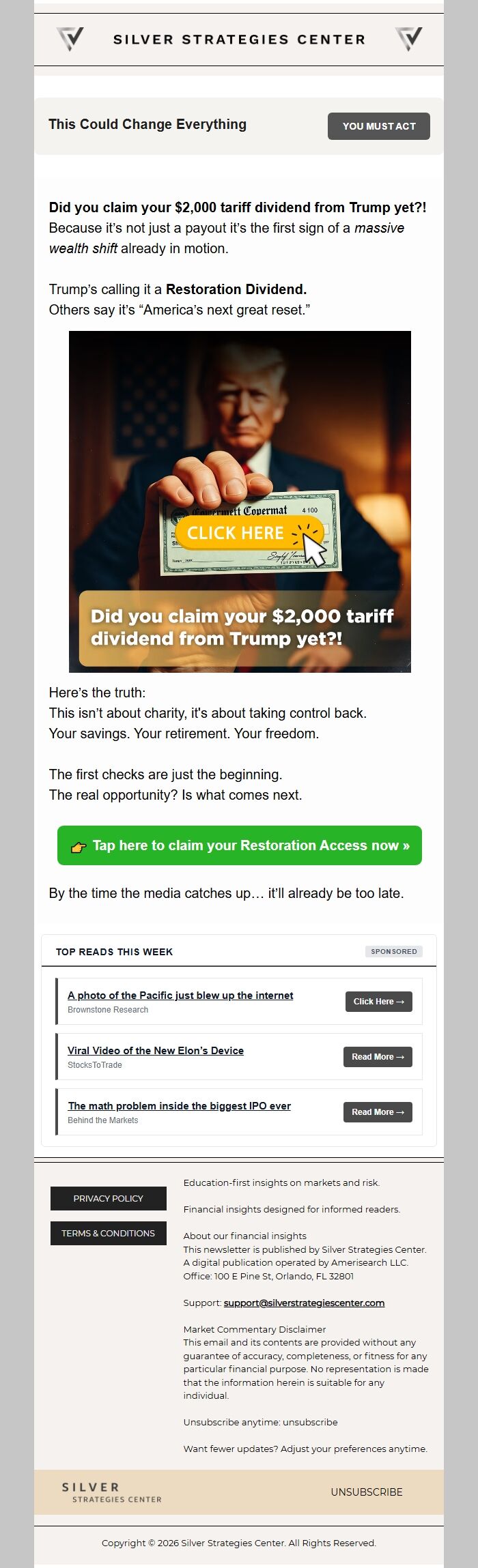
Message Analysis
- Sender: n/a
- Political Party: n/a
- Country: n/a
- State/Locality: n/a
- Office: n/a
-
Email Providers:
- Iterable