Pull up Palantir's recent Form 144 filings on SEC EDGAR.
You will see something interesting.
On or around May 12, 2026, Alex Karp – Palantir's CEO – filed to sell 585,000 shares. At recent prices, that is approximately $95.93 million of stock.
Other Palantir executives filed alongside him.
The total: approximately $207 million of insider selling, all clustered together, all in the same week.
This is the cleanest signal you will ever see in markets.
Insiders are not paid in cash. They are paid in stock. They wake up in the morning richer or poorer based on the price of the equity they hold. They know the company better than any analyst. They know the pipeline. They know what is in the deal book and what is not.
When they sell – en masse, in the same week, at all-time highs – there is only ever one explanation.
They believe the price has gotten ahead of the business.
And this is not just a Palantir story.
Jensen Huang – Nvidia's CEO – has been selling NVDA stock under a 10b5-1 trading plan that permits him to dispose of up to 6 million shares in calendar 2026; he had completed roughly $1 billion of that program by late October 2025 with billions more authorized. His Form 4 filings are on SEC EDGAR.
These plans were not put in place six years ago.
They were put in place at the top.
Now layer on what is happening with the most-followed private investor in America.
Michael Burry – the man who shorted housing in 2007 – deregistered Scion Asset Management with the SEC in November and has not filed a 13F since. His final disclosed portfolio shows 97% of his book in put options against Palantir and Nvidia. He has spent the months since adding to those shorts and writing on his Substack that "the end of this is nigh."
And David Einhorn – one of the most respected hedge fund managers of his generation – told the Sohn Conference audience on May 12 that this is "the most expensive market we have experienced." His Greenlight funds are up 6.5% year-to-date while the S&P is down 4.4%, on what he describes as defensive AI-bubble positioning.
This is what the smart money is doing. With their own funds. At record speed.
Retail is buying.
Insiders are walking out the door.
This always ends the same way.
Insiders are not selling into a vacuum. They are selling into you. In The Final Displacement, I show you the three positions to take before the public catches up.
See the three trades – watch free.
Good investing,
Porter Stansberry
Robinhood Wants a Bigger Role in IPOs—Here's Why It Matters
By Leo Miller. Date Posted: 6/14/2026.

Key Points
- Robinhood's CEO, Vlad Tenev, recently announced that the firm has gained approval to be an IPO underwriter.
- The company can now shift its status from simply a "selling group member" and get a more prominent seat at the IPO industry table.
- The potential of this market compared to the strategic implications of the move are key factors for investors to understand.
- Special Report: The Biggest IPO Ever: Claim Your Stake Today
In a recent announcement from CEO Vlad Tenev, financial services giant Robinhood Markets (NASDAQ: HOOD) continued to show a knack for entering new business lines.
According to Tenev, Robinhood Securities, a subsidiary of Robinhood, is now approved to serve as an IPO underwriter.
SpaceX is offering you shares. Don't take them. (Ad)
SpaceX is reserving 30% of its IPO shares for retail investors through Robinhood, Fidelity, and Schwab. At a $1.75 trillion valuation and 266 times earnings, you're buying in at the most expensive IPO in history - right when institutions who got in at $800 billion need someone to sell to.
Dylan Jovine has identified a small company in Musk's supply chain that builds the power infrastructure Colossus can't run without - and it's still trading at a fraction of its value.
Skip the IPO trap and get the backdoor ticker for freeNotably, Robinhood has already been a participant in the IPO market for years.
The platform has allowed retail investors to gain early access to IPOs, a privilege often reserved for institutional investors.
The announcement meaningfully changes Robinhood’s position in the IPO arena. But in isolation, is this move a major growth opportunity for Robinhood, or is something more strategic at play?
Robinhood Could Gain a Bigger Seat at the IPO Table
As noted, Robinhood has not been absent from the IPO space. In 2021, the company rolled out its IPO Access product. With this, retail investors had “the opportunity to buy shares of companies at their IPO price, before trading on public exchanges.”
This was a valuable feature, especially given that stocks going public sometimes spike before they begin trading on the exchange. Still, just because investors requested shares did not mean they would actually receive them.
During the IPO access phase, Robinhood was only a “selling group member.” In essence, the firm received a small portion of the overall IPO allocation from dominant players like The Goldman Sachs Group (NYSE: GS). It would then distribute those shares to Robinhood users. Now, the company could potentially act as an underwriter in deals, standing on more equal footing with investment bankers rather than clearly below them. This would give Robinhood a say in IPO pricing and allocation.
In turn, Robinhood could gain a larger allocation of shares to distribute to users. The company would also receive underwriting fees in addition to the concession-selling fees it earns under the selling group model.
As an approved underwriter, Robinhood could potentially get a seat at the “big boy” table where traditional investment banks rule.
Why Now: The Retail Market for IPOs Is Growing
Notably, just because Robinhood is legally allowed to be an underwriter doesn’t mean that issuers have to include it in deals. There has to be something in it for them.
What makes this move interesting now is that retail investors are becoming increasingly interested in IPOs. As Morgan Stanley notes, “Retail investors—already a significant force in daily equity market liquidity—are becoming increasingly important participants in IPOs… For issuers, retail demand can be a strategic component of deal construction and aftermarket performance.”
The critical phrase for Robinhood is “retail demand can be a strategic component of deal construction.” In other words, because retail interest in IPOs is rising, issuers should increasingly consider retail investors when thinking about how to allocate shares.
Morgan Stanley's statement somewhat echoes Tenev’s more bold claim: “Since IPO Access launched in 2021, we've watched retail go from an afterthought to a key part of how companies plan an IPO. The question changed from 'why allocate to retail at all?' to 'how big can the allocation be?'”
With Robinhood being one of the most widely used retail investment platforms, this dynamic could make it more likely to gain underwriter status on deals. In turn, the company would be more likely to realize the benefits outlined above.
IPO Underwriting Market Size: Fees Aren’t the Point
While underwriting fees would bring in real revenue for the company, it is important to keep perspective on how large an opportunity this could actually be for Robinhood. Notably, Goldman Sachs' equity underwriting revenue was $535 million last quarter, or $2.14 billion annualized. Within that, IPO fees are only one component of the total.
As a rough estimate, assume IPO fees represented half of the total, or $1.07 billion annualized. Growing to 20% of Goldman’s IPO business long-term would likely be a success, if not an aspirational goal, in Robinhood’s mind. That would equate to around $214 million in annual revenue, or 4.6% of Robinhood’s last 12 months' revenue of $4.61 billion. Thus, the potential for Robinhood to drive growth through the IPO underwriting market is not especially large, though it is still meaningful.
However, the largest benefit of entering this space likely isn’t about generating IPO-specific revenue at all. With this move, Robinhood can continue to attract and retain retail investors on its platform. As IPO interest among this group rises, offering larger allocations of IPO shares would likely be a draw for many customers. The more customers it brings in through this offering, the more Robinhood can encourage them to use its other products.
Transaction revenue across equities, options, and crypto—where Robinhood makes the bulk of its revenue—could receive a meaningful boost as user growth continues. Overall, Robinhood’s IPO underwriting push may not be a needle mover in and of itself. However, more importantly, it clearly reinforces the company’s core value proposition: being a one-stop shop for retail investors. By expanding its IPO offerings, Robinhood protects the strong position it has built in this industry.
Eli Lilly Wins Back CVS Health, Reverting Novo's Advantage
By Leo Miller. Date Posted: 6/2/2026.
Key Points
- After CVS made Novo Nordisk its preferred GLP-1 provider in 2025, Lilly shares took a huge hit.
- However, CVS will restore access to both Eli Lilly and Novo's drugs, putting the firms on a level playing field.
- Lilly is now approaching its all-time high again, making its valuation something to monitor.
- Special Report: The Biggest IPO Ever: Claim Your Stake Today
After its blockbuster Q1 2026 earnings report sent shares up 9.8%, pharmaceutical giant Eli Lilly and Company (NYSE: LLY) continues to collect wins. These include a Food and Drug Administration (FDA) proposal that would pressure compounders and strong clinical results for its oral GLP-1, Foundayo.
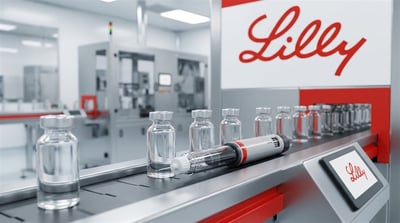
Now, the company is back in the news with another key development that highlights its strong position in the GLP-1 market. Lilly has reached an agreement with CVS Health (NYSE: CVS), the parent of the nation’s largest pharmacy benefit manager (PBM), Caremark. The agreement will expand coverage of Lilly’s top GLP-1s, allowing patients to access them through their existing insurance.
Please open before June 12! (Ad)
The SpaceX IPO is drawing near, but the real opportunity may lie in 5 lesser-known companies providing the critical infrastructure SpaceX depends on to operate.
Goldman Sachs and Morgan Stanley are reportedly already building positions in one of these names. Another is a resource miner that Elon Musk's broader empire - including Tesla - relies on. Lance Ippolito has detailed all five inside his free SpaceX Investing Blackbook.
Download the free SpaceX Investing Blackbook before these names go mainstreamClearly, this is a positive development, as it should help drive demand for Lilly’s products. It also weakens Lilly’s biggest competitor, since CVS is reversing a prior move that had excluded Lilly from coverage.
CVS Reunites With Lilly After Backing Novo
With this announcement, all three of the United States' largest PBMs will soon cover Lilly’s entire portfolio of approved obesity medications. Express Scripts, owned by Cigna Group (NYSE: CI), and Optum Rx, owned by UnitedHealth Group (NYSE: UNH), already covered the drugs. Caremark will begin covering Foundayo on June 1, while coverage for Zepbound will begin on Oct. 1.
What makes this announcement particularly interesting, however, is the context. Just over a year ago, CVS struck a deal with Lilly’s main competitor, Novo Nordisk A/S (NYSE: NVO). That made Novo’s Wegovy CVS’s preferred GLP-1 treatment and excluded Zepbound from coverage. Combined with its slightly disappointing earnings report on May 1, 2025, this move by Lilly’s top rival and the largest PBM sent LLY shares down nearly 12%.
Now, CVS has reversed that decision, which delivered a real blow to Lilly shares. According to a CVS spokesperson, “What this change means is that, for those clients that do (choose to provide coverage), they will have equal access to both the Novo and Lilly products, and consumers will have the same co-pays for each.” In other words, if an employer covers GLP-1s for obesity, employees can access Novo and Lilly’s products on equal terms and with the same co-pay.
This should largely reverse the negative effect of CVS’s initial decision, which limited access to Lilly’s drugs and hurt demand. It also removes the advantage Novo had as the only available option for CVS clients.
Timing is another positive aspect of this decision, as Lilly is looking to increase demand for Foundayo. Its oral GLP-1 has fallen behind Novo’s Wegovy pill, which received FDA approval several months earlier. By now being on equal footing with Novo within Caremark, Lilly may have an easier time catching up. Lilly shares gained 4% on the day of this announcement as investors recognized the positive implications for the company.
Zooming in on Valuation Amid Lilly’s Rebound
Despite the many positive developments Lilly has seen in late 2026, the stock has underperformed overall. Shares are down around 1% compared with the S&P 500’s gain of more than 10%. This comes as its latest earnings report really kicked off the recovery—prior to the report, shares were down nearly 21% in 2026. Now, Lilly trades less than 5% below its all-time high. Given this, it is worth examining the stock’s valuation to get a more complete picture of the outlook for LLY shares.
Currently, the stock trades at a forward price-to-earnings (P/E) ratio near 29x. That is substantially above the S&P 500’s forward P/E near 21x, and even further above the S&P 500 healthcare sector’s forward P/E near 17x. Based on these measures, Lilly’s valuation looks fairly elevated.
However, when compared with Lilly’s own history, that is not the case. Over the past three years, Lilly’s average forward P/E is nearly 43x. Thus, its current level is around 33% below that average—a much more favorable comparison. Looking over the past 52 weeks, Lilly’s average forward P/E is around 30x, just slightly above its current level.
Lilly’s forward P/E has also come down meaningfully from 32x, when the stock traded near its current price in February. This suggests that earnings estimates have caught up with the stock price somewhat—a positive signal. Overall, Lilly is certainly not a cheap stock, and it will need to continue delivering strong growth to support its valuation. However, these metrics also show that it is not necessarily a name that screams "overvalued."
Analysts Remain Constructive on Lilly’s Upside Potential
The outlook for Lilly shares, according to Wall Street analyst price targets, remains positive. The MarketBeat consensus price target on the stock currently sits near $1,227, implying about 15% upside.
The average of targets updated after the company’s earnings report is moderately higher at $1,239.
Among these updates, Rothschild & Co Redburn’s $900 target is the most bearish. Meanwhile, Barclays’ $1,400 target is the most bullish.
This email is a sponsored message from Porter & Company, a third-party advertiser of The Early Bird and MarketBeat.
If you need assistance with your account, please contact MarketBeat's U.S. based support team at [email protected].
If you no longer wish to receive email from The Early Bird, you can unsubscribe.
Copyright 2006-2026 MarketBeat Media, LLC. All rights reserved.
345 N Reid Place #620, Sioux Falls, SD 57103. U.S.A..