ClearPath Action Rundown
June 12th, 2026
|
|
Happy
Friday!
Thank you for joining us at the Congressional baseball
game!
|
ClearPath is proud to mark its 10th year
sponsoring the annual bipartisan Congressional Baseball Game,
supporting D.C.-area charities while celebrating one of Congress'
longest-standing traditions. |
1. Jeremy Harrell
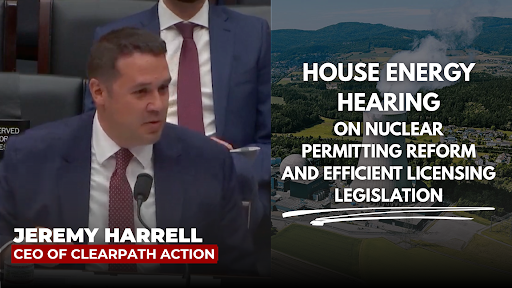
testifies on nuclear licensing reform before House
E&C |
|
A predictable, efficient Nuclear
Regulatory Commission (NRC) is the foundation American developers need
to build the next generation of reactors. ClearPath Action CEO Jeremy
Harrell testified before the House Energy
& Commerce Subcommittee on Energy on a package of six bills to accelerate
nuclear licensing and strengthen the domestic nuclear industry. The
legislation covers the full stack, from streamlining NRC hearings to
recycling used fuel to aligning NRC staff pay with an increasingly
competitive landscape.
The bills discussed at the hearing:
-
Cut approval timelines by an average
of six months by eliminating mandatory uncontested hearings under the
Efficient
Nuclear Licensing Hearings Act;
-
Accelerate nearly $3 billion in
domestic enrichment investment by allowing construction and licensing
to run concurrently under the American
Enrichment Deployment Act;
-
Strengthen domestic fuel security and
reduce taxpayer liabilities on spent fuel under the
Nuclear
REFUEL Act;
and
- Modernize NRC staffing, advisory processes and DOE test reactor
transparency through three additional bills.
What's clear:
American nuclear developers are ready to build, Congress needs to give
them a regulator built for the pace and scale the moment demands. This
package builds on the success of the ADVANCE
Act and moves the ball on the predictability,
efficiency and domestic supply chain depth that private investment
requires.
Plug in: Watch the
full hearing here.
|
2. Putting energy
security at the center of U.S. foreign
policy |
|
Energy security is inseparable from
global competitiveness and modern societies. To meet this moment, U.S.
foreign policy must lean into its strengths and create a coordinated,
agile and effective energy diplomacy and delivery system. This week,
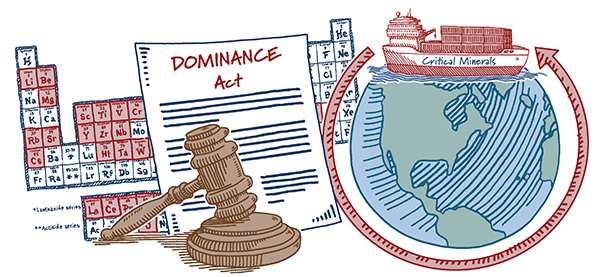
the House passed Rep. Young Kim’s (R-CA) DOMINANCE
Act (H.R. 7037) to
put energy security at the center of U.S. foreign policy.
The DOMINANCE Act:
- Authorizes Energy Security Pacts (ESPs), bilateral long-term
agreements to build energy grids and critical minerals infrastructure
with allied nations outside China's influence;
- Establishes the Bureau of Energy Security and Diplomacy within
the State Department to serve as a central hub for strategy,
engagement and policy coordination across federal agencies and
international partners; and
- Formalizes U.S. participation in President Trump’s Forum on
Resource Geostrategic Engagement (FORGE) to build supply chains for
critical minerals.
What's clear:
America has the allies, financing tools and technology to lead the
world in energy technologies and critical minerals infrastructure; the
DOMINANCE Act enhances those assets with a long-term, durable strategy
to outcompete China.
Plug in: Read
ClearPath's blog Put Energy Security at the Center of
U.S. Foreign Policy for the case behind the DOMINANCE Act's ESP
framework.
|
3. DOE announces
Antares Nuclear Mark-0 criticality |
|
For the first time in four decades,
a new privately developed reactor has gone critical at Idaho National
Lab. The
DOE announced that
under their Reactor Pilot Program, Antares Nuclear's Mark-0 reached
criticality at Idaho National Laboratory, and it's the first reactor
to hit President Trump's July 4 deadline from his May 2025 executive
order.
What to know:
- Mark-0
is the 53rd reactor completed at Idaho National Laboratory since
1951;
- Construction and testing will support eventual Nuclear
Regulatory Commission licensing and inform the design of future
commercial deployments across power, space and defense applications;
and
-
The DOE's new Nuclear
Energy Launch Pad
will build upon the Reactor Pilot Program.
What's clear:
Multiple companies are seeking to achieve criticality through the
Reactor Pilot Program before July 4th. Clear deadlines and private
sector partnerships can move American nuclear technology closer to
commercial deployment.
Plug in: Read
Jeremy
Harrell's op-ed on
what's driving America's nuclear revival and why it matters for U.S.
energy dominance.
|
4. The world's largest
geothermal complex just got bigger |
|
American companies keep building
firm, affordable, clean energy. Constellation
Energy completed a 25 MW expansion of The Geysers, the world's largest
operating geothermal complex, located in California.
The expansion shows what's possible
when federal R&D and private operators work together. The
project:
- Delivers
firm, round-the-clock power to the California grid, reinforcing
reliability as electricity demand rises;
-
Previously received
a
DOE-funded EGS demonstration award that validated EGS techniques at an
operating site and lowered risk for future projects nationwide;
and
- Demonstrates that existing geothermal infrastructure can serve
as a cost-effective launchpad for new capacity.
What's clear: The
Geysers expansion is proof that geothermal, backed by smart federal
R&D investment and private execution, can grow the grid affordably
and reliably. Congress should reauthorize the expiring geothermal
R&D authorizations in the Energy Act of 2020 to keep that momentum
going.
Plug in: Read
ClearPath's full blog, From
Energy Act to IPO: Federal Energy R&D Programs Deliver
Results.
|
5. America’s fusion
strategy takes shape |
|
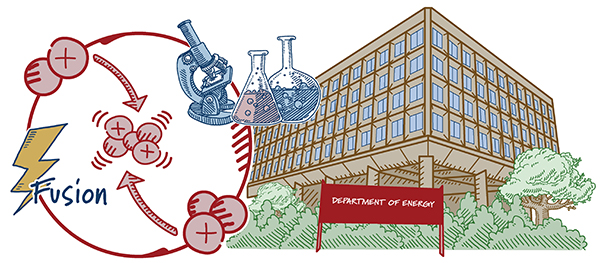
The U.S. private sector has
attracted more than $10 billion in cumulative fusion investment. DOE
released the second installment of the public sector’s plan to support
this budding industry: the Fusion
Science and Technology Roadmap lays out a Build-Innovate-Grow framework to close
the critical gaps standing between today's momentum and a commercial
fusion power plant in the 2030s.
This Roadmap announces plans
to:
- Set
near-, mid- and long-term milestones across six challenge areas to
give private developers a clear public-sector roadmap;
- Build an
AI-Fusion Digital Convergence Platform under the Genesis Mission to
accelerate materials discovery and plasma modeling;
- Launch
Fusion BRIDGE, a new program to co-fund experimental infrastructure
with private companies, states and international allies;
and
- Coordinate with advanced nuclear R&D to share enabling
technologies and reduce costs across both sectors.
What’s clear:
Fusion is the next frontier of energy technology, and this
Administration intends to move it from the lab to the grid as quickly
as possible.
Plug in: Read
ClearPath's From
Vision to Reality: The U.S. Fusion Imperative for a breakdown of what it will take for
America to lead on fusion.
|
The Atlantic Council, CleanEcon and
ClearPath hosted the premiere of IGNITION:
The Future of Fusion, a short documentary created by Future in Bloom that frames
fusion energy as this generation’s Space Race. Jeremy Harrell spoke on
a panel with Trent Bauserman (Commonwealth Fusion Systems) and Scott
Hsu (Lowercarbon Capital), moderated by Jennifer Gordon (Atlantic
Council Global Energy Center). |
6. NEW Interconnection
101 – clearing the path for new power |
|
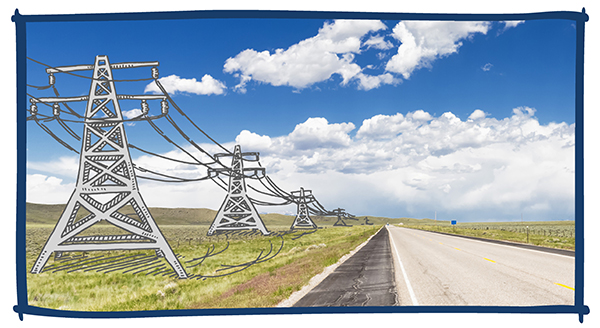
Every new power plant in America
must navigate the grid interconnection process before a single
electron moves. Studies take over three years on average, and less
than 20 percent of proposed projects ever reach commercial
operation.
ClearPath's new Interconnection
101 lays out three
fixes:
- Maximize
existing grid capacity through energy-only service, surplus
interconnection and generator replacement – faster, lower-cost
pathways most grid operators underuse;
- Integrate transmission planning with generation and load growth
so developers know costs and timing upfront; and
- Deploy
automation and AI to cut study timelines, reducing study times from
years to days.
What's clear:
Fixing interconnection is critical to energy dominance, reliability
and affordability. To unclog the queues, regulatory fixes, modern
technology and building new transmission are key.
Plug in: Read
ClearPath's Interconnection
101 for the
full breakdown.
|
7. DOE invests in
carbon capture through coal modernization |
|
With a combined $350 million in
federal funding, the DOE’s
Office of Hydrocarbons and Geothermal Energy selected four coal modernization projects,
each integrating carbon capture technologies. The projects are located
in Puerto Rico, Maryland, Alaska and West Virginia, and include
front-end engineering and design studies.
These projects:
- Underscore carbon capture’s growing role in DOE’s strategy for
modernizing existing energy infrastructure; and
- Could
add or preserve approximately 3,565 megawatts (MW) of coal-fired
generation capacity – enough electricity to serve roughly three
million U.S. households each year.
What's clear: By
integrating carbon capture technologies into infrastructure upgrades,
DOE is advancing an all-of-the-above approach focused on reliability,
resilience and the long-term competitiveness of America’s energy
system.
Plug in: Read
ClearPath's blog Made
in America, with Carbon by Jake
Marrs and
Savita
Bowman for a
breakdown of how captured carbon can be put to use to create valuable
products and recover resources.
|
8. 250 years of
American energy innovation |
|
As America celebrates its 250th
anniversary, ClearPath is
highlighting
America's innovation story. From the earliest discoveries in
electricity and steam power to modern nuclear, natural gas, advanced
grid technologies and agriculture, American innovators have
consistently pushed the boundaries of what's possible.
Quick history lesson – Hydraulic fracturing and the shale
revolution
-
1947 – Engineers at
Stanolind Oil conduct the first
hydraulic fracturing experiments in Kansas, planting the seed for what would
become a world-changing technology.
-
1977 – In Colorado,
the Department of Energy demonstrates the first use of massive hydraulic
fracturing (MHF), followed by decades of continued public-private
partnerships to scale innovative natural gas technologies.
-
1997 –
Slick
water fracking
makes shale gas extraction economically viable for the first time,
triggering a domestic natural gas boom that would reshape the American
energy sector and global energy markets.
-
2025 – The U.S.
becomes the
first country to export more than 100 million tons of LNG annually, cementing its place
as the world's dominant natural gas exporter.
What’s clear: The
shale revolution is one of the greatest American energy success
stories, built on decades of strategic public-private R&D, private
entrepreneurship and experimentation. It turned the U.S. from an
energy importer into the world's top natural gas producer and
exporter.
Plug in: Read
ClearPath's LNG
101 to learn how
the shale revolution turned America into the world's top natural gas
exporter and what that means for global energy security.
|
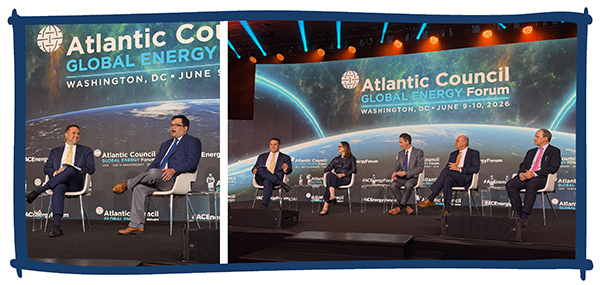
Jeremy
Harrell chaired
two panels at the Atlantic
Council’s Global Energy Forum. First, a fireside chat on “Forecasting the
‘Demand Era’ and building energy infrastructure to meet the moment”
with the Honorable Tristin Abbey, and second, a panel with Marisa
Buchanan (bp), Sasha Mackler (ExxonMobil Low Carbon Strategies), David
Sewell (Solstice Advanced Materials) and Pete Sheffield
(Enbridge). |
|
|
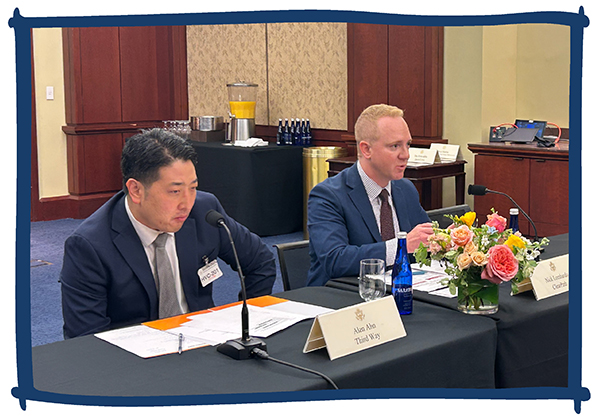
Nick
Lombardo presented
to Congressman Bob Latta (R-OH), Chair of the E&C Energy
Subcommittee and members of the British Parliament on U.S.-UK nuclear
partnerships, global energy markets and export financing.
|
|
10. Coming down the
pipeline |
Wednesday,
June 24 – 10:30 a.m.
– ClearPath
CEO, Jeremy Harrell, will moderate the UCAN Power Webinar Featuring
Nuclear Regulatory Commission Chair Ho K. Nieh. RSVP
here.
|
-
Two American fusion companies, on
opposite coasts, closed major funding rounds within weeks of each
other: Helion
Energy raised
$465M, and Thea
Energy closed a
$100M Series B, a sign that investor confidence in American fusion is
growing.
-
After 14 years in federal permitting, the Sunzia
Southwest Transmission Project has begun commercial operation, a reminder
of why modernizing the permitting process is essential for American
energy infrastructure.
-
The Senate Energy and Natural
Resources Committee advanced two hydropower bills,
the
Hydropower Licensing Transparency Act and the
FLOWS Act, to
streamline licensing and reduce regulatory burdens on existing
dams.
|
ClearPath believes
America must lead the world in innovation over regulation…markets over
mandates…providing affordable, reliable, clean
energy. |
|
That's all from us. Thanks for reading and have a great
weekend!
View this Rundown online
|
|
ClearPath · 300 New Jersey Ave NW, Suite 800, Washington, DC 20001,
United States
This email was sent to
[email protected] · Unsubscribe
Created with NationBuilder.
Build the Future.
|
|
|
|