Dear Fellow American,
If you feel like something has fundamentally changed…
Like the ground beneath your feet has shifted in some unseen way… I want you to know you're not imagining it. You're not being paranoid. What you're sensing is real.
And it's bigger than anything we've lived through.
My name is Porter Stansberry.
I’m the founder of one of the largest financial research firms in the world. Over the last 26 years we’ve helped investors navigate almost every major economic cycle.
We’ve also been on the forefront of every big financial story from the rise of Bitcoin and MRNA vaccines to robotics and artificial intelligence – just to name a few.
But today, I’m breaking the biggest story of my career…
An economic story the likes of which we’ve not seen in centuries. In fact, the last – and only time – this happened was in 1776. But now, on the eve of America’s 250th anniversary, it’s happening again.
How you work, how you vote, how you protect and build your wealth… it’s all being turned upside down by what one famous Stanford economist says is:
“The biggest change ever… bigger than electricity… bigger than the steam engine.”
Yet almost nobody is prepared for it. So, if you’ve been watching the chaos of the past year unfold, struggling to understand what it all means… you’re about to get many - if not all - of the answers you’ve been searching for.
And, most importantly, what it all means for you, your money, and your investment portfolio in the months ahead
Because as you’ll discover, everything from the government taking stakes in companies like Intel, Lithium Americas, and MP Materials.
To Trump’s strike on Venezuela… his deal with Greenland… his seemingly never-ending slew of executive orders… and increasingly centralized grip over the economy…
All the way to the surging popularity of radical socialist politicians like Bernie Sanders, AOC, and Zohran Mamdani…
It’s all deeply and inexorably intertwined in what is, without a doubt, the most consequential story of the year.
A turning point that one Nobel Prize winner says is dividing not just the economy but our entire society.
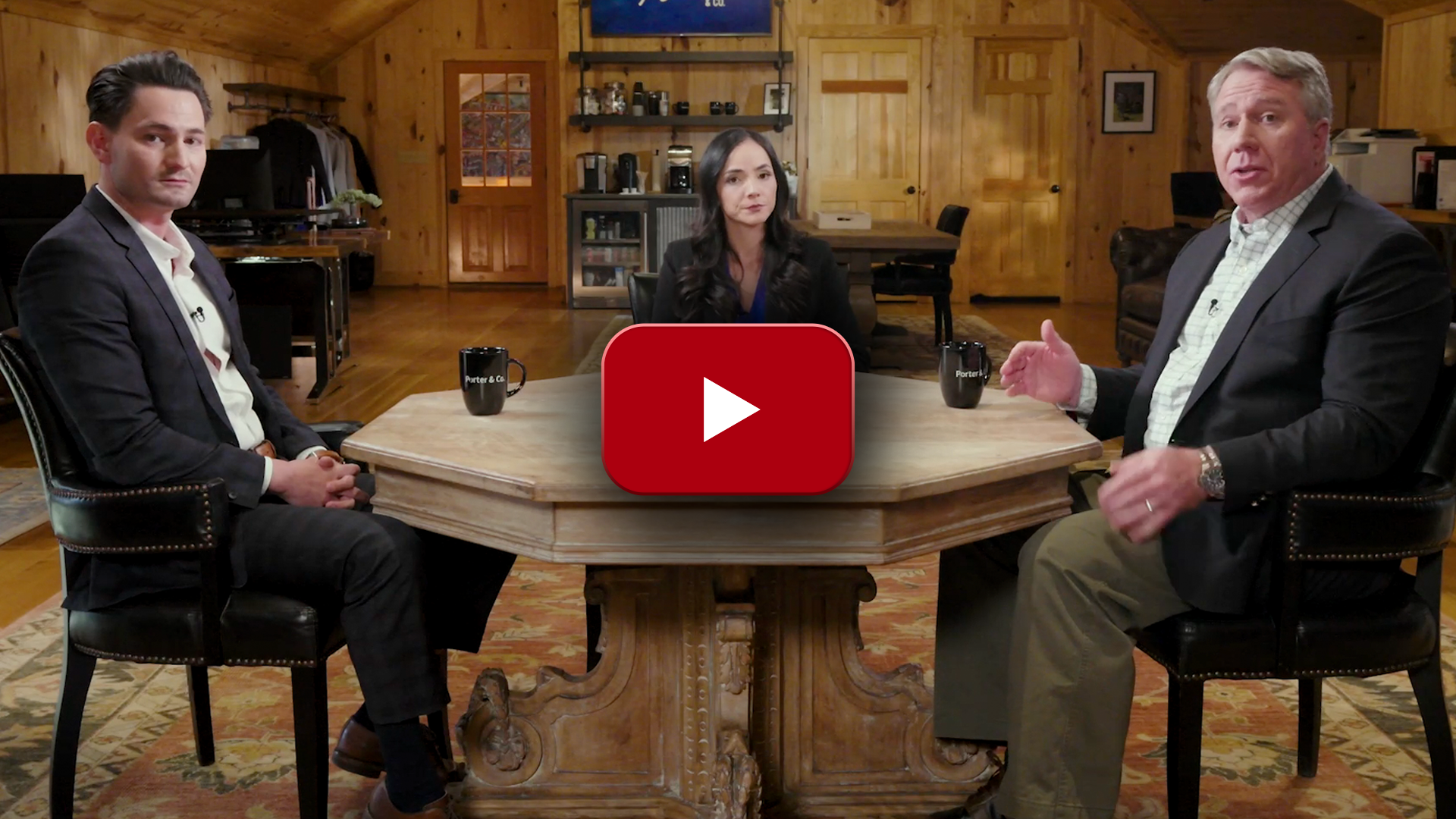
And, as my guest and I explain, the financial decisions you make in the face of this New 1776 Moment… they could dictate whether you’re enriched, left stuck in the past, or potentially even impoverished by the seismic changes barreling down upon America.
The stocks to buy… the stocks to sell… and the three money moves to ensure you and your loved ones end up on the winning side of this new economic reality.
It’s all laid out here for you…
Good investing,
Porter Stansberry
Gap Inc. Cuts Sales Outlook After Q1 Miss, Shares Drop 17%
Reported by Jennifer Ryan Woods. Publication Date: 5/30/2026.
Key Points
- Gap shares plunged more than 17% after the retailer slightly missed Wall Street's earnings and revenue expectations for a second consecutive quarter and lowered its full-year sales outlook due to weaker-than-expected performance at Old Navy.
- Despite the disappointing market reaction, Gap posted its ninth consecutive quarter of positive comparable sales growth, with the namesake Gap brand delivering 10% comps growth and Banana Republic extending its streak of positive comps to four quarters.
- While the company lowered its sales forecast, it raised its full-year earnings outlook, reflecting favorable assumptions for interest income, taxes, and share count.
- Special Report: Elon Musk: This Could Turn $100 into $100,000
Gap Inc. (NYSE: GAP) delivered a mixed first-quarter report Thursday after the bell, narrowly missing Wall Street's earnings and revenue expectations for a second straight quarter while lowering its full-year sales outlook due to weaker-than-expected performance at its Old Navy brand.
Although the company, which remains in the midst of a multiyear turnaround, raised its full-year earnings guidance, investors appeared more focused on slowing top-line growth, sending shares down about 17% after the report.
Gap's Q1 Results Reflect Uneven Brand Performance
A tiny supplier at the center of Elon's AI infrastructure (Ad)
The upcoming SpaceX IPO - reported for June 12 - is valued at $1.75 trillion. But one analyst says fighting over those shares may be the wrong move.
There's a tiny supplier, just 1/60th the size of SpaceX, sitting at the center of what he calls Elon Musk's 'tollbooth' plan for AI infrastructure. Once SpaceX goes public, Wall Street could expose this under-the-radar vendor to a much wider audience.
Watch the urgent presentation to see this hidden stock before the IPO window closesGap reported adjusted diluted earnings per share (EPS) of 38 cents, down from 51 cents a year ago and a penny below Wall Street's expectations. Revenue rose to $3.5 billion, up 1% year over year, but came in roughly $28 million short of analyst estimates.
Comparable sales (comps) increased 2%, marking the retailer's ninth consecutive quarter of positive comp growth, while gross margin of 40.5% exceeded the company's guidance.
On the earnings call, CEO Richard Dickson acknowledged that performance was uneven across the company's portfolio during the quarter.
"Overall, at the company level, the quarter was in line with our expectations. However, results at the brand level were more varied, reflecting both the different stages of their transformation and some brand-specific dynamics," Dickson said.
Three of Gap's four brands posted positive year-over-year comps. Gap's namesake brand remained a standout performer, with comps rising 10% and extending its streak of positive comps to 10 consecutive quarters. Banana Republic also continued to gain traction, posting 2% comps growth and marking its fourth straight quarter of positive comps.
Old Navy, the company's largest brand, posted 1% comps growth but fell short of expectations due to a weaker-than-expected customer response to its seasonal dress assortment. Athleta remained a sore spot, with comps declining 11% as the brand continued working through legacy inventory and broader turnaround efforts.
Lower Sales Outlook Overshadows Higher EPS Guidance
The weaker-than-expected performance at Old Navy prompted the company to lower its sales guidance, even as it raised its EPS forecast to reflect favorable interest income, tax, and share-count assumptions.
Net sales are now expected to rise 1% to 2% year over year, down from the company's earlier guidance of 2% to 3%. Meanwhile, the company raised its adjusted EPS outlook to $2.30 to $2.40 per share, up from its earlier estimate of $2.20 to $2.35 per share.
The company also expects roughly $80 million in net tariff relief, though it is reserving about half to offset the potential impact of higher fuel costs and the remainder to respond to changes in the promotional and competitive environment.
Gap also issued guidance for the second quarter, expecting net sales to be flat to down 1% from the prior year, with gross margin flat to down 50 basis points.
Gap's Volatile Year Continues Following Earnings Report
Investors were clearly disappointed with the report, sending shares sharply lower. The move added to what has already been a bumpy year for the stock as investors reacted to developments related to the retailer's turnaround efforts.
Despite the volatile backdrop, investors responded positively to improving results across much of Gap's portfolio early in the year, sending shares to a 52-week high above $29 on Jan. 9. However, the stock tumbled more than 14% following the company's fourth-quarter earnings report in early March after results came in just shy of expectations.
The stock has struggled to regain momentum since then. Ahead of Thursday's report, shares were trading just under $25. Following the sell-off, they are now trading below $21. Over the last three months, shares have fallen roughly 25%, while the stock is down about 18% year to date.
Analysts Remain Optimistic Despite the Pullback
Wall Street has remained largely optimistic on Gap, though analyst sentiment has been somewhat mixed in recent months, and at least three analysts lowered their price targets following the latest earnings report.
The stock carries a Moderate Buy consensus rating. Among the 18 analysts covering the company, 12 rate the stock a Buy, while six have Hold ratings. The average 12-month price target is just under $29, implying more than 35% upside from recent trading levels.
The recent pullback has also lowered Gap's valuation. Shares currently trade at about 10X earnings, below the broader retail industry average P/E ratio of around 17X. The stock's price-to-sales ratio of less than 0.5 is also well below the industry average of approximately 1.1.
Gap trades at a lower earnings multiple than American Eagle Outfitters Inc. (NYSE: AEO), which carries a P/E ratio of around 14X, though above Abercrombie & Fitch Co.'s (NYSE: ANF) multiple of roughly 7X. On a price-to-sales basis, Gap trades slightly above American Eagle and modestly below Abercrombie, which recently reported strong Q1 earnings.
Gap's latest quarter offered evidence that its turnaround remains on track, particularly at the namesake Gap brand. However, because it marked a second consecutive earnings and revenue miss, combined with a lower sales forecast, the positives were overshadowed. Going forward, investors will be watching whether the challenges at Old Navy prove temporary while monitoring signs that Athleta's turnaround efforts are gaining traction.
Cracker Barrel Surges 23% as Earnings Beat Signals Turnaround Progress
Author: Jennifer Ryan Woods. Originally Published: 6/11/2026.

Key Points
- Cracker Barrel delivered a surprise earnings beat and raised its fiscal 2026 guidance, sending shares up roughly 23% following the report.
- The results suggest the company's turnaround efforts may be gaining traction after a difficult 2025 marked by customer backlash over a logo redesign, which sparked a sharp decline in the stock.
- Despite improving momentum and a stock rally of more than 75% year to date, analysts remain cautious, with the consensus price target 10% below the current share price.
- Special Report: Elon Musk: This Could Turn $100 into $100,000
Cracker Barrel Old Country Store Inc. (NASDAQ: CBRL) reported fiscal third-quarter earnings after the bell on June 9, and investors clearly liked what they heard.
The country-themed restaurant and retail chain delivered a sizable earnings beat and raised its full-year guidance, sending shares up nearly 23%. The report offered some much-needed good news for a company in the midst of a turnaround after a series of missteps that have weighed on both its business and stock price.
Cracker Barrel Delivers Surprise Earnings Beat
A tiny supplier at the center of Elon's AI infrastructure (Ad)
The upcoming SpaceX IPO - reported for June 12 - is valued at $1.75 trillion. But one analyst says fighting over those shares may be the wrong move.
There's a tiny supplier, just 1/60th the size of SpaceX, sitting at the center of what he calls Elon Musk's 'tollbooth' plan for AI infrastructure. Once SpaceX goes public, Wall Street could expose this under-the-radar vendor to a much wider audience.
Watch the urgent presentation to see this hidden stock before the IPO window closesCracker Barrel reported Q3 earnings of 29 cents per share, down from 56 cents per share a year earlier but well ahead of Wall Street's expectation for a loss of 45 cents per share. Net income included a $47.4 million benefit related to a settlement agreement involving interchange fee litigation.
Revenue of approximately $797 million fell 2.9% year over year but came in nearly $21 million above analyst estimates. Comparable-store sales declined in both the restaurant and retail businesses. During the earnings call, Chief Executive Julie Masino said the stronger-than-expected performance was driven by solid cost management, improved traffic, and higher checks.
Guest satisfaction also improved, with the chain's Google star rating reaching its highest quarterly score since 2018.
Guidance Raised Despite Tough Consumer Environment
The company raised its fiscal 2026 outlook, now expecting total revenue of $3.27 billion to $3.3 billion, up from its previous forecast of $3.24 billion to $3.27 billion. Adjusted earnings before interest, taxes, depreciation, and amortization (EBITDA) is now expected to be between $120 million and $125 million, up from the previous forecast of $85 million to $100 million.
On the call, Chief Financial Officer Craig Pommells addressed the impact of higher fuel prices, which have disproportionately affected lower-income consumers, who make up a significant portion of Cracker Barrel's customer base.
"Certainly, fuel prices are up. That will impact the business in terms of distribution on the restaurant side. It also impacts the retail side of the business. There is some impact in the fourth quarter related to fuel," he said, adding, "All of that is included in the guidance."
Cracker Barrel isn't alone, as much of the restaurant sector that caters to lower-income consumers has faced pressure amid weak consumer sentiment due to rising fuel costs and living expenses.
Cracker Barrel Continues to Recover From Logo Misstep
Wednesday's rally was a much-needed boost for a stock that has been heavily beaten down. Over the last five years, shares have fallen more than 70%.
The second half of 2025 was particularly difficult for the company and its stock. In August 2025, Cracker Barrel unveiled a new, more modern-looking logo, which sparked significant backlash from customers. Even President Donald Trump weighed in, writing on Truth Social that the company should return to its old logo. The controversy weighed on shares, which fell nearly 15% at one point before closing down around 7%.
Days later, the company announced it would return to the original logo. It also said it would revert the four remodeled locations to their previous designs and pause plans for future remodels.
Despite its efforts, however, the damage was done. Shares continued to tumble through the remainder of the year, falling from around $59 before the logo announcement to roughly $25 by year-end.
Turnaround Efforts Begin to Gain Traction
The company's turnaround efforts began showing signs of progress over the last few months. In early March, the company reported second-quarter results that beat top- and bottom-line expectations, prompting several analysts to raise their price targets on the stock.
During the earnings call, Masino said, "We're gaining traction and are encouraged by some important guest metrics and green shoots around traffic, and we're energized in terms of driving improved performance."
Although the results were better than expected, both earnings and revenue declined year over year, as did comparable restaurant and retail sales. Investors appeared encouraged by the progress, but remained cautious given the ongoing challenges.
The stock moved only slightly higher following the Q2 report and soon resumed its downward trend. Sentiment seemed to shift in the weeks leading up to the Q3 release, with shares climbing to around $36 ahead of the results. Following the strong Q3 earnings report, shares climbed to $44.49, bringing their year-to-date gain to almost 75%.
Analysts See Limited Upside After Rally
Despite the improving momentum, Wall Street remains cautious on the stock. Short interest has also climbed in recent months, reaching nearly 6.1 million shares, or 27.6% of the float, as of May 29. The consensus rating is Hold, with four analysts rating the stock a Buy, four rating it a Hold, and four rating it a Sell.
At the current price, analysts on average see downside over the next 12 months. The consensus price target is just under $40, roughly 10% below the current share price. Price targets range from $27 to $55.
Cracker Barrel's turnaround is still a work in progress. However, the strong earnings beat, higher guidance, and sharp rally in the stock suggest investors are gaining confidence that the company's efforts are beginning to take hold.
While Wall Street remains divided on the stock's long-term prospects, the latest quarter provided some of the clearest signs yet that Cracker Barrel may be moving in the right direction.
This email content is a sponsored email for Porter & Company, a third-party advertiser of MarketBeat. Why was I sent this email content?.
If you have questions or concerns about your account, feel free to email our South Dakota based support team at [email protected].
If you would no longer like to receive promotional emails from MarketBeat advertisers, you can unsubscribe or manage your mailing preferences here.
© 2006-2026 MarketBeat Media, LLC. All rights reserved.
345 N Reid Place, Sixth Floor, Sioux Falls, South Dakota 57103. United States..