Expert analysis made easy. Breaking down the news with data, charts, and maps.
Edited by Brady Africk and Hannah Bowen
Happy Thursday! In today’s newsletter, we examine the health of the American middle class, the latest tensions in the Middle East, and Trump’s economy ahead of the November midterm elections.
Don’t forget—subscribe and send DataPoints to a friend!
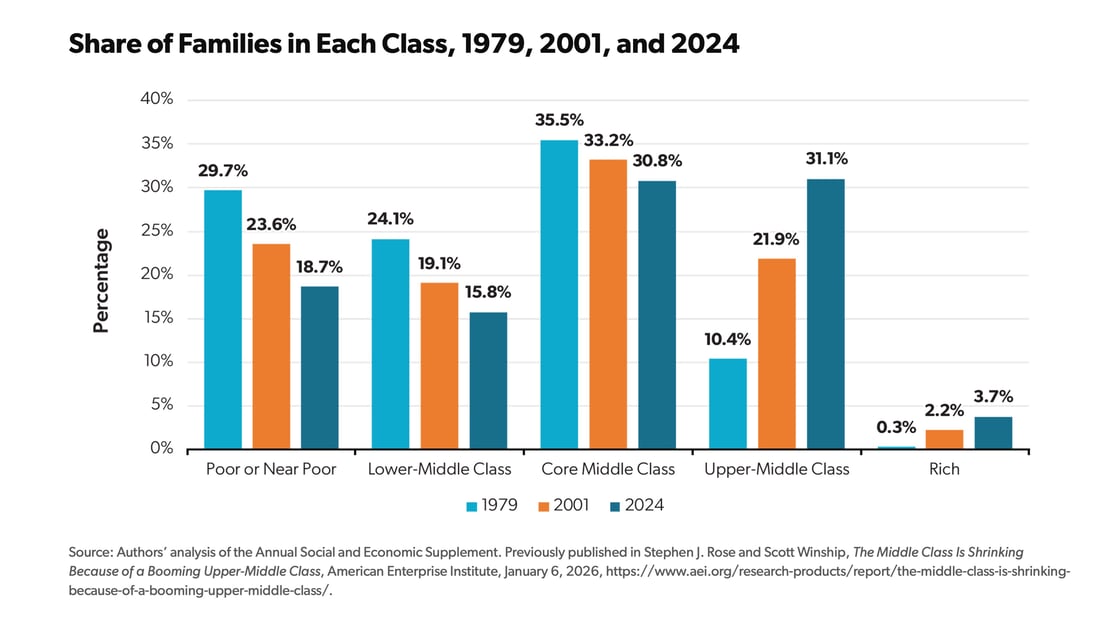
Topline: The hollowing out of the middle class has become a common narrative throughout American politics and among voters. While the traditional middle class has shrunk, that is not because Americans are uniformly growing poorer, write AEI’s Scott Winship and Stephen J. Rose. They find that the upper-middle class has grown and that, as the “core” middle class has shrunk, so have the classes below the middle. In short, the middle class has shrunk because a large chunk of it got wealthier.
Income Distributions: In 2024, 31 percent of families were in the middle class, compared with 36 percent in 1979. However, over that same period, the upper-middle class grew to comprise 31 percent of families from only 10 percent, and the number of Americans falling short of the middle class dropped to 35 percent of all families from more than half.
When Does Wealth Satisfy? When it comes to satisfaction with wealth, Americans seem to increase their expectations as they become wealthier. But Americans’ desires are running into supply constraints, such as with the housing supply, which hasn’t kept up with the demand for bigger and nicer homes. Better policymaking can ease affordability concerns, but Americans are not overall falling short of achieving the American middle-class dream.
“People who have grown wealthier want to send their kids to the best schools. But the number of ‘best schools’ hasn’t increased, although tuition sure has. Similarly, there may be more demand for bigger, nicer homes, but the housing supply hasn’t kept up.”
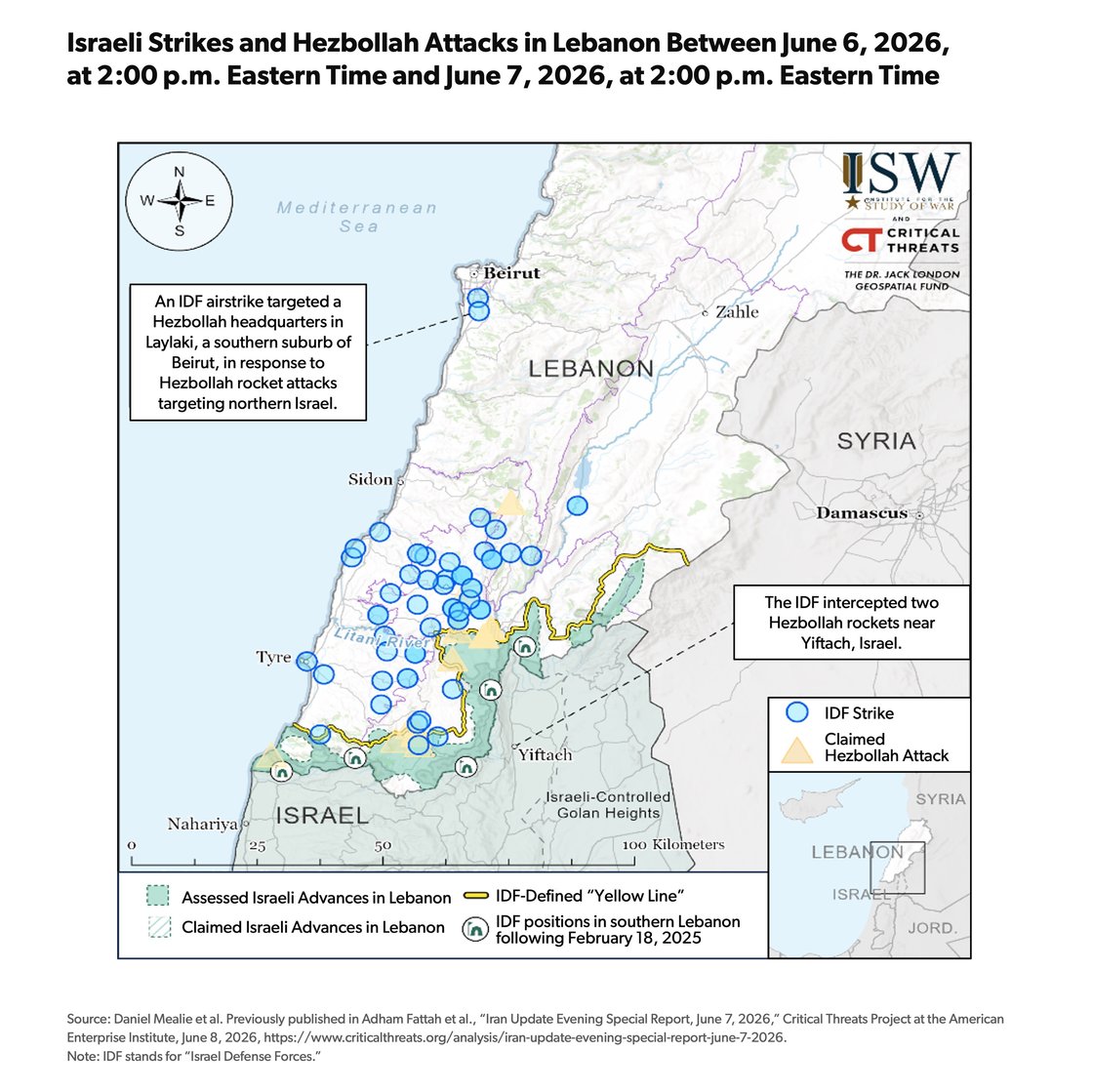
Topline: On June 7, a rocket attack attributed to Hezbollah targeted northern Israel, threatening to collapse the fragile ceasefire in the Middle East. In turn, Israel conducted an airstrike on Beirut’s southern suburbs, to which Iran replied to with a missile attack designed to deter future Israeli attacks on Hezbollah while avoiding a resumption of full-scale war. Researchers at AEI’s Critical Threats Project note that Iran’s Islamic Revolutionary Guards Corps (IRGC) fired at least 10 missiles targeting Ramat David Air Base in northern Israel, but the Israel Defense Forces intercepted them all, and there appear to be no casualties at this time.
Continued Struggle for the Strait: Meanwhile, Iran continues its efforts to forcibly impose its control over the Strait of Hormuz, a key shipping route. US forces shot down two Iranian attack drones that threatened maritime traffic in the strait on June 6, while the IRGC Navy warned other states against disrupting its illegal transit rules. According to IRGC-affiliated media, Iran has collected an average of $1,500,000–$2,000,000 per ship attempting to transit the strait through its unrecognized traffic separation scheme.
Unrelenting Tensions: Iran has likely observed discussions and leaks in Western media about increasing tension between President Trump and Israeli Prime Minister Benjamin Netanyahu regarding Israel’s actions and their potential impacts on US-Iran negotiations. Iran will likely look to use the threat of resuming full-scale war to prevent additional Israeli attacks.
“Israel has not yet responded to the attack. US President Donald Trump told Axios journalist Barak Ravid that he will call Israeli Prime Minister Benjamin Netanyahu and tell him not to launch retaliatory strikes at Iran.”
Topline: Nearly a year and a half into his second administration, President Trump has fallen short on many of the economic promises he made during his 2024 election campaign. He promised to bring down inflation and price levels, eliminate the US trade deficit, and generate manufacturing employment through aggressive tariff policies. AEI’s Desmond Lachman observes that while President Trump insists the economy has never been better, the general electorate remains stressed about affordability ahead of the midterm elections.
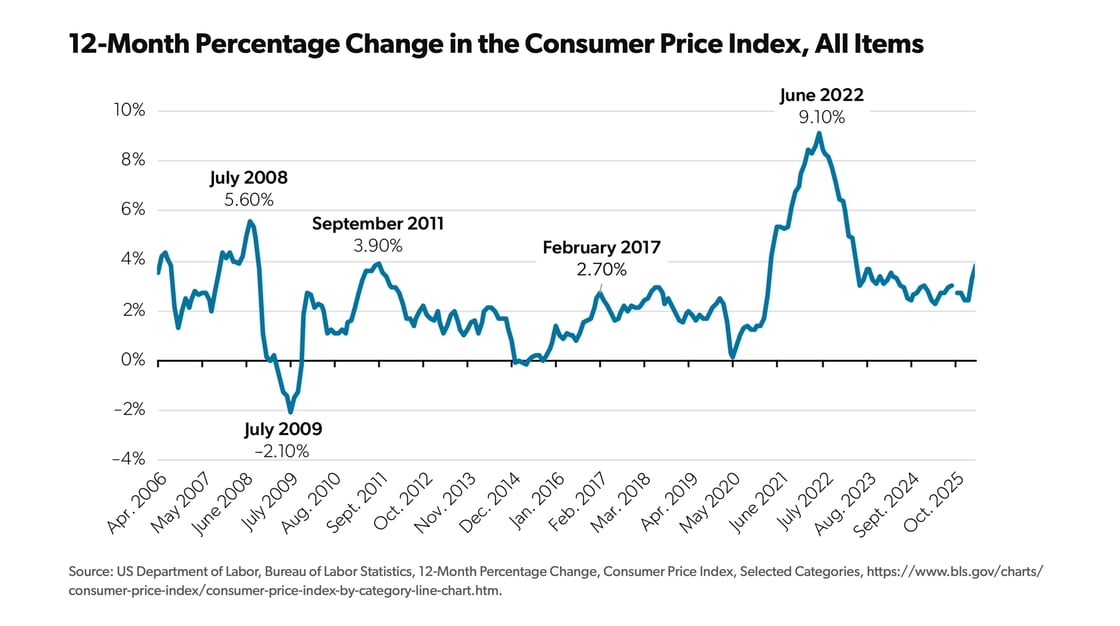
Broken Election Promises: Wage gains have continued to fall short of inflation to the point that, if current projections do not change before Election Day, the average price level will be at least 7 percent higher than when Trump returned to the White House, and the rate of inflation will have accelerated to almost 4 percent. Last year’s trade deficit was practically unchanged from 2024, and manufacturing employment has continued to decline. Additionally, gasoline prices have increased by nearly 50 percent since the Iran war began.
The GOP in the Midterms: While affordability has remained an issue for many Americans, the stock market has boomed and continued to set new records under the second Trump administration. While this is a strong talking point with the investor class, it may not resonate with the vast majority of voters, who consider daily costs the most important issue. Chaotic and counterproductive policies, such as aggressive tariffs and mass deportations, have mired the economy in uncertainty and set the GOP up to face challenging questions ahead of the midterm elections.
“Those who live by the sword die by the sword. Trump triumphed in 2024 by continually hammering on the Biden administration’s dismal inflation record. If Republicans do get a shellacking in November, it will be because he has made Americans even worse off.”