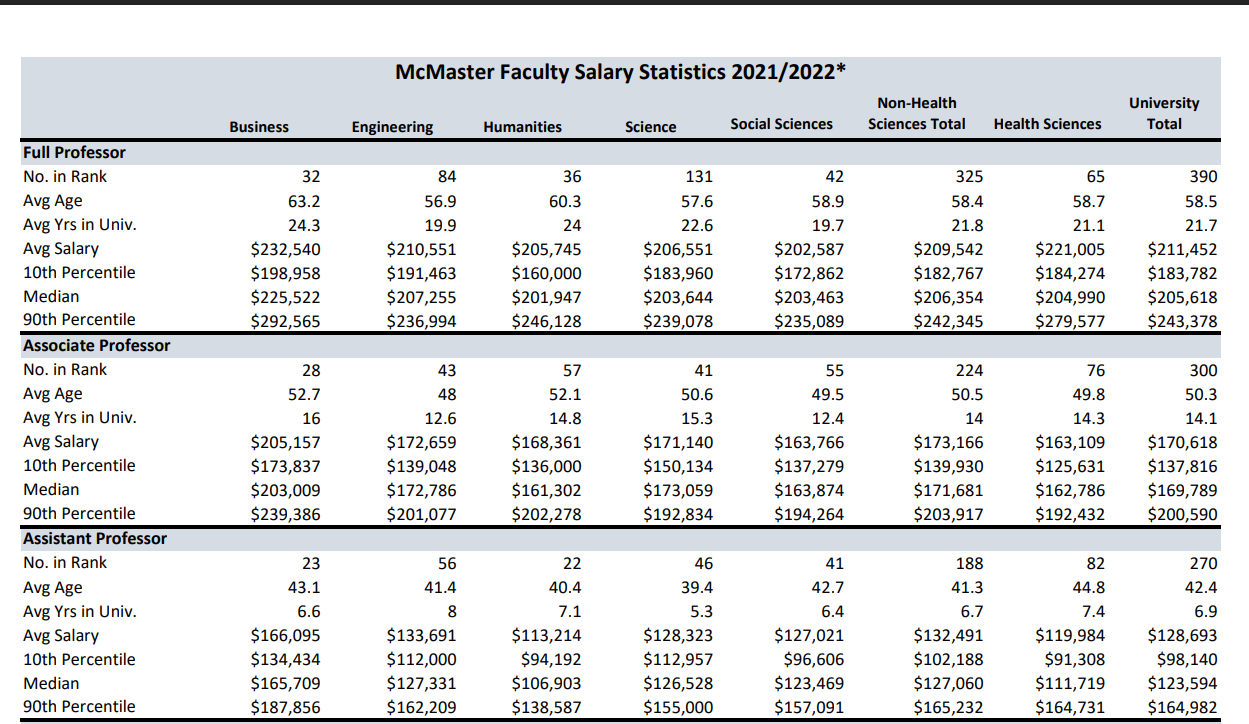
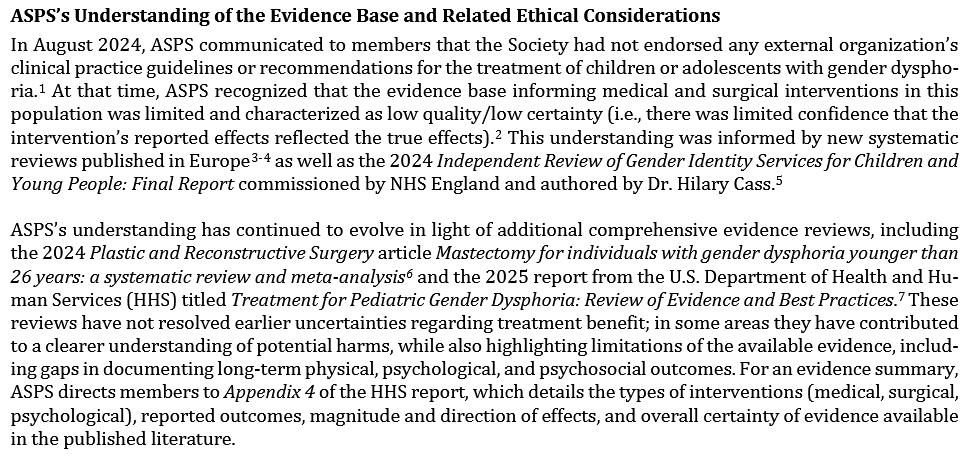
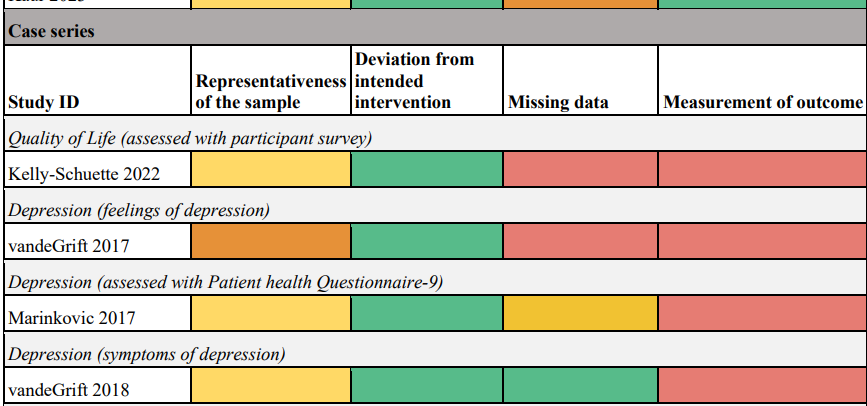
More pseudoscience from SEGM and McMaster University, debunkedBy Artemis T. Douglas and Jane Migliara Brigham The US-based hate group SEGM spent years funding Canadian research on mastectomies to dictate policy against the interests of trans people in the United States. One such study was recently reviewed by The Needle as part of a months-long investigation. SEGM, or the “Society for Evidence Based Gender Medicine” has been funding anti-trans pseudoscience since its founding 5 years ago, as previously covered by the Southern Poverty Law Center, The Needle, and others. The study The Needle analyzed was published in June 2025– and was brought to The Needle’s attention due to an ongoing investigation into McMaster’s University’s relationship with SEGM. McMaster University is a university in Ontario, Canada. SEGM is a US-based non-profit organization incorporated in Idaho. The commissioned study concerns the effectiveness of mastectomies, the removal of both breasts. These are often medically necessary, and performed for reasons of breast cancer, or as part of a transition for transmasculine people. Documents released to The Needle as part of a Freedom of Information request show how much time and money was spent on performing this research. The bottom dollar– $322,371.70 USD between Nov. 2021 and Jan. 2024. Using the 2021 yearly average exchange rate as a baseline, the grant was worth around $405,425 CAD. It is hard to say whether that sum was used to fund multiple research outputs or just this single study. The evidence released to The Needle didn't address that. One of the co-authors of this study, Romina Brignardello-Petersen, is the listed primary investigator for the SEGM grant to McMaster. The time period where SEGM paid for the services of McMaster was Nov. 5, 2021 through to Jan. 31, 2024. According to publicly-available documents from McMaster, in 2021 when the study started, the average health sciences faculty in the role of associate professor made CAD$163,109 ($130,133 in USD using 2021 exchange rates). This is where Brignardello-Petersen worked at the time. Today, Brignardello-Petersen remains with McMaster University as an Associate Faculty member as a researcher and teacher. The Needle reached out to Brignardello-Petersen for comment. She did not respond. 1: The StudyThe commissioned study is a meta-analysis, also known as a systematic review. This is where researchers don’t do new research, but instead collect and amalgamate results from existing research, generally including all relevant past studies on a topic. This study reviewed 1300+ studies on mastectomy, and then disregarded 97.1% of them, before analyzing those that remained. The remaining 39 studies were largely considered either “low-quality” or “high/critical risk of bias” due to factors such as looking at trans people’s happiness and health before and after masculinizing top surgery, being reflective of outcomes trans people generally want, or other reasons. Those findings have since been cited in several high profile anti-trans decisions, including in the ASPS Position Statement which regressed healthcare guidance away from supporting trans youth’s top surgeries. 2: Political Influence This paper, and others like it, are made with the explicit purpose of influencing public policy around trans healthcare. Much like the Cass Report and HHS Report, which are also both meta-analyses made by anti-trans actors, this explicitly political study, that arose from McMaster’s partnership with SEGM, concludes with its authors arguing that, “Guideline developers and policy makers should be transparent about whose values they are prioritizing when making recommendations and policy decisions.” In the current context, where anything shedding a negative light on trans people and their healthcare can and will be used to restrict access to that healthcare, it is impossible for such a study to not be political, whether or not that is the intention of its creators. 2.1: RecommendationsNonetheless, the researchers are very clear that their intentions are political. They argue that what they define as “low-certainty evidence” should not be used to influence policymakers and medical standards, especially when that evidence is supportive of trans people. “Given the predominantly very low-certainty evidence on mastectomy effects in individuals younger than 26 years with [gender dysphoria], factoring in both the available evidence and the values and preferences of patients and caregivers is important when making practice recommendations, and clinical and policy decisions for this group. Guideline developers and policy makers should be transparent about whose values they are prioritizing when making recommendations and policy decisions. In addition to the available evidence and the patients’ values and preferences, other considerations about the intervention may include resource use, acceptability, feasibility, and equity.”
Translating this blurb from researcher-speak, these SEGM-commissioned researchers are arguing for policymakers to consider healthcare resources “limited” and use that limitation to justify trans care exclusions. This is especially stark in a context where both the US and Canada have mixed private/public health systems that are woefully underfunded, which makes healthcare artificially more scarce than it otherwise would be. Further, they are advocating for policymakers and medical boards to openly disassociate from the needs of trans people. When they say that “Guideline developers and policy makers should be transparent about whose values they are prioritizing when making recommendations and policy decisions”, that is them arguing that those groups should walk away from even tepid defense of transition medicine, and state openly that they won’t prioritize trans people.

|
|
If you support our coverage, consider subscribing to The Needle as a Platinum tier supporter, at $24 a month- you'll get access to all content AND credited as a supporter! For a limited time, you can get 60% off your first three months!
|
|
|
|
|
Despite the article only being published last June, it has already had a measurable impact on the lives of trans people in the United States. By being repeatedly cited as evidence by anti-trans groups and legislators, it has caused measurable harm. The most notable example is in the policy paper released by the American Society of Plastic Surgeons in February. This paper encouraged plastic surgeons to stop performing trans surgeries on people under 19, placing the organization in line with the Trump Administration’s stated position on the matter. That paper prompted internal revolt within the organization’s ranks, but it still remains official policy. In that paper’s literature review, this study on mastectomies is given pride of place. It is one of only three studies here listed by their full academic titles. The only others listed so prominently are the Cass Report and the HHS Report, two of the most influential anti-trans documents in recent times. That this comparatively niche report was considered on par with much broader and more publicized systematic reviews reveals its shared status as a weapon against trans people. This makes it all the more odd that the ASPS paper cannot correctly cite which year this SEGM-commissioned review was released in. It came out in 2025, not 2024. It is on the flimsy evidence of this study that one of the largest medical associations in the United States warned its members against performing trans surgeries on people under 19. It is because of that ASPS report that trans advocates can no longer argue that all major medical associations back trans people’s right to healthcare. This review, via the ASPS report, has since been used in debate in favor of Oklahoma’s HB3586, a law allowing parents the religious freedom to emotionally and psychologically abuse trans kids, including through attempts to make them cis. In debate for that law, Oklahoma’s Senator Grellner cited the ASPS report and this review to justify his yes vote on the legislation. “If you read the literature, the American [Society] of Plastic Surgeons have bailed out on gender transition surgeries, people are remorseful. Europe has basically slowed down to a trickle” Oklahoma State Senator Randy Grellner
This bill is now law in Oklahoma. 3: Problems With the StudyAs mentioned above, this McMaster study commissioned by SEGM was a meta-analysis, also known as a systematic review. This is where researchers collect and amalgamate results from existing research. Typically, this includes all relevant past studies on a topic. That would be fine if it was done well, however, there were several major problems in this systematic review’s execution. 3.1: Study BiasAccording to their summary of their methods, they ranked down the few studies they left in if they were comparative studies which looked at trans people's happiness before and after surgery. In other words, they deem the body satisfaction of transmascs as not good enough evidence for them to get the surgeries they need. However, they did not rank down similar types of evidence that were from any studies that showed transmasculine people regret their top surgeries. Either they were unable to find studies which showed mass regret, or they deliberately didn’t state what they would do with such studies, or both. They justify this as part of their research protocol to answer their research question. That’s normal for scientific research, to design your study protocol according to what you’re trying to research. What isn’t normal is accepting the commission to do the research by a known hate group biased against the very people you’re trying to study, allowing that hate group to have input on designing your research question, and then allowing that hate group to promote your work to support their own agenda. The authors conducted this systematic review (SR) as part of a research agreement between the Society for Evidence-based Gender Medicine (SEGM), the sponsor, and McMaster University. None of the researchers conducting this SR and meta-analysis received direct financial compensation from the sponsor to conduct this work. The SR and meta-analysis research question was designed through a collaboration among SEGM representatives, independent researchers, and the methods team based at McMaster University.
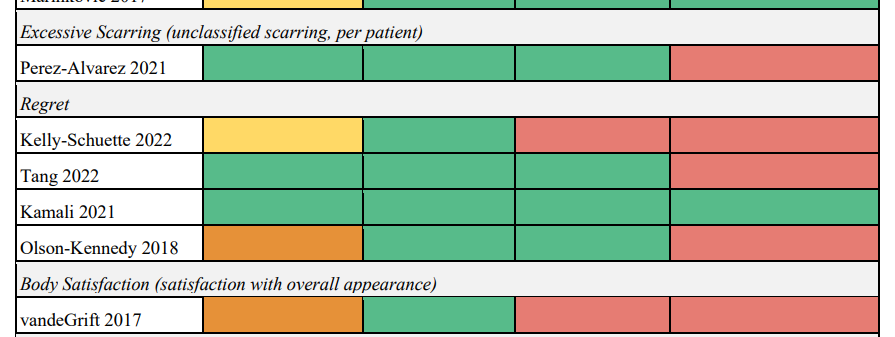
What this means is that this SEGM-commissioned review by the McMaster researchers was also, in part, designed by SEGM. 3.2: Dubious Claims of NeutralityAs if the fact that they discarded 97.1% of the studies they found wasn’t enough, the researchers chose to unevenly apply a ‘ranked down’ approach to studies showing trans people’s happiness and quality of life after transition surgeries. This means that the SEGM-commissioned researchers chose to classify studies showing that medical transition had positive effects as low-quality, allowing them to claim that the medical evidence in favor of transition isn’t strong enough. Thankfully, they list their criteria for how they determined if a study was considered high or low quality, or somewhere in between. For example, these researchers marked every study that they chose to leave in which so much as looked at quality of life or depression, as having a “critical risk of bias”. In their coding, green means “low bias”, red means “critical bias”, as in too much bias. Yellow and orange are the points in between. For further studies which looked at body satisfaction, these researchers also marked all studies looking at trans men’s satisfaction with top surgery as “critical bias”. There are only 4 studies on regret rates which they didn’t remove from the dataset. Of those 4, they only branded one as “low bias”. That one study showed that 0.4% of its cohort (2 people) detransitioned, while the same number of participants had some regret. Of these, one person pursued breast reconstruction as part of detransition. Another study they cited, the Tang study, was marked by the SEGM-commissioned McMaster researchers as critically-biased. Of the patients in that study, not a single transmasc youth who got top surgery later attempted to get their old boobs back. In summary, those studies showing one single transmasc trying to get their boobs back due to regret were considered to be low bias. By contrast, studies which showed a similar rate of regret (but where nobody wanted their boobs back) were considered to be highly biased. They also further narrowed their review by ranking down evidence from studies where the mean age of the trans people studied was greater than 26. This reveals that the SEGM-commissioned study was, for some unstated reason, particularly focused on trans youth and young adults. This makes sense when you remember who the researchers are collaborating with. SEGM has been working against youth transition since its founding. As for SEGM’s involvement, they didn’t merely pay for the study, they were an active part of determining its scope and research questions. In academic research, including medical research like this, the entire study is based around its research questions. In some ways, a study is its research questions. Given the known output activities of SEGM from The Needle’s prior investigation and reporting, it is possible (but not confirmed) that SEGM could’ve paid for this study to be open access, as SEGM admits to paying open access publication fees in its IRS filings. Combine all these facts, and you get a study that is not neutral in design or impact. Rather, it is targeted to make transition medicine unreachable. Its bias is baked in from the start, but normalized through a combination of factors; including cis-supremacist thinking, and the motivated reasoning that comes from that. 3.3: Misleading ImplicationsEverything these researchers say in their report is technically correct, albeit divorced from context. It’s technically correct, but substantively bullshit. The article summary reads that, “Case series studies demonstrated high-certainty evidence for the outcomes of death, necrosis, and excessive scarring”. This choice of words implies that those outcomes are actually happening. After all, that is the plain faced reading of what those words mean. However, buried deep in the results of the study is how they come to the conclusion of “high certainly evidence”. In short, they have a high degree of certainty that these things are hardly happening, if at all. Despite implying that transmascs and trans men undergoing top surgery face death as a complication, the study itself actually says: “A meta-analysis of 5 studies found that the number of people who undergo mastectomy that results in death is 0 per 1000.”
For the necrosis outcome, depending on how they ran their analysis, they could only find “high-quality” evidence that 2-4% of trans men suffer some level of necrosis surrounding the areola after top surgery. Minimal necrosis is a known risk of plastic surgery, and some tissue dying is not outside the realm of possibility. According to the Breast Cancer Society, it’s a complication that needs to be flagged to the surgical care team, contained with treatment, and monitored. In some cases, necrosis can be bad enough to require follow up surgery or more intensive approaches. However, it is a potential complication of all plastic surgery, so the mere existence of it as a complication says nothing about the surgery itself. As for the last complication, the one that some trans men actually want (excessive scarring), the study says this only happens 5% of the time, and says this has a high degree of evidence for that claim. So for the trans man or transmasc reading this, you’ve got a D20 chance of getting those cool scars when you get your top surgery. Sorry about that! In short, the study opens by implying that transmascs and trans men getting mastectomies are at a high risk of complications, but the actual text of the article actively contradicts this. They are burying the truth in sections where most people will not see it, and hoping that people don’t bother to read beyond the summary. 3.4: Seeding DetransitionOf the 20+ search queries these researches used, only one database search combo included trans men. The researcher’s searches in other databases didn’t include trans men. Most of the researchers’ queries focused on enbies and on terms associated with them. Combined with the researchers not creating a protocol to rank down studies that showed regret while doing the opposite for studies which didn’t show regret, this shows a motivated bias towards trying to seed detransition narratives. In other words, they showed favor to any studies showing post-transition regret, and disfavored any studies that didn’t show regret as a common outcome. For example, they made multiple queries which included stone butches, but only one including trans men. This bias is especially blatant when you consider the researchers’ own words on what should be done with the review. “Higher certainty evidence would be useful to individuals with [gender dysphoria] considering chest masculinization; clinicians and surgeons involved in their care; guideline developers; and policy makers and stakeholders who make decisions about treatment related to [gender dysphoria].”
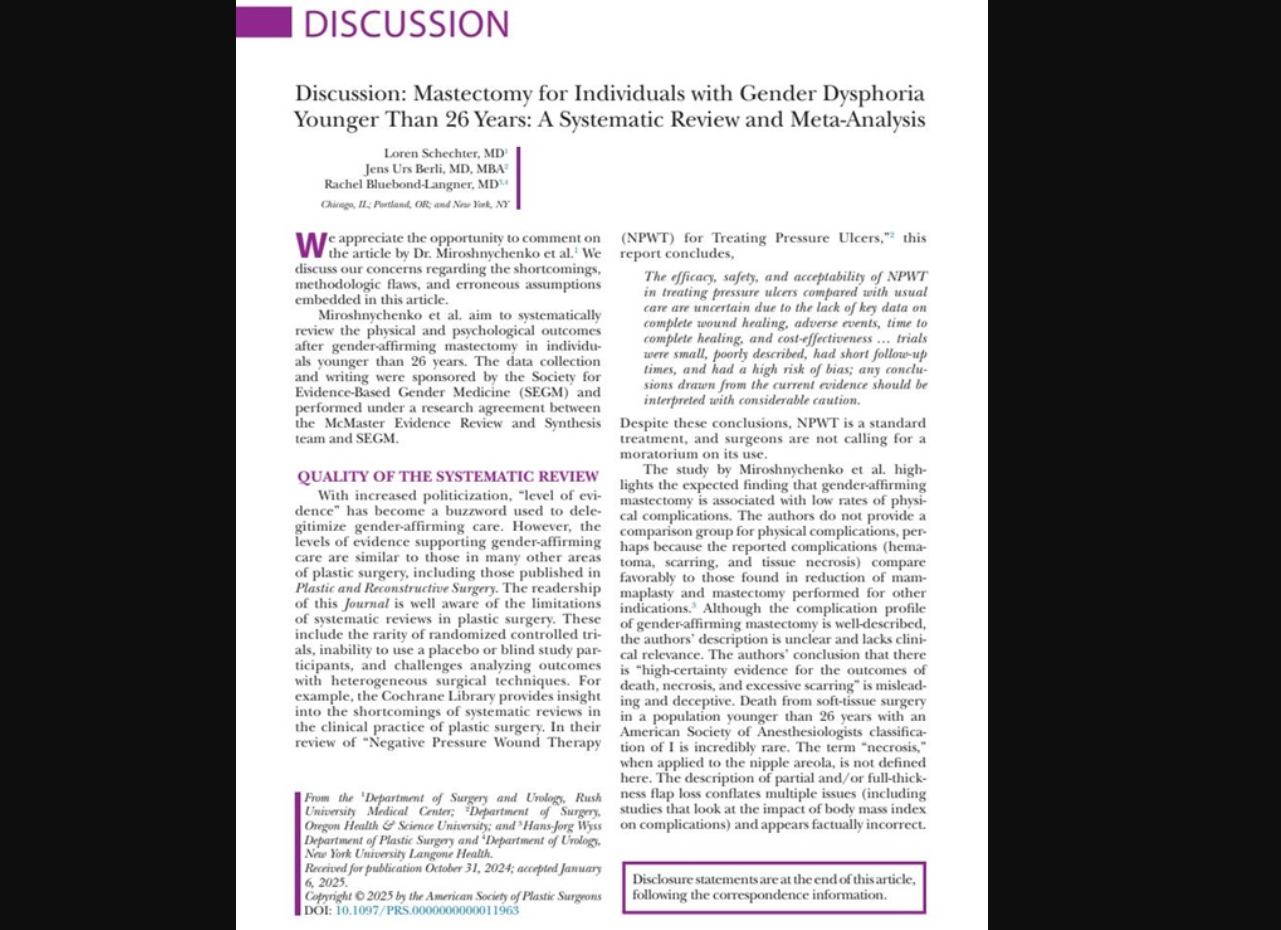
When you combine their relative disregard for trans men, their focus on lesbian identities (such as stone butches), and with the overall political movement surrounding this study, you get an potential for bias towards seeding ideas of womanhood onto transmasculine people. When you further combine those with the way this study is used and how anti-trans reaction is, in effect, defense of patriarchal social relations, what you get is an interesting nexus of reactionary values turned into anti-trans pseudoscience– an unsurprising yet harmful result. It is also a quiet, deadly, and all too commonly effective push to pull those people which right-wing politics views as immutably women away from bodily autonomy, and towards making babies. 3.5: Randomly Controlled TrialsBack to the SEGM-commissioned study; The authors claim that any attempt to measure the effects of mastectomies which isn’t a randomly controlled trial will result in low-quality evidence. A randomly controlled trial is where the people you’re testing a medicine (or procedure in this case) on are randomly assigned either the medicine you are studying, or a placebo designed to look like the medicine. The goal is to make sure that the test subjects do not know whether they are being given the real medicine or a placebo. When studying a procedure designed to remove someone’s tits, this begs an obvious question: How are you supposed to perform a randomly controlled trial on that? The entire point of the surgery is to cut someone’s tits off. The patient can check if theirs are still attached the moment they wake up, instantly figuring out whether or not they got a placebo. The idea that randomly controlled trials are possible under such conditions is a farce. These facts make it appear as though the authors of the SEGM-commissioned study have no idea what they are talking about. There is no reason to believe that a randomized control trial is the proper level of evidence for something like a mastectomy. Demanding this is demanding a level of evidence that cannot exist for the procedure they are studying. 4: Professional BacklashAll these critiques have been echoed by the actual surgeons performing mastectomies. In response to the publication of this review, three well-established surgeons in this field, including Dr. Rachel Bluebond-Langler, filed a formal reply in The Journal of the American Society of Plastic Surgeons, the same journal which published the initial review. In that reply, the practitioners expressed concern, among other things, about the political influence of this review. Their reply opens by saying that “With increased politicization, ‘level of evidence’ has become a buzzword used to delegitimize gender-affirming care.” They continue by stating that the level and quality of evidence in favor of transition medicine “are similar to those in many other areas of plastic surgery”. These surgeons, which by all available evidence were not directly influenced by a known hate group in drafting their response to the study which was commissioned by a hate group, show that the SEGM-commissioned researchers’ concerns about quality are poorly situated at best. They also accused the researchers at McMaster University of conflating multiple unrelated issues, so as to make mastectomy seem worse than it is. “The authors do not provide a comparison groups for physical complications, perhaps because the reported complications (hematoma, scarring, and tissue necrosis) compare favorably to those found in reduction of mammoplasty and mastectomy performed for other indications.
Although the complication profile of gender-affirming mastectomy is well-described, the authors’ description is unclear and lacks clinical relevance.
The authors conclusion that there is “high-certainty evidence for the outcomes of death, necrosis, and excessive scarring” is misleading and deceptive.”
These practicing surgeons of transition medicine also undermine the McMaster researchers’ claims that their systematic review is a novel intervention by stating, “the study [sic] highlights the expected finding that gender-affirming mastectomy is associated with a low rate of physical complications.” In short, the actual doctors performing the surgeries under scrutiny think that this study is bunk, and they are angry about their work being lied about. ConclusionIt is crucial to remember that this is not just a bad study, but one that was created in coordination with an organization that aims to harm trans people, and which is achieving such a goal in the United States. The doctors and researchers involved in mastectomies reject the study’s findings, even as those findings are used to inform the positions of policymakers. It begs the question: would a study this motivated and influenced by hate be taken so seriously if it weren’t for the preferences and funding of right-wing cis people in positions of power?
|