|
Investors all over the country and the world will soon have the chance to own a piece of Elon Musk’s SpaceX, after what could be the biggest initial public offering (IPO) in history. On Friday, the space and AI conglomerate plans to offer 555,555,555 shares at $135 apiece for a total of $75 billion. A successful IPO will put the notional total valuation of SpaceX at $1.75 trillion, which is more than double the $780 billion it may actually be worth according to a Morningstar analysis. Even that figure is quite a lot of money for a company that reported a net loss of $4.94 billion last year. It would put it not far behind JPMorgan Chase in size, which made $57 billion in profit during the same period.
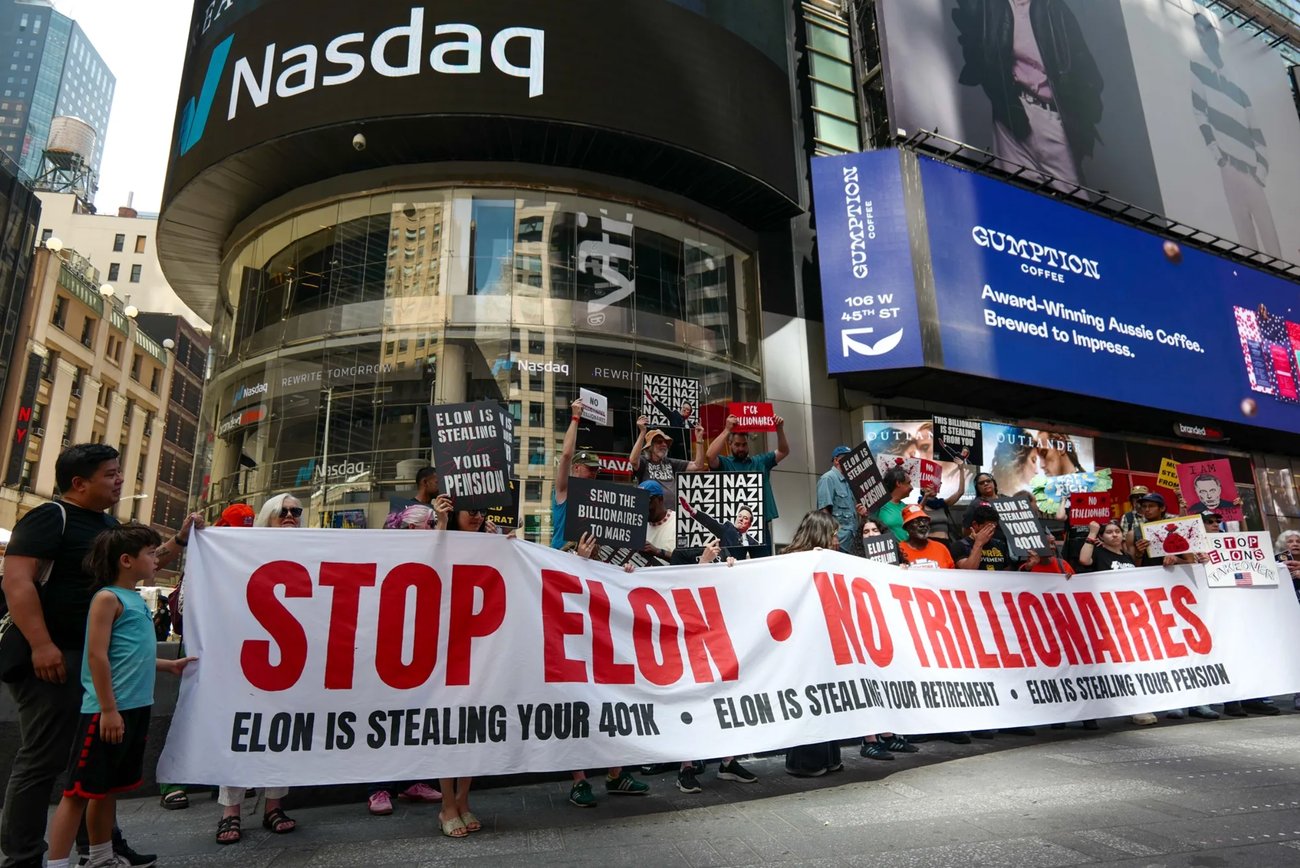
Despite the shaky-at-best valuation, Musk is eyeing a windfall of hundreds of billions of dollars for himself and his friends, while banks and financial insiders will go home with a nice bonus of their own, if all goes according to plan. This is all possible because, as the Prospect reported last month, the shares could almost immediately hit the investment accounts of millions of people saving for retirement or otherwise invested in the stock market through index funds like Vanguard or BlackRock—the financial vehicle that most regular people rely on to grow their money. Index funds have historically been crucial for regular people who want to participate in the stock market, but now—thanks to rule changes from some of the biggest index providers—the functioning of those funds could be abused to make financial markets even more hostile for working Americans.
Most of the justification for the $1.75 trillion valuation doesn’t come from Starlink, SpaceX’s satellite internet business, and currently the only profitable area of the company, or the undeniable successful rocket-launching portion of the company. Instead, investors hoping to get their money’s worth are betting that xAI, the cash-burning AI division behind the chatbot Grok, will soon be more profitable than any company in history. According to SpaceX’s investment prospectus, the AI business has a total addressable market of $26.6 trillion. Goldman Sachs, the lead underwriter of the IPO, projected AI revenue will reach $322 billion by 2030—100 times what it currently takes in. Soon, it assures us, the company will succeed in its mission to blanket various extraterrestrial areas and objects with data centers and bring forth the “emergence of new trillion-dollar markets on the Moon, Mars, and beyond.”
Grok has already displayed alarmingly erratic behavior that is arguably criminal in many nations. Continued expansion, especially at the scale outlined in the prospectus, comes with widespread liability risks. SpaceX has acknowledged the potential of catastrophic outcomes of AI—including the development of biological, chemical, or nuclear weapons—but the prospectus itself does little in the way of addressing how the company will manage such risk and protect investors from legal liability.
The skeptical investor might want to sit this one out, at least until the market has had time to properly evaluate and price the stock. Typically, index fund investors would get that time. Indexes used to wait months, if not years, to add an IPO—limiting volatility and allowing the share price to settle at a level determined by the market (and not by Musk). They also imposed strict minimum requirements on the float, the percentage of outstanding shares actually available for public trading. |