I’ve spent my career studying the gold cycles… For the past 20 years I've buried myself in my research... And what’s unfolding right now in the Persian Gulf is the end of a cycle that will affect the price of gold like nothing before it. Because Saudi Arabia just abruptly terminated a deal it made with the U.S. back in 1974... This deal single-handedly controlled the global financial system for the last 50 years. It was an agreement that Saudi Arabia would sell oil exclusively in U.S. dollars – forcing every country on Earth to hold U.S. Treasuries. That system has been the foundation of American financial dominance over the past five decades. There was virtually nothing reported about the end of this agreement... And at first, nothing changed. But now the consequences are becoming undeniable... Saudi Arabia signed a $7 billion currency swap with China… Began settling oil in digital yuan… And joined mBridge, China’s cross-border payment system. The war in Iran is driving Gulf nations to settle oil deals in yuan... And tankers are being forced to pay tolls for safe passage through the Strait of Hormuz in yuan, cryptocurrency, or basically any denomination that's not the U.S. dollar... At both ends of the Persian Gulf the dollar system is being dismantled... even replaced. This removal of massive global demand for dollars will rewrite the rules of global finance. Because if oil doesn’t require dollars, the world doesn’t need to hold them. And when demand for dollars falls… Demand for Treasuries falls with it. Yields on the US ten-year Treasury are pushing toward the 4.4% danger line — where the system starts to break down. Falling treasury demand → rising yields → Fed intervention → money printing → the loss of your purchasing power. That’s the sequence playing out today. As the dollar pulls back and countries step back from buying more US debt, gold has to reprice higher. A declining dollar is the single strongest driver of the gold price. But the best way to play the decline of the US dollar is not to buy physical gold… There's an alternative way to leverage gold's continued rise... Using an asset that still trades at an extreme discount relative to gold's current price. It's like buying gold for pennies on the dollar... Click here to learn more. To your wealth, Garrett Goggin, CFA, CMT
Chief Analyst and Founder, Golden Portfolio
Further Reading from MarketBeat Media Burlington Beat Earnings Estimates, But Not Investor ExpectationsReported by Jennifer Ryan Woods. Posted: 6/1/2026. 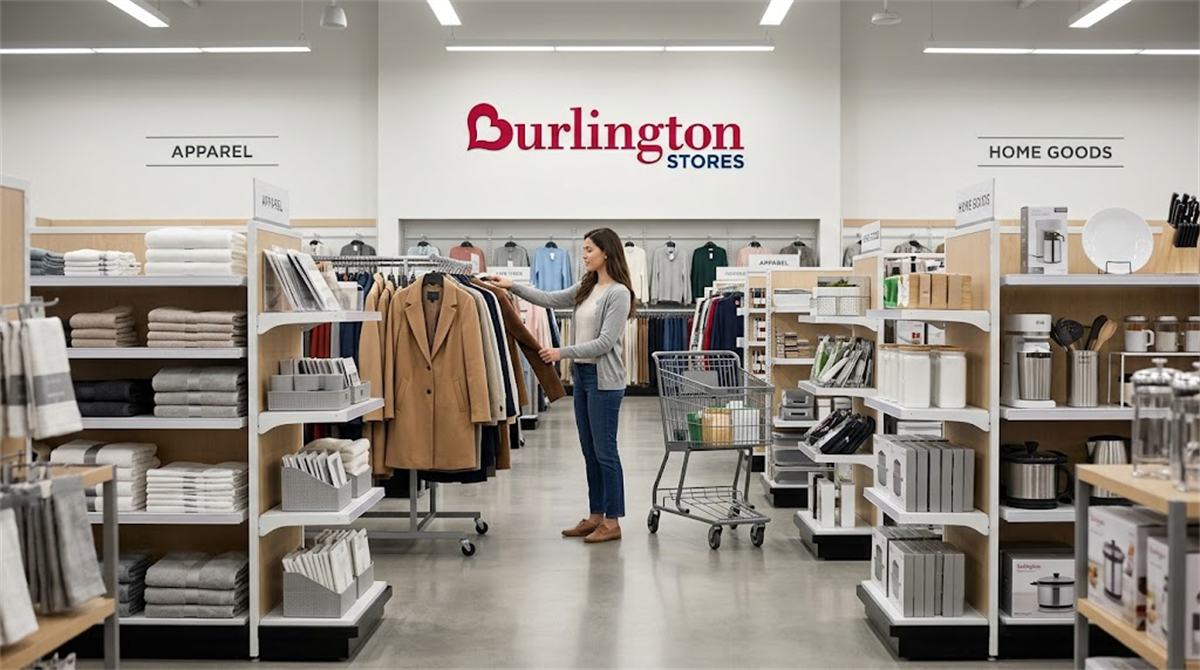
Key Points- Burlington Stores reported adjusted EPS of $2.01, a 26% increase year over year, marking its 14th consecutive quarter of double-digit earnings growth.
- Despite beating estimates and raising full-year guidance, BURL shares initially fell nearly 8% after the report, reflecting elevated investor expectations.
- Burlington's post-earnings decline contrasted with peers TJX and Ross Stores, whose shares rose more than 5% and 8%, respectively, after their own strong results.
- Special Report: A tiny supplier at the center of Elon's AI infrastructure
Burlington Stores Inc. (NYSE: BURL) delivered another better-than-expected quarter on May 28, marking its 14th consecutive quarter of double-digit earnings growth. The company also raised its full-year outlook as off-price retailers continue to benefit from demand among budget-conscious consumers seeking bargains. Still, it wasn't enough to satisfy investors, as shares fell sharply after the report. Burlington Earnings Beat Expectations For the quarter, the company reported adjusted earnings per share (EPS) of $2.01, up 26% from year-ago earnings of $1.60 and well above Wall Street’s expectations of $1.77 per share. Revenue rose 14% year over year (YOY) to $2.86 billion, topping analyst estimates by more than $57 million. Comparable-store (comp) sales increased 6% YOY, above the company’s guided range of 2% to 4%, while gross margin expanded 30 basis points to 44.1% of net sales. On the earnings call, Chief Executive Michael O’Sullivan said, “These results add to an already very impressive track record of consistently converting sales growth into strong margin expansion and earnings flow-through.” Burlington Raises Full-Year Guidance on Strong Off-Price DemandThe company also issued second-quarter guidance and raised its full-year sales and earnings outlook. For Q2, Burlington expects comp sales growth of 1% to 3%, with total sales increasing 10% to 12%. Operating margin is expected to expand 30 to 60 basis points YOY, while adjusted EPS is forecast to be between $2.05 and $2.20. For the full year, Burlington now expects comp sales growth of 2% to 4%, up from prior guidance of 1% to 3%. Total sales are expected to rise 9% to 11%, up from the prior outlook of 8% to 10%, while adjusted EPS is projected between $11.45 and $11.80, above the previous forecast of $10.95 to $11.45. The company also said it now expects net new store openings of 115, up from 110. O’Sullivan also discussed how higher oil prices and the conflict in the Middle East have influenced the company’s outlook since the previous earnings call. Burlington remains optimistic about the second half of the year, though management is taking a more cautious view than it did in March because of higher gas prices and the potential impact on inflation. Even so, O’Sullivan said a tougher consumer backdrop could work in Burlington’s favor if shoppers become more focused on value. "In fact, as a value retailer, it could turn into an opportunity," he said. Shares Tumble Despite Strong Quarter and Better OutlookBurlington may have cleared Wall Street’s estimates, but not necessarily the market’s expectations. After the report, BURL stock initially fell nearly 8%, trading near $300, before recovering much of that decline in subsequent trading. Ahead of the earnings release, the stock had been on a major multiyear run. After normalizing from pandemic-era highs, Burlington shares were trading around $110 in September 2022. Since then, the stock has surged roughly 175%, including a gain of more than 25% over the past year, leaving investors with a higher bar for another beat-and-raise quarter. The post-earnings sell-off comes shortly after Burlington shares hit a 52-week high above $351 in April, potentially signaling some profit-taking following the stock’s multiyear run. It may also indicate that investors were looking for stronger comp sales growth and a more robust outlook for comparable-store sales. During the earnings call, one analyst questioned whether Burlington’s focus on earnings may have caused it to miss opportunities to drive additional comp growth in Q1. In response, O’Sullivan said, “I do think that we may have an opportunity to loosen our belts a notch and get slightly more aggressive on sales.” Burlington Sell-Off Contrasts With Off-Price PeersThe reaction to Burlington’s earnings was very different from some of its off-price peers, whose shares moved higher following their own better-than-expected earnings reports. Shares of TJX Companies Inc. (NYSE: TJX) rose more than 5% after the company's recent earnings and revenue beats on May 20, while Ross Stores Inc. (NASDAQ: ROST) gained more than 8% two days later following its strong Q1 report. In terms of valuation, the three stocks have similar price-to-earnings (P/E) ratios, with Burlington trading around 34x earnings, TJX at 30x, and Ross Stores at roughly 32x. The broader retail industry is trading at an average P/E ratio of 25x. Despite Burlington’s post-earnings decline, Wall Street analysts remain largely bullish on the stock. Ahead of the report, the average 12-month price target stood around $357, implying more than 18% upside from current levels. The stock currently carries a Moderate Buy consensus rating, based on 16 Buy ratings and five Hold ratings. The $351 analyst consensus price target implies about an 8% potential upside. While Burlington’s latest quarter highlighted the continued strength of the off-price sector, the market reaction suggests investors may have been hoping for more signs of strength in comparable-store sales. Still, with consumers remaining focused on value amid economic uncertainty, Burlington could be well-positioned if bargain hunting continues to drive retail spending.
. |