|

|
|
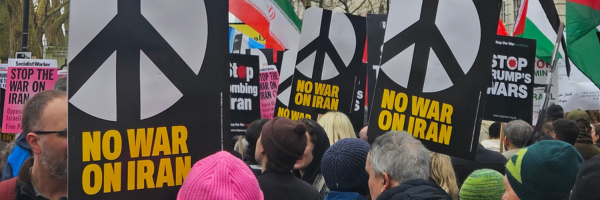
Hopes of turning the fragile ceasefire between the US and Iran into a more permanent peace agreement remain in doubt, as the US and Iran exchanged fresh attacks over the Strait of Hormuz on Wednesday.
|
With guest speakers: Khem Rogaly, Principal Research Fellow at Common Wealth; Lindsey German, Convenor of Stop the War; Dyfrig Jones, UCU President-Elect; Nick Dearden, Director of Global Justice Now. Chaired by Sophie Bolt, CND General Secretary.
|
|
|
|
.jpg)
|
Trump in talks to send more US nukes to Europe
|
|
Responding to news of the discussions, CND General Secretary Sophie Bolt said:
“Reports of these talks shows that far from NATO pulling out of Europe under Donald Trump’s presidency, its nuclear presence is only increasing. This is not going to make us any safer. On the contrary, stationing these nuke jets on Russia’s borders would seriously increase the risk of a nuclear confrontation between NATO and Russia. It would only further undermine the chances of a ceasefire in this devastating war. More nuclear-capable F-35s in Europe simply means more profits for US arms companies. It’s time to halt the nuclear expansion and close down US bases in Europe for good.”
|
|
|
|
|
|


|
|
Copyright © 2026 Campaign for Nuclear Disarmament, All rights reserved. We collected your name from a petition or you are a member of CND
Our mailing address is: Campaign for Nuclear Disarmament, The Green House | Ethical Property | 244-254 Cambridge Heath Rd, Cambridge Heath, London E2 9DA
Campaign for Nuclear Disarmament | For peace and a nuclear-free future | CNDUK.ORG |
