
|
 |
Is America Facing Total Defeat?
Intercollegiate Review | Conservatism's sharpest voices, curated weekly. ISI's weekly newsletter brings you the best in serious conservative thought.
|

| |||||||||||||||


Admitting Defeat?
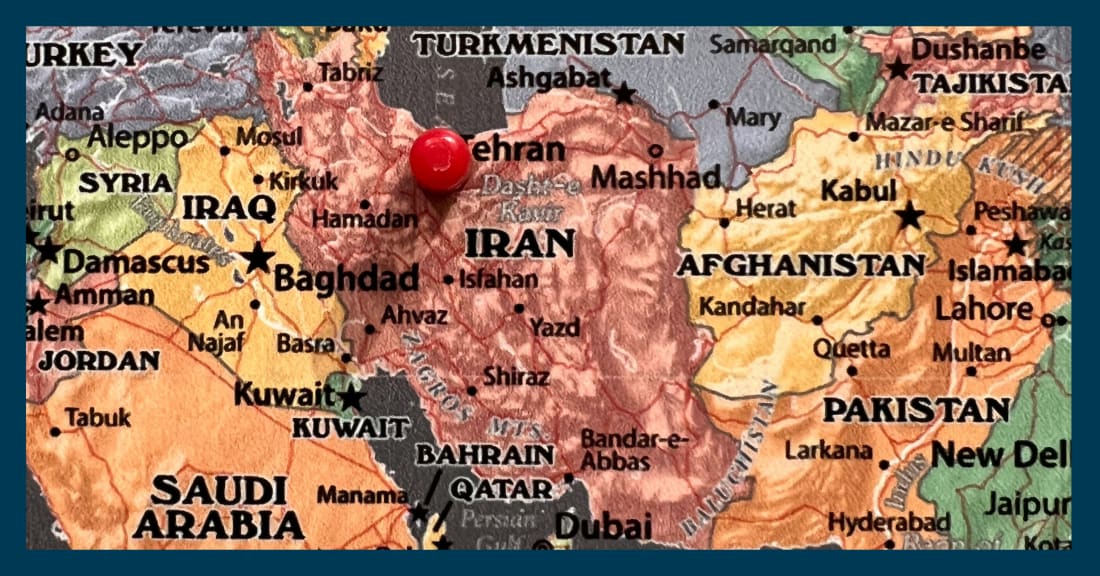 |
It has been nearly three months since President Trump launched Operation Epic Fury against Iran. Despite weeks of relentless U.S. strikes that have killed many Iranian leaders, some observers are questioning whether the campaign has brought us any closer to toppling the regime.
In an essay for The Atlantic, Robert Kagan reflects on what the ongoing Iranian conflict means for the United States. A prominent neoconservative scholar, Kagan has spent much of his career advocating for American military intervention in the Middle East—yet here he admits that a U.S. defeat is “not only possible but likely.” Over the past three months, Iran has shown no interest in compromise, while further military escalation risks destroying the region’s oil infrastructure beyond repair. President Trump is left with no clear path to victory.
Kagan then sketches what this looming defeat might look like in practice. Should Iran retain control of the Strait of Hormuz, its influence over neighboring Middle Eastern nations would grow exponentially. At the same time, Kagan warns, “the United States will have proved itself a paper tiger,” leaving both the U.S. and its allies exposed to further attacks.
Read Kagan’s full essay here to explore his account of what a U.S. defeat in Iran could mean for American power and global stability.
|
The Price of Victory
 |
While the majority of Americans disapprove of President Trump’s handling of the conflict in Iran, not everyone shares Robert Kagan’s pessimism about the war’s potential outcomes. Some commentators still see a path to U.S. victory—though they recognize how difficult that path would be.
Writing for UnHerd, Wolfgang Munchau argues that President Trump’s best option at this point is to double down on the war effort, up to and including deploying U.S. ground troops if necessary. Munchau acknowledges that this is almost certainly not the strategy President Trump wants to pursue, nor one his supporters would readily endorse—but he contends that the President may soon find there is no other viable option.
Munchau then lays out the scale of military commitment a victory over Iran would actually require. With 610,000 active soldiers and 350,000 in reserve, Iran’s military is nearly five times the size of Israel’s 170,000 troops. To prevail, Munchau suggests, the U.S. would need to mobilize hundreds of thousands of its own soldiers—a massive and costly undertaking. Yet this, he writes, may simply be “what the logic of war dictates.”
Read Munchau’s full assessment here.
Compendium
Every article we feature here is available to read for free. Articles from paywalled publications are available through gift links.
Forrest Bohler on how race-conscious admissions and DEI mandates have undermined medical education in Compact Magazine.
Matthew Schmitz on why Catholicism has gained outsized influence in American public life even as the institutional Church continues to decline in First Things.
Hannah Rowan on America’s broken food system and a regenerative alternative in The New Atlantis.
Robert P. George on shifting ideological conformity at Vanderbilt and Dartmouth in The Washington Post.
Aaron Renn on why the defining succession strategy of the Boomer generation has been to build endowments rather than leaders in his Substack.
Mary Harrington on the suppression of Thomistic metaphysics and its consequences for debates over human nature in First Things.
Bradley Birzer on the publication history and intellectual shifts of Russell Kirk’s landmark The Conservative Mind in The Imaginative Conservative.
Spencer Klavan on the backlash over Christopher Nolan’s Odyssey casting in UnHerd.
Katherine Dee on why alarmism about Gen Z and phones misses the mark in The Dispatch.
Join the Intercollegiate Studies Institute
For over 70 years, ISI has been the home of serious conservative thought in America.
Our national conservative community of over 90,000 members—students, academics, and patriotic citizens—is united by a commitment to the ideas that make America free and prosperous.
Members get access to events with like-minded conservatives, educational resources, scholarship opportunities, and a professional network rooted in enduring ideas.
Take the first step by clicking the button below.
Upcoming ISI Events
 |
If you enjoy what you’re reading here, we invite you to engage with ISI at one of our upcoming in-person events.
Mobilize: An Evening with Palantir | May 28 | Wilmington, DE
The evening will feature a discussion exploring the book Mobilize: How to Reboot the American Industrial Base and Stop World War III with ISI trustee and alumnus Bill Rivers and author Madeline Hart. This is an exciting opportunity to hear from Palantir insiders about America’s defense technology race and the future of America’s industrial base.
Visit our events page to see all upcoming events.
Thanks for reading the Intercollegiate Review! Subscribe for free to receive new posts.

This week, from the Collegiate Network:
ISI’s Collegiate Network supports over 80 student-run publications across the country, empowering students to run independent college newspapers, magazines, and journals that report on important issues ignored by the mainstream media.
Iran at the Breaking Point: The Anatomy of a Managed Collapse via The Pennsylvania Post
An overview of the factors surrounding Trump’s trip to Beijing and the looming July 14 deadline to close the war with the Islamic Republic.
The Isthmus’ Looming Crisis via The Wisconsin Standard
A summary of recent petty crimes at UW-Madison and the “pernicious apathy” that pervades the local community.
When Culture Becomes Competitive via The Columbia Sundial
An investigation of Columbia’s most prestigious clubs found that members have little more access to “prestige” or “elite” groups than the average student.
Kennedy, Kirk, and Changed Nation via The New Guard Press
An argument that Charlie Kirk’s death has become the defining cultural rupture of our era by driving young people back to church, into Turning Point USA chapters, and toward a renewed defense of American values.
Axelrod, Turley, Ginsburg, Pinheiro, to debate “America 250: Origins, Evolution, and the Future of the Republic” at American Identity Summit via The Chicago Thinker
A preview of The Chicago Thinker’s second American Identity Summit panel, titled “America 250: Origins, Evolution, and Future of the Republic,” which will be a cross-ideological debate on whether America is a nation of ideals or heritage and where the republic is headed next.
Visit our Student Journalism section to read more from the Collegiate Network.
George Orwell’s First Big Break
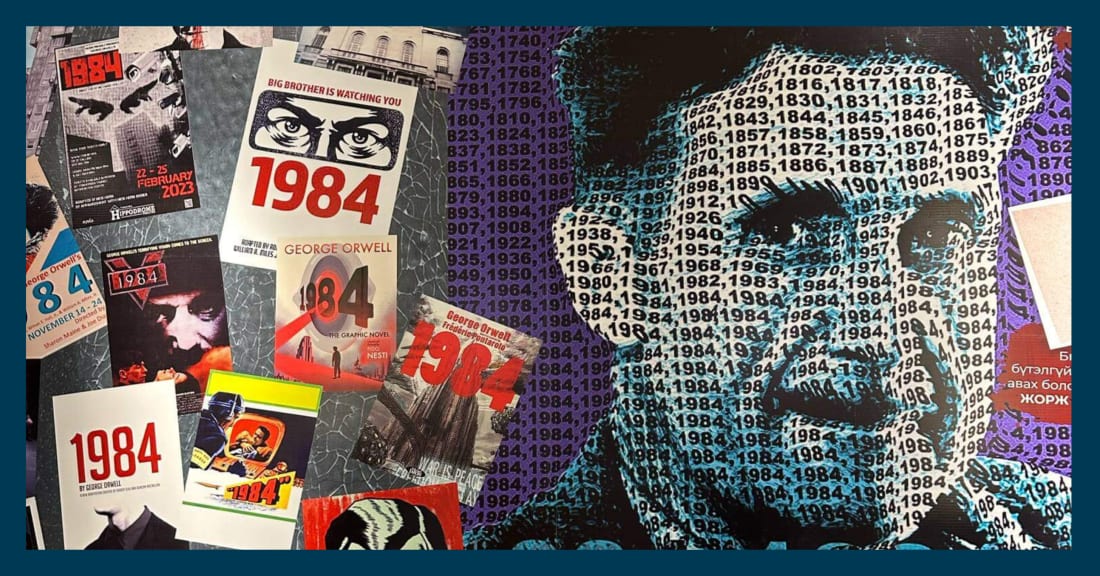 |
George Orwell is best known today for Animal Farm and Nineteen Eighty-Four—but these two novels, published in 1945 and 1949 respectively, came near the end of his career and only shortly before his death in 1950. For most of his career, Orwell’s reputation rested not on his fiction but on his journalism.
In this week’s piece from Modern Age, John P. Rossi examines the nonfiction book that first launched Orwell’s writing career: The Road to Wigan Pier. Rarely read today, the book was nonetheless remarkable in its time for its unflinching depiction of working-class poverty. Orwell wrote it after spending two months living alongside workers in the industrial towns and coal mining regions of northern England, immersing himself directly in the conditions he set out to describe.
The book’s first half chronicles what Orwell witnessed during these months and, according to Rossi, “remains a powerful work of investigative journalism that is still able to provoke an emotional reaction ninety years later.” The second half proved more controversial, featuring Orwell’s pointed critique of socialism as a naive movement of “middle-class intellectuals who didn’t understand poverty.”
Read the rest of Rossi’s commentary on The Road to Wigan Pier on the Modern Age website here.
Modern Age is ISI’s flagship publication. Visit modernagejournal.com and subscribe to receive a free daily newsletter.
“The tendency of mechanical progress is to make your environment safe and soft; and yet you are striving to keep yourself brave and hard...So in the last analysis, the champion of progress is also the champion of anachronisms.”
–George Orwell, The Road to Wigan Pier
Celebrate America’s semiquincentennial with ISI and help shape the next 250 years of our country. Your support of the America 500 Education Fund will help ISI reach, teach, and launch the next generation of conservative leaders. Visit isi.org/america500 to learn more.
| ||||||||||


