Editor's Note: Our colleague, the former $900 million hedge fund manager Larry Benedict, has discovered a way to make money from gold… WITHOUT buying a single ounce. Read on to learn more…
Dear Reader,
A former hedge fund manager has discovered a unique way to pull cash from the gold markets.
He calls it "Gold Skimming."
It has nothing to do with mining, panning, or buying gold in any form.
But it's handing regular people the chance at payouts like $2,975… $3,781… and even $6,786, sometimes in just one day.
If you're skeptical, I understand…
That's why he's put together a short, step-by-step walkthrough. In a few short minutes, you'll see:
- What Gold Skimming actually is — and why it works whether gold goes up or down.
- Real results, real numbers, and a 73% win rate across 19 winning skims.
- How even a complete beginner could get started as soon as tomorrow.
Gold has nearly doubled over the past year, which makes skimming more valuable than ever.
Imagine the next time gold makes a move…
Instead of watching from the sidelines, you calmly follow three simple steps.
By the end of the week, it could put thousands of dollars into your account.
Click here to see how Gold Skimming works.
Regards,
Kim Moening
Host, Gold Skimming
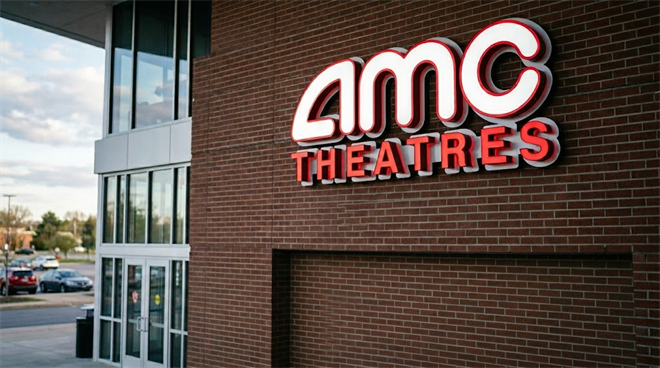
A Prada Payday: Is AMC Back in Style?
Author: Jeffrey Neal Johnson. Originally Published: 5/5/2026.
Key Points
- A string of blockbuster film debuts confirms that the theatrical exhibition industry is experiencing a durable, sustained consumer demand recovery.
- AMC recently executed a strategic debt restructuring, significantly extending its financial runway and improving its overall stability.
- This convergence of operational success and balance sheet strength is creating a compelling technical setup, attracting heavy speculative interest.
- Special Report: Elon’s “Hidden” Company
A blockbuster premiere is rewriting the script for the theatrical exhibition segment of the entertainment sector, where a potent mix of resurgent consumer demand and shrewd financial engineering is forcing a market reappraisal.
The stunning $233 million global debut of "The Devil Wears Prada 2" is serving as a strong top-line catalyst, driving a wave of bullish call option volume in AMC Entertainment (NYSE: AMC). This event-driven momentum is colliding with a critical, under-the-radar balance sheet restructuring that fundamentally alters AMC's risk profile and magnifies the impact of every ticket sold.
Act 1: A Blockbuster Fit for a Rally
Ticker Revealed: Pre-IPO Access to "Next Elon Musk" Company (Ad)
We’ve found The Next Elon Musk… and what we believe to be the next Tesla.
It’s already racked up $26 billion in government contracts.
Peter Thiel just bet $1 Billion on it.
👉 Unlock the ticker now and get it completely free.Theatrical exhibition is staging a clear comeback in 2026. The premiere of "The Devil Wears Prada 2" is now the fourth title in just seven weeks to clear the $75 million domestic benchmark, showing that the industry's recovery has durable legs. AMC's global attendance figure of 4.4 million guests in a single frame confirms that high-profile intellectual property remains a powerful driver of consumer discretionary spending.
This is not an isolated success, but the leading edge of a robust Q2 and Q3 film slate that provides a sustained macro tailwind for the entire sector. The narrative has shifted from survival to a tangible growth trajectory.
This top-line strength also delivers a powerful boost to high-margin ancillary revenue streams. The rapid sell-out of release-themed merchandise, a core pillar of AMC's evolving retail and concessions strategy, highlights the company's improving ability to monetize cultural events. That creates a direct and immediate impact on profitability, turning box office momentum into high-margin cash flow that flows to the bottom line. This operating leverage is critical for a company focused on deleveraging its balance sheet and investing in the guest experience.
The Director's Cut: A Balance Sheet Makeover
While box office numbers are making headlines, a recent strategic move on the liability side of the ledger provides the foundational stability for a sustained rally. An April 2026 Form 8-K filing detailed a crucial debt restructuring for AMC's Odeon credit facility. AMC refinanced its expensive 12.75% Senior Secured Notes, which were a significant headwind with a 2027 maturity date.
This transaction swaps the high-interest debt for a new $425 million senior secured term loan that does not come due until 2031. This move pushes AMC's most significant debt wall out by four years, substantially reducing near-term default risk. It gives management critical breathing room and operational flexibility. With a more stable financial runway, AMC can now shift from a defensive posture to a more offensive one, using improved cash flow to support growth initiatives.
This restructuring also demands a more sophisticated valuation approach. Focusing solely on the equity market cap of roughly $765 million would be an investor mistake; AMC's enterprise value is far more telling at $8.55 billion. With AMC's balance sheet stabilized, every dollar of incremental EBITDA generated from a hot box office has a much stronger deleveraging effect on the enterprise as a whole. That creates a compelling thesis in which operational success can quickly improve AMC's credit profile and, by extension, its equity valuation.
The Grand Finale? Options Market Bets on a Climax
The convergence of a blockbuster revenue catalyst and a fortified balance sheet is creating a favorable technical setup for a short squeeze. As of the last report, short interest in AMC remains exceptionally high at 89.54 million shares, or about 17% of the public float. With a days-to-cover ratio of 2.5, a sudden spike in buying volume could trigger a frantic dash for the exits by short sellers, forcing them to buy back shares at escalating prices and creating a self-reinforcing upward spiral.
The derivatives market is already placing its bets. A surge of unusual options activity has been concentrated in near-term expirations. The May 8, 2026, $1.50 strike call options have seen volume jump to more than 15,600 contracts, a clear signal of conviction from speculative traders. This activity, coupled with an elevated implied volatility of 123.65%, suggests the market is pricing in a significant move ahead of AMC's May 5 earnings call.
Despite these powerful catalysts, investors must remain pragmatic. AMC still faces stiff competition from conservatively managed peers such as Cinemark Holdings Inc. (NYSE: CNK) and premium-focused innovators such as IMAX Corporation (NYSE: IMAX). Fundamentally, AMC's negative net margins and trailing EPS of -$1.31 show that the road to consistent profitability remains a work in progress. The recent positive developments are undeniable, but sustained institutional buying will likely require clear evidence of durable margin expansion and positive free cash flow generation in the coming quarters. The stage is set, but the final act has yet to be written.
Lilly's Double-Beat Widens the GLP-1 Gap—And a New Pill Could Make It Permanent
Author: Nathan Reiff. Originally Published: 5/1/2026.
Key Points
- Eli Lilly reported impressive Q1 2026 results, including a $2-billion revenue beat over analyst predictions and 156% year-over-year EPS improvement.
- Significant boosts to full-year guidance and news of Foundayo's approval could also help to generate momentum for LLY shares.
- Novo Nordisk faces an uphill battle at the same time, as the threat of generic versions of Ozempic looms.
- Special Report: Elon’s “Hidden” Company
The $63 billion GLP-1 agonist industry is forecast to triple over the next decade, so it's no surprise that pharmaceutical companies of all sizes are scrambling to get in on the action. For now, though, the market is still dominated by two names: Eli Lilly and Co. (NYSE: LLY) and Novo Nordisk A/S (NYSE: NVO).
Between the two, Novo Nordisk may have the more recognizable brands in the GLP-1 space, as it is the maker of both Ozempic and Wegovy.
Ticker Revealed: Pre-IPO Access to "Next Elon Musk" Company (Ad)
We’ve found The Next Elon Musk… and what we believe to be the next Tesla.
It’s already racked up $26 billion in government contracts.
Peter Thiel just bet $1 Billion on it.
👉 Unlock the ticker now and get it completely free.However, Eli Lilly's recent earnings suggest that it could cement a dominant position that would make it even tougher for competitors in the fast-growing space.
Eli Lilly delivered a Q1 2026 trifecta—an earnings beat, raised full-year guidance, and early-April FDA approval of Foundayo, the first oral GLP-1 with no food or water restrictions—widening its lead over Novo Nordisk just as the race for a convenient weight-loss pill heats up.
Digging Into Lilly's Q1 2026 Results
Strictly on the financial side, Eli Lilly's Q1 2026 earnings results already shine. The company posted an impressive 56% year-over-year (YOY) increase in revenue, thanks in large part to $12.8 billion in combined sales from its two main GLP-1 agonists, Mounjaro and Zepbound. Total revenue of nearly $20 billion was about $2 billion above consensus estimates. Lilly also delivered on earnings, reporting $8.55 in earnings per share (EPS), 156% above last year's results and a full $1.58 above analyst expectations.
The biggest business update in Lilly's latest report is the FDA approval of Foundayo, the first oral GLP-1 agonist for obesity that can be taken at any time of day and without any food or water restrictions. Current oral GLP-1 medications often require patients to take them at specific times of day or wait a certain period before eating after taking the medication.
Foundayo appears to be the latest step toward greater convenience and flexibility in the GLP-1 agonist space. While patients initially had to deal with injections and later moved to oral medications, Foundayo now goes a step further by reducing some of the inconveniences associated with earlier options. As Eli Lilly continues to roll out the product, with early uptake among the first 20,000 or more patients picking up speed, Foundayo could become the GLP-1 agonist of choice.
There's more to Lilly's momentum than just its past results and newest GLP-1, though. The company anticipates continued rapid growth, as reflected by significant increases in guidance. Management raised full-year 2026 revenue guidance by $2 billion at both the low and high ends of the range. Previously, the company guided for revenue of $80 billion to $83 billion; it now expects $82 billion to $85 billion. EPS guidance also increased by $2 on both ends of the range, to forecasts between $35.50 and $37 for the year.
Novo Nordisk's Uphill Battle
After Eli Lilly's strong earnings report and promising drug developments, investors will be watching Novo Nordisk carefully when it reports its own Q1 2026 earnings. The Danish firm is working toward its own oral version of Ozempic and is seeking approval for pediatric use, which would significantly boost its addressable market. It is also in the midst of early trials for LX9851, a non-incretin obesity drug that could serve as a potential alternative to GLP-1s.
One of Novo Nordisk's biggest risks, however, is the potential for generics. Canada has recently approved a generic version of Ozempic, which could undermine Novo Nordisk's pricing power considerably.
Notably, there is an FDA proposal to exclude certain active ingredients in Novo's products from the mass compounding list. This would make it more difficult for companies to create copycats, helping protect the firm's core GLP-1 products.
Despite the major success of Ozempic and Wegovy, analysts remain mixed on Novo Nordisk going forward. Only four of 23 have rated NOV shares a Buy, although the stock has 50% upside potential based on a consensus price target of $65.56.
By contrast, Wall Street is much more optimistic about Eli Lilly: 25 out of 30 ratings are a Buy or equivalent, despite the fact that upside potential for LLY is lower at about 25%. As Foundayo continues to enter the market, investors may watch to see whether new price targets suggest there is even more room for growth.
This email is a sponsored email sent on behalf of Brownstone Research, a third-party advertiser of MarketBeat. Why was I sent this email content?.
If you have questions or concerns about your account, please feel free to email MarketBeat's South Dakota based support team at [email protected].
If you would no longer like to receive promotional emails from MarketBeat advertisers, you can unsubscribe or manage your mailing preferences here.
© 2006-2026 MarketBeat Media, LLC.
345 North Reid Place, Sixth Floor, Sioux Falls, South Dakota 57103-7078. United States..