There’s a subtle shift happening in how capital is being positioned right now.
As we move through May, rising debt levels and persistent inflation aren’t just headlines —
they’re starting to influence allocation decisions in a more meaningful way.
That’s where gold tends to re-enter the conversation.
Not as a trade…
but as a form of positioning.
We’ve outlined this in a concise brief:
The Gold Wealth Blueprint
Review the blueprint here
Inside, you’ll see:
- Why gold behaves differently during periods of fiscal pressure
- How investors are thinking about exposure right now
- Where gold may fit without overextending a portfolio
This isn’t about making a bold call.
It’s about understanding where stability is being built — quietly.
Access the full breakdown here
Regards,
The Wealthiest Investor Team
By following the link above you're choosing to opt in to receive insightful updates from The Wealthiest Investor plus 2 free bonus subscriptions! Your privacy is important to us. You can unsubscribe anytime. See our privacy policy for details.
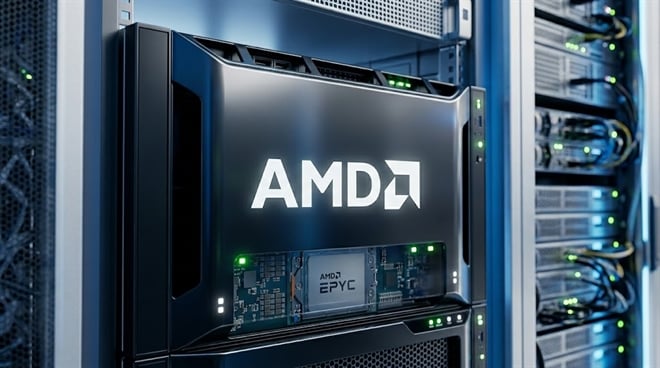
AMD's Poker Face: Reading the Tell in a Panic-Driven Market
Written by Jeffrey Neal Johnson. Article Posted: 4/29/2026.
Key Points
- AMD's partnership with a major hyperscaler validates its technology and de-risks the company's future revenue growth expectations.
- Management is using a forward-dated product event to anchor market expectations on its next-generation hardware cycle, countering short-term sentiment.
- Sophisticated options traders and institutional investors appear to be accumulating shares, positioning for a significant rally into the late summer.
- Special Report: Elon Musk already made me a “wealthy man”
A severe, macro-driven correction is ripping through the semiconductor complex, creating a technical dislocation in shares of Advanced Micro Devices (NASDAQ: AMD).
The current selloff, sparked by systemic concerns about the pace of AI infrastructure spending, has created an attractive entry point for investors who can separate short-term sentiment from medium-term fundamental catalysts.
You’re Being LIED To About The Iran War (Ad)
The mainstream explanation for the Iran airstrikes may not be the full story. Addison Wiggin, Founder of Grey Swan Investment Fraternity, says there's a deeper motive behind the bombing campaign that most coverage is ignoring.
If you're making investment decisions based on what you're hearing in the news, Wiggin argues you could be working with an incomplete picture.
Read Addison Wiggin's full breakdown of the real Iran storyAlthough the stock gapped down nearly 5%, a deeper analysis reveals a company laying the groundwork for the next-generation hardware cycle, reinforced by a major new hyperscaler commitment and telling activity in the options market.
Calling the Bluff: Why AI CapEx Panic Is Overblown
The immediate downside pressure is a direct reaction to late-April reports of missed internal growth targets at OpenAI, which sent a shockwave through the AI supply chain. The narrative quickly shifted to fears of a slowdown in data-center capital expenditures, providing cover for profit-taking after a hefty 59% 30-day rally in AMD’s stock price.
Compounding the macro pressure was a tactical downgrade from Northland Securities, which moved its rating from Outperform to Market Perform, citing valuation concerns. The stock currently trades at a trailing price-to-earnings (P/E) ratio of 126.23, a level that demands near-flawless execution and sustained high-growth tailwinds. For many investors, the OpenAI news was the first visible crack in the growth thesis and a reason to step to the sidelines. The resulting pullback to the roughly $318 level reflects this heightened uncertainty as investors await the company’s Q1 2026 earnings release on May 5.
AMD's Pocket Aces: The Meta Partnership Counter-Signal
Just as the market began to price in a potential CapEx winter, fresh disclosures offered a powerful counter-narrative. An expanded strategic partnership with Meta Platforms (NASDAQ: META) will see the hyperscaler deploy 6 gigawatts of AMD GPUs. This multi-gigawatt commitment is a direct, verifiable rebuttal to the thesis that AI infrastructure buildouts are stalling. It provides a foundational demand signal from a premier client, de-risking forward revenue and validating AMD’s accelerator performance.
That contrasts with competitors such as Broadcom (NASDAQ: AVGO), which are pursuing custom ASIC strategies that can increase margin pressure and concentrate customer risk. The Meta deal highlights the strength of AMD's more open, flexible ecosystem—an important differentiator for hyperscalers looking to avoid vendor lock-in and diversify their silicon supply chains.
Betting on the Turn: AMD Signals Its Next Move
AMD management is not waiting for the market narrative to dictate its trajectory. The announcement of its Advancing AI 2026 event, scheduled for July 23, serves as a strategic marker for the next hardware cycle. This forward-dated event is a common move by silicon companies to shore up confidence during sector corrections, signaling conviction in the product pipeline.
The San Francisco showcase is timed to debut the next-generation Instinct MI400 series accelerators, engineered to challenge NVIDIA's (NASDAQ: NVDA) data-center dominance. In addition to new GPUs, the market expects a roadmap for Zen 6 and Zen 7 EPYC enterprise server processors, reinforcing AMD’s two-pronged push into the high-margin data-center market. By anchoring expectations to a firm date, AMD forces analysts and institutional investors to look past current noise and begin pricing in the next wave of product-driven growth.
Who's Staying in the Game
Despite the jarring price action, institutional conviction appears intact. AMD is currently 71% institutionally owned, and capital flows over the last 24 months show a decisive bullish bias—about $36.96 billion in inflows versus $20.33 billion in outflows. That suggests long-term allocators are using volatility to add to positions.
Recent insider selling, often interpreted as a bearish signal, requires context. SEC Form 4 and 144 filings show that the widely reported April share sales by CTO Mark Papermaster were executed under a pre-arranged Rule 10b5-1 trading plan established in November 2025—well before the recent rally—neutralizing any interpretation of the sales as a reaction to current market conditions.
Going All-In: Options Traders Play Their Hand
The options market is illustrating investor strategy. Significant open interest in put options at the $300 and $310 strikes for near-term expirations establishes a technical support floor. At the same time, traders are accumulating out-of-the-money call positions, with concentrated open interest at the $340, $350, and $370 strikes.
This bifurcated positioning supports the broader thesis: sophisticated traders are buying downside protection while placing directional bets on a rally into the late-summer hardware event. The flow indicates the market is beginning to front-run the hype cycle for Advancing AI 2026, creating a baseline of support that should help cushion the stock against further macro-driven panic. The current technical divergence offers an asymmetric risk/reward opportunity to scale into a high-beta technology leader ahead of its most significant catalysts of the year.
Did Qualcomm Just Put Apple in Check?
Written by Jeffrey Neal Johnson. Article Posted: 4/28/2026.
Key Points
- Qualcomm's alliance with OpenAI is a strategic move to create a new, open ecosystem for advanced on-device artificial intelligence.
- Management's confidence is underscored by a substantial share repurchase program, signaling a strong belief in Qualcomm’s long-term valuation.
- Qualcomm is working to transition from a component supplier to the central platform for the entire mobile artificial intelligence ecosystem.
- Special Report: Elon Musk already made me a “wealthy man”
As a technology sector investor, sometimes the market sends a signal so clear it can’t be ignored. Recently, semiconductor sector giant Qualcomm (NASDAQ: QCOM) jumped more than 11% in a single session. Trading volume was nearly triple the daily average—about 33 million shares—indicating substantial capital was flowing in. The rally was a decisive market reaction to reports of a transformative partnership with OpenAI, a leader in artificial intelligence (AI).
Such an abrupt, aggressive move suggests the established hierarchy in the multi‑trillion‑dollar smartphone market may be shifting. For years the industry has been defined by incremental hardware updates and software tweaks.
You’re Being LIED To About The Iran War (Ad)
The mainstream explanation for the Iran airstrikes may not be the full story. Addison Wiggin, Founder of Grey Swan Investment Fraternity, says there's a deeper motive behind the bombing campaign that most coverage is ignoring.
If you're making investment decisions based on what you're hearing in the news, Wiggin argues you could be working with an incomplete picture.
Read Addison Wiggin's full breakdown of the real Iran storyThis partnership, however, signals a more fundamental strategic change: device intelligence may matter more than camera megapixels or screen resolution. For investors, understanding that pivot is essential to identifying the companies best positioned to lead the next decade of mobile innovation.
It Is a War of Ecosystems, Not Just Devices
The catalyst behind this pivot is a fundamental change in how AI is deployed. The Qualcomm–OpenAI collaboration aims to create chips that run powerful AI models directly on devices, a concept known as Edge AI. That departs from the cloud‑centric AI model that has dominated until now.
Moving AI to the edge brings several material advantages:
True instantaneous performance: By processing locally, Edge AI removes the network lag inherent in cloud computing, making assistants and applications feel seamless and responsive.
A fortress of privacy: Keeping sensitive data on the device rather than sending it to remote servers is a major privacy advantage and a powerful consumer selling point.
New capabilities unlocked: On‑device processing enables more sophisticated, always‑on AI applications that can integrate with a phone's hardware in real time, creating experiences not possible with cloud‑only systems.
This technology is the strategic weapon in a much larger battle. Qualcomm is positioning its Snapdragon platform as the premier hardware foundation for manufacturers that want to compete in AI. This open‑ecosystem model invites collaboration across the Android market and echoes the historic PC wars, when the open architecture of Windows‑based machines ultimately captured dominant share from Apple Inc.'s (NASDAQ: AAPL) closed system.
The strategy challenges Apple’s walled‑garden approach. Apple's tight control of hardware and software has been a major strength, but it can slow integration of breakthrough third‑party innovations.
By partnering with one of the biggest names in AI, Qualcomm is making an aggressive play to leapfrog Apple’s internal development. The aim appears to be making Snapdragon silicon the indispensable standard for developers building next‑generation AI applications, forcing much of the industry to build on its platform.
Management's Bet: Back the Vision With Cash
A visionary strategy requires more than ideas; it requires the financial conviction to see it through—especially amid short‑term market headwinds. While the long‑term potential of Edge AI is significant, some analysts remain cautious, projecting a 1.1% decline in near‑term earnings growth amid a softer smartphone market.
Qualcomm’s management is countering that caution with a clear capital‑allocation strategy. The most visible signal is the board's authorization of a $20 billion share repurchase program. A buyback of this size signals Qualcomm believes its shares are fundamentally undervalued.
The repurchase could retire as much as 14.5% of outstanding shares, delivering two important investor benefits. First, it creates sustained demand for the stock and can provide support during volatile periods. Second, by reducing the share count, the program directly boosts earnings per share (EPS), a key valuation metric that can make the stock more attractive even if profits are flat.
This aggressive buyback is complemented by Qualcomm’s steady dividend. The current 2.4% yield offers a reliable income stream, rewarding shareholders as the long‑term AI strategy matures. Together, these financial tools act as a protective buffer for the investment thesis, signaling leadership's confidence and providing flexibility against near‑term uncertainty.
How to Track the AI Rerating
The combination of a disruptive technical pivot and aggressive financial support has put Qualcomm at a critical inflection point. The company is clearly trying to shift perception from a cyclical component supplier to the central platform for the mobile AI ecosystem.
The market’s initial reaction, plus Qualcomm’s capital moves, suggests a potential rerating could be underway. In that scenario, investors may increasingly value Qualcomm for its foundational role in secular AI growth rather than solely for handset cycles. Success is not guaranteed, but the strategy to become indispensable to mobile AI development is explicit.
For those monitoring the transformation, Qualcomm’s Q2 2026 earnings release on April 29 and the 2026 Investor Day on June 24 are key events. Investors should look for updates on the OpenAI partnership, early feedback from device manufacturers, and any revisions to Qualcomm’s long‑term financial outlook. Those data points will be crucial in determining whether Qualcomm is successfully executing its ambitious vision and positioning itself for leadership in the new AI era.
This email message is a paid sponsorship sent on behalf of Darwin, a third-party advertiser of InsiderTrades.com and MarketBeat.
If you have questions or concerns about your subscription, please email our South Dakota based support team at [email protected].
If you no longer wish to receive email from InsiderTrades.com, you can unsubscribe.
© 2006-2026 MarketBeat Media, LLC. All rights reserved.
345 North Reid Place, Suite 620, Sioux Falls, SD 57103. United States of America..