Hello,
Thanks for signing up for MarketBeat Daily Ratings—we’re excited to have you on board.
Every weekday, you’ll get a curated summary of new “Buy” and “Sell” ratings from Wall Street’s top-rated analysts, the latest stock news, and bonus investing content—all delivered straight to your inbox.
You’re just two quick steps away from completing your sign-up:
1. Make sure our emails go to your inbox
Gmail users:
Mobile: Tap the three dots (…) in the top right and select Move to Inbox or Move to Primary
Desktop: Click the folder icon at the top and select Move to Inbox or Primary
Apple Mail users:
Tap our email address at the top (next to From: on mobile), then select Add to VIP
Other providers:
Reply to this message and add [email protected] to your contacts
2. Confirm your subscription
Click this link to confirm your subscription. This verifies your account and ensures you receive your newsletters without interruption instead of getting stuck in your spam filter.
Confirm your subscription here.
After you confirm, feel free to download our popular free report, "7 Stocks to Buy and Hold Forever" with this link.
Thanks again for subscribing—we look forward to being part of your investing journey.

Matthew Paulson
Founder and CEO, MarketBeat.
P.S. If you didn’t mean to subscribe, no problem—you can unsubscribe here.
Exclusive Article 3 eVTOL Stocks, 3 Flight Plans: Which One Will Stick the Landing?Author: Jeffrey Neal Johnson. Article Published: 4/22/2026. 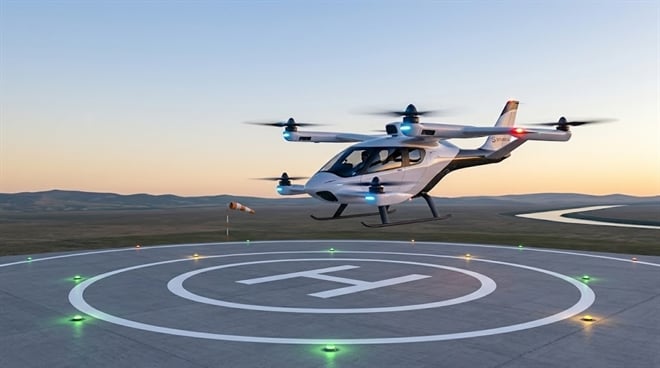
Key Points- Joby Aviation is building a fully integrated air taxi service, leveraging its key automotive partnership to enhance its manufacturing capabilities.
- Archer Aviation is accelerating its path to market by collaborating with established aviation and automotive leaders to scale its operations efficiently.
- Vertical Aerospace's manufacturer-focused model is supported by a substantial pre-order book from global airlines and a newly secured financing package.
- Special Report: Elon’s “Hidden” Company
The electric vertical takeoff and landing (eVTOL) sector is moving past its science-fiction origins into a new phase of financial reality. Driven by the urgent need to relieve urban congestion and reduce carbon emissions, electric air taxis are no longer a question of if but of when—and, most importantly for investors, how.
The industry has reached an inflection point where the conversation is shifting from dazzling prototypes to the complex business of execution. Companies now face final, capital-intensive hurdles: achieving regulatory certification, scaling complex manufacturing, and securing sufficient financing to launch commercial service. For investors, the focus must shift from the allure of the technology to a hard look at each competitor’s business-model viability and sustainability.
All Systems Go: A Trifecta of Industry-Defining Progress
For a moment…
Forget about Trump’s ties to Israel.
Forget about reports of Iran’s nuclear program.
Because my research has led me to believe we’re risking World War 3 with Iran for a completely different reason. Click here to find out what it is. The abstract promise of eVTOLs became substantially more concrete as all three industry leaders recently announced major advancements. Vertical Aerospace (NYSE: EVTL) completed a piloted two-way transition flight under the direct oversight of the UK’s Civil Aviation Authority (CAA). That critical validation of its aircraft’s core mechanics was followed by the company securing up to $850 million in financing, addressing two of the biggest investor concerns at once: technical viability and cash reserves.
U.S. front-runner Joby Aviation (NYSE: JOBY) is making steady progress through the Federal Aviation Administration’s (FAA) certification process. The company has also deepened its partnership with the Department of Defense—a de-risking development that provides early revenue opportunities and validates the aircraft’s robustness for demanding missions.
Archer Aviation (NYSE: ACHR) received FAA acceptance of its certification basis, a foundational regulatory milestone. Archer is working closely with partner United Airlines (NASDAQ: UAL) to map out the infrastructure and logistics for its initial commercial routes. These simultaneous breakthroughs show the sector is maturing and invite a closer look at the divergent strategies each company is using to compete.
Which Blueprint Leads to Profit?
With core technology proving itself through successful transitions and regulatory milestones, the ultimate winner in the eVTOL space will likely be determined by the strength, efficiency and scalability of its business model. The industry is moving from the wow factor of flight to the how of sustainable operations, and each of the three leaders has chosen a distinct, high-stakes path to capture the burgeoning urban air mobility market.
The All-in-1 Powerhouse: Joby Aviation
Joby pursues a high-control, vertically integrated strategy. It aims to build a strong moat by controlling everything from aircraft design and manufacturing to the consumer-facing ride-hailing app. This all-in-one approach—similar to Apple’s hardware and software ecosystem—offers the greatest potential for long-term profit margins by capturing the entire value chain.
However, it is the most capital-intensive model and carries a correspondingly high cash burn—an important risk for investors. That risk is partially mitigated by Joby’s partnership with Toyota (NYSE: TM), which brings valuable expertise in mass-market manufacturing.
The Alliance-Based Accelerator: Archer Aviation
Archer has chosen a hybrid model that outsources major risks to established industry partners. By teaming with automotive giant Stellantis (NYSE: STLA) for manufacturing and with United Airlines for market entry and customer acquisition, Archer reduces upfront capital requirements and operational hurdles.
This de-risked approach allows the company to concentrate on its core competencies: aircraft design and certification. The tradeoff is sharing future revenues and depending on flawless execution by partners—making the health of those alliances a key indicator of Archer’s long-term prospects.
The Capital-Efficient Manufacturer: Vertical Aerospace
Vertical Aerospace is pursuing an asset-light model as a pure-play aircraft manufacturer. Its strategy is to design, certify and sell aircraft directly to airlines and leasing companies, leveraging those customers’ existing infrastructure and brand recognition.
This approach is the most capital-efficient of the three, avoiding the enormous costs of building and operating a consumer-facing airline. With a pre-order book of roughly 1,500 aircraft, Vertical’s model may offer the most streamlined and de-risked path to positive cash flow—a compelling advantage as the market scrutinizes high cash-burn business models.
The Great Valuation Divide
The stock market has drawn clear lines in how it values these competing strategies. Joby Aviation, with its ambitious plan for total market control, currently leads the pack with a market capitalization near $8.3 billion. Archer Aviation’s partnership-backed model commands a valuation of about $4.5 billion.
In stark contrast, Vertical Aerospace is valued at roughly $282 million. That vast valuation gap raises a central question for investors: which approach is worth the premium? While analyst targets suggest upside for all three, Vertical’s price target of around $11.30 implies a potential re-rating may be warranted now that its technology and funding have been significantly de-risked.
Your Final Approach: 3 Profiles for Your Portfolio
As the eVTOL sector moves from promise to execution, the investment thesis shifts from betting on a concept to analyzing business fundamentals. With recent milestones validating the technology across the board, investors can consider three distinct corporate strategies—each with its own risk and reward profile.
For investors with higher risk tolerance, Joby Aviation represents a venture-capital-style bet on building a dominant, vertically integrated transportation network. Archer Aviation offers a more balanced approach, leveraging the strength and stability of blue-chip partners to accelerate market entry. Vertical Aerospace presents a value-oriented, capital-efficient case rooted in a traditional manufacturing model with a pre-sold order book.
Cautious investors may prefer to monitor how each model performs through the final stages of certification. Those looking to establish positions should weigh which of these strategies best aligns with their long-term outlook for the future of flight. |