ClearPath Action Rundown
April 24th, 2026
|
Happy
Friday! Great seeing so many of you at our spring happy hour last
night. |
1.
America’s energy dominance starts with
innovation
|
|
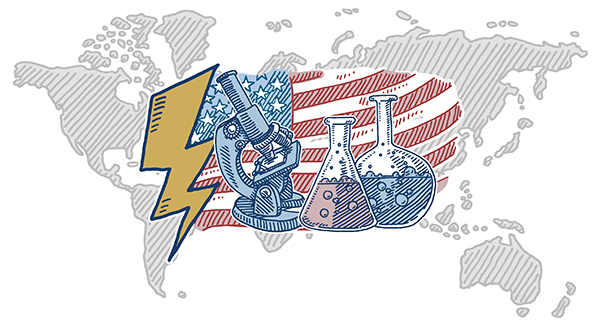
ClearPath’s Lisa
Epifani writes in
the Washington Times that the 119th Congress has an opportunity to
strengthen U.S. energy technology leadership. That starts by treating
basic research and applied programs as one connected innovation
system.
What Congress can do:
- Reauthorize the National Quantum Initiative and invest in
national lab infrastructure to strengthen foundational
research;
- Update
and extend key applied energy programs from the Energy Act of 2020 to
support technologies ready to scale; and
- Align
efforts to bridge the “valley of death” between discovery and
deployment.
What’s clear:
China is increasing research spending by nearly 10 percent annually,
which is triple the U.S. rate. Long-term energy dominance starts with
innovation today, and that requires connecting research to deployment.
The 119th Congress has a clear opportunity to act.
Plug in: Read
Lisa
Epifani’s
Washington Times piece here.
|
2. America’s energy
strategy for global competition |
|
Energy security is no longer just
about how much energy is produced domestically. The world needs more
power for the industries of the future. The nation that builds the
next generation of energy technologies, finances the infrastructure
and secures the supply chains will win in those global
markets and wield
long-term strategic leverage.
ClearPath CEO Jeremy
Harrell writes in
the Ripon Forum that since 2015, China has outpaced the U.S. nearly
ten-to-one in financing global energy projects and now controls
roughly 70 percent of manufacturing across key clean energy
technologies.
Three priorities will determine whether the U.S.
leads:
- Innovate fast;
- Build here; and
- Sell globally.
What’s clear:
Energy leadership is not just about domestic supply. The countries
that build, finance and export next-generation energy will shape
global markets, strengthen alliances and secure long-term
advantage.
Plug in: Read
Jeremy
Harrell’s Ripon
Forum article on how the U.S. can compete and win in
global energy markets.
|
3. Geothermal gains
funding momentum… |
|
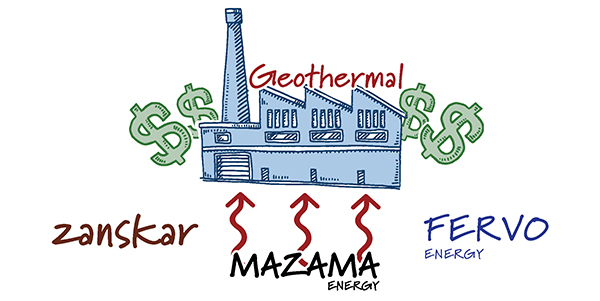
Geothermal capital is accelerating.
Three new capital announcements signal growing investor confidence in
next-generation geothermal as a source of firm, always-on
power.
What to know:
-
Zanskar closed a $40 million development capital facility,
structured to scale to $100 million, targeting early-stage project
work;
-
Mazama Energy is raising $100 million to develop superhot geothermal
resources, which could lower costs and improve competitiveness by
accessing higher temperatures; and
-
Fervo Energy filed with the Securities and Exchange Commission
for an initial public offering.
What’s clear:
Early-stage financing has long been a bottleneck for geothermal. New
capital and financing models are beginning to unlock projects, helping
move the sector from exploration to deployment.
Plug in: Read
ClearPath's blog on why geothermal is at an inflection point
and what it will take to scale it.
Dive deeper: ClearPath’s geothermal
report breaks down
how federal permitting reform can unlock next-generation
geothermal.
|
4. … and bipartisan
traction |
|
This week, the HEATS
Act passed the
House with bipartisan support on a 231-186 vote. ClearPath’s
Matthew
Mailloux
highlights in the Ripon Forum that geothermal’s eligibility for tax
credits was included in both the IRA and President Trump’s Working
Families Tax Cuts.
Three policy priorities will drive geothermal
scale-up:
- Federal
R&D funding parity with other emerging energy
technologies;
- A more
efficient permitting process; and
- Predictable tax incentives.
What’s clear: The
U.S. already leads the world in installed geothermal capacity. With
sustained federal support and permitting reform, next-generation
geothermal could unlock an additional 90 gigawatts. The window to lead
is open, but not indefinitely.
Plug in: Read
Matthew
Mailloux’s Ripon
Forum piece here.
|
5. ClearPath welcomes
Lauren Fookes and Ashley Hill |
|
The ClearPath team is growing with
two new hires.
Lauren
Fookes has joined
the External Affairs team as Senior Events Manager. In her new role,
Lauren will lead the planning and execution of events and external
engagements, supporting stakeholder outreach and policy-focused
programming.
Before joining ClearPath, Lauren
led event operations at Consero Group, where she managed a portfolio
of in-person and virtual programs.
Ashley
Hill serves as an Advisor for the ClearPath
Conservative Leadership Program, leading recruitment, operations and
participant experience. She develops emerging talent in clean energy
and climate policy.
Ashley previously worked across
Capitol Hill, membership organizations and large-scale events,
focusing on stakeholder engagement and program execution.
Welcome, Lauren and Ashley!
|
6. Ten NRC rulemakings
to watch |
|
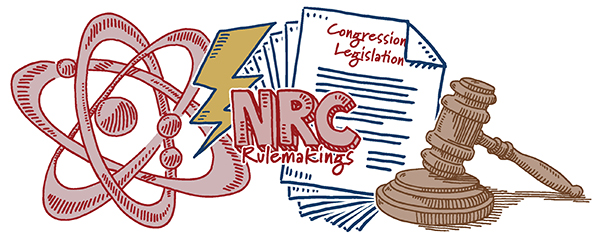
A sweeping modernization effort is
now underway at the Nuclear Regulatory Commission.
What’s in motion:
- Rulemakings are moving forward, driven by years of bipartisan
legislation, recent executive action and internal modernization
efforts;
- Many
focus on creating clearer, more flexible pathways for advanced
reactors, fusion and microreactors; and
- Reforms
to environmental reviews, hearings and radiation standards aim to
improve timelines, reduce costs and increase
predictability.
What’s clear: This
is more than regulatory housekeeping. It is a test of whether the U.S.
can turn years of policy momentum into a licensing system that enables
faster, more predictable nuclear deployment.
Plug in: Focus on
what’s important using ClearPath’s top 10 NRC rulemakings to watch in
this blog by Niko
McMurray and
Natalie
Houghtalen.
|
|
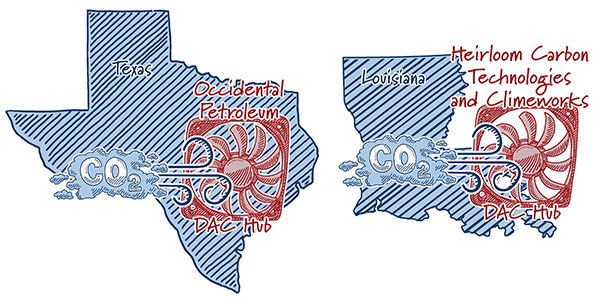
Two direct air capture (DAC) hubs –
Heirloom’s Project
Cypress and Oxy’s
South Texas DAC Hub – will move forward after the DOE
confirmed it will retain funding eligibility for the
Louisiana and Texas projects, following a review of federally funded
clean energy projects.
Key details:
- Heirloom
Carbon Technologies and Climeworks – Project Cypress is designed to
remove up to 1 million metric tons of CO₂ annually across two
Louisiana sites, with carbon stored through the CapturePoint CENLA
Hub; and
-
1PointFive (Oxy) – The South Texas DAC
Hub is designed to remove up to 30 million metric tons of
CO2 annually to be stored in geologic
formations at the South Texas Hub in Kleberg County.
What’s clear:
Project Cypress and the South Texas DAC Hub reflect federal support
for commercial deployment of carbon removal projects alongside private
sector investment.
|
8. Air Force picks
nuclear microreactor partners |
|
Nuclear power is coming to U.S.
military bases. The Department of the Air Force and Defense Innovation
Unit selected three companies to develop and operate
microreactors on Air Force installations as part of the Advanced
Nuclear Power for Installations initiative.
Three companies have been paired with
installations:
- Radiant
Industries at Buckley Space Force Base, Colorado;
- Westinghouse Government Services at Malmstrom Air Force Base,
Montana; and
- Antares
Nuclear at Joint Base San Antonio, Texas.
What's clear:
Energy resilience is national security. This initiative is in line
with President Trump’s May
2025 executive order tasking the Department of War with demonstrating at least one
advanced nuclear reactor on a military installation by September 30,
2028. Deploying microreactors on military bases ensures critical
missions are never held at risk by a power outage.
Plug in: Check out
ClearPath's blog on what this means for energy resilience
and national security.
|
9. 250 years of
American energy innovation |
|
|
As America celebrates its 250th
anniversary, ClearPath is highlighting America’s innovation story. From the
earliest discoveries in electricity and steam power to modern nuclear,
natural gas, advanced grid technologies and agriculture, American
innovators have consistently pushed the boundaries of what’s
possible.
Great American Energy Innovators: Charles G.
Curtis
-
1896 – Shrinking the steam engine: Developed a turbine 1/8th the weight and
1/10th the size of existing models while maintaining the same power
output;
-
1896 – Scaling power systems: Applied compact turbine designs to central
power plants and marine propulsion, enabling more efficient
electricity generation and faster maritime transport; and
-
1899 – Pioneering the gas turbine: Invented the first U.S. gas turbine,
selling the patent to General Electric (GE). His foundational
innovations were so robust that GE built on them for over 100 years to
maintain global leadership.
What's clear:
Since the days of the first turbines, America's grid has grown to
become the world's largest machine. Today, we need to expand the grid
to connect new technology and move American energy.
Plug in: For a
full history of breakthrough technologies, click here.
|
|
|
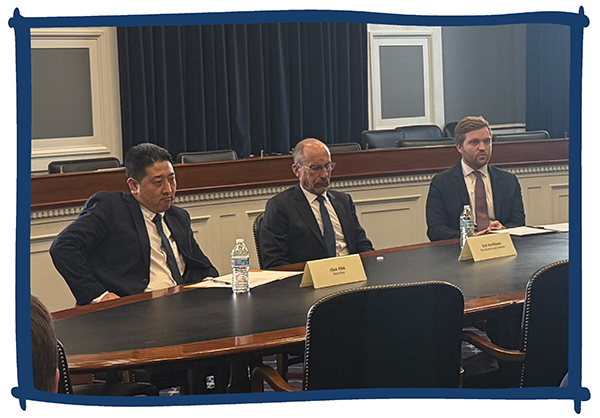
ClearPath CEO Jeremy
Harrell moderated
a House Fusion Caucus briefing on scaling domestic fusion
manufacturing, strengthening supply chains and competing with
China. |
|
ClearPath's Jake
Kincer spoke on a
panel at the Build America Caucus Staff Briefing on nuclear energy,
discussing policy solutions to accelerate nuclear deployment and meet
rising electricity demand. |
|
|
-
USNIC reelects Jeffrey Merrifield as Chairman – The United States Nuclear Industry Council
reelected Jeffrey Merrifield, ClearPath Advisory
Board member, Partner at Pillsbury Winthrop Shaw Pittman and former
NRC Commissioner, as Board Chairman for the coming term. ClearPath CEO
Jeremy
Harrell remains on
the Board of Directors.
-
Montana steps up on critical minerals – Gov. Gianforte (R-MT) hosted a roundtable with state officials, mining
industry partners and Montana Tech University focused on permitting
reform and unlocking the state's critical mineral potential.
-
Blue Energy raises $380M for prefabricated nuclear
plant – Blue Energy
announced $380 million led by VXI Capital, with
backing from Engine Ventures, At One Ventures and Tamarack Global.
Their prefabricated nuclear plants are designed for faster deployment.
Work on its first Texas project is expected in 2026, with a final
investment decision targeted for 2027.
-
Congress sends hydropower licensing bill to
Trump – The House
passed S. 1020, championed by Sen. Steve Daines
(R-MT) and Rep. Dan Newhouse (R-WA), which authorizes FERC to extend
construction deadlines for hydropower projects licensed before March
2020 by up to six years. The bill now heads to President Trump’s
desk.
-
U.S. increases LNG export capacity again – The U.S. added its 10th LNG export terminal as Golden Pass
shipped its first cargo.
-
Colorado shows why permitting
reform matters – E&C Chairman Guthrie (R-KY) and Rep. Evans (R-CO) penned an
op-ed
in the Washington Times stating, "We cannot afford to delay meaningful
permitting reform that will support innovation, lower energy costs,
and create good-paying jobs across the country."
|

|
ClearPath believes
America must lead the world in innovation over regulation…markets over
mandates…providing affordable, reliable, clean
energy. |
|
That's all from us. Thanks for reading and have a great
weekend!
View this Rundown online
|
|
ClearPath · 300 New Jersey Ave NW, Suite 800, Washington, DC 20001,
United States
This email was sent to [email protected] · Unsubscribe
|
|
|
|