Editor's Note: What you're about to read involves a specific provision of federal law that most financial advisors have never mentioned to their clients.
From the desk of Shanon Davis, CEO — American Alternative Assets
If you hold retirement savings in dollar-denominated accounts, what I'm about to show you could be the most important thing you read this year.
Most people don't know that U.S. Code Title 31, Section 5117 gives the President legal authority to revalue America's gold reserves by executive order alone. No congressional vote. No public debate. One signature.
FDR used this exact authority in 1934 — resetting gold from $20.67 to $35 overnight. No warning. Billions in wealth transferred before most Americans knew what happened. The investors already in gold protected everything. Everyone else watched.
Here's what's sitting on the books right now: the U.S. holds 8,133 metric tons of gold valued at $42.22 per ounce — a price set in 1973. At today's market price, that's a $1.59 trillion gap between the government's ledger and reality.
Think about that. Every retirement account in America is priced against a dollar that pretends gold is worth $42. When that fiction breaks, the adjustment won't be gradual.
Show me how to position my retirement before this triggers →
Trump has publicly questioned why America doesn't "use" its gold. No executive order has been signed. But the legal authority is in place — and the conditions justifying it are mounting.
Here's what it means for your retirement:
- Your IRA: Accounts already holding physical gold would sit on the right side of the largest government accounting correction in history
- Your 401(k): Most target-date funds hold zero hard assets — they'd miss this entirely, just like 1934
- The tax-free move: Reposition part of your retirement into physical gold now — no penalties, no taxable event
- The window: FDR gave zero warning — investors who weren't positioned missed the entire move
It's called The Great Gold Reset — the kind of intelligence financial newsletters charge $97 to $297 for. Right now it's yours free.
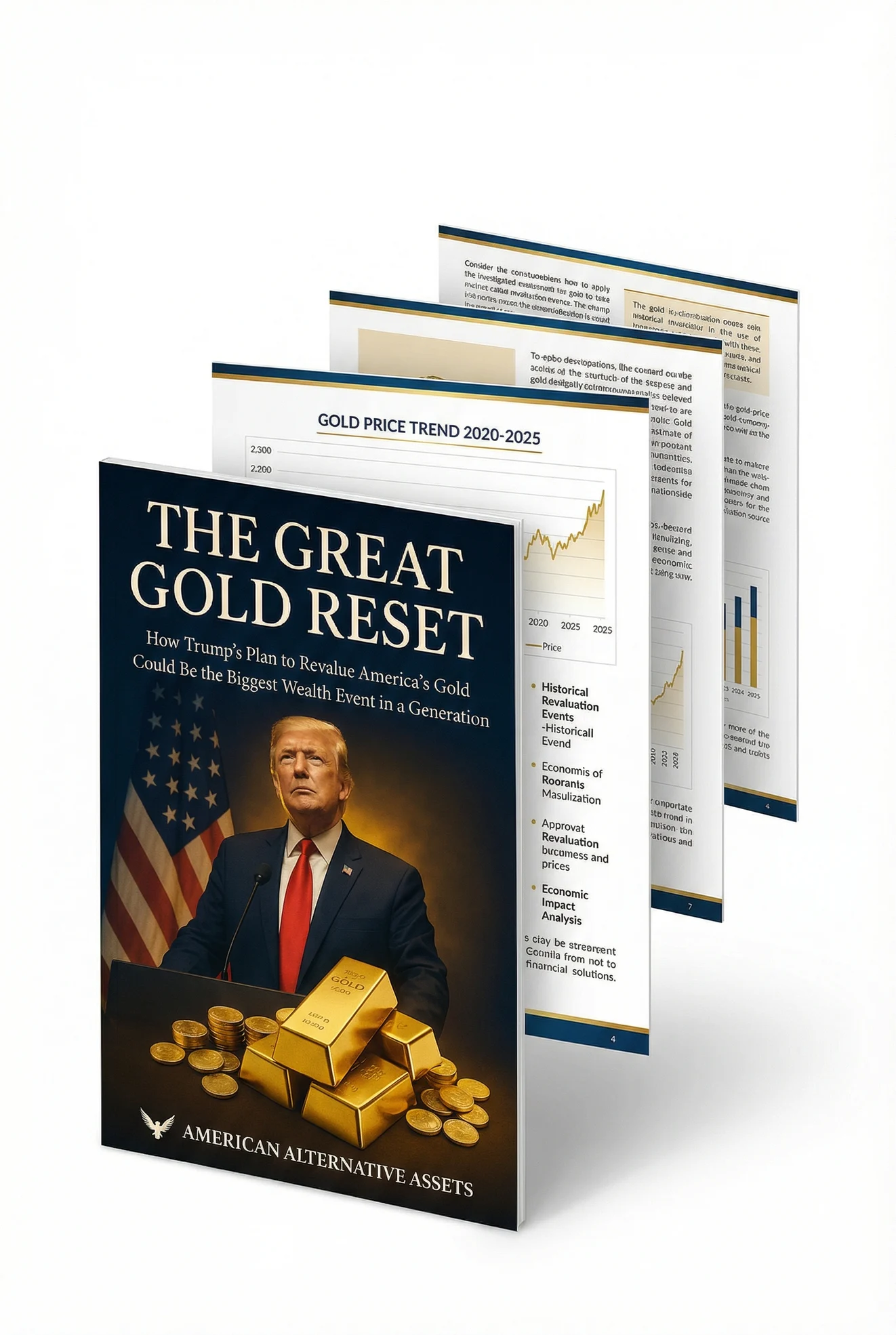 |
Get your free copy of The Great Gold Reset →
- Shanon Davis
CEO, American Alternative Assets
P.S. If Title 31 is activated, the repositioning window closes before the announcement.
Download The Great Gold Reset now →
Helium Stocks Soar on Conflict and Chip Demand: 5 Names to Know
Submitted by Leo Miller. Posted: 4/8/2026.

Key Points
- Helium stocks are on the rise in a big way, with multiple small stocks up well over 100% in 2026.
- Damage to Qatari facilities is impacting global supply, while chip makers need helium for production, putting upward pressure on prices.
- Three minuscule names are catapulting, and analysts have called out two massive players as helium shortage beneficiaries.
- Special Report: The Biggest IPO Ever: Claim Your Stake Today
In 2026, an unlikely group of stocks — companies tied to the helium gas industry — has emerged as major winners. Several names in the space have produced double-bagger returns or better so far this year, including Avanti Helium (CVE: AVN) and Pulsar Helium (LON: PLSR).
What’s driving these dramatic moves, and can the gains continue? Here’s a look at how geopolitical developments and semiconductor demand are lifting shares of helium companies.
Iran Conflict Causes Turmoil at Top Helium Supplier
What is Trump's "Project 2026"? (Ad)
Liberation Day wiped over $2 trillion from markets in a single day. Then a 90-day tariff pause added $4 trillion back to the S&P 500. Trump's AI initiatives sent Palantir up over 140%. Trader Larry Benedict says all of that was just the warm-up.
Benedict is calling what comes next 'Project 2026' - a move he believes could send billions, potentially trillions, into overlooked corners of the market. He's identified one ticker sitting at the center of it all, and he's revealing the name today at no cost.
Larry is calling it "Project 2026."Beyond the widely felt impact on oil prices, the Iran conflict is also disrupting helium supply. Qatar produces roughly one-third of the world’s helium, and in March Iran launched attacks on Qatar’s Ras Laffan liquefied natural gas (LNG) facility, causing significant damage. Those attacks are expected to reduce Qatar’s LNG export capacity by about 17%, with repairs that could take several years.
Because helium is a byproduct of natural gas production, Qatar has cut its annual helium exports by roughly 14%. With one of the world’s largest helium suppliers now capacity-constrained, prices have risen quickly.
The disruption has boosted helium stocks elsewhere. Canadian-based Avanti Helium (CVE: AVN) is up nearly 300% in 2026, and Pulsar Helium (LON: PLSR) is up almost 150%. These companies control acreage across the United States and Canada and are looking to develop direct helium production rather than relying solely on natural gas operations. Shares of Desert Mountain Energy (OTCMKTS: DMEHF) have also risen more than 100% in 2026; Desert Mountain, however, currently emphasizes the byproduct strategy and has put its direct-helium plans on hold.
Qatari Helium: Asian Chipmakers Are Key Buyers
Demand-side dynamics add to the bullish case. Helium is a critical input in several steps of semiconductor manufacturing because of its unique properties, and chipmakers already operating near capacity could face further strain if helium supplies tighten.
South Korea and Taiwan get the majority of their helium from Qatar, and both are home to some of the world’s largest chip manufacturers, including Taiwan Semiconductor Manufacturing (NYSE: TSM), Samsung Electronics (OTCMKTS: SSNLF), and SK Hynix.
Reports indicate South Korea has enough helium to last into June, and Taiwan’s inventories are described as “stable.” But with the conflict’s trajectory uncertain and the potential for further attacks, helium supplies could be disrupted again.
Even if hostilities subside, the damage already inflicted on facilities could produce multi-year constraints on global helium capacity — a scenario that could support higher prices and benefit producers outside Qatar.
Tiny Helium Stocks Come With Big Risks
Investors should weigh the upside against substantial risks. Many of the high-flying helium names have very low market capitalizations, making them highly volatile: Avanti and Desert Mountain each trade well below $100 million in market cap even after their recent rallies, while Pulsar’s market cap is near $300 million.
Those firms are also largely in exploration stages and generate little or no revenue today, so their ability to capture higher helium prices is uncertain without proved, ready-to-sell volumes.
Avanti does expect to begin selling helium in mid-2026, which helps explain why its shares have outperformed peers. Even so, Avanti remains an unproven supplier and faces execution and operational risks.
Analysts See Linde and Exxon Benefiting From Helium Supply Disruption
Beyond the small explorers, several large companies produce significant helium volumes as a byproduct of natural gas operations. Exxon Mobil (NYSE: XOM), for example, operates the LaBarge facility in Wyoming, which the company says accounts for roughly 20% of the world’s helium supply.
UBS recently reiterated a Buy rating on Exxon, citing helium-market challenges; its $171 price target implies roughly 5% upside. Still, Exxon’s returns will be driven more by the direction of oil and gas markets, where the Iran conflict also plays a central role.
Meanwhile, industrial gases giant Linde (NASDAQ: LIN), with a market cap exceeding $200 billion, received an upgrade from JPMorgan amid concerns about helium supply constraints.
Bottom line: the current helium story mixes genuine supply pressure and strong end-market demand with the usual risks of small-cap mining and exploration stocks. Investors attracted to the upside should balance that potential against execution, operational, and geopolitical risks that could quickly reverse gains.
The Drone Disruptor: Kratos Stock Seeks a Higher Altitude
Submitted by Jeffrey Neal Johnson. Posted: 4/8/2026.
The foundation of the global defense industry is shifting. For generations, the business of war was defined by monolithic, multi-billion-dollar projects — aircraft carriers, stealth bombers and fighter jets that took decades to design and build. That exquisite and expensive model is increasingly becoming obsolete.
A new era is dawning, one in which military dominance is achieved not through singular platforms but through swarms of intelligent, networked and autonomous systems. This strategic pivot from the precious to the practical is forcing a major reallocation of capital within the Pentagon's budget, creating clear winners and losers. As this new defense economy takes shape, one company stands out as particularly well positioned: Kratos Defense & Security Solutions (NASDAQ: KTOS).
Unmanned, Unmatched: The Kratos Hardware Edge
This shift in military spending is not a distant projection; it is happening now and is guided by concrete government initiatives. The most prominent example is the Pentagon's Replicator program, an urgent effort to deploy thousands of autonomous systems to counter near‑peer adversaries.
What is Trump's "Project 2026"? (Ad)
Liberation Day wiped over $2 trillion from markets in a single day. Then a 90-day tariff pause added $4 trillion back to the S&P 500. Trump's AI initiatives sent Palantir up over 140%. Trader Larry Benedict says all of that was just the warm-up.
Benedict is calling what comes next 'Project 2026' - a move he believes could send billions, potentially trillions, into overlooked corners of the market. He's identified one ticker sitting at the center of it all, and he's revealing the name today at no cost.
Larry is calling it "Project 2026."Key Points
- The strategic shift toward low-cost, high-volume autonomous systems creates a long-term growth opportunity for specialized defense technology companies.
- Recent strong financial performance and the company's ability to exceed market expectations demonstrate the effective execution of Kratos's internal modernization strategy.
- Leading positions in hypersonic testing and unmanned combat aircraft provide a diverse pipeline of revenue from the next generation of military contracts.
- Special Report: The Biggest IPO Ever: Claim Your Stake Today
At its core, the strategy prioritizes overwhelming mass — achievable only with attritable hardware: platforms that are capable but inexpensive enough that commanders can risk losing them in combat without prohibitive strategic or financial consequences. That affordability is the new currency of defense, and Kratos is building to that market.
Kratos's XQ‑58A Valkyrie is an embodiment of this doctrine. It is a stealthy, versatile unmanned combat aircraft that can act as a robotic wingman, a sensor node or a weapons-delivery platform at a price that makes fleet deployment feasible.
The XQ‑58A’s modular design lets the Air Force tailor payloads to diverse missions — a flexibility legacy aircraft cannot easily match. This capability is grounded in Kratos's long experience producing high-performance target drones that simulate adversary threats. That institutional expertise in unmanned systems gives Kratos a meaningful competitive advantage. By aligning its development pipeline with Washington's procurement priorities, Kratos has secured a foundational role in America’s evolving defense posture and established a predictable revenue base.
From Contracts to Cash: A Healthy Financial Picture
A compelling strategic story is necessary but not sufficient for investors; it must be backed by financial performance. Kratos meets that test. Kratos's most recent quarterly report showed year-over-year revenue growth of 21.9%, a sign of accelerating demand, and earnings of $0.18 per share, comfortably beating analyst expectations of $0.14 per share.
While some investors may hesitate at the company's current price-to-earnings ratio, that multiple largely reflects expectations for future growth. Analysts project earnings growth of roughly 32%, which helps explain the valuation. The company's balance sheet supports that outlook: Kratos carries a low debt-to-equity ratio of just 0.05, giving it the financial flexibility to fund R&D and scale production for large government orders without taking on heavy debt or diluting shareholders.
Market confidence is growing. Kratos holds a Moderate Buy consensus rating from 22 analysts, and a Jefferies upgrade to Buy has helped fuel bullish sentiment. The consensus price target of $98.28 supports the current growth trajectory, while some firms have revised targets as high as $135, indicating strong institutional belief in Kratos’s long-term prospects.
Cleared for Takeoff: What Happens Next
Kratos's momentum is backed by several near-term catalysts investors should watch. The company's current success looks more like a launchpad for broader involvement in the nation's defense modernization efforts than a final destination.
-
The Crown Jewel Contract (CCA): Kratos is a major contender for the Air Force's Collaborative Combat Aircraft (CCA) program, a generational initiative to build thousands of autonomous wingmen. A significant award from this multi‑billion‑dollar program would be transformative, cementing Kratos's role as a prime contractor for the next era of air combat.
-
More Than Just Drones: Kratos's technology portfolio extends beyond unmanned aircraft. The company supplies rocket motors for hypersonic weapons programs and is developing next‑generation satellite ground systems. These businesses provide diversified growth paths and reduce reliance on any single program.
-
The Next Financial Checkpoint: The upcoming earnings report, estimated for May 6, 2026, will be a key indicator. Another quarter of strong growth would confirm that Kratos's momentum is not only intact but accelerating.
The investment case for Kratos is straightforward: it is the right company with the right technology at a pivotal moment in defense procurement. As the playbook for military power is rewritten, Kratos is helping to author the next chapter.
This message is a paid sponsorship from American Alternative, a third-party advertiser of MarketBeat. Why did I receive this email message?.
If you need assistance with your newsletter, feel free to email MarketBeat's South Dakota based support team at [email protected].
If you would no longer like to receive promotional emails from MarketBeat advertisers, you can unsubscribe or manage your mailing preferences here.
Copyright 2006-2026 MarketBeat Media, LLC. All rights reserved.
345 North Reid Place #620, Sioux Falls, South Dakota 57103. USA..