You can feel it, can’t you?
Something big just broke...
Not the stock market, not the banks… something deeper.
The numbers say everything’s fine… but it doesn’t feel fine, does it?
The cost of living keeps rising. The divide keeps widening. The anger keeps building.
Listen, I’ve spent three decades studying financial systems, and I’ve never seen pressure like this. It’s as if the old order of the economy has cracked and something new is forcing its way through.
Most people can’t see it yet. But they sense it. They feel it in their gut.
I’ve pulled on that thread for the past year, and what I’ve uncovered is bigger than anything I’ve ever reported. And it’s happening much faster than anyone imagines.
I explain everything in my new documentary.
➡ Watch it here before it’s too late for you.
Good investing,
Porter Stansberry
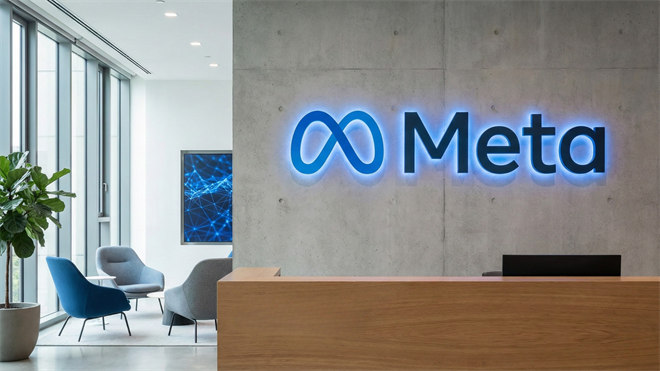
Meta's Muse Spark Model: Big Improvements Reinvigorate Investors
Written by Leo Miller. Date Posted: 4/14/2026.
Key Points
- Many investors saw Meta as having fallen behind in the AI race, but that perception looks to be changing.
- The company's latest Muse Spark model shows huge improvements over its Llama releases.
- After Meta invested over $14 billion to attract a top AI founder Alexandr Wang, the company moving in the right direction.
- Special Report: Elon Musk: This Could Turn $100 into $100,000
Investors appear to believe that Meta Platforms (NASDAQ: META) is making up ground in the artificial intelligence (AI) race after disappointing results from its Llama models.
In April, the Magnificent Seven member released its latest AI model, called Muse Spark. In the two days after the release, Meta shares jumped more than 9%, easily outpacing the S&P 500’s roughly 3% gain over the same period.
Former White House Insider Predicts New Gold Surge (Ad)
Analyst Jim Rickards believes gold could climb to $10,000 per ounce or higher in the coming years - and he says investors still have time to position ahead of the move.
His top recommendation is a $2 stock he describes as sitting on the largest gold deposit in the world, with an extraction green light potentially arriving April 15.
See Jim Rickards' number one gold recommendation for 2026The market's bullish reaction largely came down to one factor: Muse Spark’s substantially improved capabilities compared with Meta’s prior models. Combined with the company's demonstrated strength in AI-enabled advertising, Muse Spark positions Meta considerably better going forward.
Muse Spark Shoots Meta Up AI Model Ranking Sites
Muse Spark changes Meta's competitive position, moving its top model from an afterthought to a legitimate contender. Sites such as Artificial Analysis compare the performance of different AI models. The Artificial Analysis Intelligence Index currently gives Muse Spark a score of 52, putting it in the top five. Notably, it still sits just behind top-tier models, including Alphabet’s (NASDAQ: GOOGL) Gemini 3.1 Pro Preview, OpenAI’s ChatGPT 5.4, and Anthropic’s Claude Opus 4.6.
Those higher-ranking models score between 53 and 57, so Muse Spark is not far off the leaders. More importantly, the gap between Muse Spark and Meta’s prior models is substantial.
Before Muse Spark, Meta’s most capable model was Llama 4 Maverick, which Artificial Analysis scored at just 18—nowhere near the leaders. The jump on the site's Agentic Index is even more dramatic: Meta moved from a score of seven with Maverick to 62 with Muse Spark. That said, Muse Spark still trails the top models on specialized coding tasks.
LLM Arena, another widely used ranking site, places Muse Spark as the second-best performing AI lab on text-to-text tasks, and the model is the third-best overall—ranking above both Google’s and OpenAI’s entries. For context, Meta’s earlier Llama models were ranked outside the top 100.
Ranking systems aren’t perfect and users often disagree with them. Still, the improvement Meta appears to have made with Muse Spark is hard to ignore. The release gives Meta a strong, general-purpose AI model to complement an already impressive advertising franchise.
Muse Spark Creates New Levers Meta Can Pull
Muse Spark is also the first model from Meta Superintelligence Labs (MSL). Meta formed MSL after paying $14.3 billion for a 49% stake in Scale AI in 2025. As part of that deal, Alexandr Wang, Scale’s former CEO, agreed to lead MSL.
With Wang at the helm, Meta’s models appear to have improved markedly in roughly nine months, suggesting the company’s big bet on him is already producing results. That also raises the prospect that Meta can continue to advance its models as Wang’s tenure progresses.
Meta plans to offer paid access to Muse Spark, which could create a meaningful supplemental revenue stream. If the model performs as the rankings suggest and Meta continues to improve it, users may have a real incentive to pay.
Meta will integrate Muse Spark across Facebook, Instagram, WhatsApp, Messenger, and its AI glasses. The goal is likely twofold: to provide better answers that increase user engagement and to enhance the company's advertising tools.
Advertisers are Meta’s primary customers, and maximizing their return on ad spend (ROAS) keeps them investing in the platform. Muse Spark’s enhanced capabilities could improve existing campaign tools and enable new ones. By creating a better experience for advertisers and boosting ROAS, Meta can sustain its nearly $200 billion advertising business.
Despite Lowered Targets, Analysts Eye +30% Gains in Meta Stock
Meta saw several price target updates after Muse Spark’s April 8 release. Interestingly, all of the targets tracked by MarketBeat moved lower.
Those cuts appear driven by factors unrelated to Muse Spark, with analysts generally viewing the model as a positive. For example, Rosenblatt lowered its target while calling Muse Spark "an encouraging development," citing the Iran war and the risk that rising gas prices could dampen advertiser spending.
The updated targets average $845, which implies about 30% upside for the stock. That sits slightly above the MarketBeat consensus price target of roughly $838.
MarketBeat Week in Review – 03/30 - 04/03
Written by MarketBeat Staff. Date Posted: 4/4/2026.
The more things change, the more they stay the same. For investors, the direction of stocks on any given day has remained inversely correlated with the price of oil. Heading into a long weekend, stocks sank as oil floated above $100 per barrel. That pattern will persist as long as the conflict in Iran threatens supply through the Strait of Hormuz.
Although markets will be closed on Friday, April 3, the March jobs report will be released that day — potentially setting the tone for next week, when investors will get two important reads on inflation.
All of that happens before a new earnings season kicks off in mid-April. Earnings expectations are positive, which could give investors reason to look past oil prices as we move deeper into the second quarter.
Former White House Insider Predicts New Gold Surge (Ad)
Analyst Jim Rickards believes gold could climb to $10,000 per ounce or higher in the coming years - and he says investors still have time to position ahead of the move.
His top recommendation is a $2 stock he describes as sitting on the largest gold deposit in the world, with an extraction green light potentially arriving April 15.
See Jim Rickards' number one gold recommendation for 2026Key Points
- Stocks were moving lower to end the week as oil prices climbed above $100 per barrel; it’s a pattern that has become familiar to investors.
- The March jobs report will still come out on Friday, despite the market being closed, and could set the tone for next week.
- We’re only a couple of weeks away from a new earnings season and expectations are positive.
- Special Report: Elon Musk: This Could Turn $100 into $100,000
Articles by Thomas Hughes
Thomas Hughes’ article on his five best monthly artificial intelligence (AI) stock picks has become one of MarketBeat’s most popular pieces. See which stocks Hughes lists as the top AI picks for April.
Hughes also put a spotlight on The Metals Company Inc. (NASDAQ: TMC). The company is leading the way in this century’s gold rush — only this time it’s minerals found in deep-sea nodules, which the company is seeking regulatory approval to mine.
McCormick & Co. (NYSE: MKC) reported earnings this week, and the numbers pointed to a consumer still trading down. However, Hughes dug into the report and noted that MKC stock may now be offering investors deep value.
Articles by Sam Quirke
The issues in the private credit market are real and unlikely to disappear soon. Still, Sam Quirke noted that for a company like Blue Owl Capital (NYSE: OWL), the sell-off may be overdone. OWL stock is down 65% and could offer value and growth for risk-tolerant investors.
HP Inc. (NYSE: HPQ) remains historically undervalued, and investors aren’t yet pricing in an AI premium. Quirke explained what analysts are thinking and why the company’s June earnings report may act as a catalyst or an additional headwind.
Oracle Corp. (NYSE: ORCL) was one of the first hyperscalers to face a sharp sell-off amid fears of an AI bubble. This week, Quirke laid out why the bears have a solid case, but also why analyst sentiment suggests the 60% drop in ORCL stock may be a reset rather than a breakdown.
Articles by Chris Markoch
Now may not be the time for reckless speculation, but Chris Markoch explained why buying quality stocks at depressed prices is often a winning strategy. Markoch highlighted three stocks under $20 that present compelling entry points.
Despite a promising start, 2026 has continued to be a rough year for Russell 2000 stocks. However, as Markoch noted, if the market rips higher, three Russell 2000 stocks could deliver the biggest gains.
Carnival Corp. (NYSE: CCL) reported strong earnings and bullish guidance for 2026 bookings — yet CCL stock sold off on concerns over rising fuel costs. Markoch explained how fuel costs can fall back as quickly as they surged, which is why investors might consider buying this dip in CCL stock.
Articles by Ryan Hasson
MercadoLibre (NASDAQ: MELI) offers a compelling buy-the-dip setup. Ryan Hasson noted that MELI stock is down nearly 40% despite a recent revenue surge of around 45% — a disparity that keeps analysts broadly bullish even as the company navigates growing pains.
Is it time to give up on Alphabet Inc. (NASDAQ: GOOGL)? The stock recently fell more than 9%, but Hasson argued this may be a pause before the next leg up and offered a key technical level to watch for confirmation.
Hasson also highlighted five AI infrastructure stocks that will be essential to building the framework AI models need — and noted it’s not too late to consider this trade.
Articles by Leo Miller
Like many consumer discretionary stocks, PDD (NASDAQ: PDD) has had a rough start to 2026. However, Leo Miller explained why the stock’s valuation may be overly pessimistic and why it could offer long-term value for risk-tolerant investors.
Miller also wrote about USA Rare Earth Inc. (NASDAQ: USAR), a company trying to reposition the U.S. in the race for rare earth elements. That makes the bull case obvious, but as Miller warned, the company is now at a point where execution matters more than hype.
Cybersecurity stocks have been hit by AI fears. Miller highlighted three cybersecurity companies where insiders made significant trades, and explained how investors should interpret those moves.
Articles by Nathan Reiff
Healthcare stocks cover a wide range of risk/reward profiles. This week, Nathan Reiff focused on three names in an often-overlooked healthcare sector with defensive qualities that may be just the prescription for investors seeking growth in 2026.
The launch of Artemis 2, along with news that SpaceX has filed a confidential IPO, has made space a hot sector. Reiff highlighted three satellite stocks that have compelling business cases independent of a SpaceX IPO.
The conflict with Iran may wind down in the coming weeks, but that’s unlikely to dampen interest in defense stocks. This week, Reiff highlighted two actively managed defense ETFs that remain relevant beyond current geopolitical events.
Articles by Dan Schmidt
Dan Schmidt explained that real estate investment trusts (REITs) have been a tough hold over the last five years because growth has largely come from dividends. The market is still challenging, but Schmidt pointed to three REITs that are flashing oversold signals and have fundamentals that could make them buys.
Higher gas prices are squeezing consumers, but investors might consider two warehouse club stocks that can use discounted gas as a membership perk to drive in-store traffic and purchases.
Articles by Jeffrey Neal Johnson
Jeffrey Neal Johnson wrote about recent gains in Unity Software Inc. (NYSE: U) stock. The company delivered better-than-expected earnings and unveiled a new, clearer business model that analysts are backing.
Johnson also highlighted an interesting change in sentiment about Coursera Inc. (NYSE: COUR). The online learning company has been beaten down on concerns that AI will make its offering less relevant, but a surge in call options, a merger announcement, and the launch of new AI tools could spark a sharp turnaround.
Energy stocks remain the hot trade, but not all names are the same. That’s the case Johnson makes for Valero Energy Corp. (NYSE: VLO). The company’s ability to generate cash from refining margins positions Valero well amid a potential fundamental shift in global refining.
Articles by Jennifer Ryan Woods
The recent rally in Target Inc. (NYSE: TGT) may have been overdue. However, Jennifer Ryan Woods noted the rally is losing steam and suggested this could reflect lingering skepticism about the company’s turnaround strategy.
Starwood Property Trust (NYSE: STWD) is a textbook example of the problems that have hit commercial real estate stocks, including dividend uncertainty. Woods analyzed the REIT’s recent earnings and highlighted three specific catalysts that may turn sentiment around.
Articles by Peter Frank
Upstart Holdings (NASDAQ: UPST) delivered a strong earnings report, showing a positive reversal in revenue and profits. However, Peter Frank noted that investors have been hesitant to reward the report. The company touts an AI-native lending approach, but it remains closely tied to credit conditions and the broader economy.
Frank also explained why Capital One Financial (NYSE: COF) has a lot to prove in 2026. The company expanded aggressively in 2025 and now needs to show investors that its increased scale and any efficiency gains can offset credit risks and competitive pressure.
This email is a sponsored message sent on behalf of Porter & Company, a third-party advertiser of Earnings360 and MarketBeat.
If you have questions about your newsletter, don't hesitate to contact MarketBeat's South Dakota based support team at [email protected].
If you no longer wish to receive email from Earnings360, you can unsubscribe.
© 2006-2026 MarketBeat Media, LLC.
345 N Reid Pl., Sixth Floor, Sioux Falls, S.D. 57103. United States of America..