Expert analysis made easy. Breaking down the news with data, charts, and maps.
Edited by Brady Africk and Hannah Bowen
Happy Thursday! In today’s newsletter, we examine the Supreme Court case that could influence Election Day and voting by mail, the global supply shocks caused by the closure of the Strait of Hormuz, and the introduction of Workforce Pell Grants.
Don’t forget—subscribe and send DataPoints to a friend!
Topline: The Supreme Court recently heard oral arguments in Watson v. Republican National Committee—a case regarding the validity of laws permitting some states to count mail ballots for federal elections received after Election Day. AEI’s John C. Fortier analyzes the historical background of mail ballots and the possible political impacts of SCOTUS’s impending ruling.
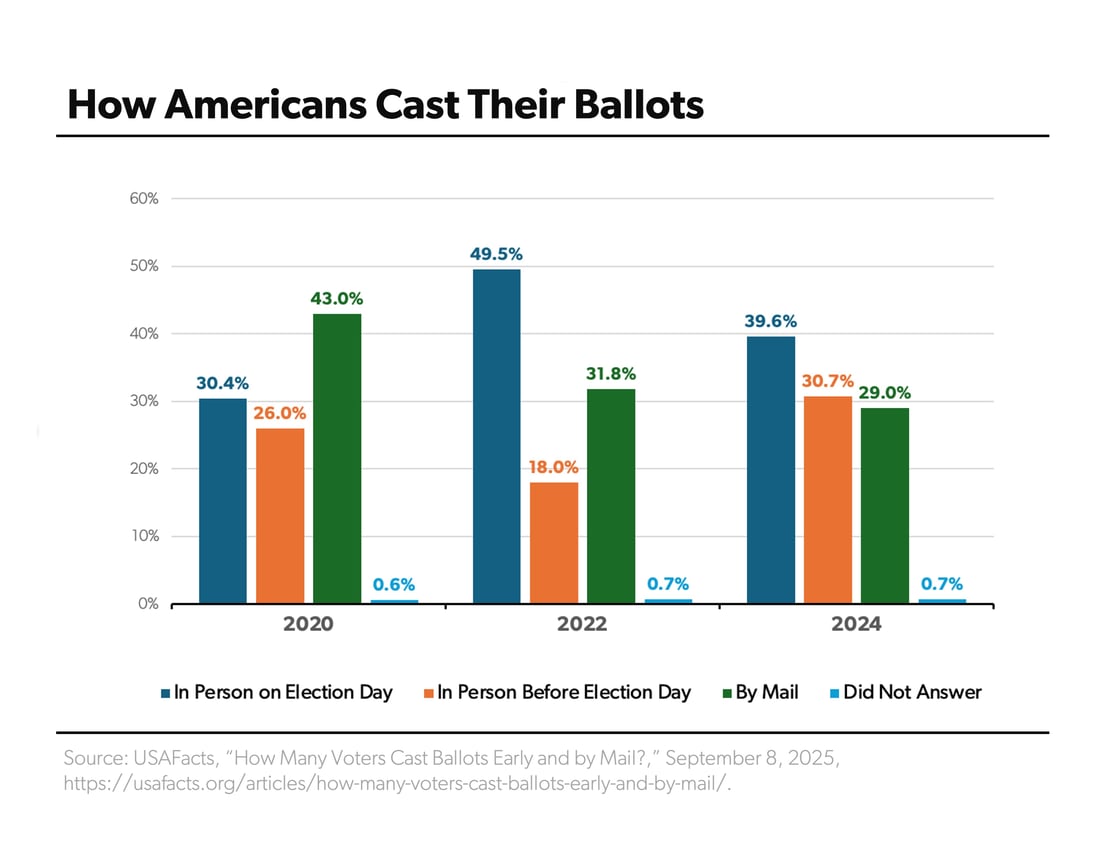
Battle of the Ballot Box: Voting by mail hit peak numbers in the 2020 presidential election, when approximately 43 percent of voting was done by mail and only 30.5 percent in person on Election Day. The 2024 presidential election saw the second-highest percentage of mail ballots cast at 30.6 percent. While 36 states require ballots to be received by Election Day, 14 states allow ballots postmarked by Election Day to be received afterward. The Supreme Court is debating issues related to when an absentee ballot must be accepted.
Until the Last Vote Is Cast: Fortier argues that several historical points support an Election Day deadline for mail ballots, as federal law can preempt state election laws on the timing of elections. He also outlines how a key purpose of the Election Day laws is to combat fraud, since much of the voting system centers on a specific election date and polling place. However, if the Court accepts the argument that a ballot can be cast before Election Day by placing it in the mail, the laws allowing post–Election Day arrival will likely stand.
“The legal and constitutional question before the Court is whether a federal law setting Election Day requires states to have the Election Day deadline for receiving a ballot or whether it permits states to enact laws allowing ballots to be received by election officials after Election Day as long as they are postmarked by Election Day.”
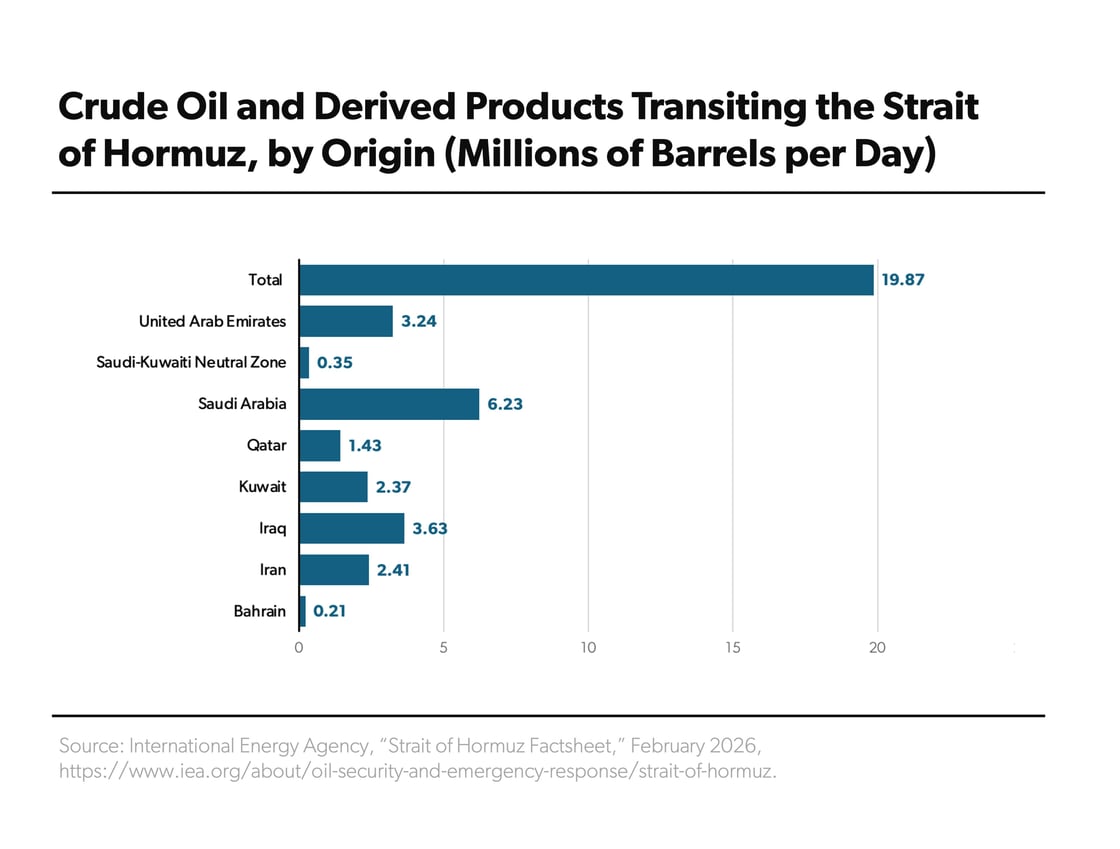
Topline: The prolonged closure of the Strait of Hormuz and conflict in Iran will have dire consequences for the US and world economies, writes AEI’s Desmond Lachman. While only around 20 percent of the world’s oil supply and 20 percent of the world’s liquified natural gas supply transits through the strait, the supply shock is already affecting other industries. President Trump has indicated progress toward reopening the strait in the near term, but a long-term plan will be essential.
Supply Shocks Turn to Sticker Shocks: Around 30 percent of the world’s seaborne fertilizer supply, 9 percent of the world’s aluminum supply, and 30 percent of the world’s helium supply have been affected by the closure of the Strait of Hormuz. A shortage of fertilizer at the start of the northern hemisphere’s spring planting season may drive food prices higher later in 2026, and a shortage of helium may have serious impacts for semiconductor production and for AI data center deployment.
Economic Headwinds: The US and world economies are already facing high energy costs, with Brent crude oil rising from $60 a barrel before the war to almost $120 a barrel at times during the war. Never have the US and world economies been as indebted as they are today, leaving governments with much less fiscal space to cope with supply shocks than in the past. Considering these pressures, President Trump should secure an opening for the strait to protect supply chains and economic stability.
“Indeed, the very different nature of the current Strait of Hormuz–induced supply shock from previous supply shocks makes it difficult to see how a prolonged closure of that strait will not cause a US and world economic recession.”
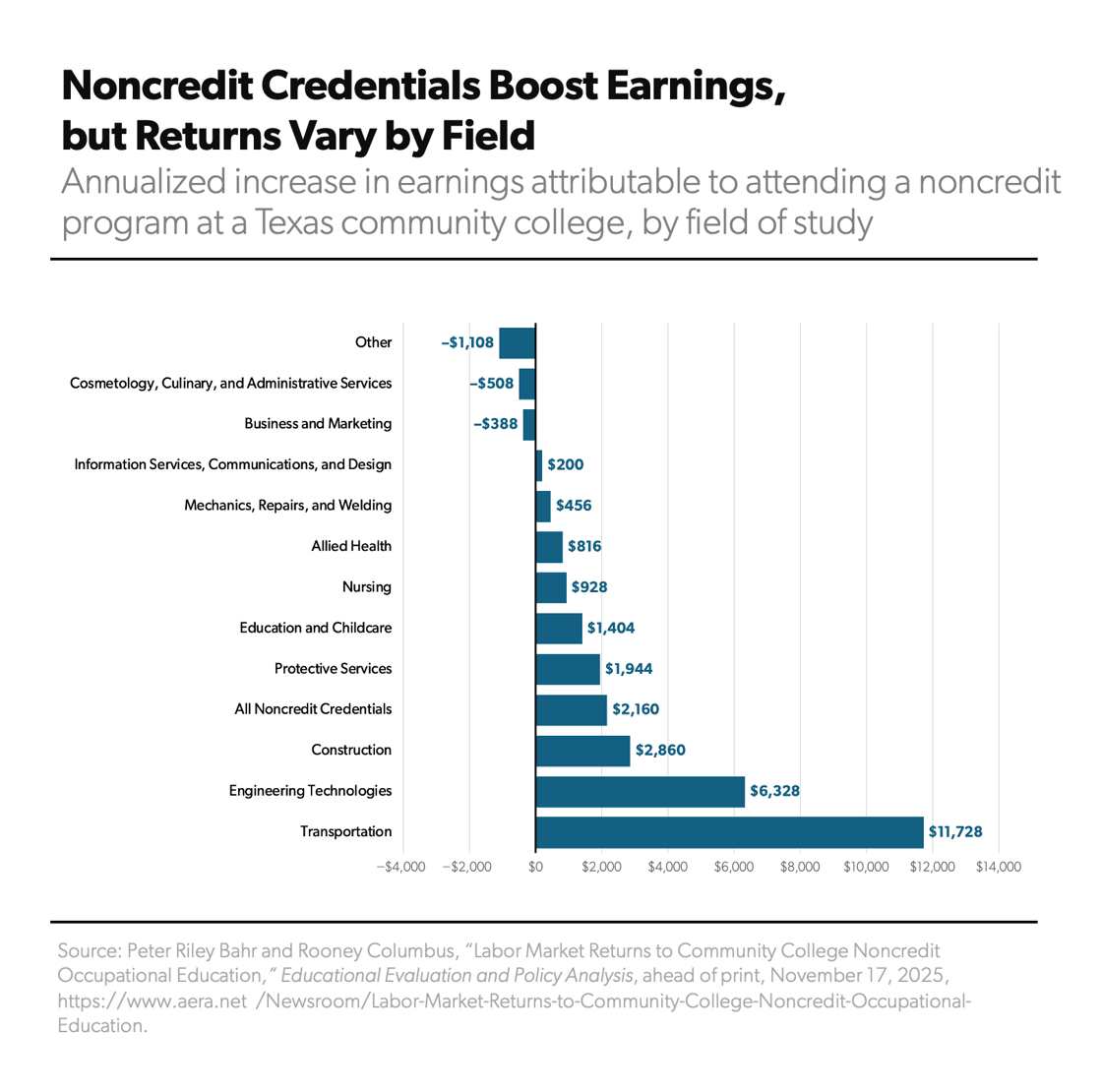
Topline: Starting July 1, workforce programs between eight and 15 weeks long can qualify for federal Pell Grants, helping to level the playing field between traditional degree programs and workforce education. To qualify, workforce programs must demonstrate completion and employment rates over 70 percent, and median graduates must earn at least $23,940 plus the cost of tuition. AEI’s Preston Cooper argues that, to ensure efficient use of taxpayer dollars for this program, Workforce Pell money must go to only the highest-quality programs.
A New Education Opportunity: Workforce Pell operates as a partnership between states and the federal government, in which each state’s governor sends the US secretary of education a list of eligible workforce programs, and the secretary of education verifies each program meets the requirements. However, no federal earnings data are available for programs newly eligible for Workforce Pell, as they don’t yet have any federally aided students to track. Therefore, certain programs may receive Pell Grants, only to find their earnings outcomes render them ineligible in 2030.
A Gap in Income Data: To mitigate this lack of federal data, Cooper advocates for state governors to critically examine the earnings of each workforce program before putting it forward for Workforce Pell Grants. State governors can assess this information by using data from cohorts of students who finish the program and enter the labor force before Pell dollars start flowing. The Department of Education should also strongly discourage governors from certifying workforce programs that are unlikely to pass the earnings test.
“In the past, the federal government splashed out grant and loan subsidies to higher education without regard for quality or outcomes. Workforce Pell Grants are designed not to repeat the mistakes of the past.”