A message from Brownstone Research Editor’s Note: What if you could claim a stake in what’s set to be the biggest IPO ever… starting with just $500? Click here to see the details from former tech executive and angel investor Jeff Brown — the man who picked Bitcoin, Tesla, and Nvidia before they exploded higher. Or read more below.
Dear Reader,
What if you could claim a stake in what’s set to be the biggest IPO ever… starting with just $500?
Click here to see the details because everyone is talking about Elon Musk’s SpaceX IPO.
CNBC called it “the big market event of 2026.”
And The New York Times predicted…
This IPO “will unleash gushers of cash for Silicon Valley and Wall Street.”
You see, this is NOT about launching rockets to Mars, satellite internet, or anything you’ve heard from the media.
It’s much bigger than that…
Because this IPO is a key part of Elon Musk’s secret AI masterplan…
A plan that I believe will unlock the full power of artificial intelligence...
Unleashing what Elon Musk is predicting will be…
A $1 quadrillion new wealth wave.
Just to put that into perspective…
That would be enough to send a check for $2.8 million to every single man, woman, and child in America.
That’s how big this opportunity is.
Click here to get the details and I’ll show you how to claim your stake…
Starting with just $500.
We have so much to look forward to,
Jeff Brown
Founder & CEO, Brownstone Research
This Week's Exclusive Article 2 Lesser-Known Photonics Firms May Play an Outsized Role in AIWritten by Nathan Reiff. Date Posted: 3/25/2026. 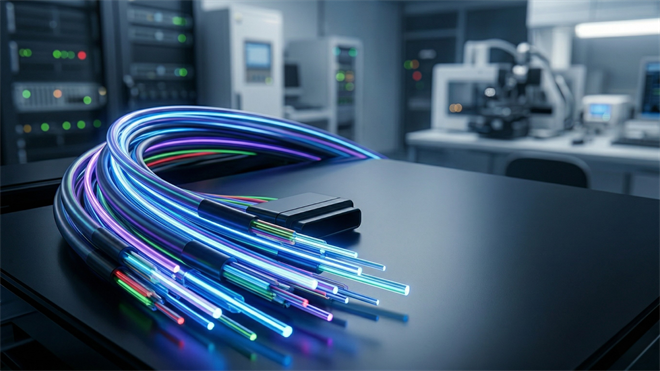
Key Points
- In early March, NVIDIA made a key investment of $2 billion each in two photonics firms, sparking renewed interest in this lesser-known technology that could have big implications for AI.
- Coherent was one of the beneficiaries of NVIDIA's investment, with momentum supported by production increases, data center business growth, and more.
- Nova is another company operating adjacent to these firms that has benefited from surging demand from semiconductor makers.
- Special Report: I tested Elon’s AI against ChatGPT…one tech won
 While uncertainty over the war in Iran has raised concerns about possible disruption to the artificial intelligence industry's rapid growth, so far there has been no notable sell-off among major AI names. As a result, the sector's losses haven't outpaced the broader S&P 500's 4% year-to-date (YTD) decline.
In fact, despite external turbulence, new opportunities may be emerging in the AI ecosystem. NVIDIA (NASDAQ: NVDA) invested $2 billion each in two smaller companies focused on photonics—Lumentum Holdings (NASDAQ: LITE) and Coherent Inc. (NYSE: COHR)—a move that could signal growing attention on this developing, AI-adjacent technology.
Musk just launched another batch. Bezos secured approval for 50,000 more satellites. Right now, over 15,000 are circling the planet - and that number could triple by next year.
The official story is global internet coverage. But a new presentation argues the real implications reach far beyond connectivity - and could change how the market works. Watch the presentation and see what the satellite race really means NVIDIA appears bullish on photonics' potential role in the next stage of AI infrastructure development. As a result, investors have pushed the shares of those two firms higher over the past month.
This shift in technological focus has helped lift other photonics-related companies as well. Here is what investors need to know.
Coherent's Big NVIDIA News Could Be Transformative, but Investors Should Keep an Eye on Valuation
One of the central challenges in scaling AI infrastructure is bandwidth: traditional inter-chip communication methods can become a bottleneck as AI clusters expand, and photonics may be crucial to increasing that capacity.
NVIDIA has made a sizable bet on Coherent, a leading photonics company with a market capitalization near $51 billion. The companies have a 20-year relationship that was recently deepened by NVIDIA's latest investment under a non-exclusive agreement that still allows Coherent to pursue other business.
COHR shares are up more than 45% YTD, pushing the stock about 11% above the consensus price target of $241.92. Analysts remain generally positive: 14 of 19 covering the stock assign it a Buy rating.
Investors may argue the company's fundamentals help justify its lofty ~270x earnings multiple. Coherent's revenue rose about 17% year-over-year in the latest quarter to roughly $1.7 billion, and earnings per share of $1.29 beat expectations by $0.26.
Those gains are driven by robust data-center demand, a ramp-up in production capacity and optimistic guidance, including current-quarter revenue as high as $1.84 billion and non-GAAP gross margin guidance between 38.5% and 40.5%. However, the $2 billion private placement is dilutive, which adds risk despite NVIDIA's apparent endorsement.
Shares of Photonics-Adjacent Nova Ltd. Are Soaring
With shares up more than 45% YTD, Nova Ltd. (NASDAQ: NVMI) is a photonics-adjacent company quietly building momentum.
Nova's metrology and process-control equipment help semiconductor manufacturers produce photonic components and advanced chips. Those tools are essential for manufacturing and quality control, so the booming AI market has been a strong tailwind for Nova's business.
The company reported record full-year 2025 revenue of $881 million, up 31% year-over-year, and forecast Q1 2026 revenue between $222 million and $232 million.
Although Nova hasn't received a major NVIDIA investment, it is gaining traction with several unnamed semiconductor manufacturers that have adopted its Metrion platform for production. Those partnerships should support revenue over the long term and may help insulate Nova from cyclical swings.
Of 10 analysts covering NVMI, nine rate it Buy, even though the stock trades about 9% above the consensus price target. Like Coherent, Nova's recent rally has stretched its valuation, though not to the same degree: the company currently trades at roughly 60x earnings. Investors attracted to Nova may believe long-term partnerships will sustain its growth as a key supplier in semiconductor manufacturing.
Given the substantial rallies in these and other photonics-related stocks, cautious investors worried about buying near the top may wait for a pullback. Both Coherent and Nova are now in a position to demonstrate their value to major manufacturers like NVIDIA—or to face a sell-off if enthusiasm fades. For investors bullish on the role of photonics in AI, these companies could be reasonable places to begin further research.
Today's Featured Article Why Meta's AI Chip Announcement Has Broadcom Investors Paying AttentionBy Leo Miller. Article Posted: 3/18/2026. 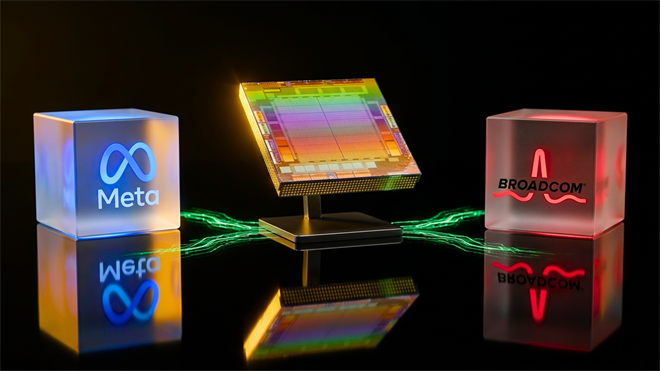
Key Points
- Meta publicly confirmed Broadcom as its custom chip partner for the first time, removing lingering doubts about one of Broadcom's most important AI relationships.
- The MTIA chip roadmap is expanding from ranking and recommendation into generative AI inference—a workload many expect to dominate AI compute by decade's end.
- One notable gap in Meta's announcement: no generative AI training chip, lending weight to reports that its most ambitious custom silicon project has been shelved for now.
- Special Report: I tested Elon’s AI against ChatGPT…one tech won
In a recent announcement, the Magnificent Seven tech giant Meta Platforms (NASDAQ: META) unveiled four customized artificial intelligence (AI) chips. This follows semiconductor design behemoth Broadcom’s (NASDAQ: AVGO) recent earnings report, in which CEO Hock Tan specifically addressed Meta.
Meta's announcement signals a direct acknowledgment of Broadcom and has clear positive implications for AVGO, though there are also risks. What does this mean for Broadcom going forward?
META and AVGO Confirm MTIA Partnership
Musk just launched another batch. Bezos secured approval for 50,000 more satellites. Right now, over 15,000 are circling the planet - and that number could triple by next year.
The official story is global internet coverage. But a new presentation argues the real implications reach far beyond connectivity - and could change how the market works. Watch the presentation and see what the satellite race really meansMarket watchers have long suspected Meta was a buyer of Broadcom’s custom AI processors, but Broadcom itself had not publicly named Meta in that role—until now. On Broadcom’s Q1 2026 call, Tan said, “Contrary to recent analyst reports, Meta's custom accelerator MTIA road map is alive and well. We're shipping now.”
MTIA, which stands for Meta Training and Inference Accelerator, is a custom chip family developed in partnership with Broadcom. Tan’s comment followed reports that Meta had paused development of its most advanced training chip, codenamed Olympus.
Notably, Meta specifically mentioned Broadcom in its custom chip press release. The company said, “Meta Training and Inference Accelerator (MTIA), our family of homegrown AI chips developed in close partnership with Broadcom, has remained and will continue to be an important part of Meta’s AI infrastructure strategy.”
Markets had generally accepted this partnership before, but both companies publicly acknowledging it now removes any remaining doubt.
The Good: META-AVGO Partnership Expands Into GenAI
The title of Meta’s post, “Four MTIA Chips in Two Years: Scaling AI Experiences for Billions,” supports the bullish scenario Broadcom outlined on its earnings call. Hock Tan noted that many customers are moving to develop two custom chips with Broadcom per year—exactly the pace Meta described—lending credibility to Broadcom’s account and suggesting deeper customer relationships.
Meta is using MTIA for training and inference on its ranking and recommendation (R&R) models—training to develop more capable models and inference to deploy those models to answer queries and perform tasks.
R&R training and inference help Meta deliver more engaging content and more targeted ads across its platforms. The company has roughly 3.5 billion users across its apps—more than 40% of the world’s population—so its compute needs are vast and ongoing.
The MTIA series also extends beyond R&R. Meta plans to use MTIA 450 and MTIA 500 to enable GenAI inference, with mass deployments expected in 2027. GenAI inference likely includes chatbot queries, image and video generation, and AI business agents in WhatsApp.
While experts generally don't view Meta’s LLaMa models as state-of-the-art compared with ChatGPT, Claude, or Gemini, they can still be useful and monetizable. Meta AI already has over 1 billion users, creating a sizable opportunity to generate revenue.
For Broadcom, expanding MTIA beyond R&R into GenAI inference should translate into additional chip sales as it supports both Meta’s core workloads and emerging GenAI use cases.
The Bad: META-AVGO GenAI Training Chip Takes a Back Seat
Meta’s announcement did not include a GenAI training chip, which adds weight to reports that development of Olympus has been scaled back. Meta's Chief Financial Officer, Susan Li, recently said at the Morgan Stanley Technology Conference that the company “expects” and is “hopeful” it can expand its use of custom silicon to train AI models “eventually.”
That uncertainty is a negative for Broadcom, which would likely have co‑developed Olympus with Meta. It does not mean those ambitions are dead, but it does suggest the timeline for meaningful revenue from a GenAI training chip could be significantly longer than previously anticipated.
AVGO and META: Powering the Growth in AI Inference
Overall, Meta’s relationship with Broadcom is now publicly substantiated and appears to be growing—particularly around inference workloads rather than large‑scale GenAI training.
Importantly, many expect inference to become the dominant AI workload in the coming years. Analysts predict that inference could grow at a compound annual rate of roughly 35% over the next five years, accounting for more than half of AI compute by 2030.
That outlook supports Broadcom’s case: as Meta leans on MTIA for inference, Broadcom’s role in powering those deployments—and the associated revenue opportunity—appears to be strengthening.
Thank you for subscribing to The Early Bird, MarketBeat's 7:00 AM newsletter that covers stories that will impact the stock market each day. This email message is a sponsored message from Brownstone Research, a third-party advertiser of The Early Bird and MarketBeat. If you need help with your account, please email MarketBeat's U.S. based support team at [email protected]. If you no longer wish to receive email from The Early Bird, you can unsubscribe. © 2006-2026 MarketBeat Media, LLC. All rights protected. 345 N Reid Place, Suite 620, Sioux Falls, South Dakota 57103-7078. United States. . Further Reading: Ticker Revealed: Pre-IPO Access to "Next Elon Musk" Company
|
|