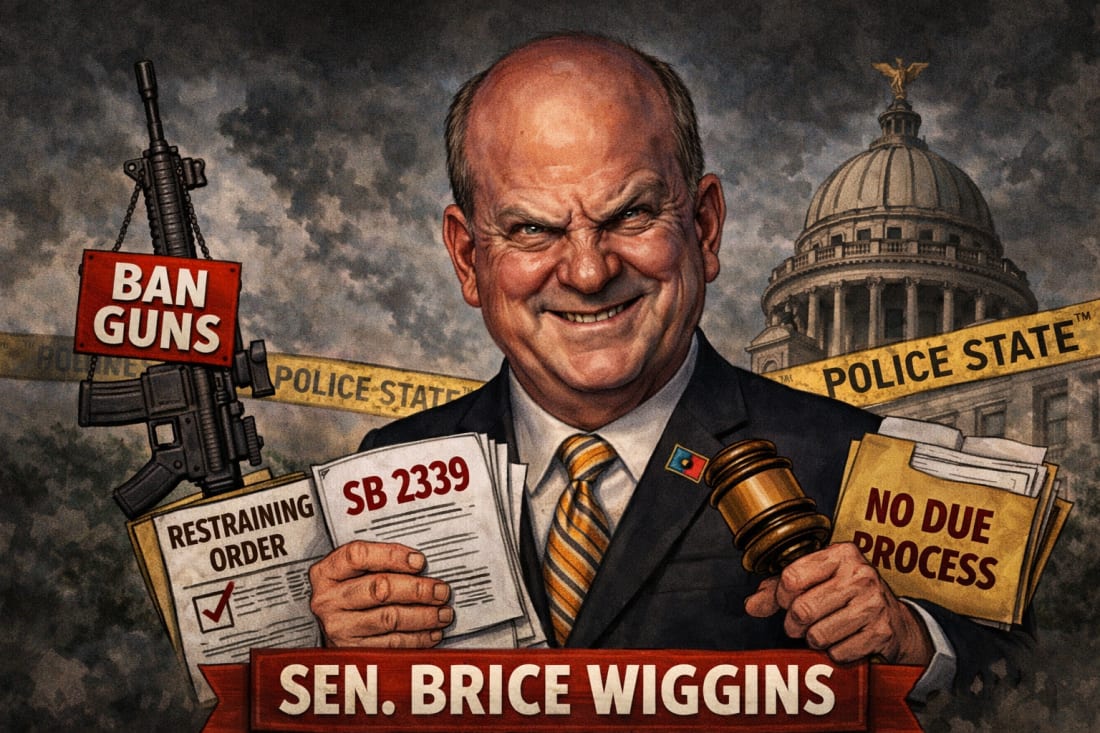
Imagine waking up one morning to discover you are now a felon—without ever having harmed anyone, without a trial by jury, and without any chance to defend your constitutional rights in a meaningful way. That is the danger lurking inside Mississippi’s SB2339.
On paper, this bill claims to protect victims of domestic abuse. In practice, it quietly hands government sweeping power to strip citizens of their Second Amendment rights based on civil paperwork, judicial hunches, and misdemeanor convictions—often from messy, highly emotional situations where facts are disputed and due process is thin.
SB2339 does three key things. First, it makes it a crime to possess a firearm if you are under certain domestic restraining orders or have been convicted of a misdemeanor domestic violence offense. Second, it lets courts order the removal of firearms whenever a judge finds a “risk” to health and safety. Third, it requires that these firearm removal orders be rapidly entered into the Mississippi Protection Order Registry so law enforcement can move swiftly to enforce them.
At first glance, that may sound reasonable. No one wants dangerous abusers armed. But we already have laws to disarm people who are truly violent and convicted of serious crimes. SB2339 goes much further by turning restraining orders—often issued in civil court, on a “better safe than sorry” basis—into automatic triggers for criminalizing gun ownership.
Restraining orders can be obtained quickly, sometimes ex parte, meaning the accused person is not present to defend themselves at the initial hearing. They may be based on one side of a story, in the heat of a breakup, divorce, or custody battle. Under SB2339, that civil order can suddenly transform a law‑abiding citizen into a criminal for simply having a hunting rifle in the closet.
Misdemeanor domestic violence offenses are also not always clear-cut. They can include low-level conduct, plea bargains taken to avoid the risk of a felony, or cases where both parties share blame. Yet SB2339 treats these lesser offenses as grounds for lifetime consequences on a fundamental constitutional right.
The bill’s reliance on a judge’s finding of “risk” is especially troubling. “Risk to health and safety” is a vague, elastic standard. One judge might see a shouting match as evidence of danger; another might not. When the result is armed officers coming to your home to confiscate your property and potentially arrest you, we should demand far more precise criteria and robust safeguards.
SB2339 also expands police authority by mandating rapid database updates and enforcement of firearm removal orders. When the clock is ticking and the law emphasizes speed over scrutiny, the chance of error, overreach, or even dangerous confrontations at a person’s home increases.
Mississippians can both protect victims and protect liberty. We should focus on enforcing existing laws against true violence, improving services for those in danger, and ensuring that any loss of rights follows full criminal due process—not the stroke of a pen in civil court.
Contact your legislators and urge them to oppose SB2339. Tell them to stand for both safety and the Constitution by rejecting laws that trade away due process and fundamental rights for the false comfort of expanded government power.