
February is Black History Month, a time to reflect on and honor the history, contributions, and culture of the Black community.
For centuries, countless Black leaders have made game-changing contributions to public health and medicine, including notable nurses such as Harriet Tubman and Mary Eliza Mahoney, the first Black woman to earn a professional nursing license in the United States.
As we celebrate these trailblazers, we must also recognize the ongoing racism and disparities Black communities still face, and we must keep working to resolve them.
Health and health care aren’t one-size-fits-all, and all too often — both now and throughout history — Black patients in the United States experience disparities in their care and health outcomes compared to white patients.
According to KFF, Black patients face greater barriers to care, including:
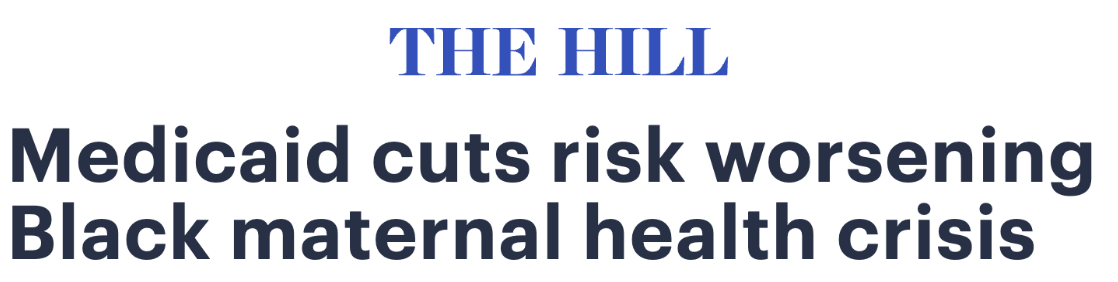
As a result, Black people statistically experience worse health outcomes than their white counterparts, including lower life expectancy, higher maternal and infant mortality rates, and higher rates of chronic diseases such as diabetes, asthma, and HIV and AIDS.
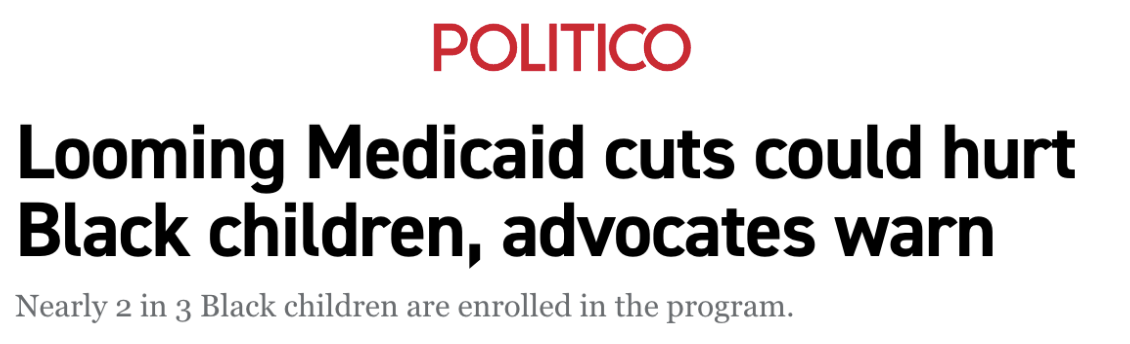
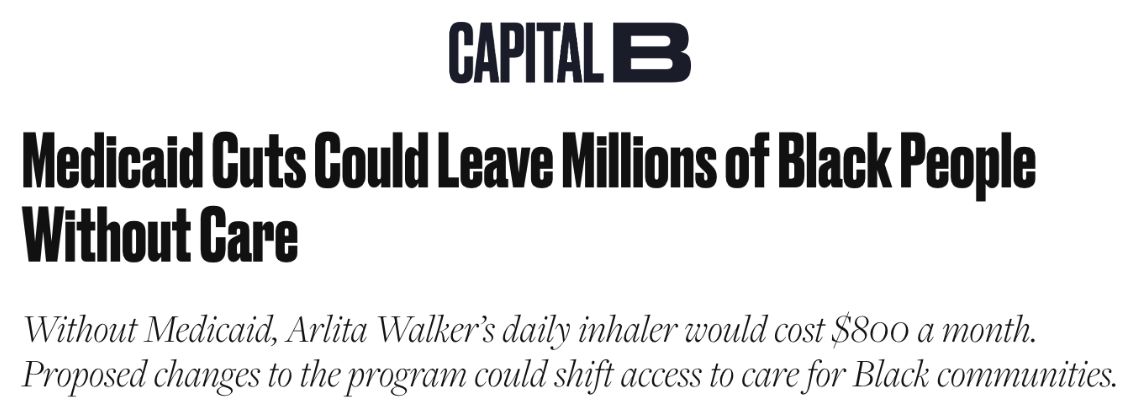
Unfortunately, experts say we can only expect these disparities to worsen with the nearly $1 trillion in cuts to Medicaid, Medicare, and other federal health care programs that Congressional Republicans and President Trump passed last year to pay for billionaire tax cuts.
To achieve true health care justice, we need Medicare for All: a single-payer, national health care system in the U.S. that guarantees care for all free at the point of service, regardless of race, ethnicity, country of origin, immigration status, sex, gender, marital status, age, or income.
Expanded and improved Medicare for All means everybody in, nobody out. This legislation would go a long way in addressing health disparities, effectively controlling costs, and ensuring that everyone is guaranteed an excellent standard of care across the entire country.
Today, Medicare for All has more momentum than ever before, but we need to keep building the public support and political will necessary to pass it into law.
In solidarity,
National Nurses United

 |
 |
 |
This email was sent to [email protected]. Email is the most important way we stay in touch with you, but if you want to unsubscribe from our mailing list, you can remove yourself here.