February 9, 2026

Dear Georgian,

As Americans enter tax season, they will reap the benefits of the Working Families Tax Cuts and the greatly simplified tax code. It was your money to start with, and you are getting a little more back than you would have. You decide what you want to do with it. That's why we call it the Big Beautiful Bill, because letting working families keep more of their money is a beautiful thing.

For starters, no American family will pay taxes on their first $31,500 of income due to the increased Standard Deduction. Because of this, Americans will also save an estimated 210 million hours in paperwork and $13 billion in compliance costs annually.

Because these tax cuts are retroactive to 2025, the average refund is projected to increase by $1,000 this filing year, with a total of $91 billion in additional refunds being returned to the American people this spring.

Through the Working Families Tax Cuts, House Republicans have turned what is historically a season of dread for American families into a season of relief. 

As always, my staff and I are here to help. If you need assistance with a federal agency or have comments or concerns to share with me, please do not hesitate to call my Warner Robins, Tifton, or Washington, D.C. offices. To receive frequent updates, I encourage you to visit my website, like my Facebook page, follow me on YouTube, and follow me on Twitter.

Keep reading for the full update.

Sincerely,
Image


Congressman Austin Scott


Image

Image

Passing PBM Reform

Last week, the House of Representatives passed the Consolidated Appropriations Act that included much needed reform to Pharmacy Benefit Managers (PBMs) that will result in lower health care costs for Americans.

This legislation included increased price transparency, restrictions on how PBMs can be paid in Medicare Part D, and new reporting requirements. PBMs are now mandated to provide detailed, semiannual reporting to employer plans regarding net drug spending and rebates.

House Republicans are bringing the cost of health care down for Americans by going after PBMs and their harmful practices.

Image

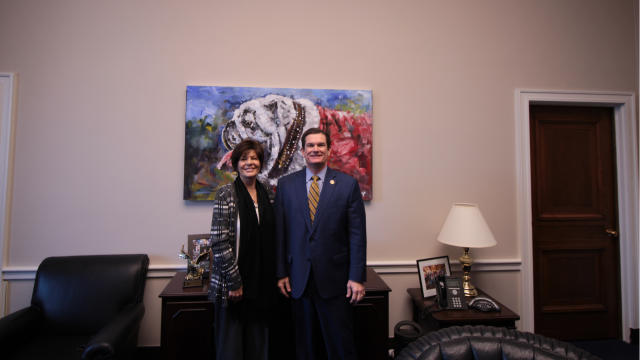
Meeting with Assistant Secretary Yvette Herrell

Last Wednesday, I met with Assistant Secretary for Congressional Relations at the United States Department of Agriculture, Yvette Herrell.

Assistant Secretary Herrell is also a former colleague of mine. She served in the House of Representatives as the representative for New Mexico's 2nd district.

She was officially sworn in to her new role on January 5th of this year, and I am excited to continue working with her and her staff.

Image

Meeting with Members of the German Parliament

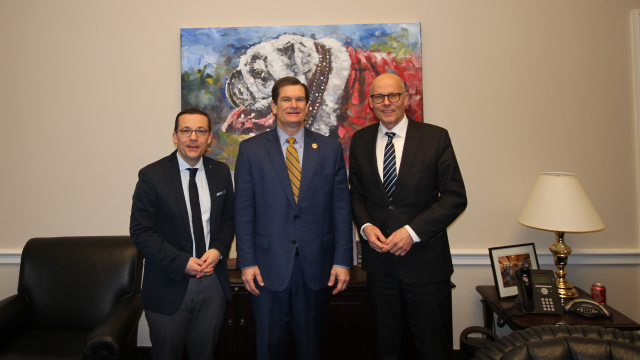
Also last Wednesday, I had the pleasure of meeting with two members of the German Parliament, Mr. Peter Beyer and Mr. Roland Theis.

We discussed the value of NATO and the need for all parties to provide the resources that they committed to provide for the defense of the free world. Many NATO countries have committed to buy equipment in the past and the neglected their obligations. Canada has a horrible track record of promising support to NATO and then providing a small fraction of their obligation.

Image

Image

Speaking on the Importance of Full Funding for DHS

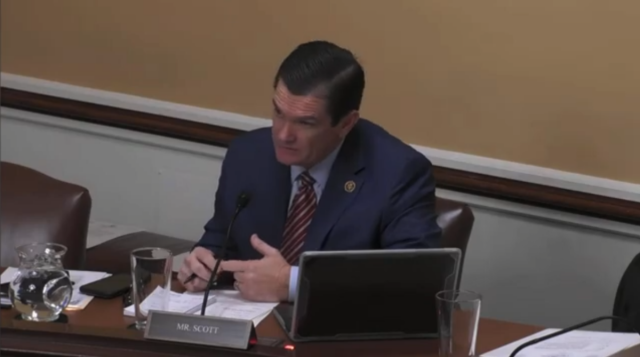
Last week, during our Rules Committee hearing, I made sure to highlight the importance of funding the Department of Homeland Security. 

DHS is in charge of funding more than just Immigration and Customs Enforcement, but also the United States Coast Guard, FEMA, Customs and Border Patrol, and other critical national security programs.

Watch my full remarks here.

Image

House passes bill to end shutdown, fund Pentagon

WASHINGTON — The House passed a $1.2 trillion spending package on Tuesday to end a partial government shutdown and provide $839 billion in full-year funding for the Pentagon, including a pay raise for service members.

The 217-214 vote clears the legislation for President Donald Trump’s signature. The package funds the Pentagon and large parts of the federal government through Sept. 30 while funding the Department of Homeland Security, including the Coast Guard, through the end of next week.

A partial government shutdown began Saturday after Senate Democrats angered by the fatal shooting of a Minneapolis resident by federal immigration enforcement agents demanded changes to a funding package the House passed and sent to the Senate two weeks ago.

A resulting bipartisan deal to fund the Department of Homeland Security for two weeks rather than a year is meant to give lawmakers time to negotiate over proposed restrictions on the Trump administration’s immigration crackdown.

But it also means flat short-term funding for the Coast Guard, which operates under the Homeland Security Department in peace time, argued Rep. Austin Scott, R-Ga., a member of the House Rules Committee and the House Armed Services Committee.

“They’re forcing a continuing resolution on the United States Coast Guard,” he said on Monday. “The only thing this is better than is a shutdown but we’re going to be right back here in two weeks.”

The rest of the funding package provides full funding for the 2026 fiscal year, which began on Oct. 1 for the Defense Department and the vast majority of the federal government.

It contains $8 billion more for defense than the Trump administration had requested, though Senate appropriators had initially sought a $22 billion funding hike. The bill comes on top of a $150 billion boost given to the Pentagon in a Republican megabill last year.

The legislation approved Tuesday funds the priorities outlined in an annual defense policy bill passed in December, including the 3.8% pay raise troops received last month and an additional pay raise for junior enlisted service members.

It also funds a 1% pay bump for the Pentagon’s civilian employees.

Rep. Ken Calvert, R-Calif., the chairman of the defense appropriations subcommittee, said the bill meets the challenges posed by adversaries such as China, Russia and Iran as well as illicit drugs that “continue to harm Americans here at home.” 

“It provides $839.2 billion to strengthen deterrence, support the administration’s America First defense agenda and to modernize our force,” he said on Tuesday. “These are strategic investments to protect the American people, project strength abroad.”

The bill funds 17 new ships, increases funding for a variety of aircraft purchases and provides multi-year procurement authority for critical munitions production — a key priority for the administration. 

It also rejects the administration’s desire to cut funding for a long-running program to arm and train the Ukrainian military, instead allocating $400 million for the initiative. An additional $200 million is being provided for a similar program for the Baltics.

Defense hawks have described the legislation as a step in the right direction but said it still falls short of the Pentagon’s needs, pointing to a funding gap of at least $40 billion for 2026. Trump has said he will ask Congress for a $1.5 trillion defense budget for the 2027 fiscal year.

Read more here.


If you wish to unsubscribe from this newsletter, please click Here.
NOTE: Please DO NOT respond to this email as this mailbox is unattended. 
To contact my office please click here.
 
Open in browser Open in plain text Forward
imageimage