|
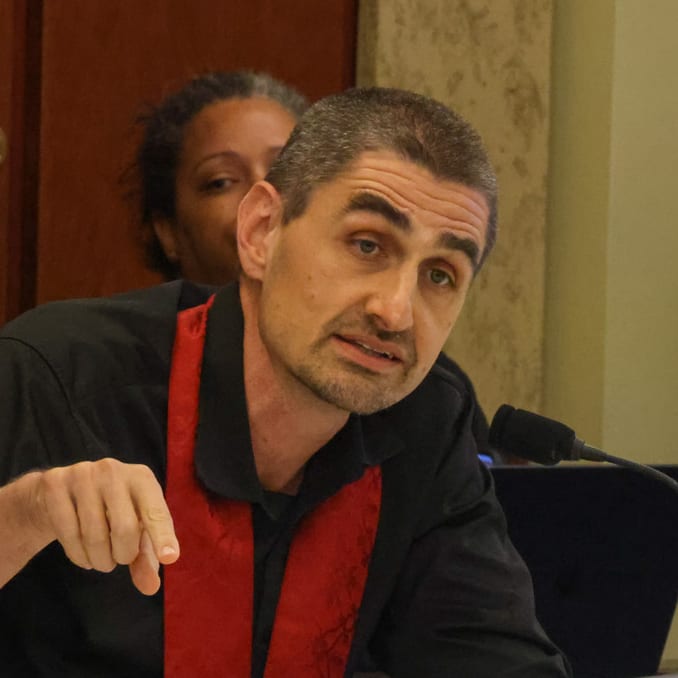


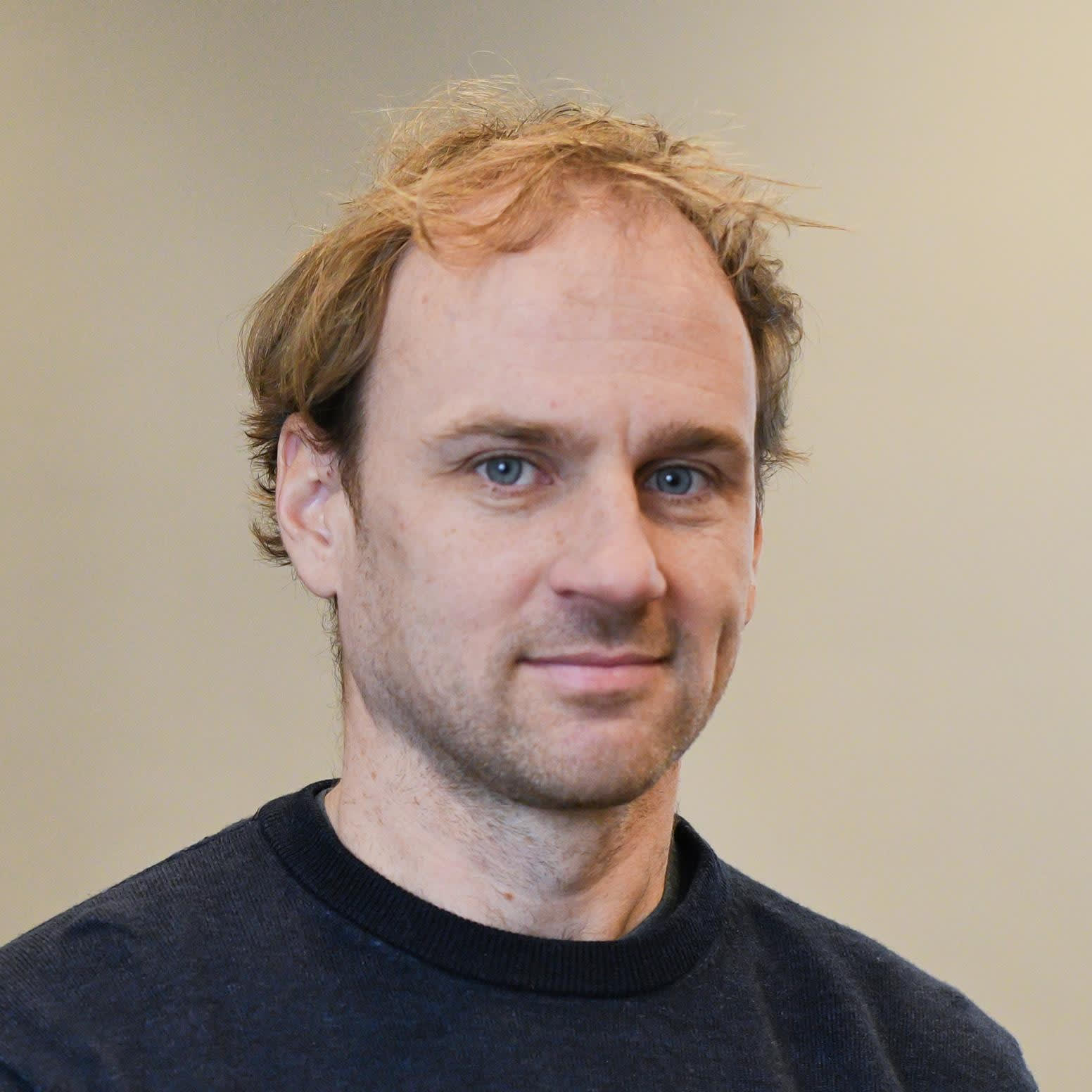
Editorial note: Last Friday, Jonathan talked with Indivisible’s Ezra Levin about the nonviolent witness in Minneapolis and the need for all of us to learn from the community there. Today, we welcome Isak Tranvik as a guest columnist for Our Moral Moment. Isak teaches nonviolence at Metro State University in St. Paul, Minnesota and has been watching the emerging nonviolent movement in his home town in light of movements he has studies around the world. We’re grateful for the opportunity to share his on-the-ground analysis with you.
By Isak Tranvik
Minnesotans’ response to the federal occupation has rightfully received much attention. Commentators have noted the ways that ordinary people have suddenly become constitutional observers, served on school patrols, and participated in mass marches in subzero temperatures. Some have also noted the quieter but still herculean efforts to check on neighbors, walk kids to school, or do laundry for those scared to leave their homes.
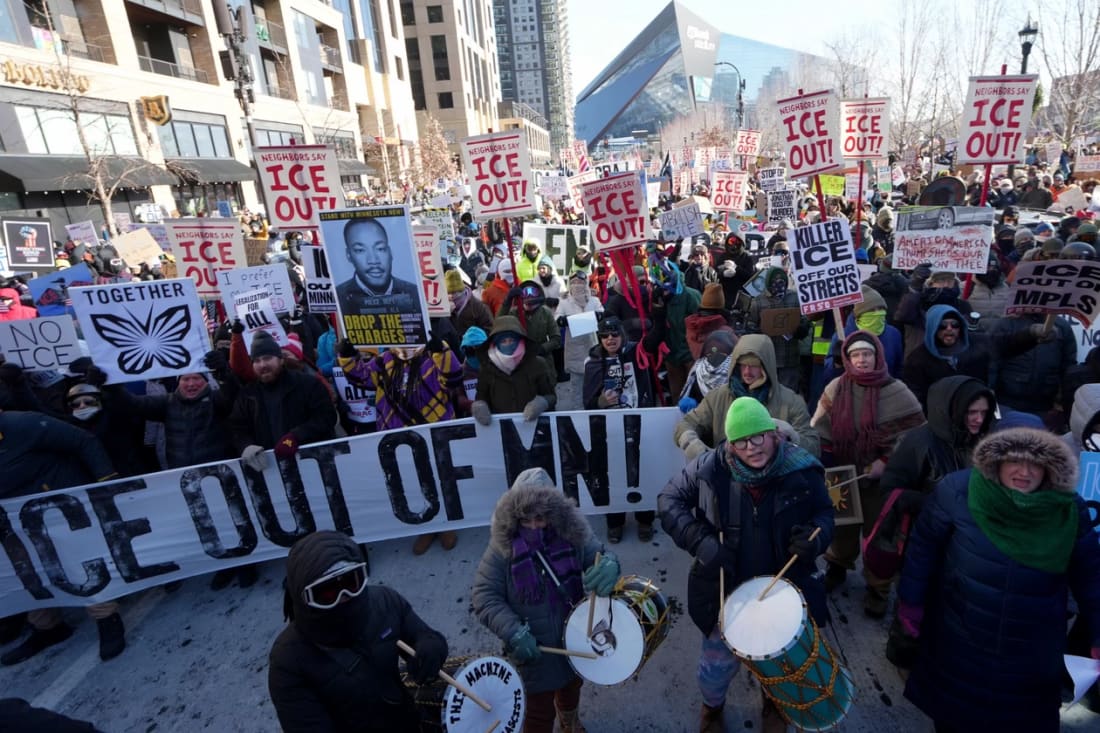 |
Nonviolence has quickly become a key part of the story here in Minnesota, too. But because it is often conflated with “peaceful protests” or overshadowed by anti-ICE “activism,” nonviolence has largely gone unnoticed in media coverage.
What’s happening cannot be reduced to an exercise of one’s First Amendment rights during a formal protest or frequent scuffles at the Whipple Building.
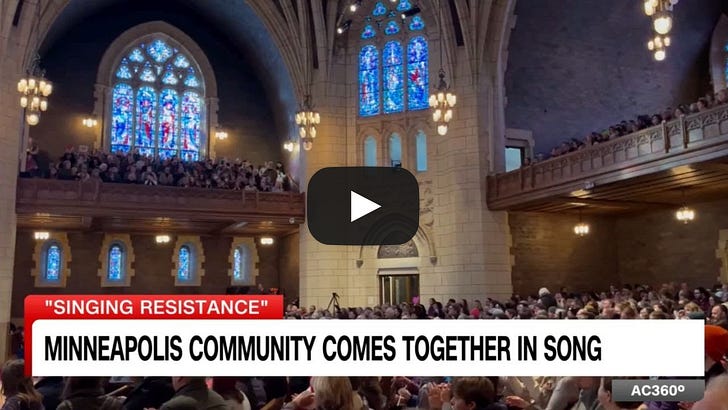
Nonviolence names a more subversive response to the spectacular violence unleashed by the armed, masked men in our parks, schools, places of worship, and bus stops. From clergy participating in civil disobedience to the “singing resistance” to boycotts of local corporations, the nonviolence unfolding here is better described as an embodied practice of refusal than an exercise of free speech or one-off demonstrations. Nonviolence interrupts the terror unleashed by the armed, masked men while also revealing that we can live together differently, here and now.
Nonviolence is less a protest than an opening up of another world and an unleashing of a different kind of power.
Part of the reason that nonviolence has caught on is undoubtedly due to the fact that we in Minnesota are no match for the federal government. As many Minnesotans grimly note, they have machine guns and a $175 billion budget; we have whistles and Go Fund Me. In that sense, nonviolence is not carefully chosen as much as it is our only hope. We simply do not have other options.
But I also think Minnesotans have been drawn to nonviolence because of its symbolic significance. On the one hand, it connects the efforts in Minnesota to historical struggles against authoritarianism in the United States. At the same time, an embrace of nonviolence draws a stark contrast between the armed, masked men and those who challenge them.
While they yank people from their cars with their guns drawn, pastors kneel in prayer as they are being detained; while they follow volunteers leaving food shelves, singers hold hands as they shuffle down frozen sidewalks; while they shoot constitutional observers in the back, old ladies stand - sometimes for hours - in Target checkout lines waiting to return their single container of salt.
The armed, masked men clearly communicate terror whereas those who practice nonviolence convey a sense of courage, dignity, and resolve.
Perhaps most importantly, though, nonviolence has interrupted the terror that permeates life here now. It is hard to overstate how scared most of us are. Those of us with citizenship and the skin color and accents that MAGA deems sufficiently American are scared for our brown kin, of course. But we are also scared for ourselves and our children; we do not know how this all ends - for our immigrant neighbors, for our city, for us. We do not know if and when constitutional observation or school patrols or marches will be deemed domestic terrorism. Perhaps we are being paranoid. Perhaps not.
Those who embody nonviolence through civil disobedience, singing, boycotts, and marches have found a way to channel another kind of force amidst the terror. They are able to live in the world as it might be even though they are keenly aware that that world is not yet here. They are not simply protesting peacefully because they believe in the First Amendment. Nor are they merely engaged in symbolic actions. They are saying no to mass deportations with their bodies - with their kneeling, their songs, and their feet.
Nonviolence is a negative term, after all. It is a refusal of the way things are. But those who practice nonviolence in Minneapolis - and those us who witness it - are drawn into another world. Nonviolence is opening in a moment when the walls seem to be closing in all around us. It reveals to us that there is another way to live together. We can kneel. We can sing. We can march. We have the power to do these things here and now.
While it has proven contagious, nonviolence does not come from nowhere. It is a practice that, like any other practice, must be taught and learned and refined. In Minnesota, local faith organizations like ISAIAH, community organizations like UNIDOS, and unions like SEIU Local 26 have already begun helping local leaders develop their nonviolent practice. Similarly situated groups and organizations across the US have been preparing their communities to practice nonviolence, and others should follow suit.
That said, nobody knows if nonviolence will “work.” And nonviolence is not a panacea. Like anything else, nonviolence can and will be weaponized to suppress forms of dissent deemed too extreme or unruly. It can and will be used to support a return to the status quo undergirded by less spectacular but still deadly forms of violence.
But one of the lessons of Minneapolis is that nonviolence taps into something much deeper than “peaceful protest.” It is strategically prudent and symbolically rich, yes. Most critically, though, it offers a desperately needed reminder that we can live together differently even - or especially - when the armed, masked men say we cannot.
We can refuse their violence alongside each other, with our prayers and our songs and our feet.
 | A guest post by
|
You’re currently a free subscriber to Our Moral Moment, which is and always will be a free publication. Paid subscribers support this publication and the moral movement. All proceeds from Our Moral Moment are donated to organizations that are building a moral fusion movement for a Third Reconstruction of America.
| ||||||||||

