|
 |
The SAVE Act: Who Stands to Lose the Right to Vote?
A co-reported and personal look at how the SAVE Act would affect two women—and 86 million more like them.
|


| |||||||||||||||


 |
 |
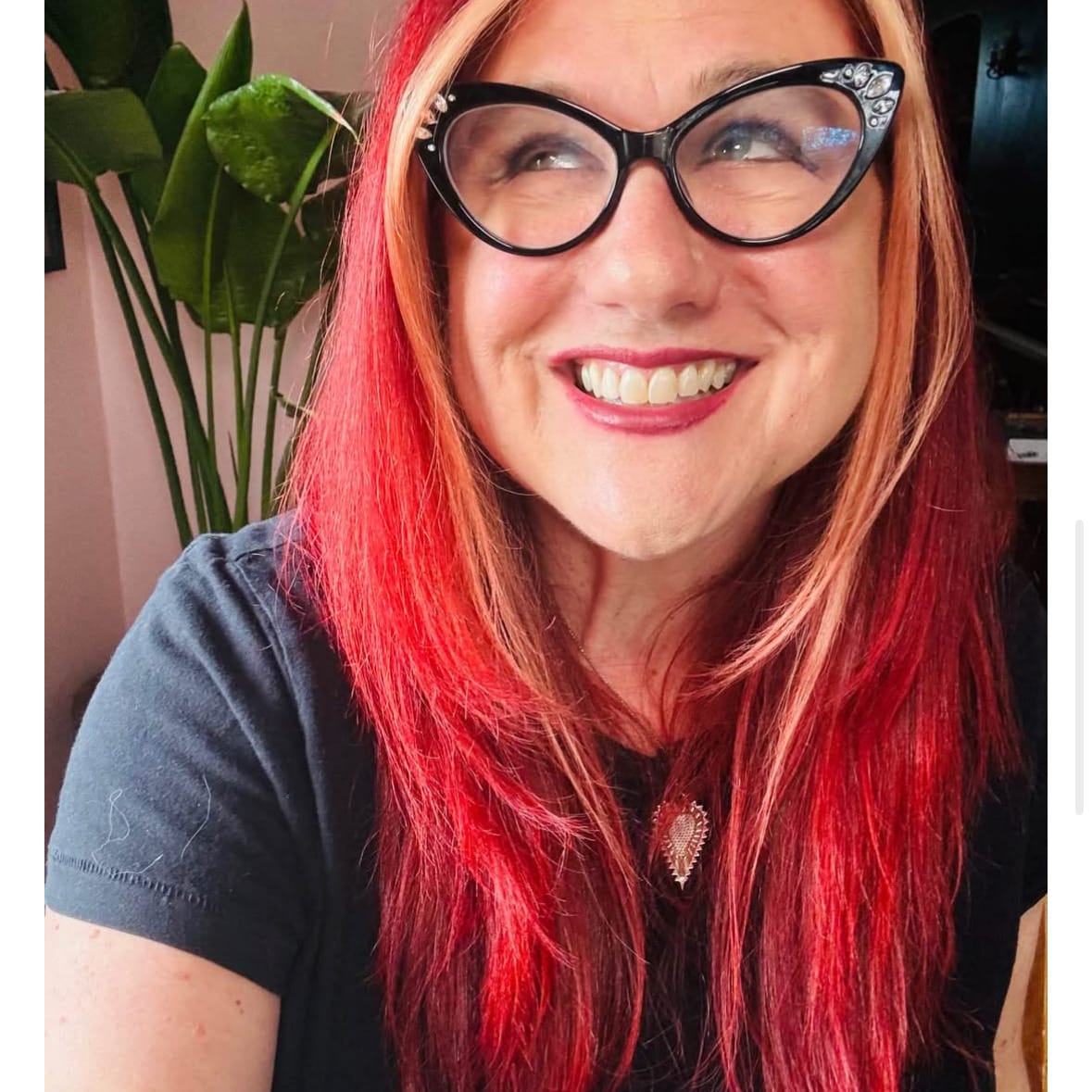
Hey Senators Mark Warner, Senator Elizabeth Warren, Senator Elissa Slotkin, Angela Alsobrooks, Senator Jacky Rosen, Tina Smith, and Kirsten Gillibrand — it’s Melissa Corrigan, she/her and Dana DuBois from Blue Amp Media (BAM) here, and we want to ask you about the SAVE Act. We’re wondering how you plan to protect the millions of women who have ever legally changed their names—through marriage or adoption—so they don’t lose their right to vote.
Not asking for a friend.
Asking for us—and millions of women like us.
Melissa’s story
I’m a disabled veteran and a resident of Virginia who happens to be adopted, divorced, and remarried. To vote under the SAVE Act, I would have to request certified copies of several court documents across three different states in order to vote—an undue financial burden, especially because all of them will need to be rushed so I can vote in my state in April.
FYI: requesting one document with rushed processing and shipping runs around $60—per document—which means my personal cost to exercise my right to vote would be approximately $500. So would my 66-year-old mother. Her burden would be at least $120, and she lives on Social Security.
Two women in one house who would be forced to pay a “tax” to vote—and a significant one at that.
We both have REAL IDs. We have already provided enough documentation to our state DMV to satisfy the rigorous standards required to obtain them. And despite having met all the necessary legal requirements, we would now have to pay for our “right” to vote?
This is unconstitutional and unacceptable.
Dana’s story
Melissa’s story has more dramatic turns. Mine is mundane. And it’s also the lived experience of so many American women. There’s nothing dramatic about it at all—I simply had the audacity to get married and take my husband’s name, as 79% of married women in the country do. Among conservatives, that number rises to 90%.
So yes, I changed my name so it doesn’t match my birth certificate. If the SAVE Act passes, I would be impacted too. I married and then divorced, but I kept my married last name. Which means I would need to obtain proof of both my marriage and my divorce—and maybe a note from the judge saying it was okay for me to keep my married name? Or perhaps written permission from my ex-husband that he approved it?
I’m being tongue-in-cheek here. But at the rate things are going with this administration and the way they’re targeting women? Who knows.
The irony is that my voting history had a rocky start. I’d barely turned 18 when my first opportunity to vote came—and went. Raised in an apolitical home and facing the lesser-of-two-evils choice of Dukakis in the 1988 presidential election, I did what nearly half of Americans did that year: I didn’t vote.
I still regret it.
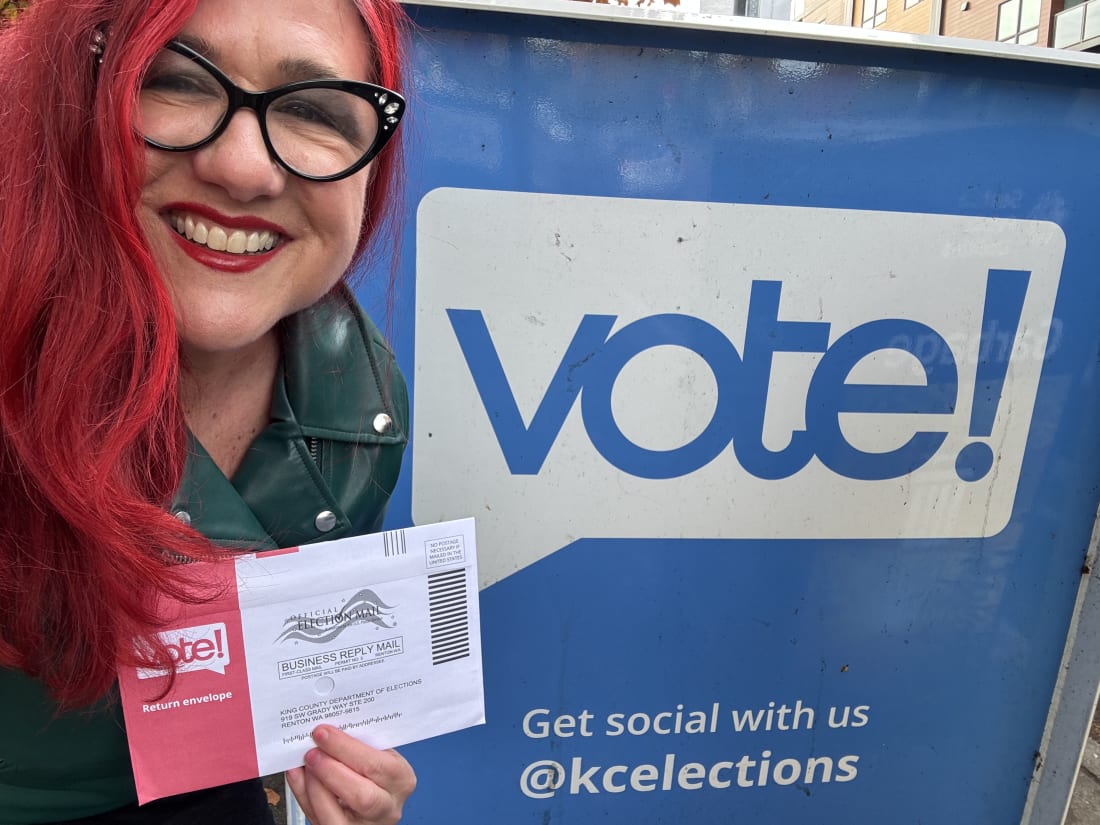
It’s never happened again.I always vote. I see it as a privilege, and I always take a photo to mark the occasion.
I’m well aware I’m standing on the shoulders of women giants in order to be there. And increasingly, I’m aware it could be taken away. I see the SAVE Act as a terrifying turn in that direction.
 |
Exactly what is the SAVE Act?
Meet the SAVE Act, short for the Safeguard American Voter Eligibility Act, H.R. 22 in the 119th Congress. On paper, the SAVE Act claims to “amend the National Voter Registration Act of 1993 to require documentary proof of U.S. citizenship for anyone registering to vote in federal elections.”
Sounds… reasonable?
It’s not. If passed, here’s what the SAVE Act would actually do:
It would require the name on your voter registration card to match the name on your birth certificate.
It could disqualify up to 69 million registered voters—disproportionately women.
It would force voters to spend weeks or even months tracking down documents, and hundreds of dollars doing so—even if they already have passports or REAL IDs that substantiate their right to vote.
Worse, if tracking down the documents is not feasible, it would stop women from voting.
Why propose the SAVE Act at all?
The idea of requiring proof of U.S. citizenship to vote wouldn’t be controversial—especially if you squint and tilt your head and pretend that we don’t already forbid non-citizens from voting. But we do.
Countless audits have shown, time and time again, that voter fraud—particularly the claim that non-U.S. citizens are voting in federal elections—is practically non-existent.
So if the alleged “problem” doesn’t really exist, we have to ask: what’s the point of this legislation?
First and foremost, it’s to tighten regulations to the point of strangulation. If they strangle us, we can’t vote.
Providing a state-issued ID has been sufficient for elections for decades. State DMVs already require a stringent list of documents to issue even a basic ID—much less a driver’s license—including, but not limited to: a birth certificate, Social Security number, proof of address, and proof of name change if married or adopted. That information is then confirmed through a national database. Only after these requirements are met can someone register to vote at the DMV. And even then, voting rights are not secured until the local election commission verifies that information.
Because of this already rigorous process, we have essentially eliminated non-citizen voting. But we have also created frequently insurmountable obstacles for homeless and low-income citizens trying to obtain or maintain voter registration.
In other words, we already have such stringent rules that many citizens cannot fully exercise their right to vote.
Instead of assessing how to expand access to eligible voters, the SAVE Act would crack down on legal registrations with ferocity—placing new and unnecessary burdens on people who are already verified citizens.
And right in the crosshairs are women.If you’re a married woman who took her husband’s last name, have changed your name to better align with your gender identity, were adopted in a state with sealed adoption records, or for any other reason changed your name from what appears on your original birth certificate—we’re talking to you.
The SAVE Act would specifically govern new voter registrations, but it also applies to updates to existing registrations—including changes of address if you move.
From the beginning of this nation, both church and state have told women that when we marry—as “good girls do—we must also take our husband’s last name. And by and large, like good girls, we did just that. We took time off work after our honeymoons to sit in Social Security offices, banks, and DMVs to update our documentation—yet another quiet “tax” on women—so that we would be legally recognized by our government at the local, state, and federal levels.
And that very obedience may now strip us of our right to vote, because this Act names the birth certificate as the fundamental document for proving citizenship.
If your name no longer matches the name on your birth certificate, for any reason, you must now document every time your name changed to the federal government.
Who does the SAVE Act impact?
If you’re a married woman who took her husband’s last name, have changed your name to better align with your gender identity, were adopted in a state with sealed adoption records, or for any other reason changed your name from what appears on your original birth certificate—we’re talking to you.
The SAVE Act specifically governs new voter registrations, but it also applies to updates to existing registrations—including changes of address if you move.
From the beginning of this nation, both church and state have told women that when we marry—as good girls do—we must also take our husband’s last name. And by and large, like good girls, we did just that. We took time off work after our honeymoons to sit in Social Security offices, banks, and DMVs to update our documentation—yet another quiet “tax” on women—so that we would be legally recognized by our government at the local, state, and federal levels.
And that very obedience may now strip us of our right to vote, because this Act names the birth certificate as the fundamental document for proving citizenship.
If your name no longer matches the name on your birth certificate, for any reason, you must now document every time your name changed to the federal government.
The burden of proof
This is what that burden looks like in practice.
The SAVE Act proclaims the birth certificate as the fundamental document for proving citizenship. It does not clearly define alternative paths for people who have legally changed their names. Instead, it points back to the REAL ID Act of 2005, which requires a certified original document for each link in the name-change chain.
For a woman who has been widowed and then remarried, divorced, and remarried again, that could mean producing:
Original birth certificate
First marriage certificate
First husband’s death certificate
Second marriage certificate
Second divorce decree (and a court-ordered name change, if required by her state)
Third marriage certificate
As the going rate for rushed processing and shipping of certified documents is around $60 per document, this woman would be forced to spend $360–$500 simply to be able to vote.
That’s a hell of a voter tax.
Additionally, an estimated 5–7 million Americans are adoptees. A small minority were adopted in states with unsealed records and can easily obtain an original certified birth certificate. The vast majority, however, were adopted either internationally or in states with sealed court records.
For many adoptees, obtaining a certified birth certificate is not straightforward. The document we receive may not resemble a traditional birth certificate at all—and may not pass muster under critical inspection.
Adoption laws vary from state to state, but adoptees often do not have access to their true original birth certificate. Instead, the document issued in its place can look radically unstandard and can draw scrutiny or disbelief when presented as identifying documentation.
For example, when Melissa requested her certified birth certificate, the State of South Carolina mailed her a blue piece of paper with her name and the names of her adopters’ typed out on three lines, with her date of birth at the top. It looks fake if not for the raised seal of the certifying clerk—something that does not convey well over fax, scan, or copy.
And by the numbers, the group most affected by this law is still married women. But adoptees are among those who would be especially vulnerable to being flagged or denied under these new rules.
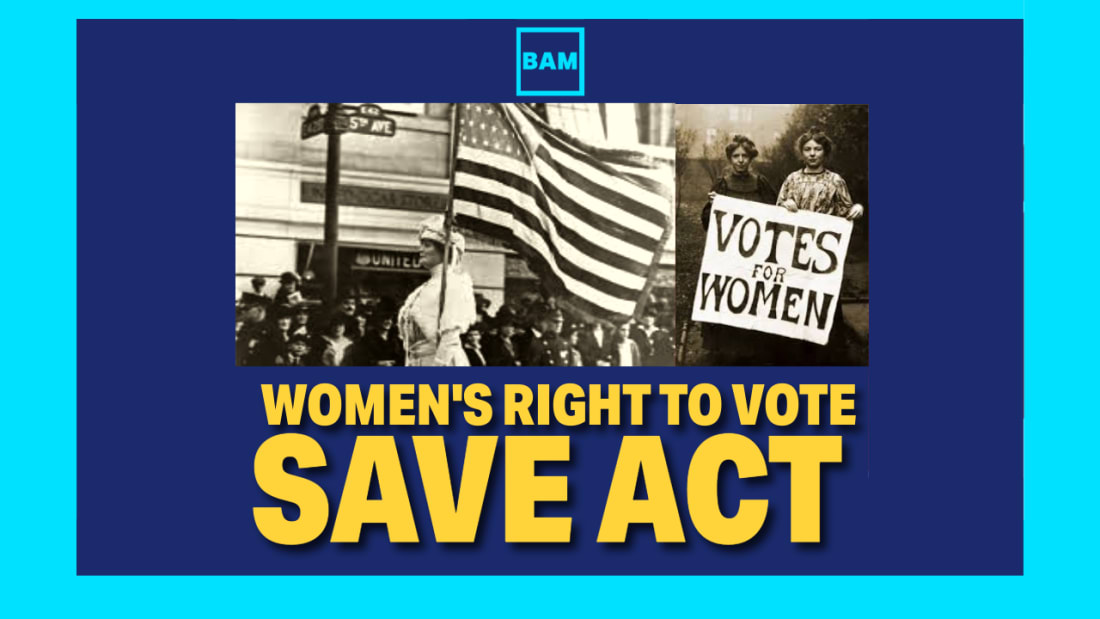
Women fought for nearly a century for their right to vote
In July of 1848, in Seneca Falls, New York, a group of around 300 concerned citizens gathered to launch what would become the women’s suffrage movement in the United States. That early meeting was organized by Elizabeth Cady Stanton, who famously said, “Truth is the only safe ground to stand on.” Truth or not, it took until 1920 for the country to acknowledge that women had the right to vote.
On this truth we stand here at BAM, and in that same spirit, we need to fully understand what is at stake if the SAVE Act becomes law.
Our first voting experiences may not have been perfect. But they were ours. At the time, our right to them felt inviolate.
What we see now in the cultural and political zeitgeist is an open attack on women and our right to vote. “Repeal the 19th” has gained traction in public discourse, with prominent figures signaling support.
The idea of women losing the right to vote may sound laughable.
But we’re not laughing. Because Congress may not need to repeal the 19th Amendment to achieve the same result. They have the SAVE Act for that.
We can’t let that happen.
What can I do?
1. Prepare
If you’re financially able, order your documents now to avoid rush processing and shipping fees. Many states use VitalChek if you can’t travel to the appropriate office in person.
You will likely need certified copies of:
Your birth certificate
Each marriage license
Each divorce decree
Any death certificate if you were widowed and changed your name afterward
Once you have everything, get yourself a fireproof bag or safe to store these documents once you have them.
2. Check your registration
Voting purges are increasingly common. This bill relies on people not checking their registration status and not understanding how the SAVE Act could affect them—setting the stage for ballot denials on Election Day due to name conflicts.
Your polling place may also change. Our pal Erica Laughing has lived in the same building for 19 years and her polling place has changed five times. Guess how many times she’s been notified? (Hint: it’s zero.)
And even if you are currently registered, get your documents anyway.
If you’re challenged at the polls, you should be able to produce certified originals and demand your ballot.
3. Inform!
Tell every married woman, adoptee, transgender person, and anyone who has legally changed their name in your circle what is happening.
Educate the men in your life, too. Make sure they understand that their wives, mothers, and sisters stand to lose their right to vote.
Share this article. Talk about it. We cannot afford to assume people already know.
4. Contact your Senators
The SAVE Act has passed the House and now sits in the Senate. There is no official date for a floor vote yet, but this is the moment to apply pressure.
Call your Senators. Email them. Tell them to vote NO on the SAVE Act.
5. VOTE
Get your documents in order. Bring them with you on Election Day. Exercise this hard-won right that millions of women before you did not have.
You’re not only representing yourself. You’re standing in for countless women who never had a voice.
Honor them.
Do your democratic duty. Go out and vote, and make sure as many people in your immediate circle do the same.
Tell every woman you know: Our vote is at risk!
The suffragettes didn’t ask politely for the right to vote. They demanded it. They endured ridicule, arrest, and violence to secure it.
Now that right is threatened and we have to fight again. Not with clubs or chains, but with forms and fees.
If the SAVE Act becomes law, millions of women will lose their right to vote, but not because they’re ineligible. They’ll lose it because they complied. Because they married. Because they changed their names. Because they followed the rules.
That’s not election security.
That’s voter suppression.
And it’s on us to stop it.
 |
About the authors
Dana DuBois is a GenX word nerd living in the Pacific Northwest. She’s the co-host of The Daily Whatever Show and Editorial Director at Blue Amp Media. She writes across a variety of topics but parenting, music and pop culture, relationships, and feminism are her favorites. Em-dashes, Oxford commas, and well-placed semi-colons make her heart happy. If this story resonated with you, why not buy her a coffee?
Melissa Corrigan, she/her is host to the new Blue Amp Media show, The CounterStory Perspective, every Monday at 2pm EST. On her kickoff episode, she discussed the ramifications of the influence of radical Christian Nationalists with guest Tim Whitaker. The first Monday of each month will be Moral Mondays, where we examine the impact and influence of religion in our federal government.
 |
Read More Blue Amp Media
Want to go deeper? These Blue Amp Media stories explore the same themes of accountability, courage, and democratic renewal from different angles.
An Open Letter to Journalists and Citizens | ||||||
| ||||||
 | ||||||
|

Who—or What—Does America Protect Now? | ||||||
| ||||||
 | ||||||
|
You're currently a free subscriber to Blue Amp Media. For the full experience, upgrade your subscription.
| ||||||||||

