|
Were You There When They Crucified My Lord?
Why so-called "Christian nationalists" have a Jesus problem
|
| |||||||||||||||


In the face of lies and totalitarian violence, Americans are standing up and standing together to reclaim our country. A mass movement of nonviolent noncooperation is growing, and it’s among the most important things happening right now (despite what you see on the nightly news).
It’s especially important that Christian teachers and preachers are offering visible leadership in the communities where they serve and are known by their people. And it’s important in this moral moment to say why.
Yesterday, we were at the North Carolina General Assembly with fellow clergy who helped lead prayers and keep vigil for five hours before officers threatened to arrest us.
 |
|
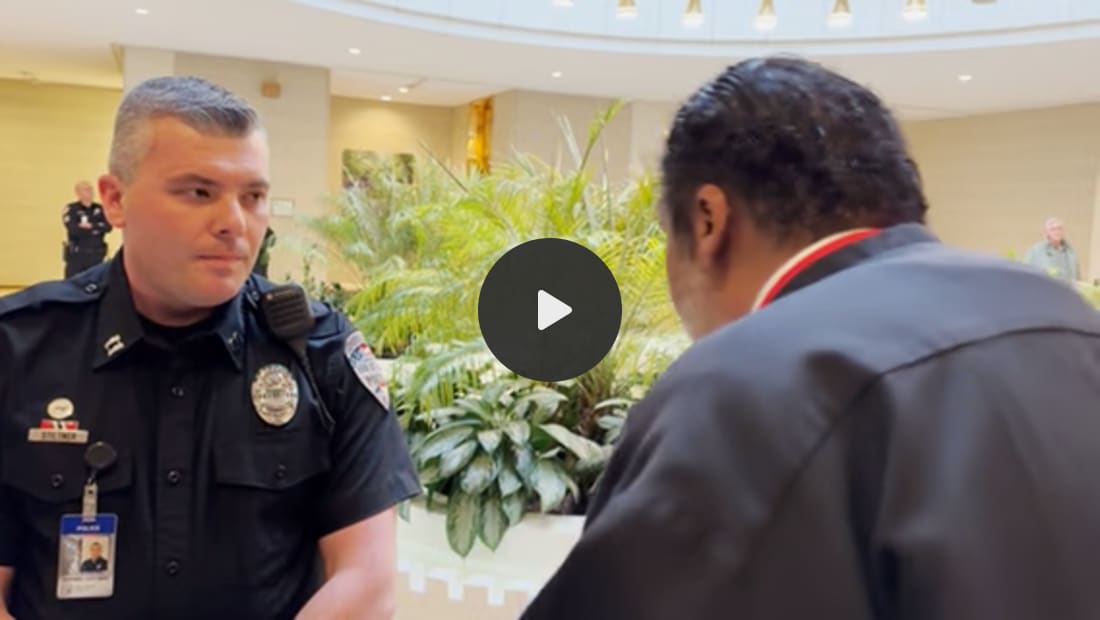


The rotunda of our state house is just one of many places where religious leaders are bearing public witness. Clergy are leading songs in the streets of Minneapolis. They are offering communion outside detention centers. More than half of all living Episcopal bishops in the country came together this week to issue a joint letter challenging extreme immigration enforcement. Vigils have happened in thousands of communities, and preachers are using their pulpits to inform and equip a moral movement.
For far too long in America, right-wing extremists have claimed the mantle of morality while the majority who oppose them have said little about faith in public life. The so-called “Moral Majority” was built in the 1970s by a political movement that organized in reaction to the civil rights movement. Its architects said they used Dr. King’s “Letter from A Birmingham Jail” as a model for how to claim the moral high ground - and they deployed his rhetoric toward ends that are diametrically opposed to what Dr. King and other religious leaders in the Movement worked for. These religious nationalists used faith to convince people that their political agenda was righteous, and they built an extreme movement fueled by religious zeal.
But religious nationalists who abuse Christian faith have always had a major vulnerability. They want to use Christianity, but its Christ inconveniently contradicts the spirit and the agenda of their political movement. They have a Jesus problem.
Russell Vought, who currently directs the implementation of Project 2025 from the Trump White House, is vexed by this problem. He attended Wheaton College and knows what Jesus says, but he thinks he can reinterpret the Lord’s words to mean the opposite of what Jesus actually said. On her show this week, Joy-Ann Reid asked Bishop to respond to Vought’s peculiar interpretation of Matthew 25.
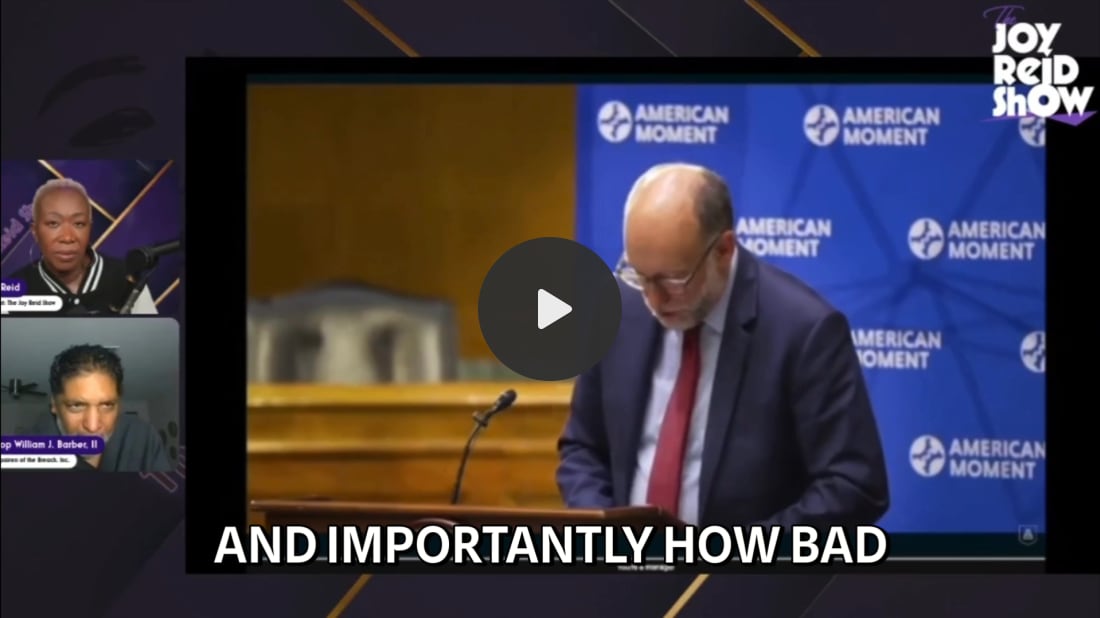
This is what Vought said:
I think it’s important to consider the problem that exists within the intellectual community of Christian leaders. And that, thankfully, has been mitigated by the vast majority of people who are actually in the pews. And that is, we are overrun with sentimentalism and a category confusion. A verse like Matthew 25:35, we all know it - “For I was hungry and you gave me something to eat. I was thirsty and you gave me something to drink. I was a stranger and you invited me in.” - has become a meta-ethical starting point for compassion to a disembodied neighbor above all other considerations, such as justice.
As Bishop outlined in his response, the text of Matthew 25 is explicitly about how nations will be judged. And beyond the particular text, which clearly considers compassion as a basis for just public policy, an attack on the gospel’s love ethic is an effort to undermine the collective witness of all of Scripture. Jesus is a problem for religious nationalists because, as it turns out, everything Jesus says is about a vision they reject - a religion of love, justice, and mercy.
Jesus wasn’t crucified because he taught people to take care of their kin and their clan. The governing authorities crucified Jesus because his love ethic was a direct challenge to their violent regime.
A government that kills people in the street and lies about what happened while claiming to be Christian must be asked, “Were you there when they crucified my Lord?”
The problem with religious nationalism is that it tries to use Jesus as a cloak, but its leaders cannot have it both ways. If they claim Jesus, they must also criticize, challenge, and end the use of ICE violence to traumatize immigrants in ways that have proven to be divisive, deadly, anti‑democratic, and deeply immoral. Jesus said, “I was a stranger and you welcomed me.” If you reject the immigrant, you reject Jesus.
If they can’t make Jesus’ words mean something else, then they understand they will have to confess that their religious nationalism is a cult of irreligious actors who care nothing about the deep, abiding Judeo‑Christian tradition they claim to honor.
It is heresy cloaked in the title of “Christian,” while its actions are far from the ethos of Jesus.
This is why the visible presence of Christian teachers and preachers in acts of public witness is so important right now. The heretical position of religious nationalists has been so loud for so long that it has been easy for them to pretend that they represented one “side” of Christian faith while those who oppose them represent the “other side.” Journalists who were trained to cover both sides of a story have perpetuated the perception that this is an honest disagreement about how to interpret the sacred text rather than a gross distortion of the entire Christian tradition.
In this moment, such confusion can be deadly. Now is a time for clear moral witness, and a new movement of Christian leadership is rising to meet the moment. The clarity of this witness has put politicians who are propped up by religious nationalism on the defensive. Speaker Mike Johnson made clear that he’s using the same talking points as Russell Vought when asked about the Bible this week. He ended his misreading of the biblical witness by saying that he would be “happy to have this lengthy debate with anybody.”

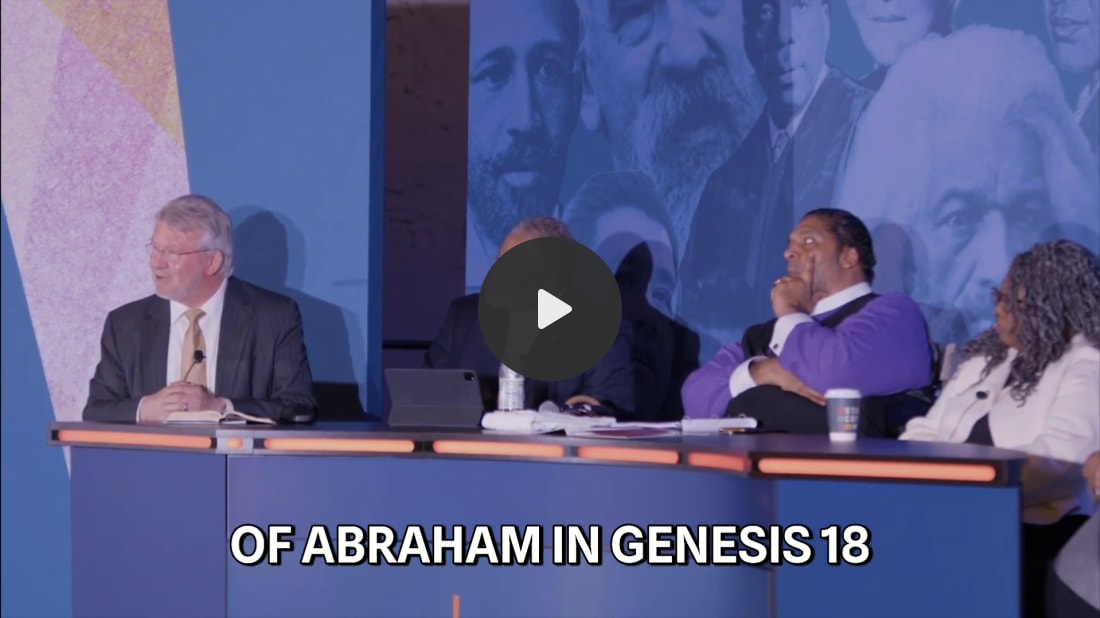
We are currently finalizing the program for our national conference on public theology at the Center for Public Theology and Public Policy at Yale Divinity School - the conference where our Dean, a New Testament scholar, taught the context of Matthew 25 two years ago in the clip above.
If Speaker Johnson is really willing to have a debate about what the Bible actually says, we look forward to welcoming him to New Haven in April.
You’re currently a free subscriber to Our Moral Moment, which is and always will be a free publication. Paid subscribers support this publication and the moral movement. All proceeds from Our Moral Moment are donated to organizations that are building a moral fusion movement for a Third Reconstruction of America.
| ||||||||||

