|
 |


By Adam Garrie and Staff of The MAHA Report
On January 30, the MAHA Institute, a policy-focused think tank that partners with government leaders and grassroots advocates to fix America’s health system, hosted a roundtable featuring National Institutes of Health (NIH) Director, Dr. Jay Bhattacharya.
Titled, “Reclaiming Science: The People’s NIH,” the event was held at the Crystal Room at the Willard Hotel in Washington, D.C. With opening remarks by Debra Sheldon, Vice President of the MAHA Institute, speakers included the NIH’s Matthew Memoli and Nicole Kleinstreuer; NIAID’s Jeffrey Taubenberger and John Powers; National Cancer Institute’s Anthony Letai; and journalist and screenwriter, Walter Kirn.
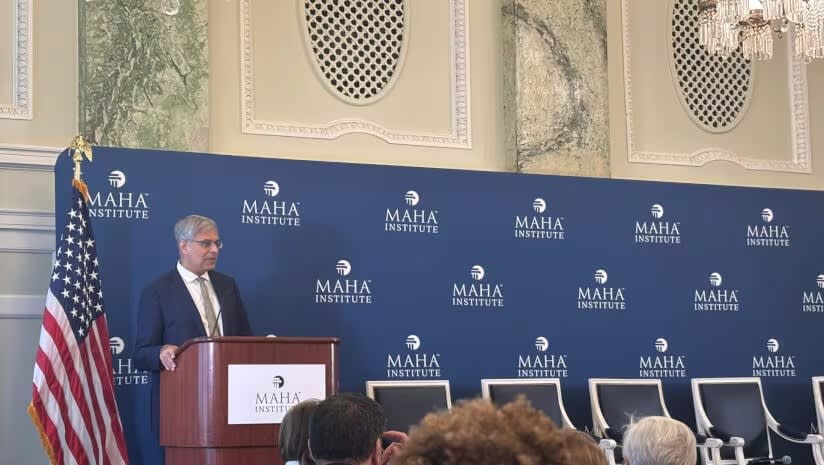 |
In his opening remarks, Bhattacharya outlined his vision to move the NIH away from bureaucratic inertia toward a ‘second scientific revolution’ for public health.
Taking issue with how the NIH fueled distrust during the Covid-era, Bhattacharya told the assembled crowd, “The cornerstone of this reform is a return to fundamental scientific integrity, placing independent replication at the heart of the ‘standard of truth.’” He added that by introducing features such as a ‘replication button’on PubMed and specifically funding researchers to verify high-stakes findings, he wants to ensure that public health policy is built on a foundation of reproducible evidence rather than prestigious journal titles whose findings cannot be cross-verified and later replicated.
This cultural shift, he said, will be paired with a commitment to democratizing data access through a soon-to-be-built, Real World Data Platform, allowing independent scientists to analyze federal health datasets while maintaining strict patient privacy.
The NIH Director also addressed public concerns about dangerous pathogenic enhancement, referred to as gain-of-function (GoF) research.
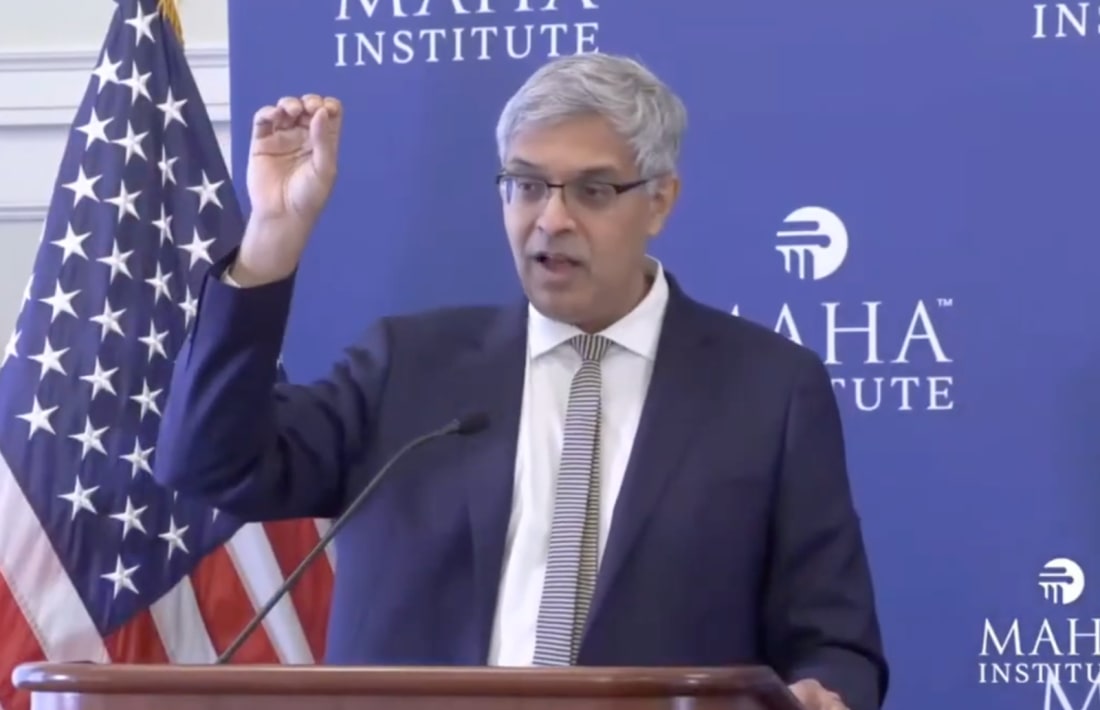 |
“The idea that you could go out into the wild places, the bat caves of southern China and elsewhere, pull all of the pathogens of the earth into labs, manipulate them in there... and then figure out which ones are the most likely to make the leap into human populations to cause a pandemic... it’s absolute fantasy and it has ended altogether in this administration,” said Bhattacharya.
He further explained that he’s moving the NIH toward tackling the root causes of the chronic health crisis—ranging from diabetes and heart disease to the often-overlooked concerns of vaccine injury. This includes a strategic pivot at the NIAID, away from biodefense-heavy research toward infectious and immunological diseases that impact the population.
Bhattacharya also spoke of streamlining the grant process to empower innovative researchers and incorporating health economics to make life-saving cures affordable. In so doing, he said, the agency seeks to transition from an ‘aristocracy’ of established institutions to a dynamic, risk-taking engine for public wellness.
On the MAHA movement, Bhattacharya said some people don’t understand it and find it controversial because it “represents a seismic shift in the demands of the American people for the U.S. government to use its power and money for the purposes of improving health.”
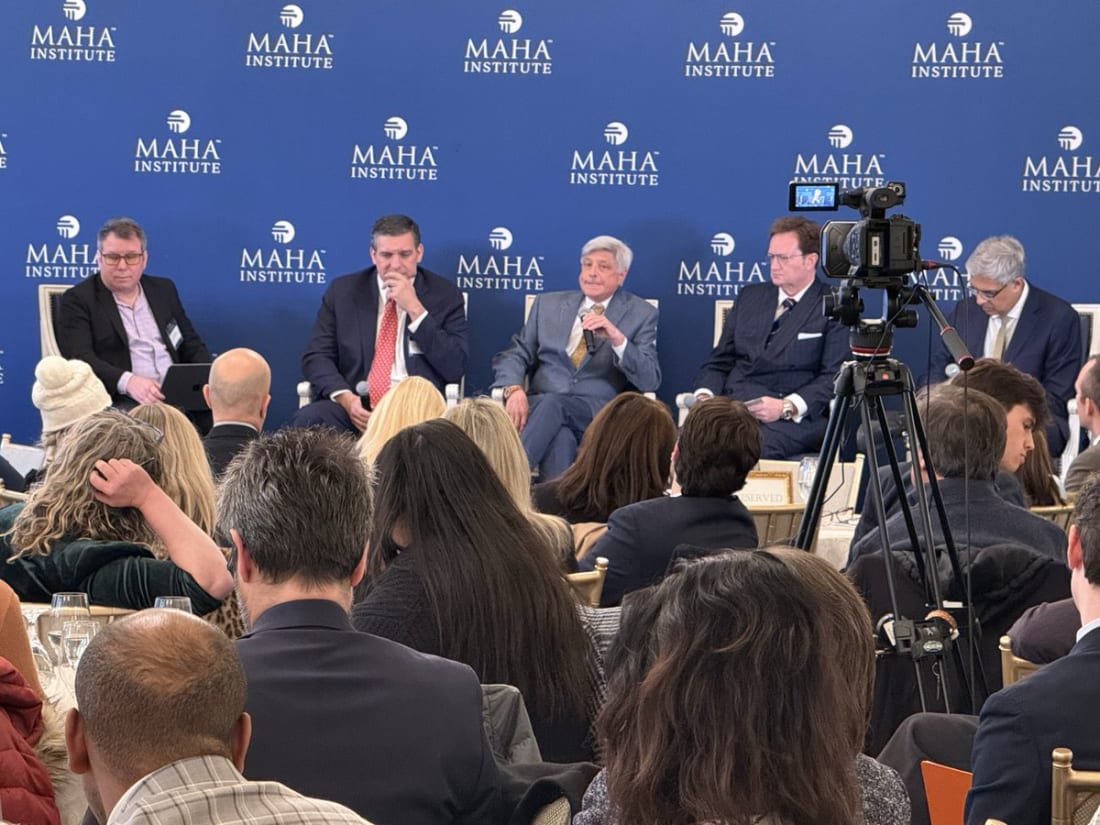 |
Following four panel discussions, Patriek Karayil, Director of Governor Relations at MAHA Institute, said, “This roundtable marked a turning point in the relationship between the American people and the institutions meant to serve them. What we saw today was NIH leadership willing to open the doors, answer hard questions, and recommit to science that is transparent, reproducible, and accountable to the public. This is exactly what the MAHA movement represents.”
 | A guest post by
|
Thank you for subscribing to The MAHA Report
You can follow us at: TheMAHA_Report on X
You can also follow us at: MAHA Action on Facebook
Make America Healthy Again™ and MAHA™ are trademarks owned by MAHA TM LLC
| ||||||||||

