|
Having trouble viewing this email? View it as a Web page.
February 3, 2026
February Weed of the Month: Changes to the Minnesota Noxious Weed List
Changes took place on January 1
By Monika Chandler, Minnesota Department of Agriculture - The Minnesota Department of Agriculture’s Noxious Weed Advisory Committee (NWAC) assesses plant species to determine if they are a threat to Minnesota and whether regulation could reduce the threat level. Rigorous risk assessments are written for the plant species, and regulatory recommendations are provided to the commissioner of agriculture. Potential recommendations include listing a species as prohibited eradicate, prohibited control, restricted, specially regulated, or do not list. The commissioner reviews each recommendation and decides whether to accept or reject it.
In 2026, six new species were added to the Minnesota Noxious Weed List. One species changed category, and two species of poison ivy were removed from the list.
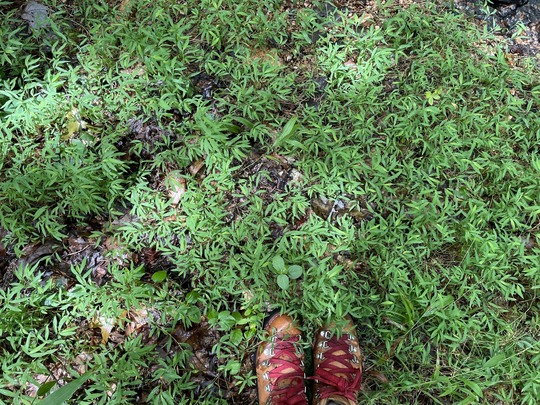 Stiltgrass forms a low growing mat on the ground that inhibits native plants. Photo courtesy Jennifer Larson, United States Forest Service.
Download photo here.
-
Prohibited Eradicate Noxious Weed – New Listing
- Stiltgrass, Microstegium vimineum
-
Restricted Noxious Weeds – New Listings
- Creeping meadow foxtail, Alopecurus arundinaceus
- Autumn olive, Elaeagnus umbellata
- Callery pear, Pyrus calleryana (Previously specially regulated for a 3-year production phase out period that began in 2023.)
-
Specially Regulated Noxious Weeds – New Listings
- Specially regulated for a three-year production phase out and will be listed as a restricted noxious weed in 2029:
- Common butterbur, Petasites hybridus
- Giant butterbur, Petasites japonicus
- Rowan/European mountain ash, Sorbus aucuparia
- The species, var atropurpurea, and all Japanese barberry, Berberis thunbergii, hybrids and cultivars except for specifically exempted cultivar
-
Deregulate – Removed from Noxious Weed List
-
- Poison ivies, Toxicodendron radicans and rydbergii
A positive development is that plant breeders are easing the problem of invasive plants by breeding low seeding cultivars of popular landscape plants. Cultivars are plant varieties that have been produced to maintain certain genetic characteristics. There are now several cultivars of Japanese barberry and winged burning bush that produce no or very little seed. This greatly reduces the risk that these plants could spread and has allowed exemptions for their sale in Minnesota.
-
Restricted Noxious Weeds – Added Cultivar Exemptions
- Winged burning bush, Euonymus alatus: The following zero and low seed cultivars are now exempt and can be sold and planted:
- Proven Winners ® ‘NCEA1’: Fire Ball Seedless TM
- ‘ZeroSeed’ (ZeroSeed Blaze TM)
- Japanese barberry, Berberis thunbergii: Five cultivars that have undergone research and proven to produce little or no seed have been approved for sale in Minnesota beginning January 1, 2026. Refer to the MDA’s Noxious Weed Listing webpage for the most current regulations.
- WorryFree® cultivars
- ‘UCONNBTCP4N’ (PP30,095): Crimson Cutie®
- ‘UCONNBTB039’ (PP30,128): Mr. Green Genes®
- ‘UCONNBTB048’ (PP30,127): Lemon Glow®
- ‘UCONNBTB113’ (PP30,094): Lemon Cutie®
-
-
- Proven Winners® Sunjoy® cultivar
- ‘NCBT1’ (PP30,330): Mini Maroon®
All other cultivars of Japanese barberry that were previously allowed for sale under the Noxious Weed Law will begin a three-year phase out, meaning they can be sold to deplete any stock on-hand through December 31, 2028, after which they will become restricted noxious weeds. Beginning on January 1, 2029, only approved cultivars will be allowed for sale in Minnesota.
The Noxious Weed Law requires that all currently listed noxious weeds be reviewed at least once every three years. The following assessments of currently regulated species were updated with no changes to their regulatory status.
-
Remain Prohibited Eradicate Noxious Weeds
- Palmer amaranth, Amaranthus palmeri
- Brown knapweed, Centaurea jacea
- Black swallow-wort, Cynanchum louiseae
-
Remain Prohibited Control Noxious Weeds
- Narrowleaf bittercress, Cardamine impatiens
- Canada thistle, Cirsium arvense
- Purple loosestrife, Lythrum salicaria and virgatum
New species assessments were completed with the recommendation to not regulate these species at this time. Many of these species are problematic but there were various reasons to not regulate.
- Asian/Heart copperleaf, Acalypha australis
- Hardy kiwi, Actinidia arguta
- Russian olive, Elaeagnus angustifolia
- Queen of the meadow, Filipendula ulmaria
- Rough potato, Metaplexis japonica
- Small leaf bramble, Rubus parvifolius
- Willow austere, Salix matsudana x alba
- White crack willow, Salix x rubens (Salix x fragilis)
- False spirea, Sorbaria sorbifolia
- Periwinkle, Vinca minor
For more information on noxious weeds and invasive insects, listen and subscribe to Smarty Plants, a Minnesota Department of Agriculture podcast.
MEDIA: Contact Brittany Raveill, MDA Communications, at [email protected] or 651-201-6131 for more information on Weed of the Month
|