Image

Daily News Brief

February 3, 2026

Welcome to CFR’s Daily News Brief. Today we’re covering an agreement lowering U.S. tariffs on India, as well as...

  • Formal U.S.-Iran talks set for Friday
  • Plans for a U.S. critical minerals stockpile
  • A lawsuit challenging Trump’s latest immigration ban


Top of the Agenda

The United States will lower tariffs on Indian goods to 18 percent, U.S. President Donald Trump and Indian Prime Minister Narendra Modi announced separately yesterday. The agreement de-escalates a trade dispute that has strained the two countries’ bilateral relationship for months—though the details were not fully confirmed by both sides. 


Trump’s announcement. Most Indian goods have faced 50 percent U.S. tariffs since late August: a 25 percent punitive tariff over Indian purchases of Russian oil and a 25 percent so-called reciprocal tariff. Trump said the deal would lower the reciprocal tariff to 18 percent, while a White House official confirmed to Reuters that the additional tariff would be rescinded entirely. Trump claimed that India would halt purchases of Russian oil, buy more U.S. oil, consider buying Venezuelan oil, reduce tariff and non-tariff barriers against U.S. goods to zero, and spend more than $500 billion on U.S. energy and other products. 


Open questions. Modi has not confirmed a shift on Indian purchases of Russian oil or other commitments listed by Trump’s post about the tariff reduction. An unnamed Indian government source told Indian news agency ANI that a joint statement on the trade deal was likely coming this week. India bought around $40 billion worth of U.S. goods last year, suggesting an extended timeline would be necessary to meet Trump’s $500 billion proposal. 


The context. As India’s efforts to reduce U.S. tariffs stalled in recent months, New Delhi pursued trade agreements with other countries, notably reaching a deal last week to reduce almost all trade restrictions with the European Union (EU). Modi also signaled warming relations with China. Yet Trump’s tariff relief now leaves India’s rate lower than Vietnam’s 20 percent rate and other Southeast Asian countries’ 19 percent rates.


The shift aligns with Trump’s pledge yesterday of closer U.S.-India ties going forward. Multiple U.S. administrations had strengthened the bilateral relationship, which soured during Trump’s second term over the president’s tariffs and stance on the India-Pakistan conflict last May. 


“For the United States, India is a key partner in the Indo-Pacific and an integral member of the Quad grouping (Australia, India, Japan, and the United States) that serves as a regional counterweight to China. A U.S.-India trade deal would enhance the strategic dimension of their bilateral relationship. India is also an important contributor to the U.S. technology sector, with complementary capabilities for joint development and production of critical and emerging technology products.”

—CFR Distinguished Fellow Kenneth I. Juster


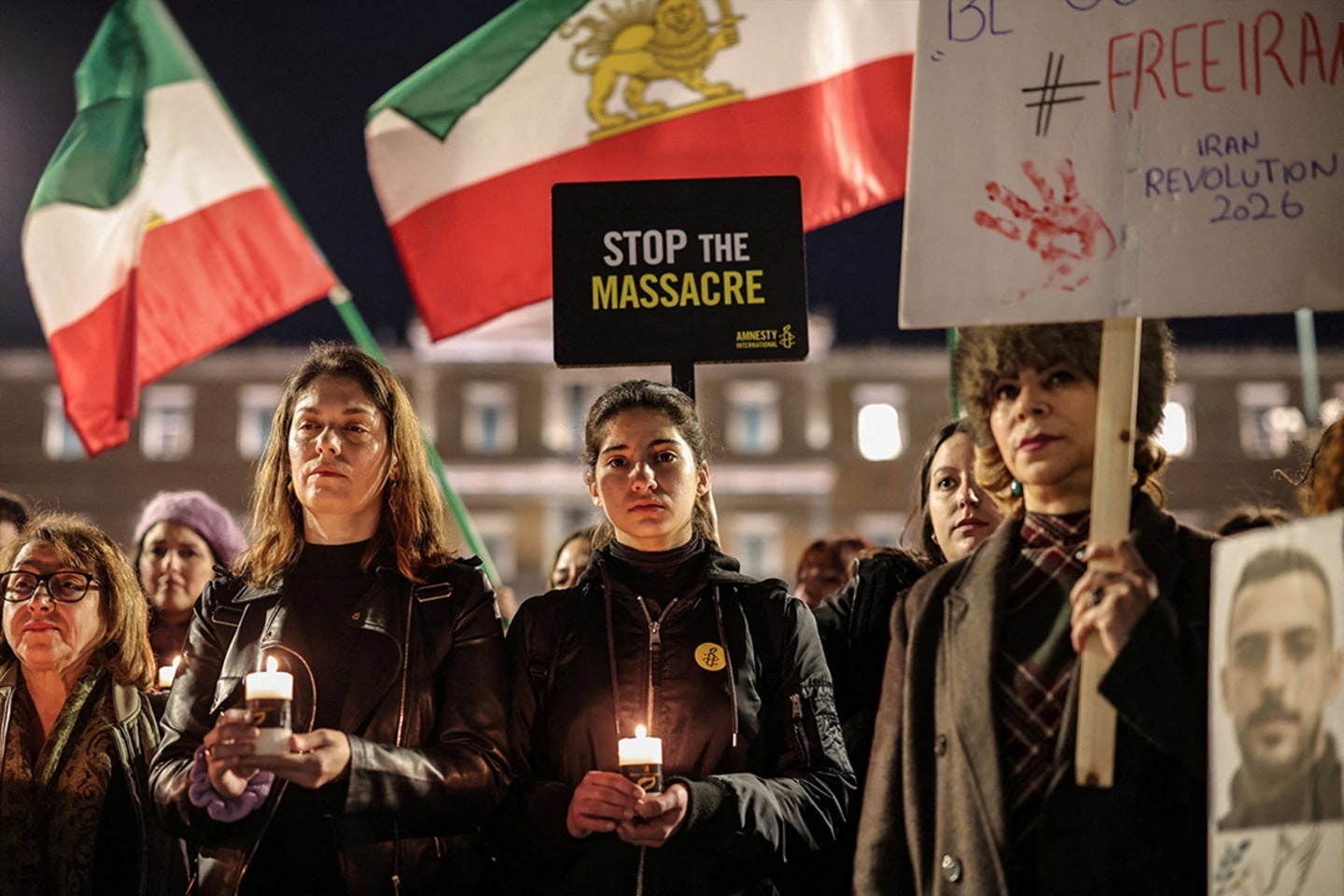
The Global Options for Defending Iranians’ Rights

Amnesty International Greek activists and Iranians living in Athens hold candles in front of the Greek Parliament to support the people of Iran on January 30.

Louisa Gouliamaki/Reuters

The reported scale of Iran’s crackdown on demonstrators would easily meet what international lawyers call the “gravity test” for crimes against humanity and gross violations of human rights, CFR expert David J. Scheffer writes in this article.


Across the Globe

Plan for U.S.-Iran talks. U.S. special envoy Steve Witkoff and Iranian Foreign Minister Abbas Araghchi are expected to meet in Istanbul Friday to discuss a potential nuclear deal and de-escalation of bilateral tensions, multiple news outlets reported. Iranian President Masoud Pezeshkian wrote on social media today that he had instructed Araghchi to pursue “fair and equitable negotiations.”   


New U.S. mineral stockpile. The United States will create a strategic reserve of critical minerals intended to reduce reliance on China and protect against disruptions in international markets. A $10 billion loan from the U.S. Export-Import Bank and more than $1.6 billion in private money will fund its creation, Trump and the bank announced yesterday. Trump compared the planned cache to the U.S. Strategic Petroleum Reserve, saying it is intended to protect firms from the kind of pressures suffered last year when China halted its rare earth exports.


Lawsuit over immigration ban. An immigrant rights organization and group of U.S. citizens sued Secretary of State Marco Rubio and the State Department yesterday over a recent ban on legal immigration for citizens of seventy-five countries. The lawsuit argues the ban, which suspended visa approvals for affected countries, violates immigration law’s “commitment to family unity” and is based on a false claim. A State Department spokesperson said the immigrant visa suspension was intended to ensure immigrants are financially “self-sufficient.”


Japan’s deep sea mining. A first-of-its-kind maritime mining mission recovered samples of a rare earth-rich mud from almost four miles below sea level, Japanese Prime Minister Takaichi Sanae wrote on social media yesterday. She said the mission was part of broader efforts to lessen dependence on other countries for rare earths, most of which are processed in China.


French budget squeaks through. France adopted its 2026 budget yesterday following months of political upheaval, after center-right Prime Minister Sébastien Lecornu secured support from the Socialist Party with concessions over student lunch fees and bonuses for minimum-wage workers. With an increase in military spending as well, the budget deficit comes in at around 5 percent of GDP—over the EU’s 3 percent limit, which France hopes to reach by 2029.


Venezuela ups oil exports. The country exported around eight hundred thousand barrels of oil per day last month, a roughly 60 percent increase from December. The surge comes after the United States captured President Nicolás Maduro at the start of January, rolled back a December embargo on Venezuelan oil, and began marketing some of the country’s oil in coordination with the country’s interim authorities.


Solar power in Africa. The continent experienced its fastest-ever growth in solar power last year, installing over 50 percent more capacity than in 2024, a new report by the Global Solar Council said. Even so, last week a group of solar mini-grid companies said they would require as much as $46 billion in investment by 2030 in order to meet the electrification targets in twenty-nine African countries set by a World Bank-backed solar power framework.


Spain floats social media restrictions. Spain’s government plans to update a social media bill to ban people under the age of sixteen from creating accounts, Prime Minister Pedro Sánchez said at a Dubai governance summit today. He also announced plans to hold social media executives responsible for hate speech on their platforms, saying Spain is joining a European “Coalition of the Digitally Willing” to enforce tech regulations across borders. He did not provide further details regarding the coalition’s membership.


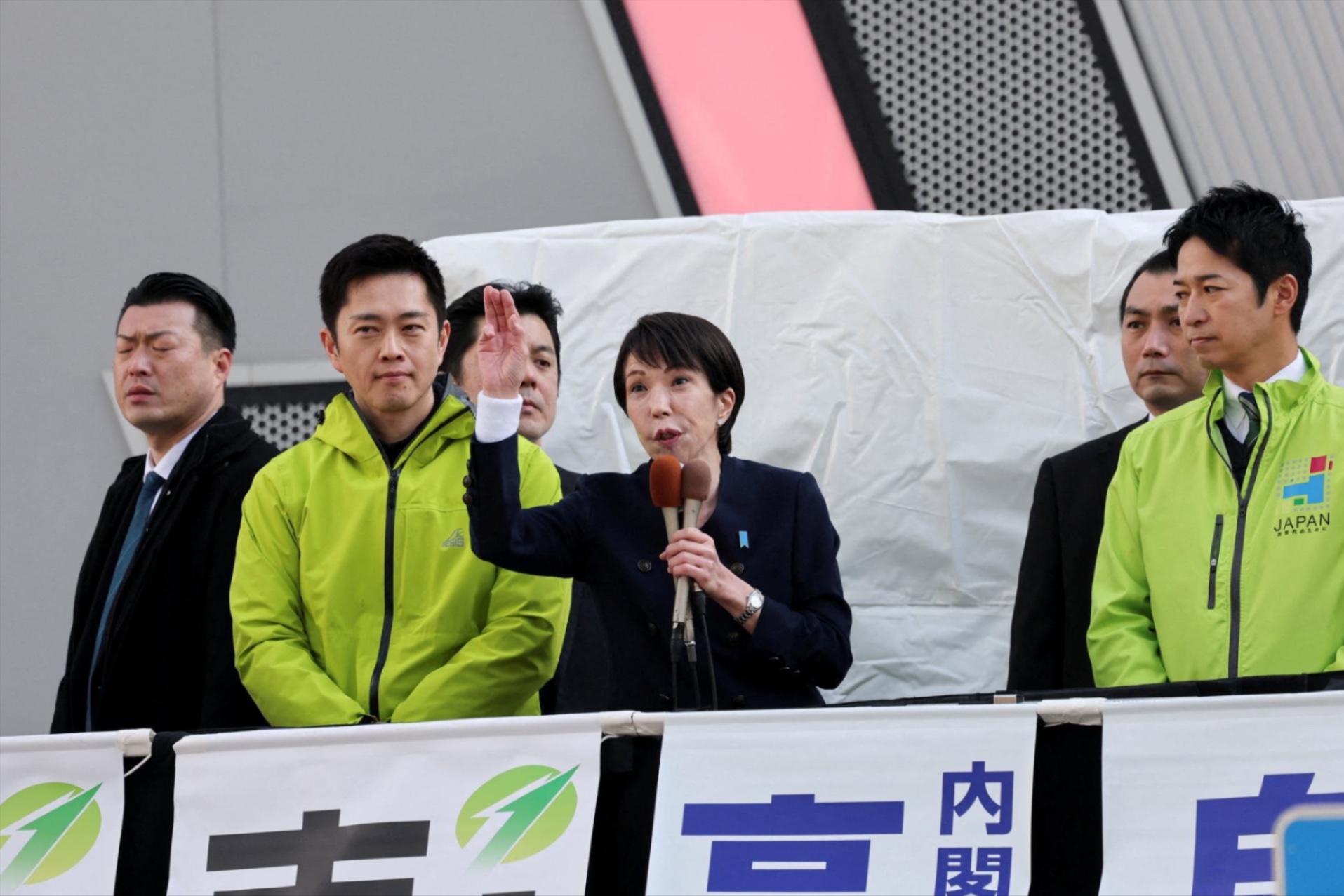
Political Realignment and the 2026 Japanese Election  

Takaichi Sanae at an election campaign event on the first day of campaigning for the February 8 snap election, in Tokyo, Japan, January 27, 2026.

Kim Kyung-Hoon/Reuters

Beyond affordability, issues including immigration and social conservatism are shaping Japan’s political debate ahead of this weekend’s election, CFR expert Sheila A. Smith writes for Asia Unbound. 


What’s Next

  • Today, Colombian President Gustavo Petro meets with Trump in Washington, DC.

  • Today, Turkish President Recep Tayyip Erdoğan visits Saudi Arabia.

  • Today, the Singapore Airshow begins. 

  • Tomorrow, the next round of U.S.-Russia-Ukraine trilateral talks begins in Abu Dhabi.


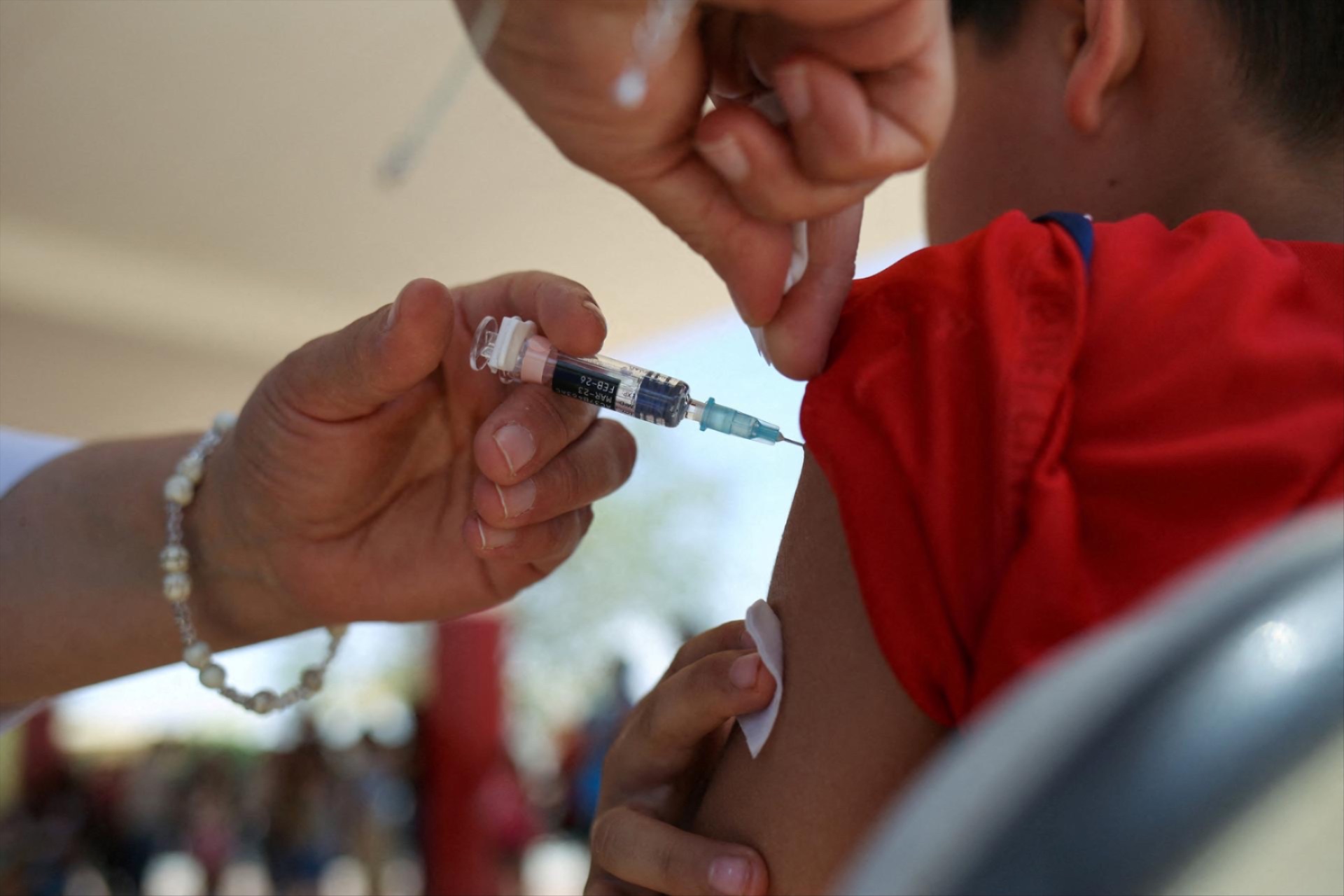
Vaccine-Preventable Disease: A Global Tracker

A health worker administers a dose of the measles vaccine to a child during a measles vaccination drive in Ciudad Juarez, Mexico, June 15, 2025.

Carlos Sanchez/Reuters

Rates of preventable infectious diseases are climbing worldwide amid stalled global immunization campaigns, shifts in vaccine acceptance, and reductions in public health funding, CFR’s Allison Krugman writes for Think Global Health. 


Council on Foreign Relations

58 East 68th Street, New York, NY 10065

1777 F Street, NW, Washington, DC 20006

Was this forwarded to you? Subscribe to the Daily News Brief

FacebookTwitterInstagramLinkedInYouTube

Manage Your Email Preferences

View in Browser