|
In some ways, it’s never been a better time to be a sports fan. You can wake up on Saturday where I live in Los Angeles and binge on college football from 9:00 in the morning until late into the night. Though I’m over 2,200 miles from Ann Arbor, all the games of my alma mater Michigan Wolverines are televised nationally. And I can go online for vast volumes of high-quality statistical analysis, insider information, and even trash talk with fellow fans on social media. I can build large quantities of my life around sports and never lack for action. This grows fan interest, deepens emotional attachment, and helps make sports an unsurpassed phenomenon.
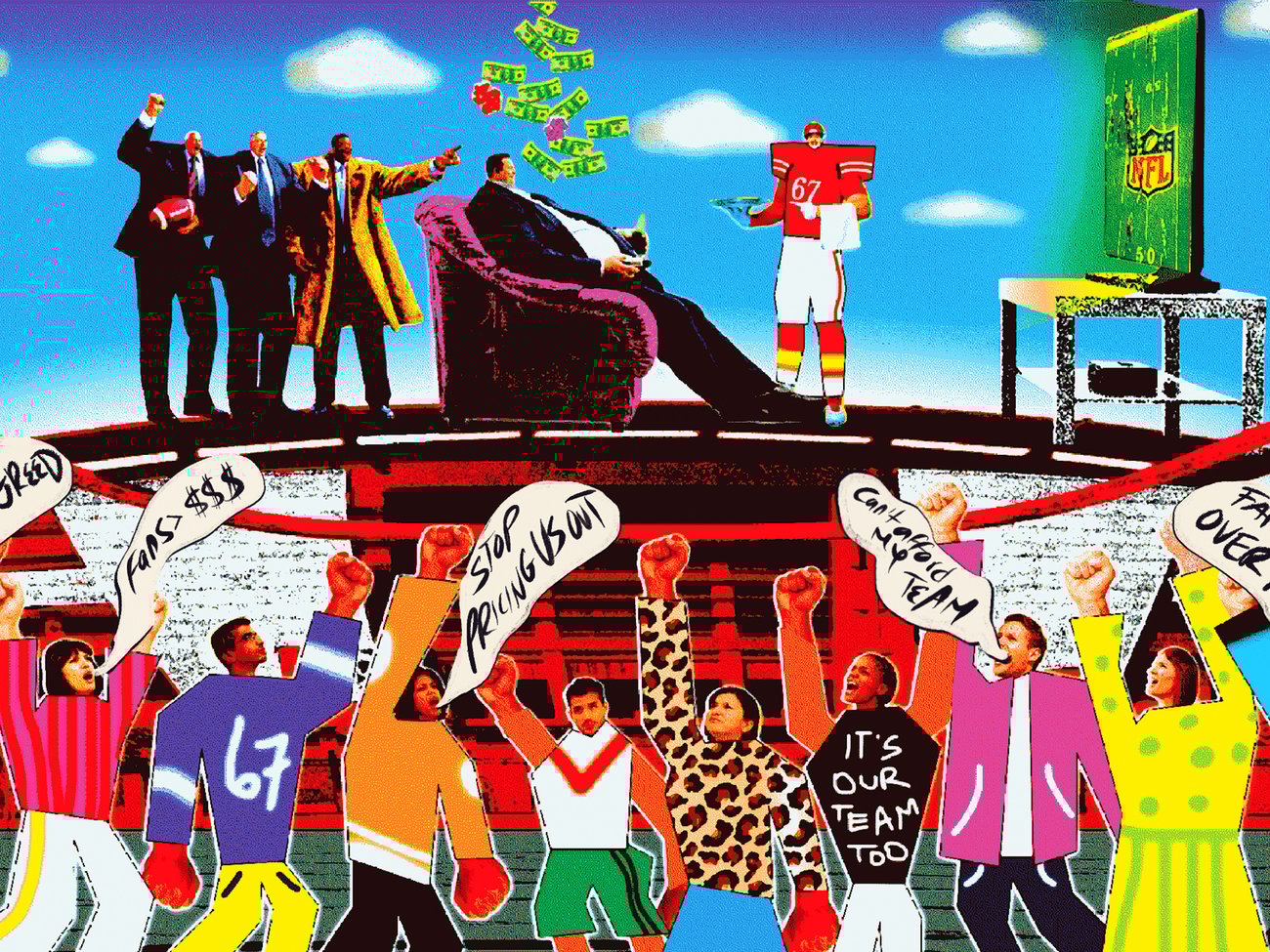
But leagues and owners have learned how to exploit this obsession to maximize profits. They assume rabid fans will suffer the inconveniences, the stratospheric prices, all the slings and arrows, motivated by the eternal hope that their team will end the season on top, and the desire to be there when it happens. And they know that in our grossly unequal society, money can be no object for some. As a result, stadiums and arenas have become gated communities, with the ultra-wealthy waved inside, and those who can’t afford it peeking through the fence hole on TV. They’re finding ways to charge you for that, too.
As fans continue to be monetized, one question emerges: Will they ever say enough is enough? |