Legislative Update
Dear Neighbor,
The 2026 session will begin in just two weeks and, as usual, a great many challenges await the legislature’s return to St. Paul.
Minnesota’s fraud problem remains front and center and I look forward to many more hearings as a member of the House Fraud Prevention and State Agency Oversight Policy Committee. Here’s a quick rundown of recent developments as we get prepared for the new session:
Congressional hearing
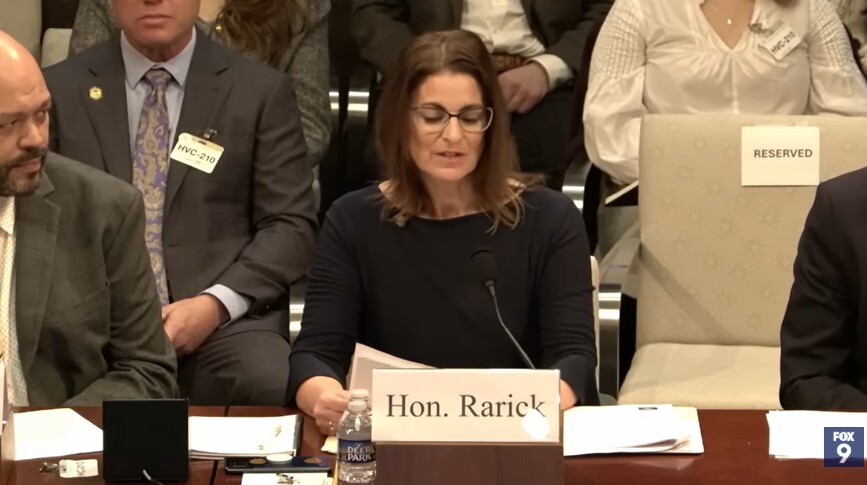 Reps. Robbins, Hudson and I were invited to a congressional hearing last month to share what we’ve learned about the culture of fraud that has taken over Minnesota’s government under the Walz Administration. I am so proud to be a voice for the 1,000-plus whistleblowers from state agencies, while also protecting their identification so they are not targeted for retaliation any more than they already are.
The amount of fraud has been reported as $9 billion – which equates to a hefty $3,840 per Minnesota household. In reality, the figure is much larger than that because $9 billion only estimates what has been stolen under 14 Medicaid services deemed “high risk” for fraud. Furthermore, the $9 billion only looks back five years when we know it has been happening much, much longer than that.
House Republicans have warned about this problem for years and have offered solutions, only to be repeatedly blocked by Democrat governors and legislators who have denied the problem even exists, opposing meaningful action to stop the fraud and hold criminals accountable. In 2015, Democrats claimed no waste could be found in Health and Human Services. They even called suspected overspending “pixie dust and unicorn droppings.” Then, the OLA subsequently found that up to $271 million was wasted on payments to HMOs for people who did not qualify for some of those programs.
Rep. Demuth’s first bill in 2019 would have required daycare attendance logs in attempt to combat fraud, but Democrats stood in the way once again.
Those are just a couple of examples of how some people in St. Paul have refused to take this issue seriously over the years. Unfortunately, Republicans have never had a trifecta of power in St. Paul to strengthen controls on our state programs, and Governor Tim Pawlenty was the last Republican governor. His last term ended in January of 2011.
Gov. Walz was aware
Throughout the congressional hearing, we laid out details behind the systemic fraud within Minnesota’s public assistance programs. We shed light on what Governor Tim Walz knew, and how his administration responded to what has now become a fraud crisis gripping Minnesota taxpayers.
One of the most glaring examples involved how the criminal investigations of childcare fraud were shut down by the Minnesota Department of Human Services. As I said during the hearing, Gov. Walz absolutely knew fraud was occurring in our state. In fact, fraud is easy to find in Minnesota if you actually look for it. Instead, the Walz administration has chosen to retaliate against whistle-blowers who dare point out fraud.
“Industrial scale” fraud
Minnesota’s fraud problem is not the result of an isolated case or an accident. In fact, Minnesota’s now-former top federal fraud prosecutor Assistant U.S. Attorney Joe Thompson described it as “industrial scale.” He said that “fraud tourism” took root in Minnesota because our system is so loose that people come from elsewhere to scam taxpayers.
The question we now must answer is to what degree state officials were not just negligent, but complicit in fraud schemes. That is because a recent OLA report revealed major problems in how DHS handled behavioral health grants, with multiple staff having backdated and even fabricated documents during an audit of funds meant to support people dealing with mental health and substance use challenges.
All the new laws in the world won’t help address this situation if the current administration does not follow the law or even fails to check the most basic boxes such as following the Generally Accepted Accounting Principles (GAAP). Businesses and nonprofits strictly abide by GAAP guidelines to standardize accounting, and our state government needs significant improvement in this regard.
Walz, Ellison to testify before Congress
Walz and Attorney General Keith Ellison are scheduled to testify before Congress on March 4 as federal investigations into widespread fraud allegations in state programs continue. That hearing will be part of the panel’s second hearing in its “Oversight of Fraud and Misuse of Federal Funds in Minnesota” investigation. In the committee’s first hearing on Minnesota fraud a couple of weeks ago, former fraud investigator Scott Dexter said the spotlight on day care fraud in the state isn’t new and claimed some former recommendations to improve security were never implemented.
Precinct caucuses
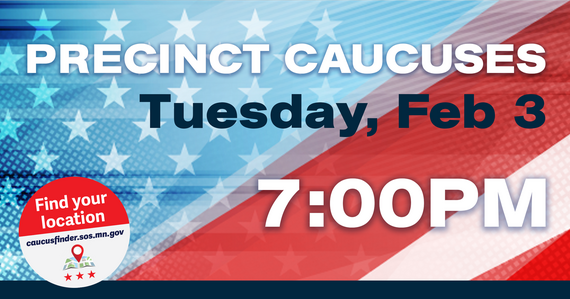 This year’s precinct caucuses will take place at 7 p.m. tomorrow (Tuesday, Feb. 3). I encourage local residents to attend your respective party’s local meeting.
Caucuses are an important part of our political process. These meetings provide Minnesotans with the opportunity to decide what policies are important in national, state and local government, along with electing local leaders.
The Minnesota Secretary of State has a statewide Caucus Finder website to help citizens find their meeting locations. The more people we have involved in this process, the better and I hope you can attend. Feel free to bring friends and family as well.
Look for more official business from the House soon as we ramp up to the Feb. 17 start of the 2026 session. There certainly is plenty to discuss regarding the challenges that await.
|