|
As we watch immigration agents rampage in American cities and imperial troops storm into Venezuela and likely more, you might be thinking, “Why is the Prospect spending its time on sports?” Our view is that sports are a national obsession of broad interest across the political spectrum, and all of the problems we see across the country and the economy as a whole—financialization, price-gouging, runaway inequality, lack of accountability, suppression of labor, and more—are present in sports. It’s a kind of gateway into talking about the major issues facing our society. And there’s even an ICE angle, as you’ll see in a later piece in the package. |
|
|
|
Over the next two weeks, we’ll investigate every aspect of the business of sports; we begin today with two stories. First, there’s an introduction to the series from me and Alex Jacquez, from our partners at Groundwork Collaborative, which explains what is happening in sports and why it matters, even if you’re not a sports fan. And second, the peerless independent sports journalist Rodger Sherman takes stock of the NFL ownership class, which he compares to medieval kings and queens of yore, only with less accountability, more hereditary lines of dynastic control, and a worse track record of actually getting what they want.
We worked really hard on this series and I think you’re going to love it.
|
|
–David Dayen, executive editor
|
|
|
|
|
|
 |
|
Cristian Mera for The American Prospect |
|
|
|
|
|
|
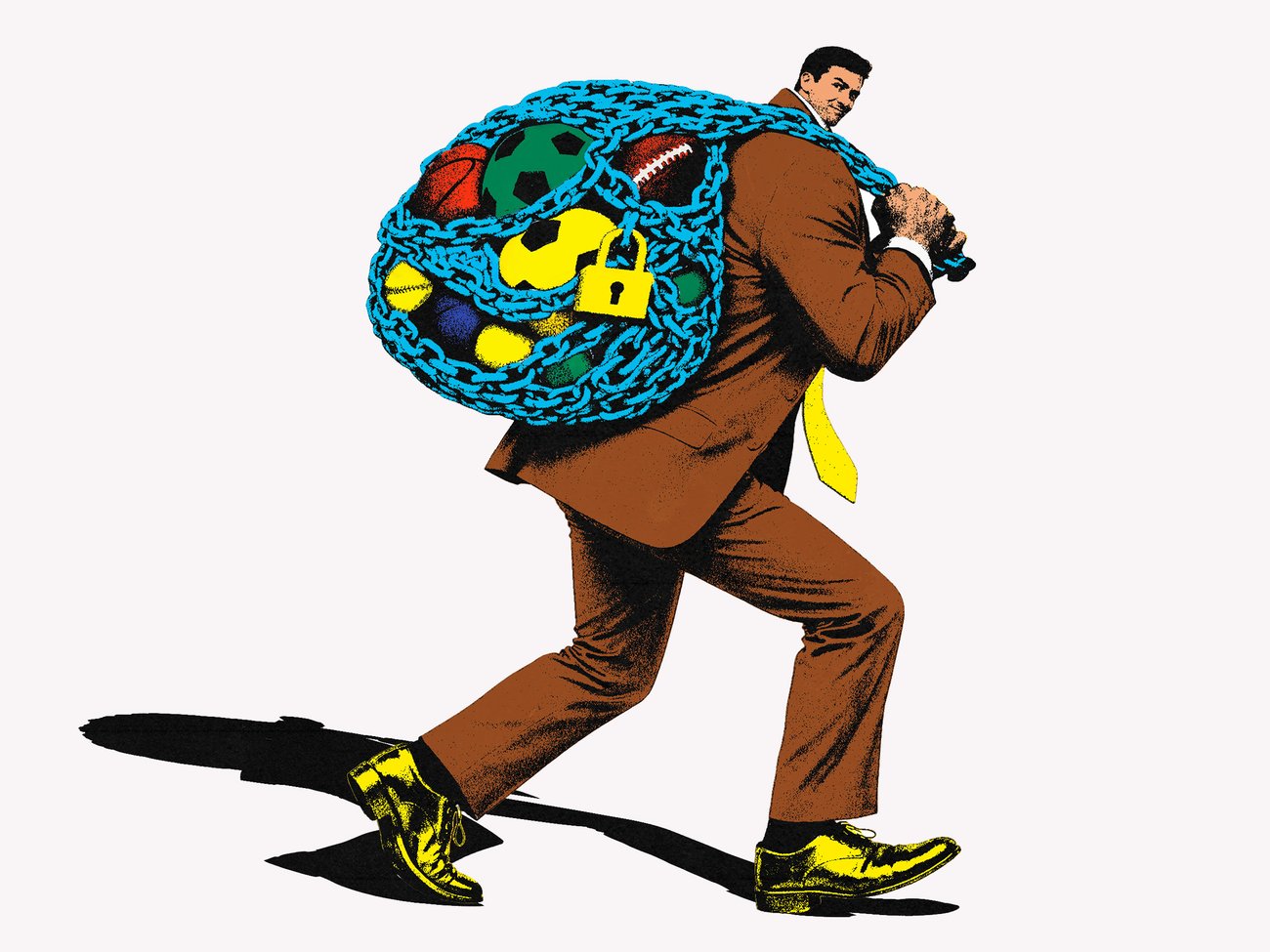
Of the top 20 most-watched television broadcasts in American history, 19 of them are Super Bowls. Last year’s record-setting edition peaked at 135.7 million viewers, only 20 million less than the total number of votes in the 2024 presidential election. Even outside the big game, Americans watch 300 million hours of live sports or shows about sports per day; there are more national sports networks on cable than news networks. To many, sports are more than a pastime, they’re a religion: 21 percent of U.S. adults attend church once a week, but 56 percent watch a sporting event that regularly.
Sports may be the last thing we do together as Americans. It’s the one subject you can bring up at any bar in the country to spur engaged conversation, instead of blank stares or seething anger. We argue about sports without being argumentative; we hate each other’s teams without being hateful; we disagree about players and coaches while being able to point to scoreboards and statistics and common facts.
But the business of sports has separated from what we love about the games. As our economy has been defined by soaring inequality, the rising cost of living, the suppression of workers, and the financialization of everything over the last half-century, those same extractive and exploitative practices have crept their way onto the field of play. It wearies fans, stresses family budgets, shortchanges players, and generates a backlash reminiscent of politics rather than athletics. If America bounces back from this dark period of cronyism and oligarchy, it might actually start with our collective rage against the corruption of sports. |
| Continue reading this story |
|
|
|
|
|
|
|
 |
|
Cristian Mera for The American Prospect |
|
|
|
|
|
|
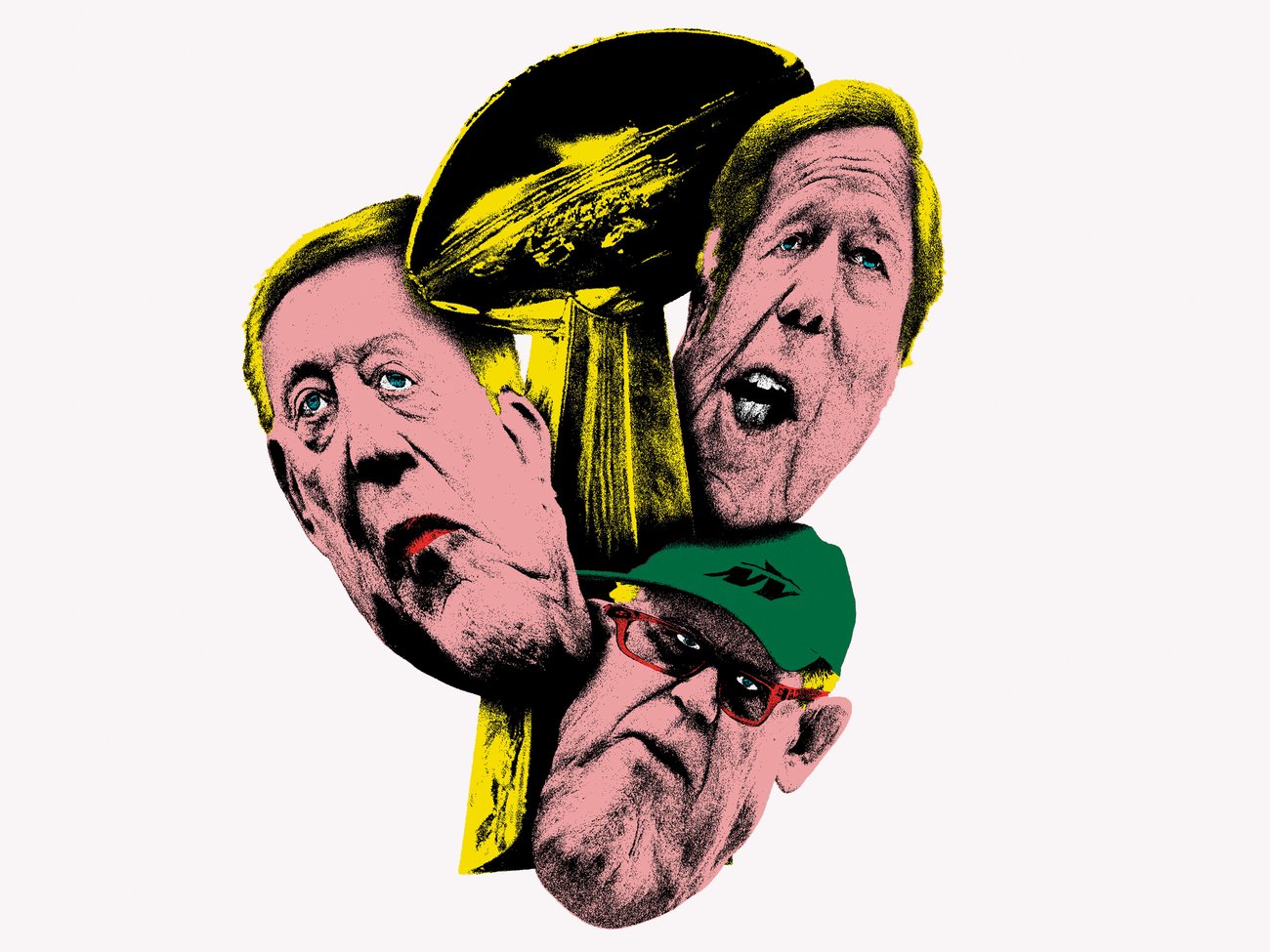
NFL owners are the closest thing we have in America to medieval kings and queens. This is true on a superficial level—they sit on thrones up in the luxury boxes and watch the armies they fund march against each other on a field of battle, wearing coats of arms on their chests and helmets—but also on a functional one.
As with kings and queens, NFL owners commission massive public works projects as monuments to themselves. Cowboys owner Jerry Jones considers his crowning achievement to be the monumental stadium popularly known as Jerry World. Besides its size and looming scoreboard, the building’s most famous feature is the way the sun shines through its massive west-facing windows in the afternoon during the months when the Cowboys play games, causing Cowboys players to drop passes in the glare despite playing indoors. It remains unclear whether this was intentional or a billion-dollar oversight; Jones claims it is not a problem because “the world knows where the sun is—you get to know that almost a year in advance.”
As with kings and queens, you just kinda have to sit there while a rambling 83-year-old makes questionable decisions and says things like the world knows where the sun is going to be almost a year in advance.
As with kings and queens, NFL owners can force local governments to pay them tribute. Just ask taxpayers in Kansas, who are going to fork over billions to build a new stadium for the Chiefs in what’s being called the most lopsided deal in the history of public stadium funding. And while our modern political leaders can be removed by elections—gulp, fingers crossed!—NFL ownership is hereditary, as with kings and queens, often leading to Shakespearean squabbles over inheritance. |
| Continue reading this story |
|
|
|
|
|
|