ClearPath Action Rundown
January 30th, 2026
|
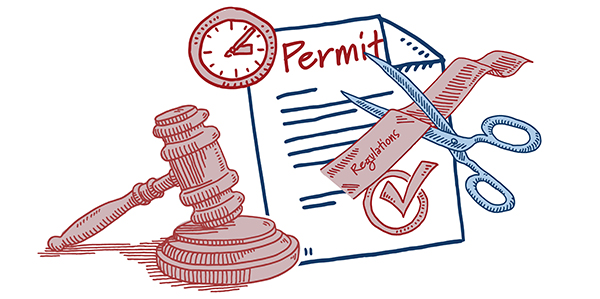
1. Senate explores
modernizing permitting to let America build |
|
|
As energy demand rises, the Senate
continues to work on addressing project delays through permitting
modernization. The Senate Environment and Public Works Committee held
a hearing this week on federal environmental review
and permitting.
What to know:
- Chair Capito (R-WV) urged bipartisan
action to give projects the certainty they need from one
administration to the next;
- Ranking Member Whitehouse (D-RI) said he
wants bipartisan reform, pointing to faster permitting as a way to add
jobs and expand power supply;
- A coalition led by Bipartisan Policy
Center Action, including ClearPath Action, sent a letter
to Congress calling for durable, technology-neutral reforms to improve
affordability and strengthen national security; and
- Dustin Meyer, Senior Vice President at
the American Petroleum Institute, testified on the need for
certainty.
What's clear:
Letting America build requires a faster, more certain timeline for
developers and customers. Bipartisan reform can unlock
investment, lower costs and ensure the U.S. can meet rising
demand.
Plug in: Read
2026:
A Clear Path for American Energy Dominance on ClearPath's full policy agenda,
including how modernized permitting can expand U.S. energy
leadership.
|
2. Scaling America’s
rare earth supply chain |
|
|
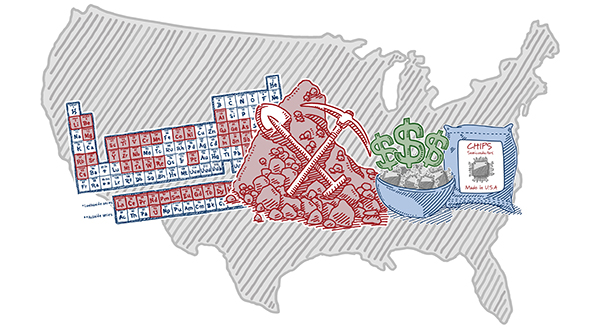
The effort to rebuild America’s
critical mineral supply chains is scaling fast. USA Rare Earth
(USAR) raised $1.5 billion in new private investment and announced
a Letter of Intent (LOI) with
the U.S. Department of Commerce’s CHIPS Program for up to $1.6 billion
in public support.
What’s happening:
- The
CHIPS LOI includes $277 million in federal funding and $1.3 billion in
a secured loan in exchange for 16.1 million shares of common stock and
17.6 million warrants issued to the Department of
Commerce;
- The
funding will allow USAR to scale its “mine-to-magnet” activities,
including the extraction and processing of rare earths and permanent
magnet manufacturing; and
- USAR
will also collaborate with the Department of Energy to advance heavy
rare earth element separation technologies.
What's clear:
Critical minerals sit at the center of American energy leadership,
industrial competitiveness and national security. Strengthening these
supply chains will require faster permitting, greater investment in
mining innovation and robust international cooperation through the use
of strategic trade tools like Energy
Security Compacts.
|
3. FERC makes waves
with pumped storage + new bipartisan hydropower
legislation |
|
|
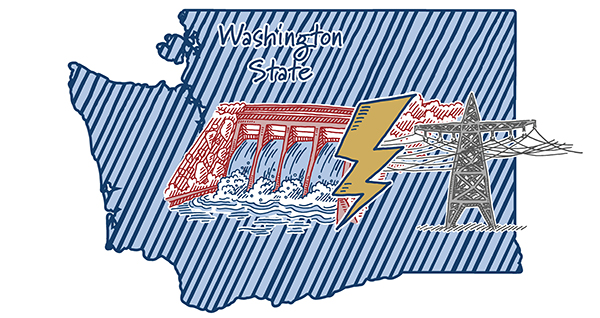
Momentum is building to unleash
American hydropower. FERC approved construction of the
Goldendale
Energy Pumped Storage Project in Washington state, the first major
hydropower project approved by the Commission in over a decade. The
project will deliver 1,200 megawatts of clean, dispatchable capacity
to support grid reliability in the Pacific Northwest.
In other hydro news:
-
Sens. Murkowski (R-AK) and King (I-ME)
introduced the Fair
Licensing for Operations of Water Structures (FLOWS) Act to reduce regulatory and
permitting burdens.
- The
bipartisan bill aims to cut federal red tape and remove barriers to
hydrokinetic energy projects, including technologies that generate
electricity from tides, waves and river currents.
-
FERC issued a Notice
of Intent for
blanket waivers for post-licensing activities at hydropower projects.
What’s clear:
Today, the U.S. uses hydropower for 5.7%
of its electricity. Yet, we use only 3% of the
92,000 dams in America for electricity. As electricity demand rises,
more hydropower is an affordable, reliable and emission-free
option.
|
|
|
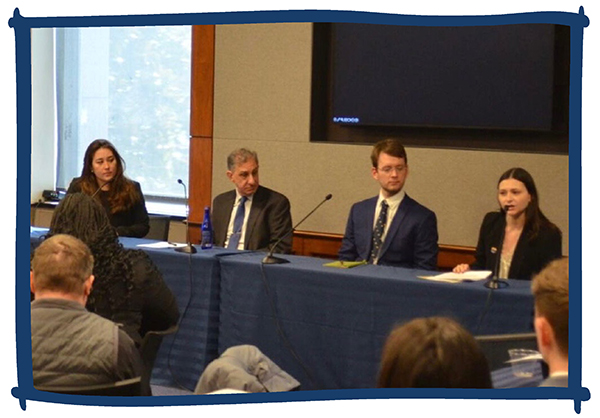
Hillary
O’Brien joined a
panel discussion at the Center for Climate and Energy Solutions’
Playing to Win: A Policymaker’s Guide to Accelerating U.S. Technology
Leadership event. The discussion focused on the importance of
sustained federal investment in innovative energy technologies and the
need for comprehensive federal permitting reform. |
|
-
A C3 Solutions report finds that investing in innovation across
agriculture and food production can help keep food affordable while
reducing environmental impacts, showing how smarter technologies can
cut costs, reduce waste and strengthen food security.
- Geothermal developer XGS Energy and Vallourec announced a
strategic
supply chain partnership to accelerate
next-generation geothermal deployment, including a 150-MW project in
partnership with Meta beginning construction in New Mexico this
year.
- Thermal energy storage innovator Electrified Thermal Solutions
announced
the commissioning of its first commercial-scale thermal battery in San
Antonio, which will deliver low-cost, reliable, clean heat at high
temperatures demanded by industries like cement, steel and
chemicals.
- U.S. primary aluminum producer Century Aluminum entered into a
joint
development agreement with Emirates Global
Aluminium, a UAE-based company, to build the nation's first new
smelter in 45 years in Oklahoma, a project that would double domestic
production capacity.
- Standard Nuclear raised
$140 million in a Series A round to expand
domestic production of TRISO nuclear fuel using HALEU. It seeks to
bring new facilities online in Tennessee and at Idaho National
Laboratory (INL).
- Microreactor start-up Antares received
DOE approval for its demonstration reactor
at INL. This facility will validate fueling, reactor controls and core
physics.
- Aclara’s U.S.-based
subsidiary is advancing vertically integrated rare earths supply
chains. To support its heavy rare earth separation process, Aclara is
entering into a Cooperative Research and Development
Agreement with Argonne National Laboratory to develop
an AI-enabled digital twin technology.
|

|
ClearPath believes
America must lead the world in innovation over regulation…markets over
mandates…providing affordable, reliable, clean
energy. |
|
That's all from us. Thanks for reading and have a great
weekend!
View this Rundown online
|
|
ClearPath · 300 New Jersey Ave NW, Suite 800, Washington, DC 20001,
United States
This email was sent to
[email protected] · Unsubscribe
Created with NationBuilder.
Build the Future.
|
|
|
|