|
 |
The Left's Immigration Illusion
Intercollegiate Review | Conservatism's sharpest voices, curated weekly. ISI's weekly newsletter brings you the best in serious conservative thought.
|

| |||||||||||||||


Misinformation and Modern Immigration
 |
As controversies over the enforcement of America’s immigration laws embroil the nation, the foundational arguments behind those laws have largely faded into the background. Throughout US history, politicians and thinkers have long wrestled with the core questions of national immigration policy: should legal immigration be expanded or reduced? Should entry into the country be made easier or more restrictive?
In his Substack Popular by Design, Alexander Kustov discusses some of the major arguments in favor of immigration that he refers to as “highbrow misinformation.” While Kustov doesn’t support President Donald Trump’s approach to immigration, he also challenges the excesses of the pro-immigration crowd—particularly those advanced by political and cultural elites, hence the “highbrow” title.
Kustov lists several main myths (along with an honorable mention). He discusses how immigration doesn’t automatically benefit the most vulnerable or everyone involved, and that its effects can vary depending on who the immigrants are and the nature of the country they’re entering. Kustov mentions that temporary migration can be positive and emphasizes that misinformation alone can’t explain opposition to immigration. He concludes with an argument for thoughtful reform, emphasizing the importance of a serious, honest immigration debate.
To explore Kustov’s arguments in more detail, read his full article here.
|
Roe’s Religious Roots
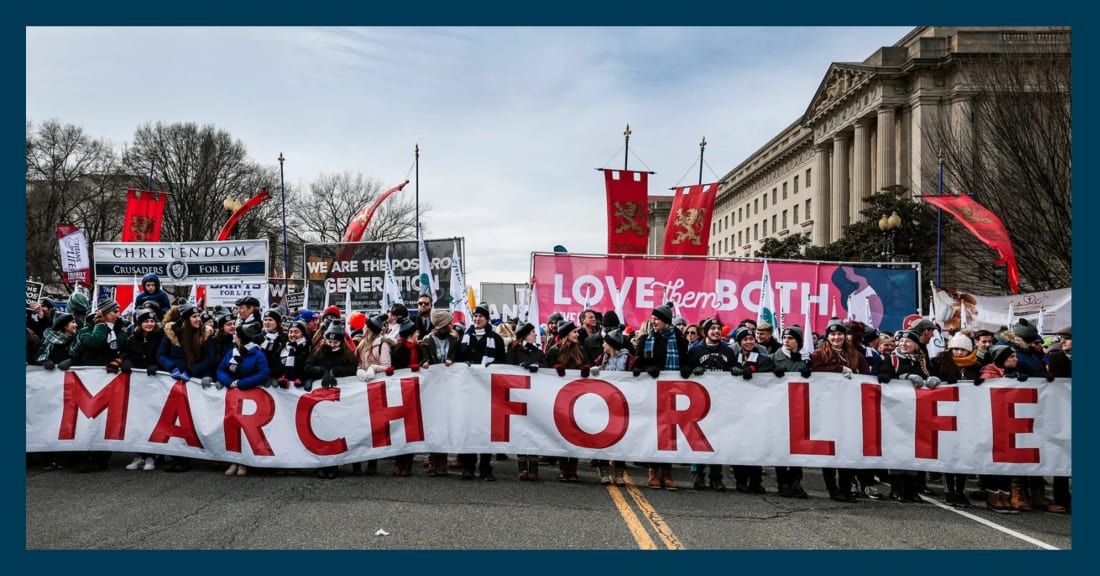 |
It’s already been three and a half years since the Supreme Court’s decision in Dobbs v. Jackson Women’s Health Organization, which overturned Roe v. Wade and the purported constitutional right to abortion. After decades of effort by the pro-life movement, the end of Roe marked a major victory. While the abortion debate has continued at the state level, Christians who fought for unborn lives rightly celebrated the Dobbs decision.
But how did the Court arrive at Roe in the first place? Writing in First Things, Matthew Schmitz reviews a book that offers a surprising answer: religious influence. In Abortion and America’s Churches: A Religious History of Roe v. Wade, historian Daniel K. Williams traces the long struggle between liberal and conservative Christians over the future of abortion.
Schmitz highlights the book’s account of liberal Protestant leaders who struggled between competing commitments to unborn life and individual freedom. He notes that some mainline Christian organizations even proposed trimester-based abortion frameworks that closely resembled Roe’s eventual ruling. After Roe, evangelicals and Catholics joined to oppose it, reshaping the nation’s political coalitions and religious landscape. Schmitz concludes by pointing to similar divisions within Catholicism over abortion and other social issues, including gay marriage.
Read more of Schmitz’s review here.
Compendium
Every article we feature here is available to read for free. Articles from paywalled publications are available through gift links.
Daniel McCarthy, ISI’s VP for Publications, on the pragmatism of Trump II and its break from the FDR-era political order in Tom Klingenstein’s newsletter.
Brendan Hodge on the available abortion evidence post-Dobbs in The Pillar.
Kevin Roose, Casey Newton, and Whitney Jones interview Jonathan Haidt on the consequences of social media use in Gen Z in The New York Times.
Misha Saul on the possible consequences of an AI-driven society in City Journal.
Maninder Järleberg on the death of literacy and the dissolution of the Western canon in her Substack.
Benjamin Haines on civic education’s rejection of historicism in Civitas Outlook.
Gale L. Pooley on Mark Perry’s 2025 Chart of the Century in Human Progress.
Emir J. Phillips on automating gradebooks in The Hedgehog Review.
 |
Upcoming ISI Events
If you enjoy what you’re reading here, we invite you to engage with ISI at one of our upcoming in-person events.
43rd Annual Evening of Viennese Waltzing | February 7 | Washington, DC
Join the Intercollegiate Studies Institute on Saturday, February 7, at The Organization of American States for the 43rd Annual Evening of Viennese Waltzing! This annual event brings together over 200 couples for a luxurious recreation of the sumptuous balls of turn-of-the-century Vienna.America 500 Gala for Western Civilization | April 30 | Washington, DC
The America 500 Gala for Western Civilization is the flagship event of ISI’s America 500 Campaign that celebrates America’s 250th anniversary. Join us at the Andrew W. Mellon Auditorium on Thursday, April 30, 2026, for an elegant evening with inspiring speakers.Conservative Book of the Year Award Ceremony and Luncheon | May 1 | Washington, DC
ISI’s annual Conservative Book of the Year Award Ceremony honors a distinguished nonfiction work that has contributed to the advancement of conservative thought. Join us on May 1 for a luncheon buffet, award ceremony, and panel discussion in Washington, DC.
Visit our events page on our website to see all upcoming events.
Thanks for reading the Intercollegiate Review! Subscribe for free to receive new posts.

This week, from ISI’s Digital Media:
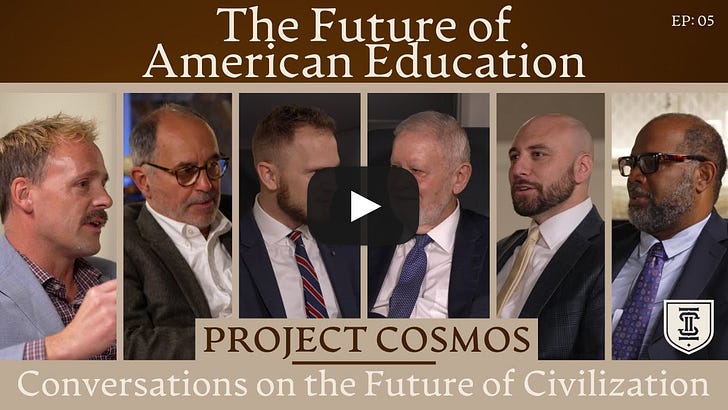
ISI’s flagship series, Project Cosmos, returns for its fifth episode featuring Larry Arnn, Jeremy Tate, Joshua Mitchell, Corey Brooks, and Jacob Imam. Moderated by ISI President and CEO Johnny Burtka, the conversation explores the classical education revival, the integration of liberal arts with hands‑on trades, the impact of identity politics, and the path toward an educational renewal worthy of a free nation.
Subscribe to our YouTube channel for more content like this.
This week, from the Collegiate Network:
ISI’s Collegiate Network supports over 80 student-run publications across the country, empowering students to run independent college newspapers, magazines, and journals that report on important issues ignored by the mainstream media.
Ditching the Albatross via The Harper Review
How Nietzsche and Pynchon helped a student realize that he could put aside the crushing weight of guilt and self-imposed debt he’d been carrying.
The Gospel of Life, the Culture of Death via Cogitare Magazine
Thirty years after John Paul II warned of a "culture of death," the assassination of Charlie Kirk and a school shooting in the author's hometown on the same day forced a reckoning with the truth.
Violence at Penn: A physical, virtual, and moral problem via The Pennsylvania Post
An overview of recent local violence at Penn, linking it to our culture's casual tolerance for violence—online and offline.
The Faithful Speak, the Gospel Trembles via The Washington and Lee Spectator
An argument that moderate, practicing Catholics—those that helped deliver Trump's 2024 victory—may be the most consequential force in deciding who wins the White House in 2028.
All Roads Lead to Tufts: International Student Admission at Tufts via The Tufts Tribune
As Trump-era visa restrictions slash foreign enrollment nationwide, the gap between Tufts University's lofty globalist ideals and its on-the-ground realities keeps widening.
Visit our Student Journalism section to read more from the Collegiate Network.
America’s Author
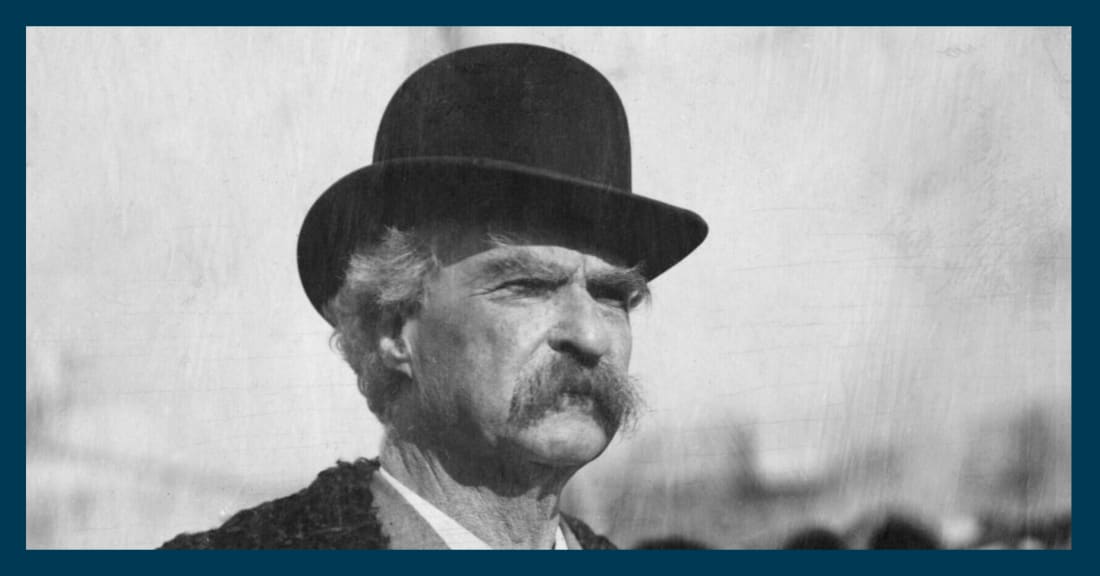 |
The post-Civil War era brought dramatic advances in science and technology, but it also marked the emergence of a distinctly American culture. A generation of influential writers and poets helped shape the identity of the newly reunified nation, including one of the most recognizable names in American literature: Mark Twain.
In this week’s article from Modern Age, Jonathan Leaf reviews a new biography of Twain by Ron Chernow. Chernow, best known for his sweeping biography of Alexander Hamilton—which later inspired Lin-Manuel Miranda’s famous Broadway musical—brings the same ambition to Mark Twain. Leaf finds the biography thorough, deep, and rich, though he suggests Chernow may have gone a little too far in his nearly 1,200-page book. As Leaf puts it, “How many pages are needed to chronicle the life of the man who said that quitting smoking was easy—he had done it a hundred times?”
Despite his criticism of the book’s length, Leaf argues that Chernow skillfully captures the complexities of Twain’s life and personality. He also defends Twain’s The Adventures of Huckleberry Finn against modern critics and explores Twain’s views on fame, politics, and his literary peers. Leaf praises Twain’s integrity and storytelling genius while acknowledging his flaws, and he credits Chernow for doing the same.
Read more about Twain here on the Modern Age website.
Modern Age is ISI’s flagship publication. Visit modernagejournal.com and subscribe to receive a free daily newsletter.
“The man who does not read books has no advantage over the man that cannot read them.”
–Mark Twain
Celebrate America’s semiquincentennial with ISI and help shape the next 250 years of our country. Your support of the America 500 Education Fund will help ISI reach, teach, and launch the next generation of conservative leaders. Visit isi.org/america500 to learn more.
| ||||||||||

