|
Critical State: ICE at Italy’s Winter Olympics
If you read just one thing this week … read about Italian pushback on plans to bring ICE to the Winter Olympics.
|

| |||||||||||||||


 |
Italian Prime Minister Giorgia Meloni’s government is facing intense backlash after US Immigration and Customs Enforcement (ICE) confirmed its agents would help with security at the Winter Olympics in Italy, Hannah Roberts reports for Politico.
The revelation has sparked outrage because ICE’s deportation arm has recently been embroiled in controversy over the killings of two US citizens in Minneapolis. Foreign Minister Antonio Tajani insisted only Homeland Security Investigations personnel — not deportation officers — will be involved and has stressed that Italian authorities retain full control.
“I have been harder than anyone else in Italy on [the ICE raids] … but it’s not like the SS are coming,” Tajani said.
Opposition lawmakers have accused Meloni of capitulating to Washington and enabling an agency they describe as abusive and incompatible with democratic norms.
Milan’s left-wing mayor, Giuseppe Sala, said ICE is “not welcome,” while petitions demanding the government block the agency’s participation have quickly amassed tens of thousands of signatures.
The uproar intensified after Lombardy’s regional president initially downplayed ICE’s role, prompting US officials to clarify that HSI would support risk‑assessment efforts for visiting dignitaries and transnational crime threats.
Milan Mayor Sala said ICE “is a militia that kills. … Can’t we just say no to [President Donald] Trump for once?”
If You Read One More Thing: The Invisible ICE Resistance
At The New Republic, Ana Marie Cox covers resistance to ICE in Minneapolis, where residents have built a vast, mostly invisible resistance network to monitor and disrupt the agency’s moves in the Twin Cities.
She describes “commuters” who spend hours driving quiet loops through neighborhoods, logging suspicious vehicles into a crowdsourced database and relaying updates through encrypted Signal chats.
Their work is monotonous but essential, aimed at delaying ICE operations and protecting immigrant families.
Cox details how volunteers have faced infiltration attempts, harassment, and the constant threat of violence, especially after agents killed Renee Nicole Good and Alex Pretti.
Yet participation has kept growing, sustained by mutual aid systems — food deliveries, childcare, clerical help — that enabled thousands to contribute.
New Counter-Drone Policies Make US Base Defense Easier
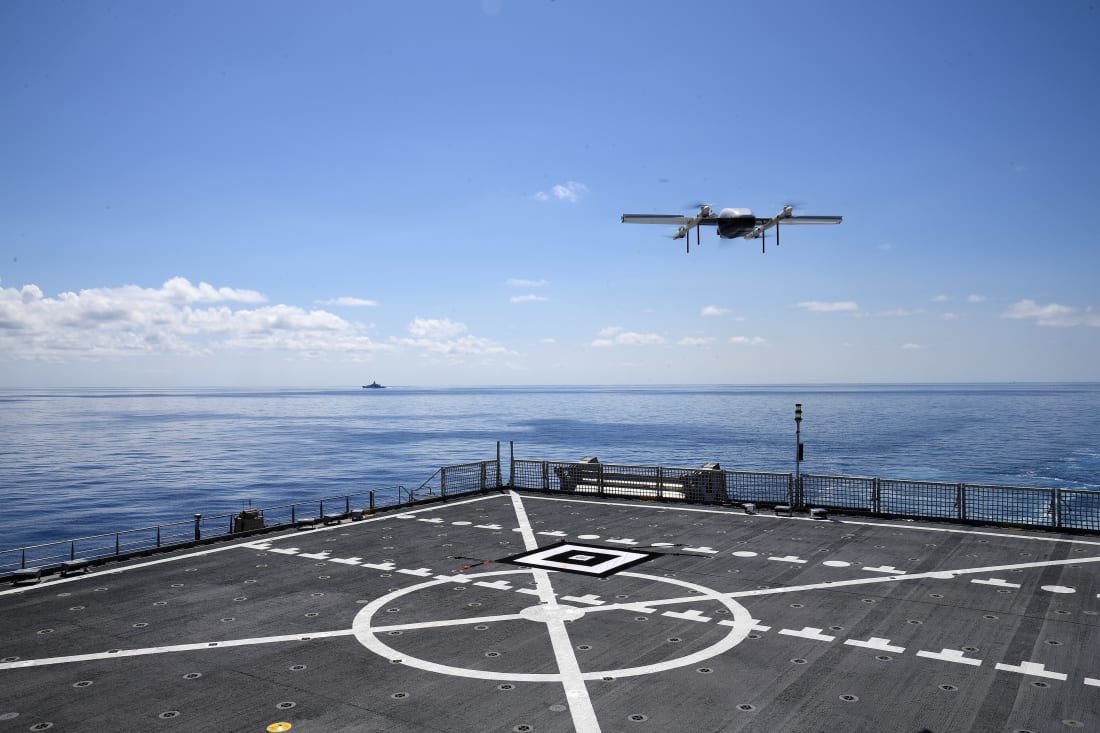 |
Base commanders in the United States have gained significantly broader authority to counter drone threats under new Pentagon guidance issued by Defense Secretary Pete Hegseth, Lara Korte has reported for Stars and Stripes.
The policy streamlines previously inconsistent rules and allows commanders to designate protected airspace beyond installation fence lines, treating unauthorized drone flights as surveillance threats even before entering a base perimeter.
The update follows a Defense Department inspector general report that found major gaps in existing counter‑drone coverage, including at critical sites such as Luke Air Force Base.
The Pentagon has also expanded coordination with Homeland Security and the Justice Department to improve data‑sharing, while installations have been instructed to draft new operating procedures within 60 days.
Deep Dive: The 12 Bells of Authoritarianism are Ringing in the USA
In a new report, Amnesty International has warned that the United States under President Donald Trump was exhibiting what it called a clear trend toward authoritarian behavior and weakening of basic rights.
The report, “Ringing the Alarm Bells: Rising Authoritarian Practices and Erosion of Human Rights in the United States,” warns that human rights often deteriorate quietly, without dramatic warning signs.
The human rights organization argues that the administration’s actions in 2025 and early 2026 amounted to a “human rights emergency.” The organization writes that “President Trump acted quickly and consistently through executive actions and administrative measures to shrink civic space and undermine the rule of law domestically and internationally.”
Amnesty claimed that the US is now following a trajectory it has documented in countries such as Hungary, El Salvador, and Nicaragua, where governments “begin by controlling information, discrediting critics, punishing protest, and narrowing civic space,” eventually weakening courts and oversight bodies until the very systems meant to check government authority may already be weakened. According to the organization, what is happening in the US fits the global pattern of shrinking freedoms and legal protections that Amnesty has been warning about.
Amnesty identified 12 “alarm bells” signaling authoritarian drift, including attacks on press freedom, punishment of protest, coercion of civil society, retaliation against critics, targeting of the legal system, disregard for due process, assaults on refugee and migrant rights, militarization of domestic enforcement, expanded surveillance, discrimination against marginalized groups, weakened corporate accountability, and the undermining of international human rights systems. These areas, the report states, show how the administration is undermining the core foundations that keep a society democratic.
The organization emphasizes that these pillars — freedom of expression, freedom of the press, peaceful protest, due process, equality, and non‑discrimination — are foundational.
Amnesty says the administration has “dangerously escalated” efforts to control information. It cites the White House’s practice of “conditioning access with speech‑chilling terms,” barring outlets such as the Associated Press from “restricted spaces,” and prompting dozens of Pentagon reporters to surrender their badges rather than sign documents “waiving their First Amendment protections.”
The report also highlights the administration’s transformation of the Federal Communications Commission into “an instrument of political retaliation,” noting that FCC leadership “terminated all diversity, equity, and inclusion initiatives” and launched investigations into NPR and PBS.
Funding for public broadcasters has been “zeroed out” through rescission, while the US Agency for Global Media was “gutted,” shuttering or weakening Voice of America, Radio Free Asia, and other outlets.
As part of its authoritarian push, according to the rights group, the Trump administration has put forth broad efforts to “shrink civic space.” Amnesty warns that “speech and protest were punished,” and that universities and civil society organizations are being “coerced to narrow civic space.” These tactics, it says, mirror global patterns in which governments “criminalize human rights defenders, climate activists, and Gaza solidarity protesters.”
Retaliation against critics has been “normalized,” with political opponents, whistleblowers, judges, and lawyers targeted in ways that “weaken the rule of law,” Amnesty adds. The report further argues that the administration’s actions made it “increasingly difficult to halt or reverse these patterns of backsliding and abuse.”
The organization warns that due process is being “disregarded,” enabling “enforced disappearances and illegal expulsions.” It says refugee and migrant rights are “attacked — cruelty became policy and reality,” noting that the administration has “dehumanized and criminalized marginalized populations,” including migrants, Black and Brown communities, LGBTQ+ people, and women. Amnesty describes immigration enforcement as a “paramilitary style operation” defined by “speed, fear, and dehumanization,” conditions that have “made it easier to normalize practices such as masked law enforcement, militarized raids, large scale detention, surveillance, and summary expulsions.”
The report concludes that militarization has become a “new normal” in domestic enforcement and that surveillance and AI tools have been “turbocharged — enabling targeting and repression at speed.” Amnesty says that these tools are being used to “scapegoat populations and roll back non‑discrimination protections,” creating a model of repression that could be expanded to other groups.
Amnesty stresses that US actions are having a global impact by encouraging authoritarian tactics abroad. In the report, Amnesty Secretary General Agnès Callamard said: “For years now, we’ve witnessed a creeping spread of authoritarian practices among states the world over … all who believe in freedom and equality must steel ourselves to counter increasingly extreme attacks on international law and universal human rights.”
Show Us the Receipts
At Inkstick, Alexandra Menter writes in an essay that President Donald Trump has escalated military operations across the Caribbean and Latin America while downplaying the flow of American guns driving violence in the region. “This dissonance has had lethal consequences — in fact, it has killed more than 100 civilians in the Caribbean islands, though many families cannot even confirm whether their loved ones are among the dead,” Menter explains. The administration has claimed that the attacks have targeted narcotics traffickers but has released little evidence. Menter notes that US‑sourced firearms overwhelmingly fuels homicides in Latin America, even as Trump ignores this well-documented threat. She shows how families like that of missing fisherman Alejandro Carranza are left without answers amid the campaign’s mounting civilian toll.
Inkstick’s managing editor, Patrick Strickland, has reported as the Trump administration’s 2026 militarism and mass deportation drive has unfolded alongside a global border regime that has long punished people displaced by wars the United States helped fuel. “American imperialism defines much of this country’s history,” he writes. And now “Immigration and Customs Enforcement agents have also been deployed around the nation” to detain immigrants. He traced how US interventions have contributed to mass displacement from Afghanistan to Syria, while migrants face lethal borders from the Mediterranean to the US–Mexico desert. Strickland recounts testimonies from refugees who have been repeatedly uprooted, including Palestinians pushed into permanent exile. He argues that borders function as both crime scenes and crimes.
Natalie Skowlund has reported for The World that rural communities in Colombia’s La Guajira region have lost critical support after the Trump administration cut nearly all USAID funding. Local ecotourism projects, including Kevin Rivadeneira’s flamingo‑focused tour agency, had relied on promised multi‑year grants that never arrived. Skowlund shows how the cuts undermine programs tied to Colombia’s 2016 peace accord, including efforts to reduce poverty, curb armed‑group recruitment, and stabilize areas affected by cocaine trafficking. Afro‑Colombian and Indigenous leaders say the loss of US aid forced organizations to shut down and has weakened violence‑prevention work. Residents face renewed economic uncertainty as development plans stall and security risks persist.
Support Inkstick
For anyone who missed our annual fundraising campaign last year but would still like to support Inkstick, there are several ways. We accept one-time donations and recurring monthly support year round. We also make a sum off any of the snazzy Inkstick swag you purchase from our merch store. As always, any support you can offer will go directly toward our reporting. And if financial support isn’t something you can swing, then we’d love it if you shared our articles anywhere you are on social media.
Critical State is written by Inkstick Media in collaboration with The World.
The World is a weekday public radio show and podcast on global issues, news, and insights from PRX and GBH.
With an online magazine and podcast featuring a diversity of expert voices, Inkstick Media is “foreign policy for the rest of us.”
Critical State is made possible in part by the Carnegie Corporation of New York.
You're currently a free subscriber to Inkstick’s Substack. For the full experience, upgrade your subscription.
| ||||||||||

