The Department of Government Efficiency (DOGE) made major headlines throughout the first half of 2025 — but where is it now? And what did it accomplish? A year later, its status and impact are hard to pin down. This is what the data shows. |
|
- DOGE was created via executive order on January 20, 2025, with Elon Musk leading the organization. Its goal was “modernizing Federal technology and software to maximize governmental efficiency and productivity.”
- This often took the form of budget cuts and layoffs. Federal entities, including the Department of Agriculture and the Environmental Protection Agency, cited DOGE when announcing budget cuts.
|
|
- Did you vote in last week’s poll? Over half of respondents (53.1%) thought federal spending had risen 1% since DOGE was established. In actuality, the 37.1% who thought it had changed less than one percent were right. Average monthly federal spending in the year leading up to January 2025 was $443.1 billion. In the 12 months leading up to October 2025, it was $442.9 billion, down 0.05%.
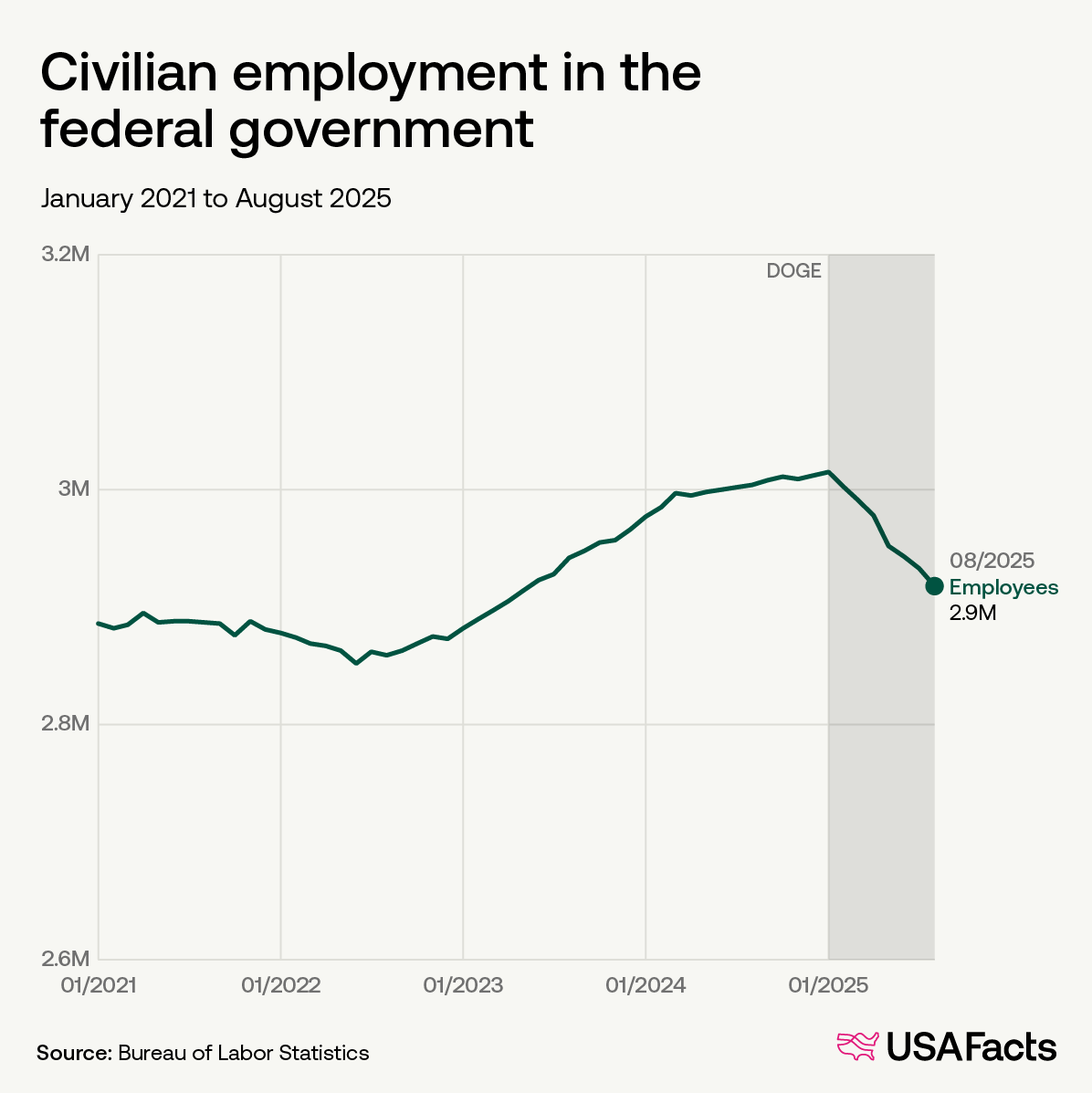
- The size of the federal workforce decreased by about 3.2% between January and August.
- The charter that established DOGE runs through July 4, 2026, and its website and social accounts are still active. For more background on DOGE, see the Decoding DOGE archive.
|
|
Use-of-force: What FBI data says |
|
Protests and public discussions have sprung up regarding law enforcement officials’ use of force following two fatal shootings of residents in Minneapolis. USAFacts turned to data collected by the FBI about federal, state, local, and tribal law enforcement and investigative agencies to learn more about how often force is used. Here’s what we found.
- The Justice Department permits officers to use “only the force that is objectively reasonable to effectively gain control of an incident, while protecting the safety of the officer and others” strictly in cases without feasible alternatives. (The Department of Homeland Security, which is home to ICE, uses similar language in its use-of-force policy, but it is not included in this data.)
- According to the FBI’s national use-of-force data, over half (54.3%) of use-of-force incidents in 2025 occurred while law enforcement was responding to unlawful or suspicious activity. Another 21% were during traffic stops (12.9%) or other routine patrol (7.0%). Nearly 10% were categorized as “other” or “unknown.”
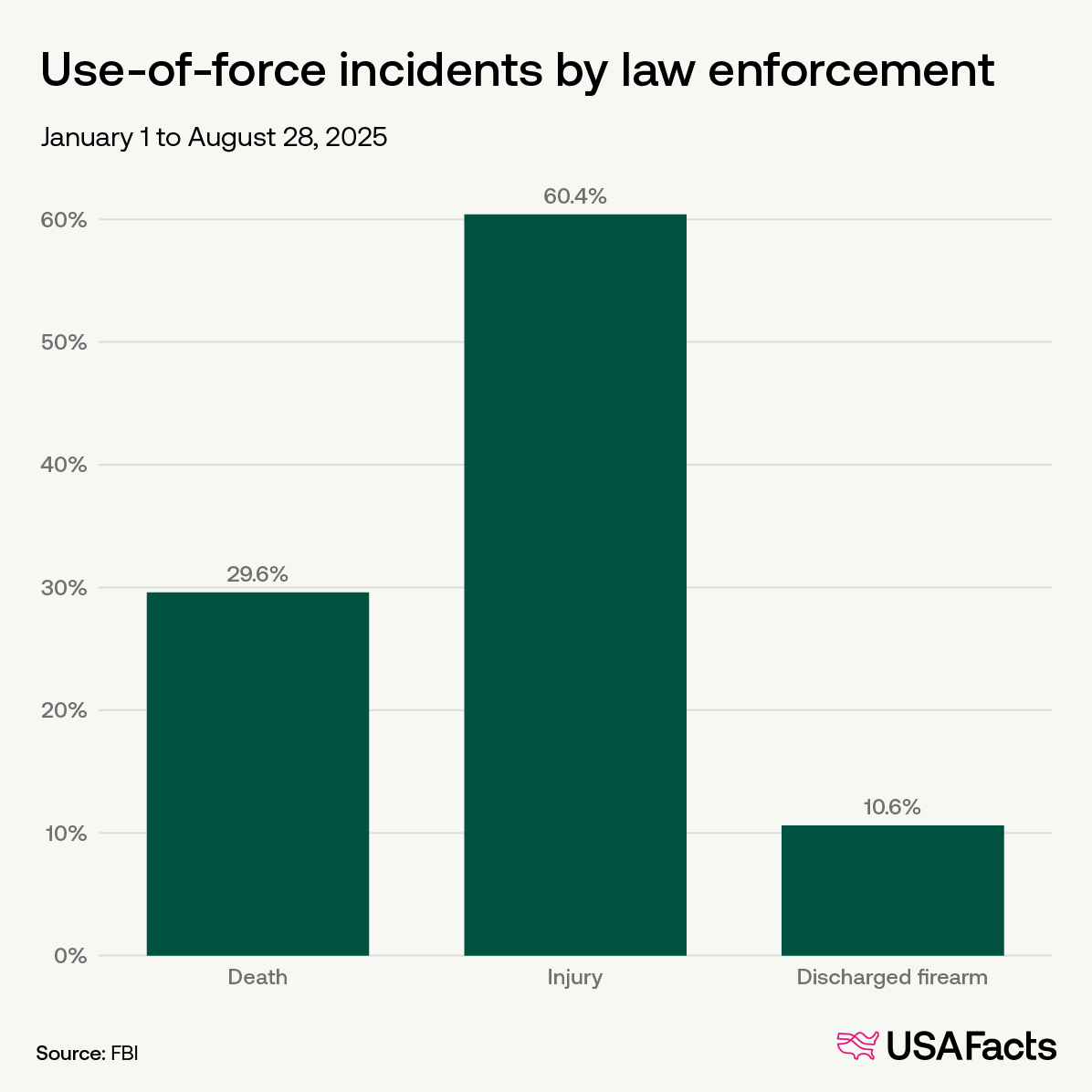
- In 2025, 60.4% of incidents caused serious bodily harm, while 10.6% involved a discharged weapon without bodily harm. About 29.6% of reported use-of-force incidents resulted in the death of one or more people.
|
|
- Firearms were the most often-cited type of force used in 2025 incidents, followed by hands/fists/feet, tasers, police dogs, and impact projectiles like rubber bullets.
|
|
Last week, the Supreme Court heard arguments about a president’s power to fire a member of the Federal Reserve. Just what does the Fed do?
|
|
Think you know the data? Take our poll! |
|
You’ll see the answer in next week’s newsletter. |
|
| There were about 515,600 DACA recipients in the US at the end of June 2025. Most were born in Mexico. Was was the second-most common country of origin? | | | | | | | | | | | | |
|
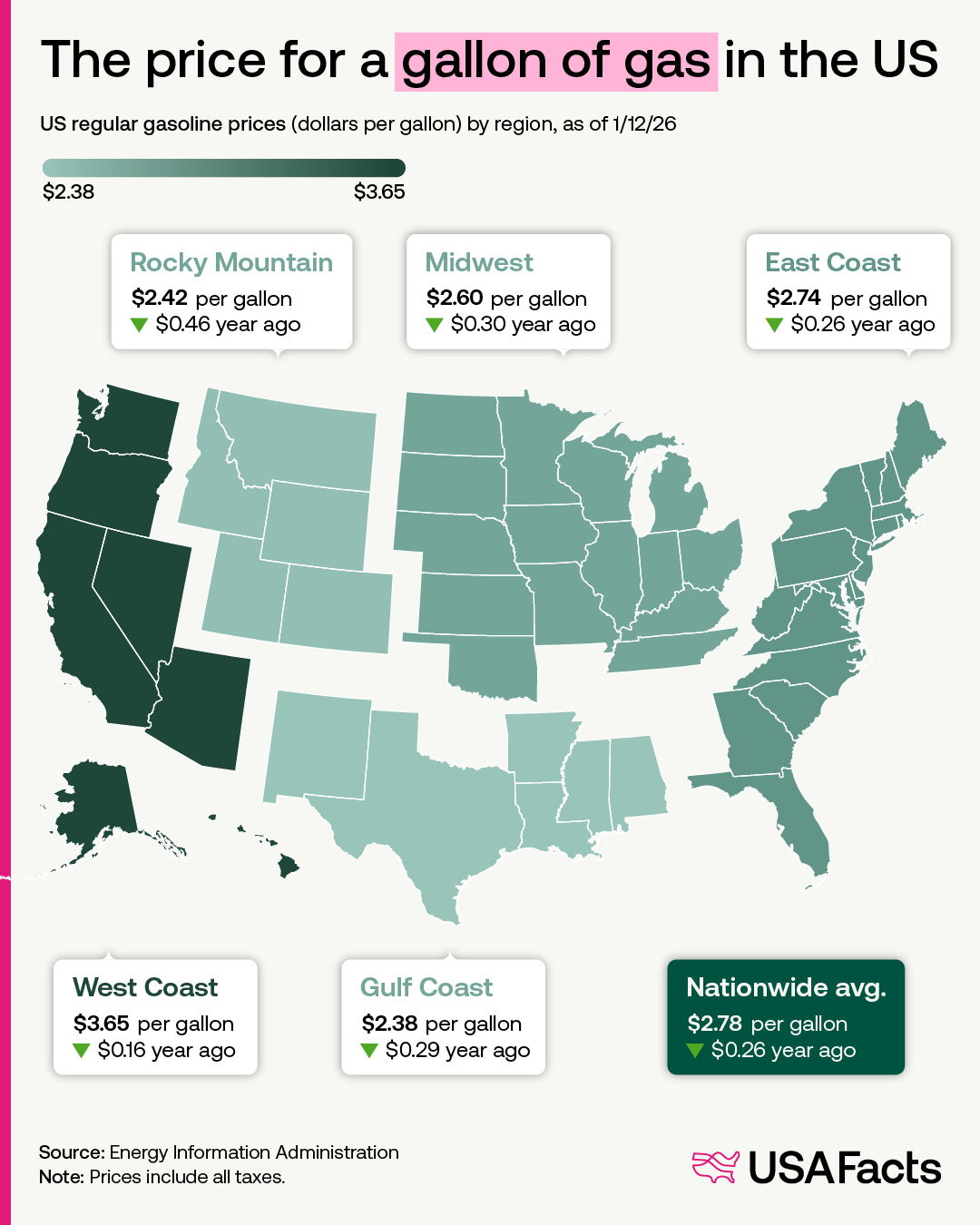
On January 12, gas prices were down from a year prior. The nationwide average price for regular gas was $2.78/gallon, down $0.26. The West Coast had the highest prices: $0.87 above the national avg. Sound off on prices where you live. |
|
|
|
|