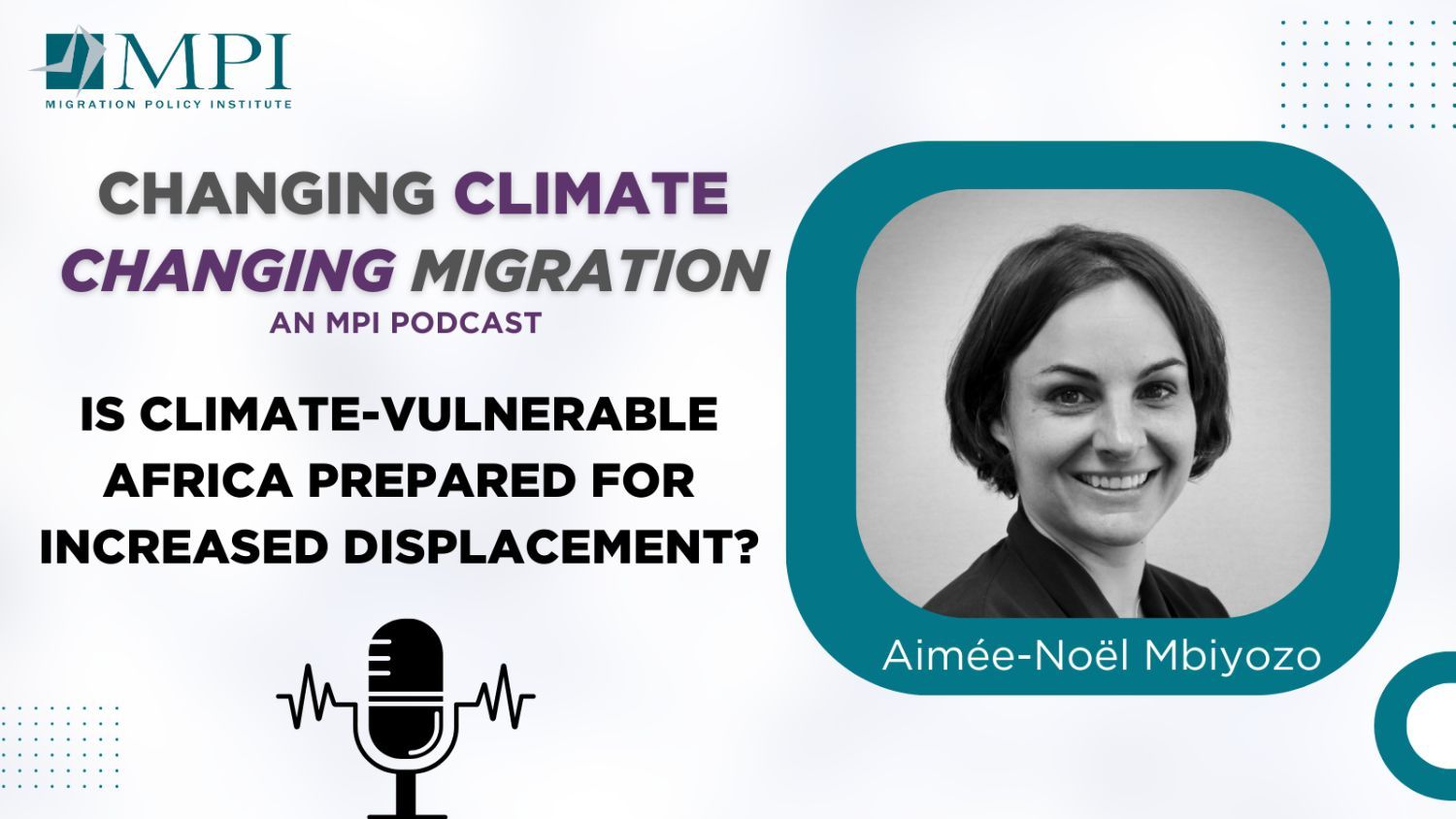
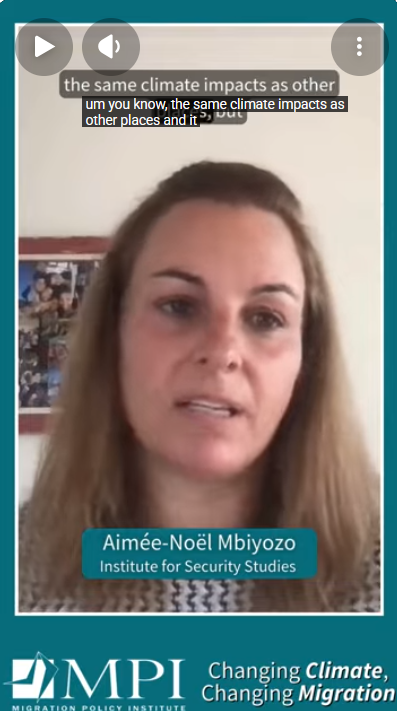
January 26, 2026 Dear John, There is no region of the world more vulnerable to the impacts of climate change than Africa. Extreme heat and storms, drought, and other environmental events have afflicted places across the continent, undermining local livelihoods, aggravating social tensions, and forcing people to leave their homes. Countries have sought to adapt to this reality by amplifying regional integration, signing bilateral or multilateral agreements, and accommodating people in need. While progress has been made, however, millions remain vulnerable to climate displacement within their country or beyond, chiefly remaining in Africa. We talk about the climate migration challenges and successes across Africa on the latest episode of our podcast “Changing Climate, Changing Migration.” Our guest is Aimée-Noël Mbiyozo, a senior research consultant at the South Africa-based Institute for Security Studies. |
|
Among the topics that Aimée-Noël explores during the conversation is the intersection between climate change, violent conflict, and migration. While neither migration nor climate change are sole drivers of conflict, they can at times aggravate underlying factors, ultimately forcing more people to flee. |
|
|
| The Migration Policy Institute is an independent, non-partisan, non-profit think tank in Washington, D.C. dedicated to analysis of the movement of people worldwide. MPI provides analysis, development and evaluation of migration and refugee policies at the local, national and international levels. For more on MPI, please visit www.migrationpolicy.org. |
| |
|
|