Plan fails to address reason property taxes keep rising: his own “400-year veto” |
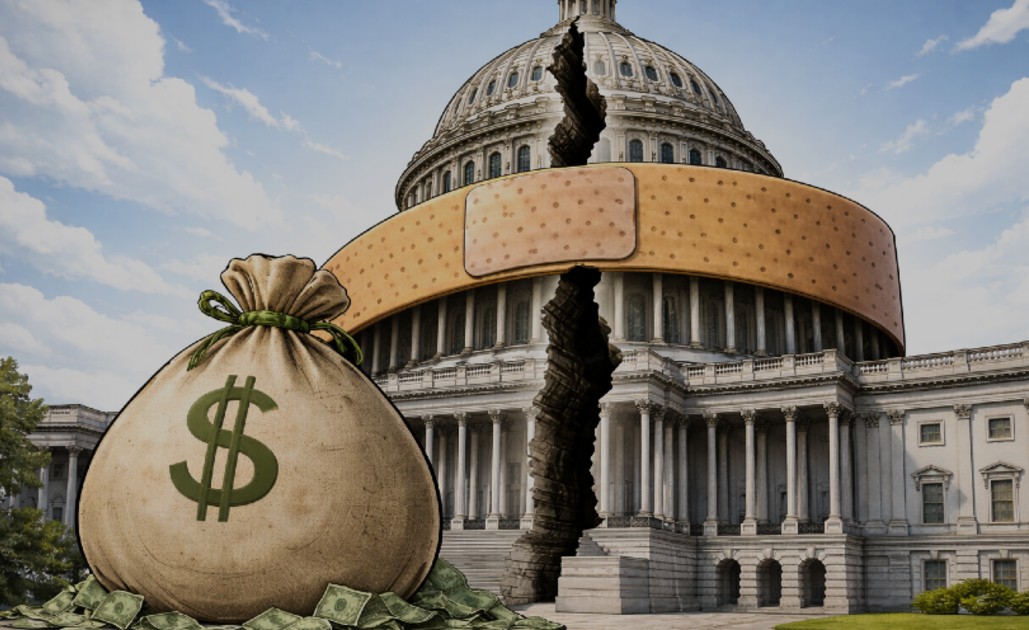
Policymakers are scrambling for solutions as Wisconsin property tax burdens continue to rise. As homeowners clamor for relief, Gov. Tony Evers (D) has proposed using $1.3 billion from the state’s surplus to buy down property tax bills. Unfortunately, the proposal does nothing to address the structural drivers of high (and rising) property taxes and, if anything, puts more pressure on them in the future. His proposal commits the state to subsidies that shift burdens rather than alleviate them.
The governor’s plan, revived from his fiscal year 2025-27 budget proposal, contains three main prongs. First, it increases state funding to local school districts beyond their revenue limit authority, reducing the amount school districts collect in property taxes. Second, it offers local governments additional aid, equal to a 3 percent levy increase, if they agree to hold their property tax levies flat. And third, it enhances school levy tax credits, reducing taxpayers’ net liability.
|
Democrats object, want to force use of renewables |
The state Assembly this week passed a bill barring data centers from passing on any utility costs to other ratepayers in Wisconsin — targeting a key objection from Wisconsinites who oppose data center development.
Assembly Bill 840, passed 53-44 almost entirely along party lines, also requires new data centers to use water-conserving technology for cooling and to report annual water use to the Department of Natural Resources.
The bill doesn’t specify how the Wisconsin Public Service Commission would go about ensuring that costs from new electrical infrastructure don’t land on existing ratepayers — only that the commission “shall ensure” it when it sets rates. |
|
|
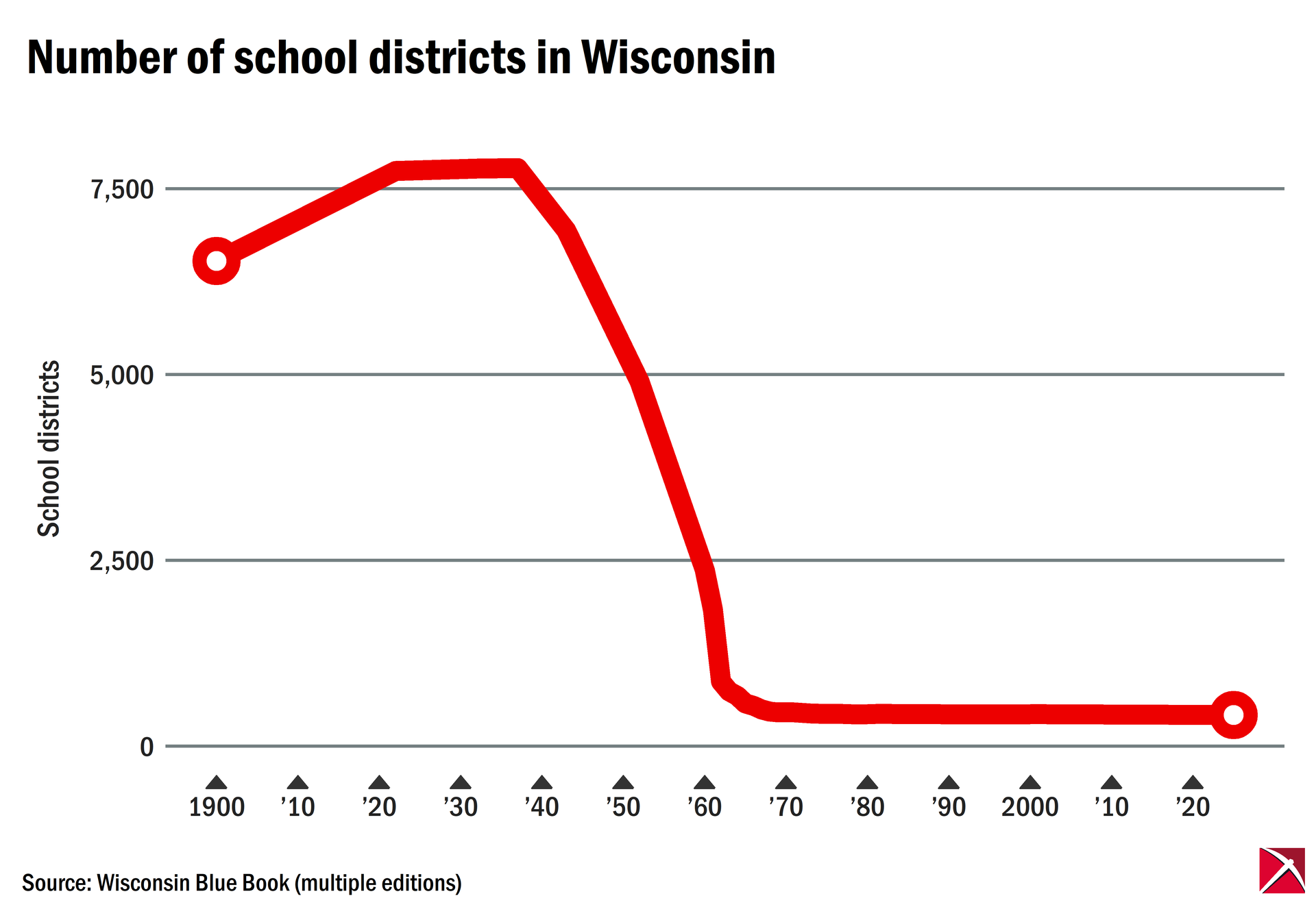
Wisconsin’s count of 421 school districts has been mostly steady for decades, but it’s far below the figures of a century ago, when the Badger State was divided into more than 7,000 school districts.
The number of districts peaked at 7,777 in the school year 1937-38, more than 18 times the current number, according to the Wisconsin Blue Book, the state’s official almanac, published by the Legislative Reference Bureau. |
The Wisconsin Senate approved Senate Joint Resolution 116 this week to advance a constitutional amendment preventing governors from using the partial veto to create new taxes or fees. If passed by the Assembly, the amendment would go before voters in a statewide referendum.
The amendment responds to Gov. Tony Evers' 2023 use of the partial veto to transform a single-year revenue limit increase into a 400-year potential property tax hike. In a 4-3 decision, the Wisconsin Supreme Court upheld Evers' maneuver as constitutional. As Badger Institute president Mike Nichols argued, "the partial veto makes a mockery of the legislative process, and of our state."
"We need a constitutional amendment — an explicit one this time — to kill this thing once and for all," Nichols said. |
|
|
It’s hard not to laugh a little about the absurd state of our democracy and Wisconsin’s odd partial veto — though there are serious constitutional issues, and tax dollars, at stake.
Our governor, you likely have heard by now, is the talk of the nation for using his unique veto power to essentially try to lock in tax increases and big spending until sometime close to Armageddon. |
|
|
|
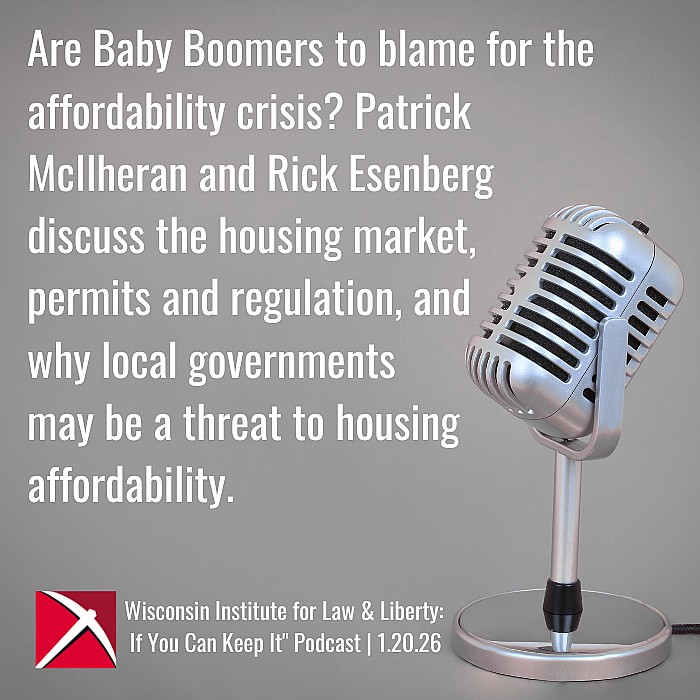
The dire need for more houses in America has even regulation-heavy cities like Los Angeles, New York City, Minneapolis and St. Paul streamlining rules — and providing a playbook for Wisconsin. |
| |
|
Weekly survey: How much snow has Milwaukee received so far in January?
|
|
|
Previous survey question: |
Invest in the Badger Institute |
|
|
|
The Badger Institute has long been at the forefront of the fight for school choice, right to work, welfare reform, tax restructuring, limited government, civil society and so much more. If you appreciate the Institute’s legacy and want to support free markets, opportunity and prosperity, please consider donating today. Your support will help the Institute continue to advocate for conservative principles now and in generations to come.
|
|
|
The Institute never has, and never will, accept government funding. We gratefully welcome your online donation or email Mike Nichols, President. The Badger Institute is a 501(c)(3) tax-exempt nonprofit organization funded solely by the generosity of foundations, companies and individuals. |
|
|
Badger Institute
700 W. Virginia St., Suite 301
Milwaukee, WI 53204 |
|
|
|