|
 |
What Are Teachers Being Taught?
Intercollegiate Review | Conservatism's sharpest voices, curated weekly. ISI's weekly newsletter brings you the best in serious conservative thought.
|

| |||||||||||||||


A Critical Look at Critical Pedagogy
 |
The future of America is bound up in the future of its children. To safeguard that future, we must pay close attention to our educational system. The Founding Fathers placed great importance on civic education, believing that each generation bore the responsibility of instilling respect for liberty, equality, and justice in the next.
Today, however, America’s public education system is filled with teachers who would rather destroy our cultural inheritance than cultivate it. Writing for National Affairs, Daniel Buck argues that the dominant philosophy shaping today’s schools is “critical pedagogy.” This approach traces back to Brazilian Marxist Paulo Freire, whose book Pedagogy of the Oppressed is widely assigned in teacher‑training programs. Freire urged educators to use their position to overthrow the oppression of capitalism, and his intellectual heirs apply similar arguments to justify deconstructing gender norms, family structures, and other traditional values from within the classroom.
Buck contrasts critical pedagogy with the classical understanding of education, which sees teachers as stewards of our nation’s history and values, responsible for passing on enduring truths about reality. He urges conservatives not to abandon our nation’s public education system to the Left but to instead work toward meaningful reform. A crucial first step, he argues, is to “take pedagogical debates seriously and treat schools as the cultural institutions that they are.”
Read the rest of Buck’s essay here.
|
Aeneas Comes to America
 |
The long tradition of Western civilization—one that ultimately shaped our nation’s founding—stretches back to the great ancient powers of Greece and Rome. These cultures produced extraordinary works of art and literature, including a few epic poems that still resonate today. Look no further than Christopher Nolan’s upcoming adaptation of The Odyssey.
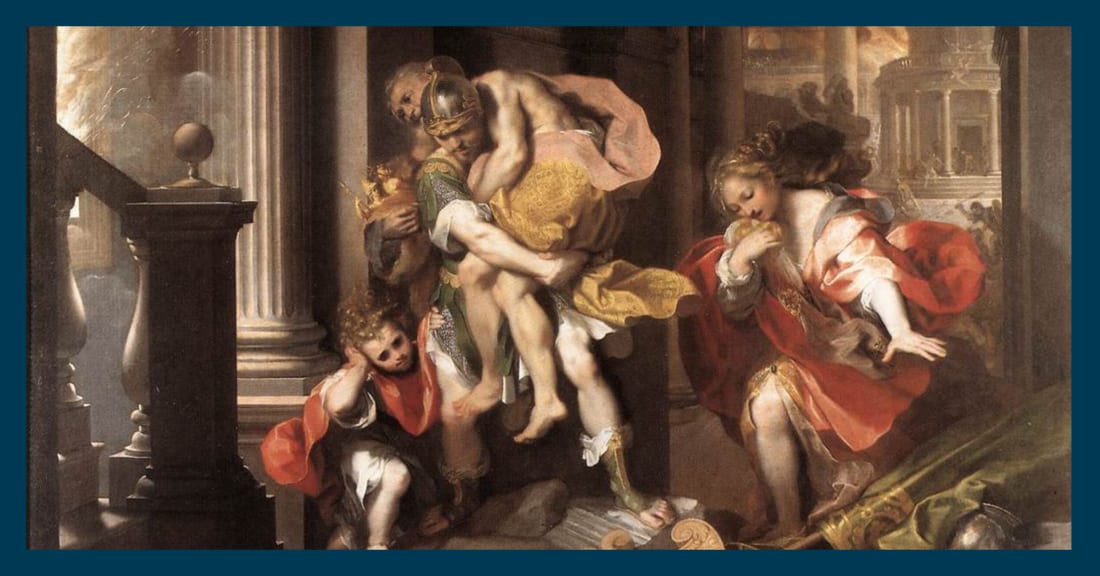
Writing in First Things, Spencer Klavan discusses another one of these legendary poems: Virgil’s Aeneid. He guides readers through Aeneas’s journey, from the fall of Troy and the whims of the gods to the tragedy of Dido and the hero’s arrival in Italy. Klavan traces the emotional arc of the epic, and he notes the ever-present grief that shadows Aeneas across the Mediterranean. He praises the beauty of Virgil’s achievement and celebrates the poet’s remarkable creative genius.
Yet Klavan also acknowledges Virgil’s keen insight into the human spirit and character formation. He draws a connection between that insight and America’s current position in 2026. Like Aeneas, he argues, the United States confronts a series of trials and tribulations—with more likely ahead. He urges our nation to face its calling and move forward “manfully and honorably.”
Read more of Klavan’s article here.
Compendium
Every article we feature here is available to read for free. Articles from paywalled publications are available through gift links.
Christopher Rufo on fraud and loopholes in 8(a) contracting in his Substack.
Ross Douthat interviews Ryan Burge on why U.S. secularization has stalled in Interesting Times.
Titus Techera on the politics of Paul Thomas Anderson’s latest film in Religion & Liberty Online.
Poppy Sowerby on the emasculation of Gen Z men in UnHerd.
Emily Harrison on how screen time in schools undercuts real learning in Institute for Family Studies.
David G. Bonagura Jr. on why liberalism keeps “dying” but never disappears in Law and Liberty.
 |
Upcoming ISI Events
If you enjoy what you’re reading here, we invite you to engage with ISI at one of our upcoming in-person events.
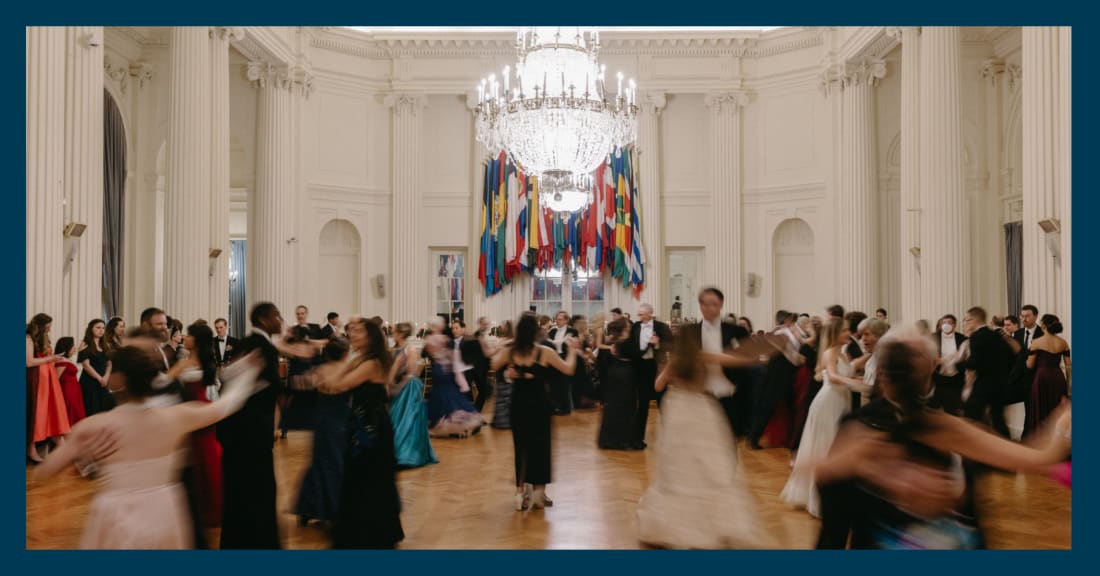
43rd Annual Evening of Viennese Waltzing | February 7 | Washington, DC
Join the Intercollegiate Studies Institute on Saturday, February 7, at The Organization of American States for the 43rd Annual Evening of Viennese Waltzing! This annual event brings together over 200 couples for a luxurious recreation of the sumptuous balls of turn-of-the-century Vienna.America 500 Gala for Western Civilization | April 30 | Washington, DC
The America 500 Gala for Western Civilization is the flagship event of ISI’s America 500 Campaign that celebrates America’s 250th anniversary. Join us at the Andrew W. Mellon Auditorium on Thursday, April 30, 2026, for an elegant evening with inspiring speakers.Conservative Book of the Year Award Ceremony and Luncheon | May 1 | Washington, DC
ISI’s annual Conservative Book of the Year Award Ceremony honors a distinguished nonfiction work that has contributed to the advancement of conservative thought. Join us on May 1 for a luncheon buffet, award ceremony, and panel discussion in Washington, DC.
Visit our events page on our website to see all upcoming events.
Thanks for reading the Intercollegiate Review! Subscribe for free to receive new posts.

This week, from the Collegiate Network:
ISI’s Collegiate Network supports over 80 student-run publications across the country, empowering students to run independent college newspapers, magazines, and journals that report on important issues ignored by the mainstream media.
Exposing Stanford’s Weiland Health Initiative: From Race-Conscious Hiring Language to Sex-Change Surgery Funding via The Stanford Review
Author Zayd Patel critiques Stanford’s Weiland Health Initiative, arguing that its targeted hiring language and programs for queer students may violate federal non-discrimination laws.
The Hawk Security Raises Serious Questions via The Free State Journal
A report on a deadly shooting at The Hawk bar in Lawrence, KS, and how that tragedy could have been avoided with stronger security.
It’s Time to Talk About AI: How ‘Work’ Forest’s Culture of Overcommitment Exacerbates Artificial Intelligence Use via The Wake Report
At Wake Forest University, a proliferation of AI use and a culture of extreme busyness is driving students to rely on AI simply to keep up.
The Local Significance of the ‘Mamdani Moment’ via The Columbia Sundial
Looking back at the lessons of NYC’s fiscal crises in the 1970s–80s, this article warns that Mamdani’s local policy effects will worsen affordability and harm the city’s economy.
Why Students Graduate Without Learning to Think via The Texas Horn
A critique of higher academia’s failure to teach true critical thinking, and a solution in traditional liberal-arts programs like UT Austin’s Plan II Honors.
Visit our Student Journalism section to read more from the Collegiate Network.
A Founding Father of Catholic Integralism
 |
When telling the story of the modern conservative movement in America, coalition builders such as William F. Buckley and Frank Meyer usually take center stage. But these leaders did not work alone. Their efforts were supported and sharpened by many lesser‑known thinkers whose ideas left a lasting imprint on conservatism, even if they never became widely recognized.
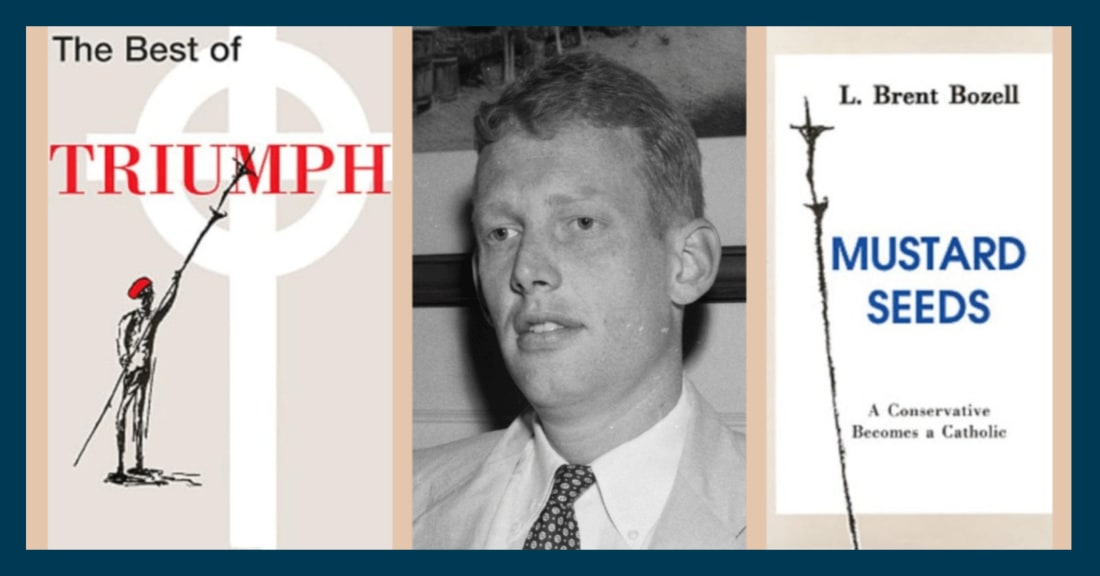
In this week’s article from Modern Age, Nicholas Mosvick profiles one such lesser-known conservative thinker: L. Brent Bozell Jr. Bozell was Buckley’s college debate partner and later his brother-in-law, and he helped to found National Review in 1955. Yet Bozell rejected the fusionism of his fellow NR editor Meyer, arguing instead for Catholic integralism. He ultimately founded his own magazine, Triumph, to advance his views.
Mosvick argues that the New Right’s critiques of establishment conservatism echo Bozell’s earlier challenges to liberal conservatism. “Bozell,” he writes, “brought forth a proto-integralist vision that rejected Americanism and the political primacy of the Constitution in favor of a politics which put the faith first.” Bozell’s rejection of constitutional primacy and classical liberal ideals eventually led him to separate from the conservative movement and pursue his own path.
Read more about Bozell’s life and beliefs here.
Modern Age is ISI’s flagship publication. Visit modernagejournal.com and subscribe to receive a free daily newsletter.
“The gates of hell are open night and day;
Smooth the descent, and easy is the way:
But to return, and view the cheerful skies,
In this the task and mighty labor lies.”
–Virgil, The Aeneid
Celebrate America’s semiquincentennial with ISI and help shape the next 250 years of our country. Your support of the America 500 Education Fund will help ISI reach, teach, and launch the next generation of conservative leaders. Visit isi.org/america500 to learn more.
| ||||||||||

