If the Jewish future is important to you, please click here and share this email with your family. Welcome to the January edition of the Jewish Future Promise Newsletter.
Promisers to date: The Jewish Future Promise reached 167,537 Signers


Giving Docs
US-based signers, we’re excited to share a new benefit for our community: free access to Giving Docs, a secure online platform that helps you create a will or ethical will in just minutes. This service is our gift to you: no cost, no donation required. Plan ahead and protect what matters most. Get started here
Community Notes
We’re excited to share an opportunity from our partners at the Jewish Grandparents Network. On Tuesday, January 27, 2026 (3:00–6:30 pm ET), grandparents of Jewish grandchildren are invited to join the first-ever Grandparents’ Jewish Learning Fest, a global virtual gathering focused on learning, connection, and strengthening Jewish family life. Highlights include a keynote by Dr. Becky Kennedy, expert-led sessions, and small-group meetups. Register: jewishgrandparentsnetwork.org/learningfest
New & Newsworthy An Endangered People: Why the World Is Failing the Jews Again – Times of Israel (Hadara Ishak) Mamdani’s ‘collectivism’ is dangerous to Jews and everyone else – JNS (Jonathan S. Tobin) What Jews keep getting wrong about defending themselves – Cleveland Jewish News (Raphael Poch) A tumultuous 2025 comes to a close – eJewishPhilanthropy (Staff) Global Jewry Announces Grant from Mike Leven to Launch Global Roundtable Fund – Global Jewry (Staff)
How To: Keep Jewish Pride Strong In Daily Life 
Jewish pride doesn’t only live in moments of celebration or crisis. It is built quietly, day by day, through choices that affirm who we are—at work, at school, and in the communities we call home. Here are subtle but powerful ways to live Jewishly with confidence and intention.
1. Let Jewish identity be visible—on your terms
A Star of David necklace, a mezuzah on your doorframe, or Hebrew on your desk can be simple affirmations of belonging. Visibility doesn’t have to be loud to be meaningful; even small signals remind us—and others—that Jewish life is present and enduring. 2. Bring Jewish values into professional and academic spaces
Living Jewishly isn’t only about ritual—it’s about values. Practicing tzedakah, chesed, and tikkun olam through ethical leadership, mentorship, and community service allows Jewish identity to show up through action, even when words feel harder. 3. Normalize Jewish time
Mentioning a holiday you’re preparing for, leaving early for Shabbat, or marking Jewish milestones helps normalize Jewish life in everyday conversations. These moments gently educate others while reinforcing that Jewish rhythms belong in public life. 4. Create Jewish moments at home—and share them outward
Lighting candles, hosting Shabbat dinner, or celebrating holidays with friends and neighbors turns private practice into communal experience. Inviting others in—Jewish or not—builds understanding and strengthens connection. 5. Stay connected to Jewish community, even in small ways
Attending a class, supporting Jewish organizations, or checking in on friends creates a sense of collective resilience. Jewish pride grows when we remember we are part of something larger than ourselves. 6. Choose hope as an act of strength
Jewish history teaches us that pride is not naïve—it is courageous. Continuing to live Jewishly, openly and purposefully, is a statement that Jewish life will not be diminished or hidden. Every act of Jewish pride—no matter how small—helps ensure a vibrant Jewish future. By showing up as ourselves, day after day, we keep Jewish identity alive, visible, and strong.
Promiser Spotlight: Eric and Shoshana Farbman
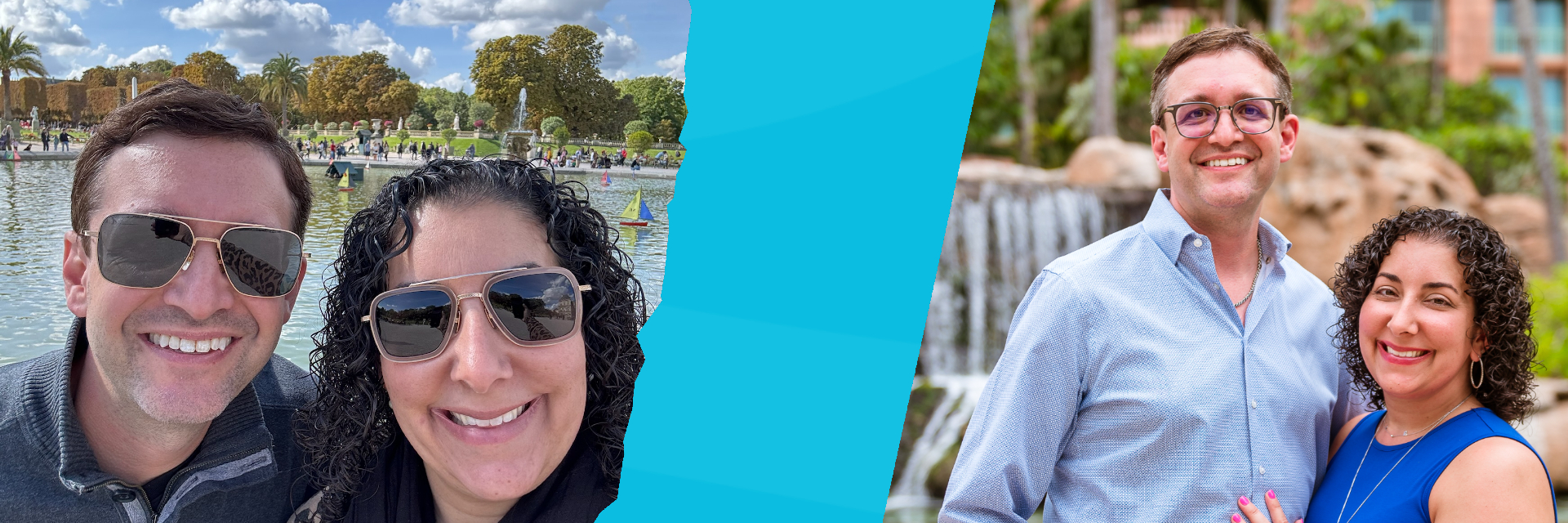
As a family, how did you come to a shared vision for living Jewishly, both in your home and in the broader community? We both grew up experiencing the beauty of Judaism in our homes, though in different expressions—Shoshana as a deeply rooted product of the Conservative movement and Eric with an equally strong Jewish identity shaped by a Reform synagogue. Our college years further cemented the importance of living Jewishly: Shoshana graduated from the dual program at the Jewish Theological Seminary and Columbia University, while Eric took on significant leadership roles in Alpha Epsilon Pi, the Jewish Fraternity. It was natural, then, that we were each seeking to build a life with someone who shared similar values and priorities. We both believe that Judaism is not only something to practice privately, but something to live publicly—through community, leadership, and service. Over time, that shared belief became the foundation for how we build our home and engage with the world around us. You’ve made intentional choices around Jewish education and family life, including Jewish day school for your children. What role does Judaism play in shaping your family’s daily rhythms and long-term priorities? Judaism is woven into the fabric of our daily lives—from how we mark time and celebrate milestones to how we talk about ethics, empathy, and responsibility. We believe it is essential to raise children with strong Jewish identities and a deep love for Israel. We model this through synagogue membership, participation in communal programs like the JCC and PJ Library, and regular Shabbat dinners with friends and family. In these challenging times to be Jewish, like many families in the South Florida Jewish community, we have chosen to double down on our investment in Jewish education alongside equally excellent secular education—our younger son attends our synagogue’s preschool, and our older son is enrolled in our community day school. When our boys come home excited to tell us about an upcoming Jewish holiday, a new Hebrew letter, or a song they learned, it reminds us every day that we have made the right choices for them. You each hold leadership and professional roles rooted in Jewish values with AEPI and The Greater Miami Jewish Federation. How do you support one another in bringing your Jewish identities into your work and communal leadership? We see our professional work and volunteer leadership as extensions of our values, and we support one another by recognizing that this commitment takes time, energy, and intentionality. We talk openly about challenges, celebrate successes, and continually realign around why the work matters. Most tangibly, we support each other by honoring one another’s commitments—Shoshana’s evening programs across the Miami Jewish community and Eric’s travel for AEPi leadership conferences and board meetings. That shared understanding enables us to lead with authenticity, balance, and purpose. What motivated you to sign the Jewish Future Promise together, and what did that decision represent for you as a family? Signing the Jewish Future Promise felt like a natural affirmation of what we already believe and practice. While our annual charitable giving already prioritizes the Jewish causes we are most passionate about, signing the Promise allowed us to publicly declare that sustaining Jewish life—today and for future generations—is a core priority for our family. More than a pledge, it represents intentionality about how and why we give, and a commitment to aligning our values with our actions. What conversations do you hope your children will one day have about Jewish identity, responsibility, and continuity, and how are you modeling those values now? We hope our children will one day speak about Judaism as something meaningful, empowering, and relevant in their lives—not just inherited, but chosen. We try to model this by staying engaged, asking thoughtful questions, and showing them that Jewish identity carries both privilege and responsibility. We want Jewish life and tikkun olam to be something they love and something they believe is important. Practically at their young age, that includes weekly tzedakah before Shabbat and choosing toys they no longer use to donate to those in need within our community—small acts that teach lasting values. In a time when Jewish identity and belonging feel more urgent than ever, how do you stay grounded and intentional about strengthening Jewish life as a couple?
We stay grounded by focusing on what we can control and the impact we can make each day—through our work, our community involvement, and our home. After serving in professional roles in both mental health and Jewish organizations, Shoshana bridged her two passions at the Greater Miami Jewish Federation as Director of BeWell Miami, working with synagogues, day schools, JCCs, and Jewish youth programs to address the growing mental health needs of teens and young adults. The company Eric founded, Organize My People, supports the technology needs of more than 50 Jewish organizations across all sectors of Jewish life in the United States, Canada, and Australia. As a volunteer, Shoshana serves on the Jewish Theological Seminary’s Alumni Advisory Board and as Vice President of the PTO at our synagogue preschool. In addition to his role with AEPi, Eric serves on the Board of Directors of our synagogue. But more important than any professional or volunteer role is the time we spend together instilling Jewish identity and belonging in our children. That is the fuel that drives everything else. What inspired you to take on a leadership role within a Jewish organization, and how has that experience shaped your view of the Jewish future? Becoming National President and Board Chair of Alpha Epsilon Pi was a natural continuation of Eric’s more than 20 years of volunteer leadership with the Fraternity. AEPi deepened Eric’s Jewish identity while providing an irreplaceable sense of community and lifelong friendships. He often says he can never fully give back what AEPi has given him. Interacting with AEPi’s undergraduate brothers gives him great confidence in the Jewish future. Representing a tapestry of Jewish backgrounds, levels of observance, and Jewish identities, these young leaders are unapologetically proud of their Judaism and their commitment to Israel. When Israeli flags were torn down from chapter houses in acts of hate, they responded by raising even larger ones. How has recent global antisemitism or unrest impacted your personal sense of Jewish responsibility? We believe deeply that this moment requires everyone in the global Jewish community to step up. As antisemitism and Jew-hatred become increasingly normalized, we have chosen to invest our professional and volunteer time in strengthening Jewish institutions and communities. Perhaps more strongly than ever before, we believe that instilling Jewish values, pride, and belonging in our children is essential to ensuring Jewish continuity. What’s something unexpected you’ve gained, personally or spiritually, from your communal involvement? We gained something deeply personal from Jewish communal involvement—each other. We were introduced by friends who knew us through the choices we made to be actively engaged in Jewish organizations, programs, and community life. We would not have the family we have today had we not each made the choice to ensure Judaism was an integral part of our lives.
|