Americans are sleeping (a little) more than they used to
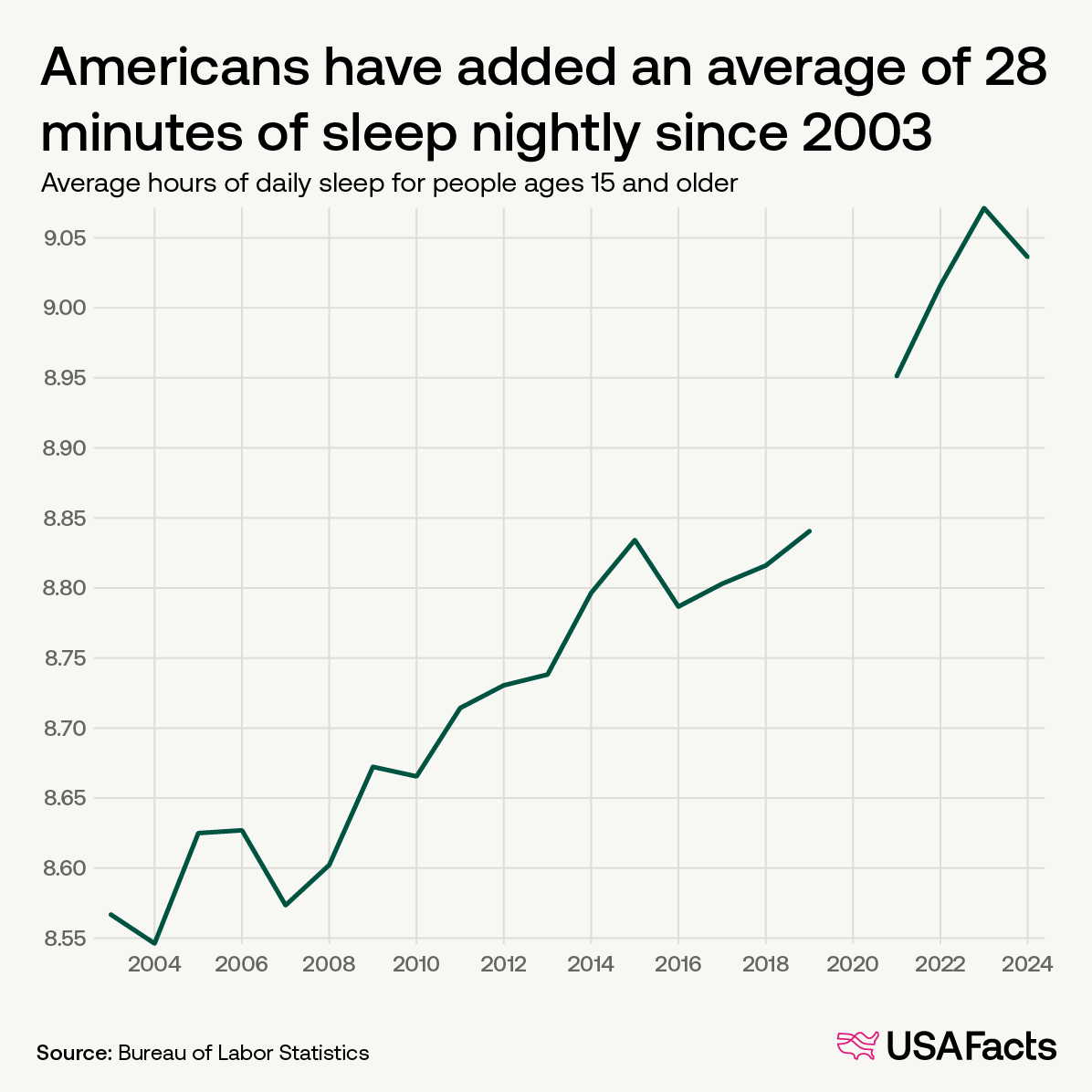
It’s probably a near-universal truth that most people don’t feel like they get enough sleep. But according to new data in the American Time Use Survey from the Bureau of Labor Statistics, the average time people dedicated daily to sleep or attempting to sleep has increased over the past two decades.
From 2003 to 2024, the average American dedicated 28 more minutes to sleep or trying to sleep per day, according to the survey. Average sleep time is measured over a 24-hour period and includes naps and spells of sleeplessness. (2020 data is not available.)
Full-time workers sleep about 44 fewer minutes per day than people not in the workforce. The overall workforce participation rate has declined in recent years. Adults 65+ and older — a group that comprises a growing share of the population — slept nine minutes more per day than younger adults.
More people worked from home in 2024 than they did in 2003, which may allow for more sleep. Notably, the increase in remote work since 2019 has coincided with more minutes slept over the past few years.
Google searches for “can’t sleep” have risen eight-fold from 2004 to 2026, perhaps suggesting that some of the rise in reported sleep is due not only to time asleep but time spent counting sheep.
Fentanyl is a synthetic opioid prescribed for pain relief, but it's also trafficked illegally and is a major driver of drug overdose deaths nationwide. Here’s what the latest numbers show about how much fentanyl US authorities are seizing at the border.
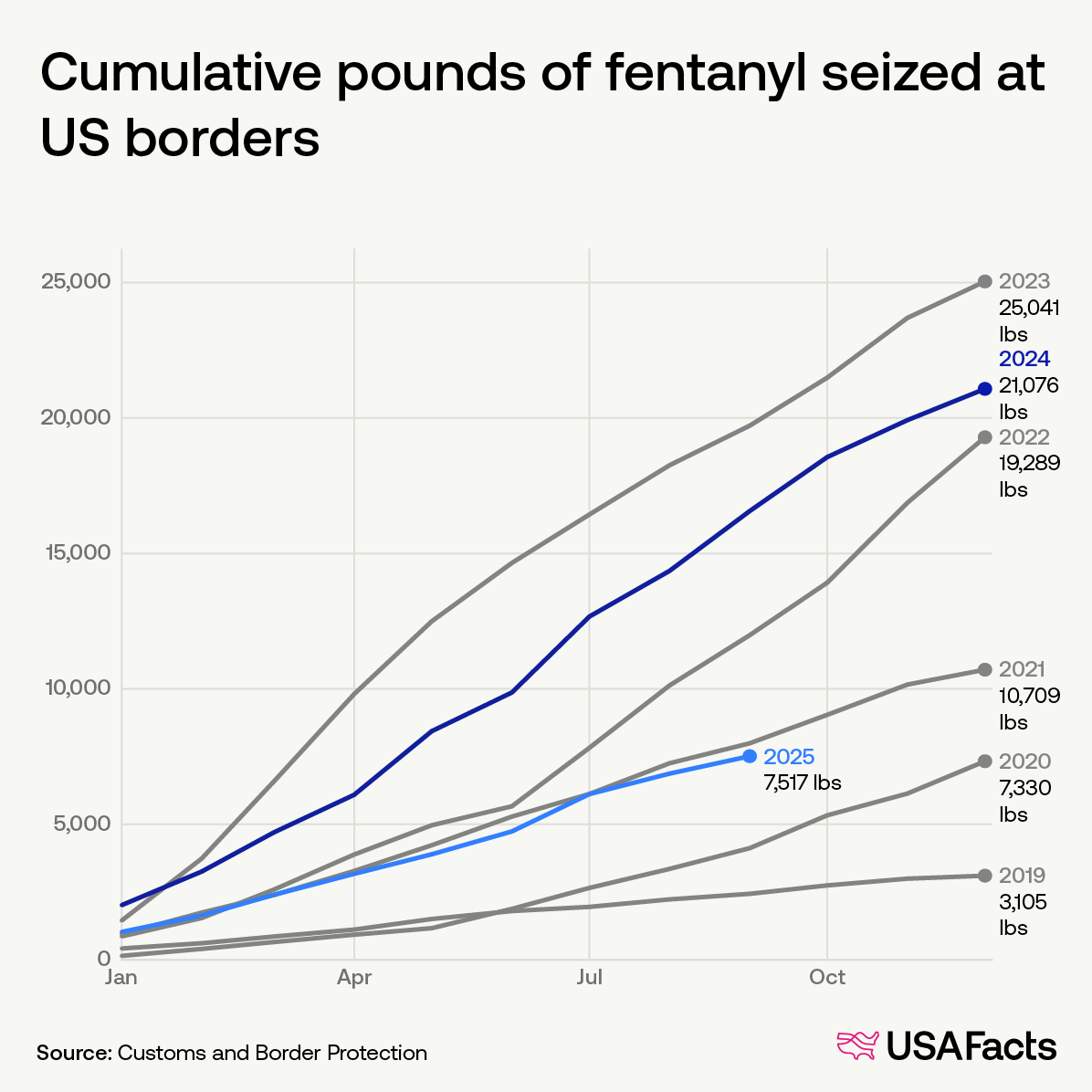
The amount of fentanyl seized annually rose every year from 2019 to 2023.
About 640 pounds of fentanyl was seized at US borders in September 2025, down 15% from the previous month.
Between January and September 2025, authorities seized approximately 7,517 pounds of fentanyl at US borders — roughly 55% less than during the same period in 2024.
Of the opioids trafficked into the US, Customs and Border Protection specifically reports fentanyl and heroin seizures. In 2019, fentanyl comprised around 32% of opioid seizures by weight. In 2024, it accounted for 93% of seized opioids.
Most fentanyl is intercepted at official ports of entry. Between January and September 2025, 84% of seizures were at these entry points, with about 80% occurring at official ports along the southwest border.
The amount of fentanyl seized can fluctuate based on changes in law enforcement strategies, trafficking routes, economic conditions, or supply and demand.
USAFacts has data on Immigration and Customs Enforcement (ICE), as well as this new article on what FBI data says about law enforcement’s use-of-force. We’ll share more from this article here next week.
President Trump has said he is considering invoking the Insurrection Act regarding ICE and protests in Minneapolis.