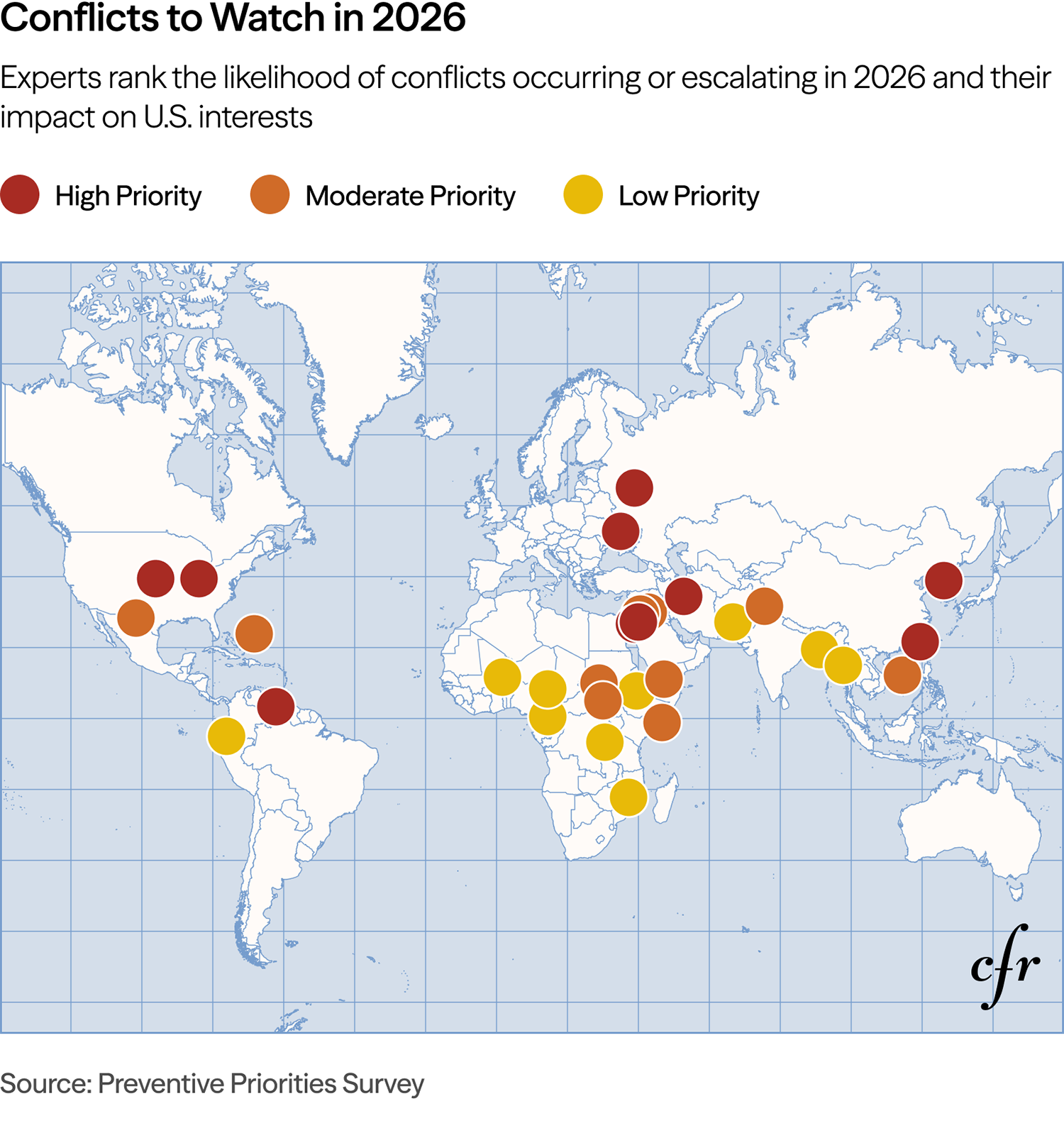
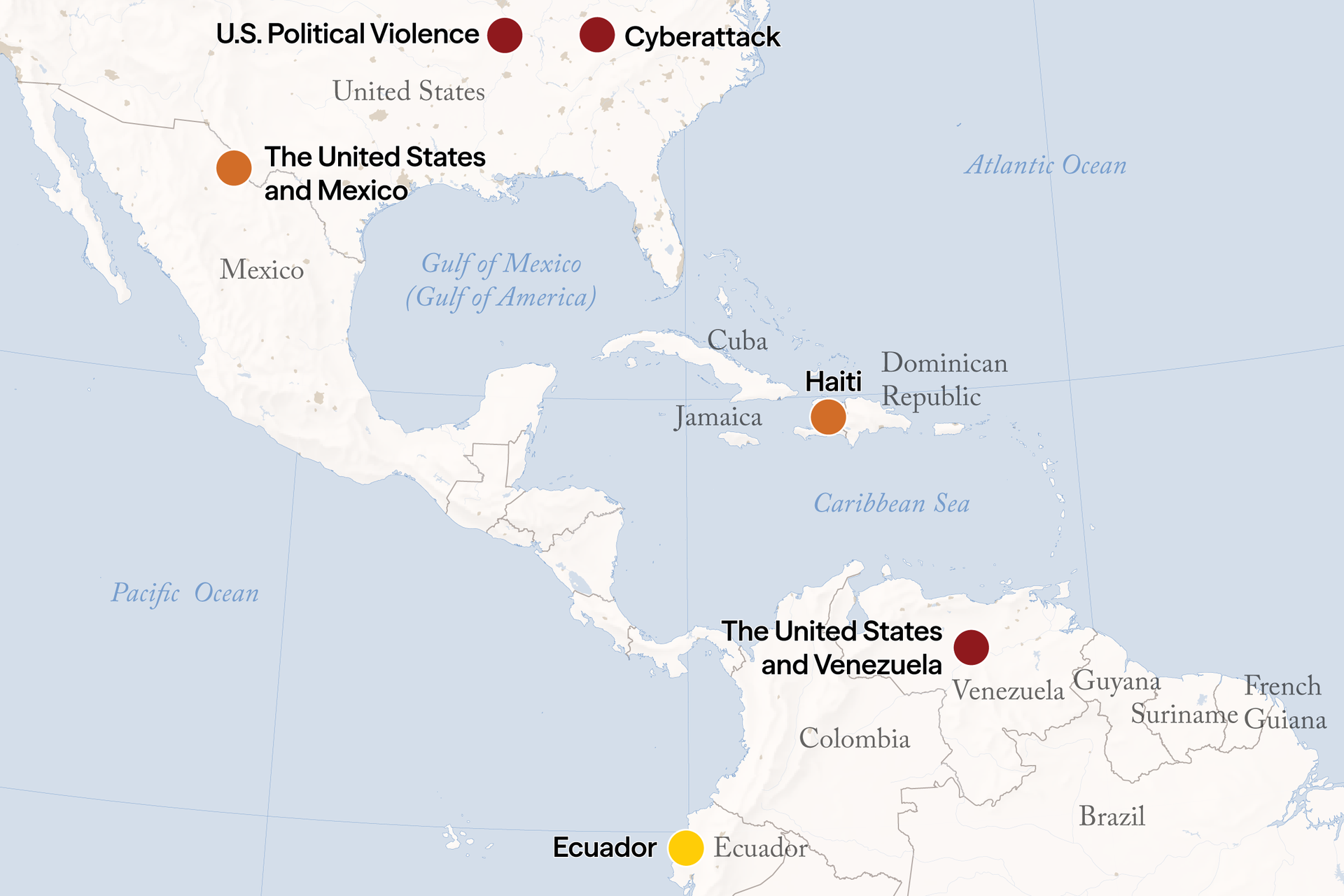
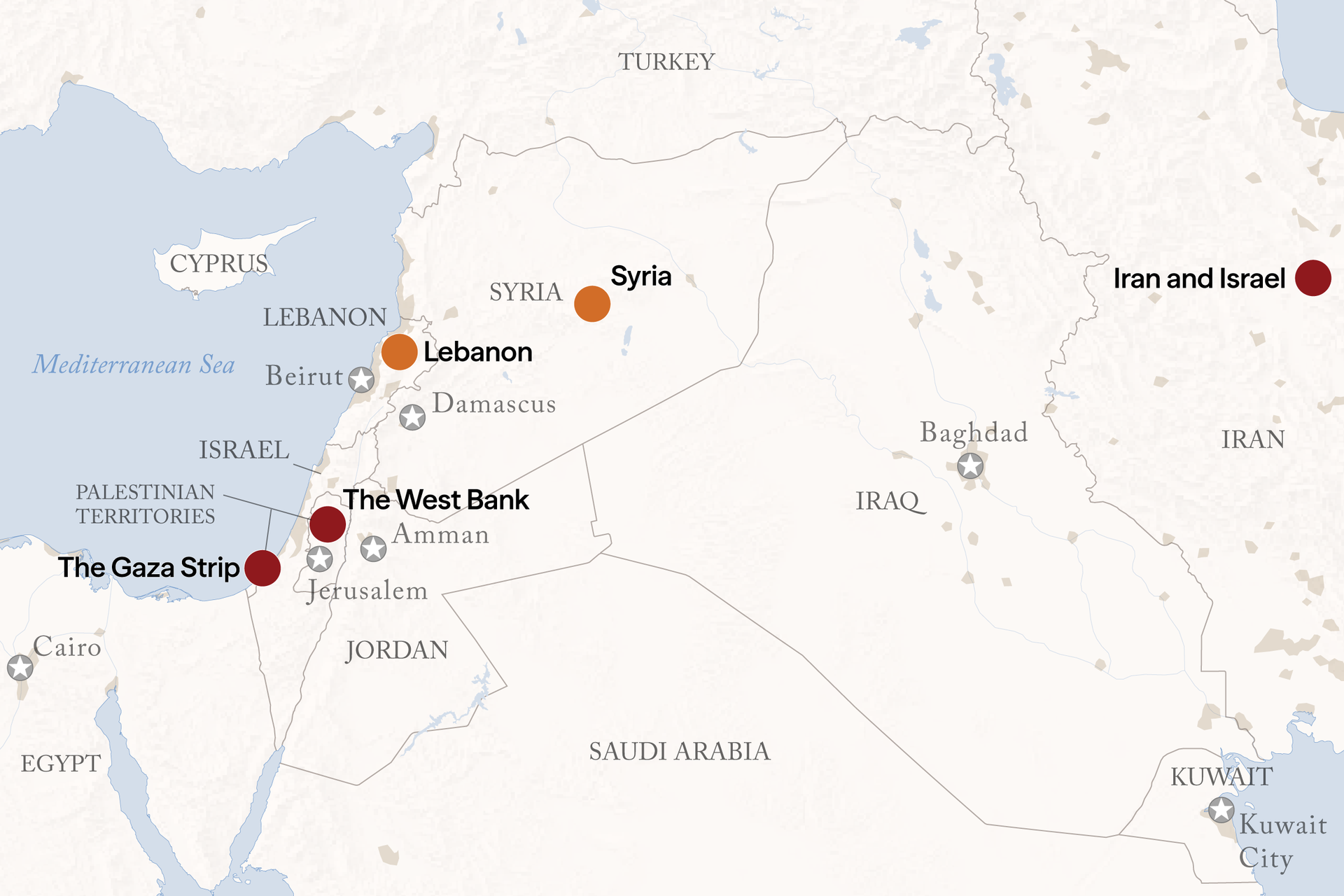
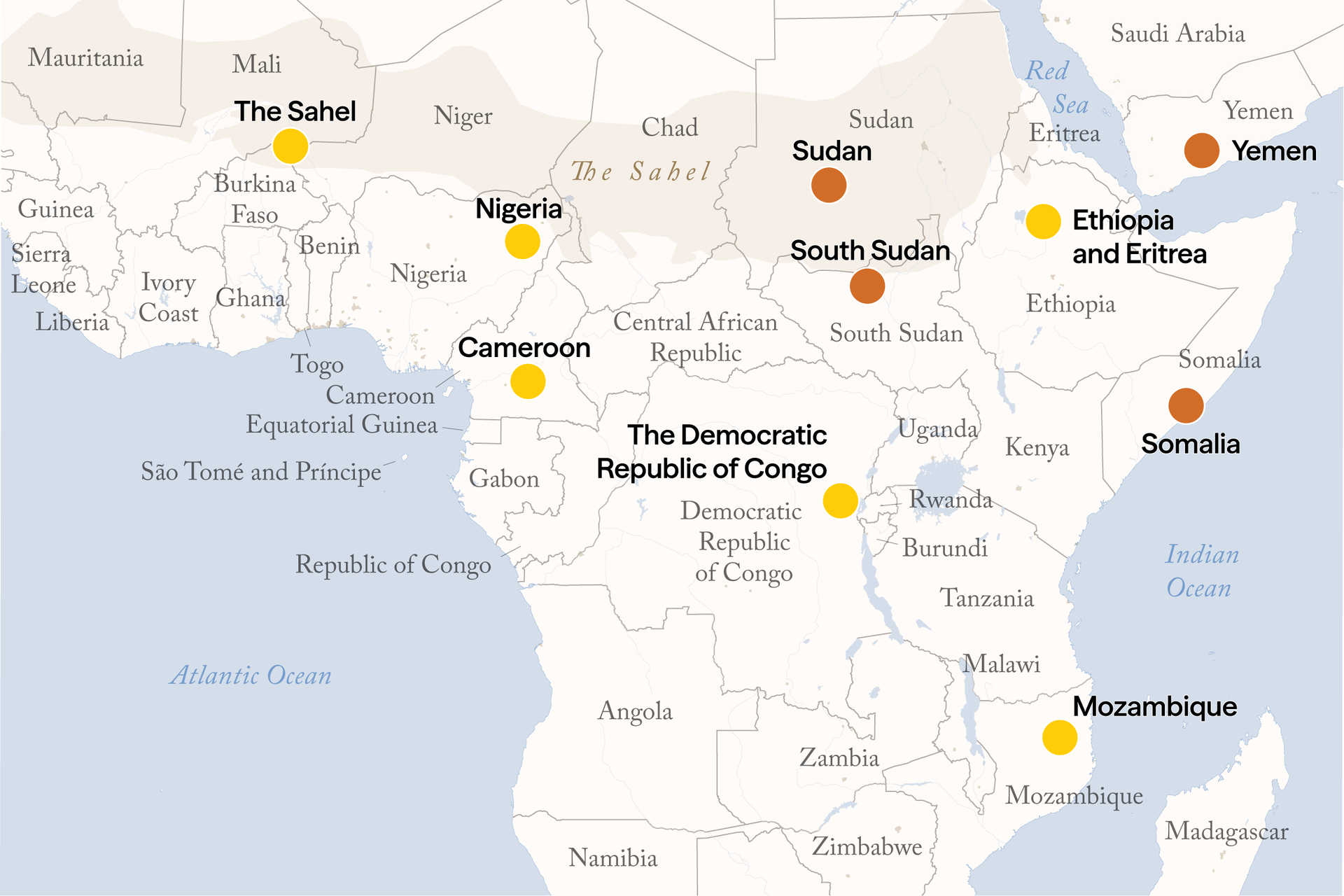
For the second year in a row, five contingencies were judged as highly likely to occur and be highly impactful on the United States, and twenty-eight of the thirty total concerns were rated as either moderately or highly likely to unfold. |
The need for U.S. policymakers to look ahead and actively lessen conflict-related risks grows every year. The purpose of the annual report is to help leaders prioritize threats to national security and critical U.S. interests abroad. It sorts ongoing and incipient risks into three tiers of relative priority based on experts’ responses to the survey. |
“The second Trump administration has sought to end many ongoing conflicts,” writes Paul B. Stares, Center for Preventive Action director and General John W. Vessey senior fellow for conflict prevention. “At the same time, however, it has engaged in unnecessarily destabilizing behavior . . . [and] it has also systematically dismantled the very elements of the U.S. government dedicated to strategic foresight, conflict prevention, and peace-building. . . . Those actions are both counterproductive and shortsighted,” argues Stares.
“Hopefully, the Trump administration will reverse course in the coming months by no longer alienating important allies and partners, while giving more emphasis to upstream efforts known to promote peace and stability, particularly in areas important to the United States. The findings of this year’s PPS can help in that regard.” |