|
Banning Congressional Stock Trading
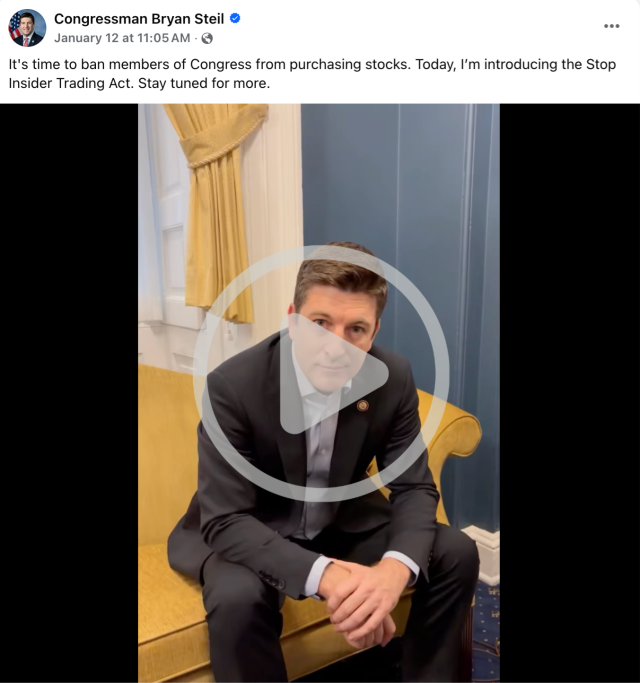
No member of Congress should be profiting off inside information or purchasing individual stocks.
On Monday, I introduced the Stop Insider Trading Act. This bill bans members of Congress, their spouses, and dependent children from purchasing publicly traded stocks. The bill also requires seven-day advance public notice before a lawmaker, spouse, or dependent child sells stock.
Any member of Congress who violates this law will face stiff penalties. The Stop Insider Trading Act requires the House Ethics Committee to issue a fine equal to $2,000 or 10% of the value of the stock investment for violations of the law - whichever is greater - plus any profits made from the sale.
This bill continues to gain support.
I want to hear from you:
On Wednesday, the Committee on House Administration, which I chair, also held a markup hearing on this bill. It passed it out of committee on a vote of 7-4.
You can watch my remarks in support of this bill below or at the link here.
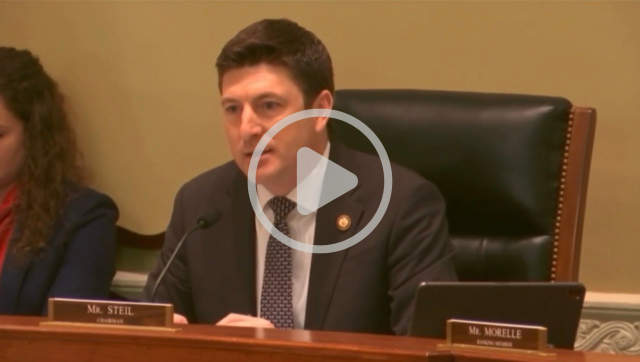
My bill is now eligible for a full vote in the House. Both the Speaker of the House and the Majority Leader of the House said that they will move this bill for a vote in the coming weeks.
Current Law is Insufficient
The Stop Insider Trading Act improves on the STOCK Act of 2012. The STOCK Act prohibits members of Congress from using nonpublic information for financial benefit. This bill was passed in 2012 to prevent members of Congress from engaging in insider trading.
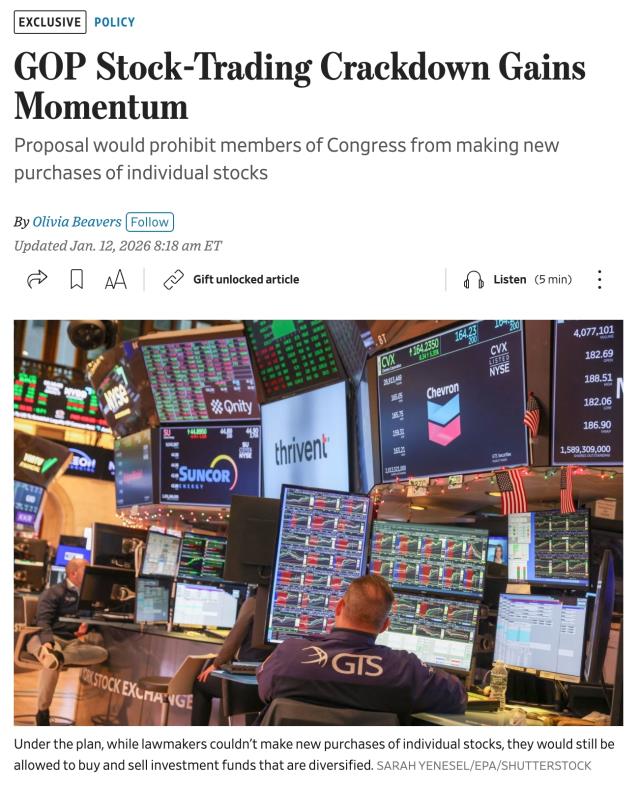
The STOCK Act requires members of Congress to report the purchase of stocks, bonds, and other investments, typically within 30 days. Before the STOCK Act became law, members did not have to disclose their stock trades until their annual financial disclosure. This disclosure helps provide transparency as to if members are trading based on insider information.
Since that time, members of Congress have continued to face allegations of making significant profits from trading stock or conducting insider trading. These trades can occur in industries that members oversee.
One prominent example occurred just before the COVID-19 pandemic. The Chair of the Senate Intelligence Committee reportedly sold all but one stock just prior to the pandemic, totaling over $1 million. Despite this action, no member of Congress has ever been prosecuted under the STOCK Act.
The reforms in my bill will ban members of Congress from purchasing individual stocks and require a seven-day advance public disclosure for any potential sale. This will help prevent insider trading in Congress.
If someone wants to day trade stocks, they belong on Wall Street, not Capitol Hill.
I look forward to voting to pass this bill on the floor of the House.
Funding for Crime Victims
In 1984, Congress created the Crime Victims Fund (CVF) to provide funding for state victim assistance programs. Since its creation, the CVF has supported victim assistance programs in Wisconsin, including Child Advocacy Centers, domestic violence agencies, and crisis centers.
Currently, the CVF is funded by deposits including federal criminal fines, penalties, forfeited bail bonds, and donations. CVF funding can vary each year depending on the number of cases prosecuted by the Department of Justice. Since 2017, the CVF's balance has seen an 83% decrease.
To address this, the House passed the Crime Victims Fund Stabilization Act. This bill adds another funding source to the CVF - civil fines collected under the False Claims Act. This will open approximately $1 billion in new funding for victims of crime under the CVF.
I'm proud to have helped lead this important legislation and support Wisconsinites.
Congratulations Zoe!
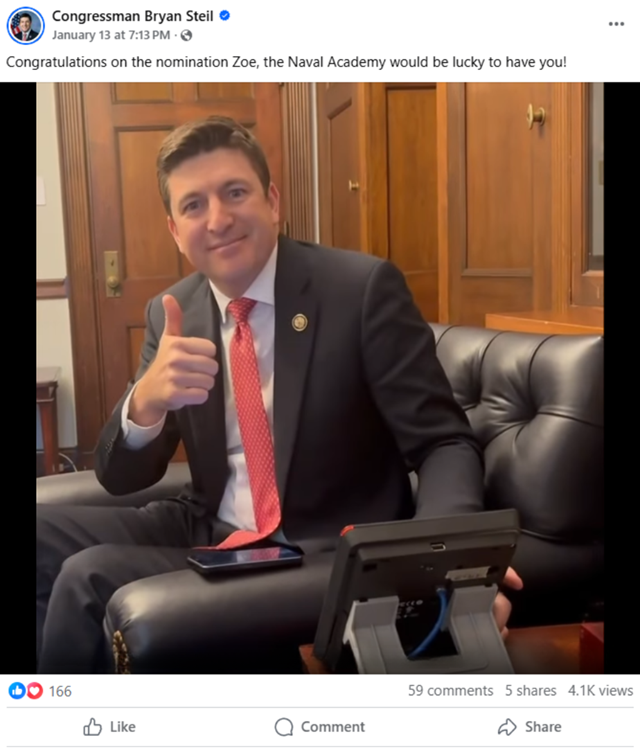
Last month, I was proud to nominate 13 Wisconsin high school students to attend a U.S. Military Service Academy.
This week, I had the honor to call Zoe of Burlington to let her know she is receiving an offer of appointment to the U.S. Naval Academy.
Click here or watch above. Congratulations, Zoe!
As always, feel free to contact my office if you have any questions, want to share an opinion, or are having trouble with a federal agency.
On Wisconsin,
Bryan Steil
Member of Congress
Click here to subscribe to my e-newsletter
|