|
 |
Is It Possible That ICE Is Using a Toxic Chemical Weapon in Minneapolis?
A documented federal precedent, a cloud of secrecy, and a city demanding to know what’s in the air
|


| |||||||||||||||


 |
 |
by Lawrence Winnerman, BAM COO and Writer
(* Apologies to the band “The Airborne Toxic Event”, whom I adore.)
There’s being angry about what’s happening on the streets of Minneapolis right now, and then there’s being terrified for our communities and for the state of our nation.
In the two weeks since an ICE agent shot and killed 37-year-old Renee Nicole Good—a U.S. citizen and mother—Minneapolis has erupted in protest, grief, and fear. Thousands have taken to the streets, not just in Minneapolis, but in cities across the country, demanding accountability and an end to a federal force that many people clearly see as hostile and not protective.
But beyond the anger that we are all feeling, a deeper and more deadly question needs to be answered: it possible that ICE and federal immigration agents are deploying a toxic chemical weapon against the people of Minneapolis?
And while it feels crazy to say it like this—I don’t mean “just” tear gas. I mean something far more dangerous — something that has been described elsewhere as a toxic smoke weapon capable of severe injury.
 |
We Already Know DHS Has Used Chemical Irritants
Let’s start with what we know we can confirm.
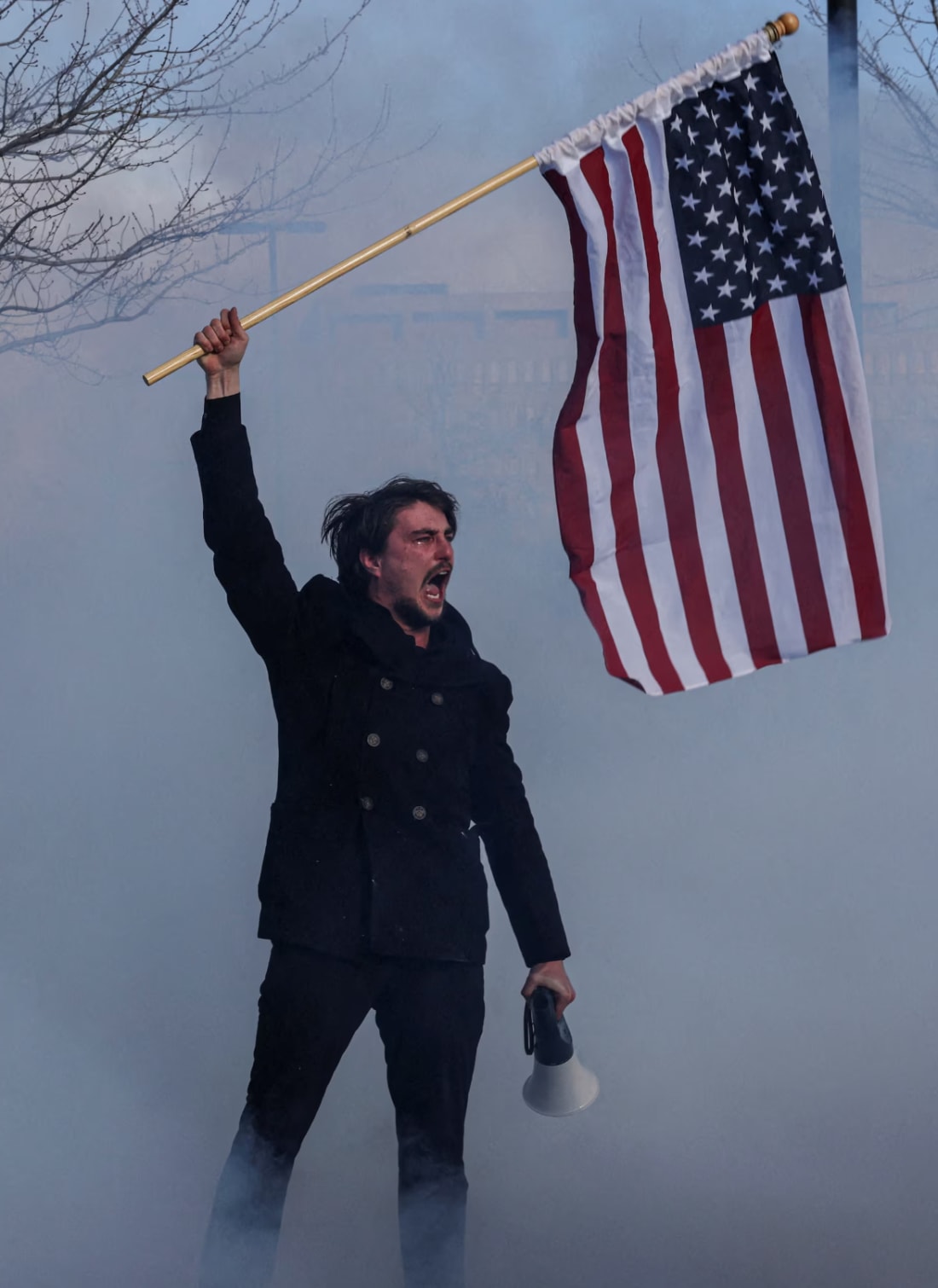
Multiple news agencies and dozens of on-the-ground videos show federal agents in Minneapolis deploying chemical irritants and tear gas to disperse crowds and quell protests in the days since Good’s killing. AP News reports that plumes of tear gas and eye irritants have filled the air around demonstrations.
The NYT recently reported that ICE targeted a family car with six children in it, and that the children suffered lung burns so severe that a 6-month-old infant was rendered unconscious and unable to breathe.
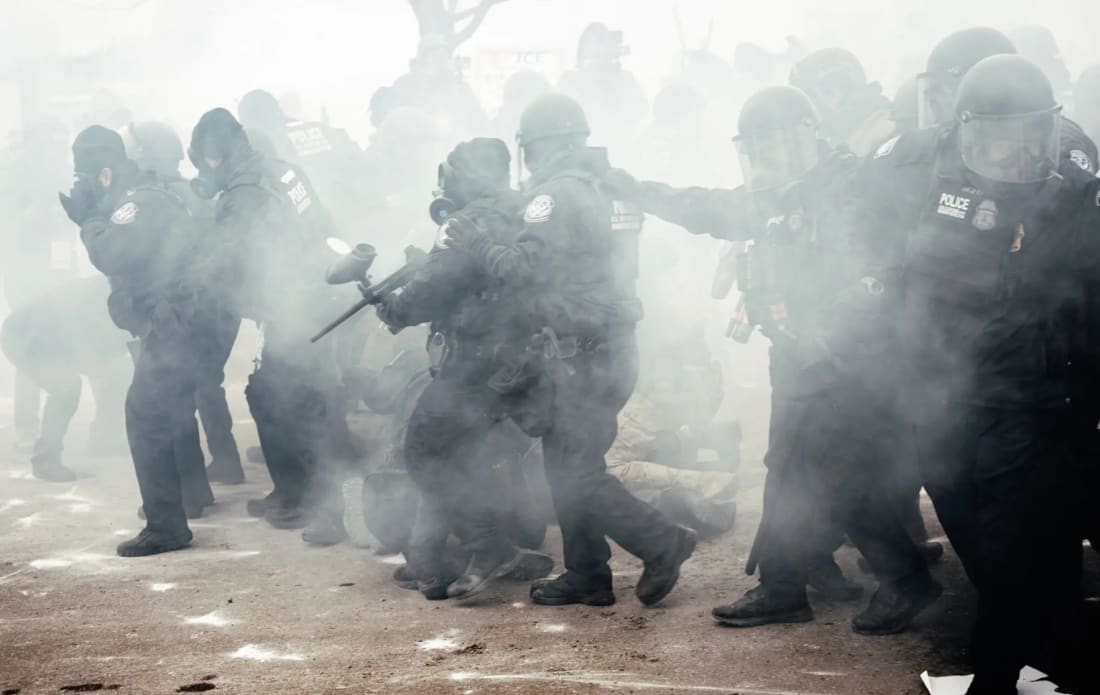
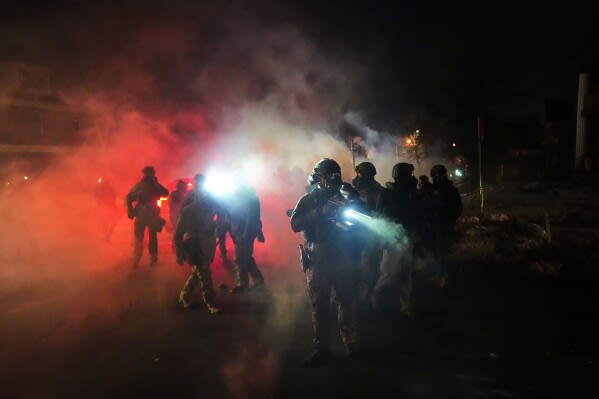
Footage from press and bystanders alike shows officers in tactical gear releasing clouds of orange-colored and green-colored irritants at close range into crowds of residents and protestors.
Local fire and EMS reports corroborate this: emergency calls surged for people suffering from exposure to these clouds—coughing, burning eyes, trouble breathing—common symptoms associated with tear gas use.
When officials say ‘tear gas,’ they are almost always referring to CS, or ortho-chlorobenzylidene malononitrile—a specific chemical irritant with a well-documented, relatively predictable health profile—not obscurant smoke devices or other chemical agents.
So what exactly is being used? What’s in that smoke?
 |
There Is a Precedent for Toxic “Smoke” munitions Being Used in Crowd Control
This is where the question stops being rhetorical and starts being urgent.
In other cities, most notably Portland, Oregon, during the protests of 2020, federal law enforcement was documented or alleged to have deployed munitions that weren’t simple tear gas canisters. City officials in Portland reported that federal officers used hexachloroethane (“HC smoke”) devices—smoke grenades that produce a dense, toxic cloud.
Hexachloroethane (HC) smoke and other zinc-chloride–producing chemical agents are prohibited for use as weapons in international armed conflict under the Chemical Weapons Convention, which bans the use of toxic chemicals as methods of warfare.
While the treaty allows limited domestic law-enforcement use of certain irritants like CS tear gas, HC smoke is not classified as a standard riot-control agent and is widely recognized in international medical and military literature as too dangerous for crowd control.
Here’s the critical part: hexachloroethane smoke is not a mild irritant. The mainstream chemical literature, medical case reports, and toxicology profiles identify the dense smoke produced by these devices—dominated by chemicals like zinc chloride—as capable of causing severe respiratory damage, chemical burns, and long-term lung injury. Some exposures in closed environments have even been fatal.
The Union of Concerned Scientists recently reported that Safariland, a chemical weapons company, has changed the labeling on the munitions to falsely sell them as non-hazardous.
Sell them to whom?
 |
So What Does That Have to Do With Minneapolis?
In Minneapolis, protestors and bystanders were again reporting chemical clouds—but there’s been no official clarification on what chemicals federal agents are using. The government’s public statements have stuck to generic phrases like “tear gas” or “irritants,” and the local reporting has mirrored that language without specificity.
Is it reasonable to assume that federal agents aren’t using the same kinds of munitions they have in the past?
Think about this pattern:
Federal agencies deploy munitions without transparent disclosure of chemical agents—Minneapolis demonstrations are now being met with vague references to “tear gas” or “chemical irritants.”
In Portland, federal officers used munitions that may not have been simple tear gas—City officials themselves raised concerns about “HC smoke” devices’ deployment in 2020.
No independent testing of the chemicals in Minneapolis has been released yet—That means the actual content of the plumes filling residential streets remains unknown.
Given this pattern, it would be naïve and irresponsible to take the government’s blanket “tear gas” description at face value.
This is not about semantics; it’s about health and civil rights.
Tear gas has a known profile: it causes burning eyes, coughing, and mild respiratory distress in most cases, and wears off as you exit the thickest concentrations. It’s painful, yes—and it’s already banned for use in warfare for good reason—but most adults recover after a few minutes to hours once far enough away.
But hexachloroethane smoke and zinc-chloride-dominated smoke munitions are a different beast. They can:
cause severe lung injury (chemical pneumonitis), requiring hospitalization;
lead to long-term respiratory damage;
prompt multi-organ effects beyond just the lungs;
and in some documented cases, lead to fatal complications.
Neurological symptoms linked to HC smoke exposure are typically secondary to lung injury, systemic toxicity, and oxygen deprivation—but they are real, documented, and potentially severe, particularly with high-dose or enclosed-space exposure.
These neurological effects include dizziness, confusion, altered mental status, and—in severe cases—loss of consciousness or seizures, sometimes emerging hours after exposure.
To the families who live in the neighborhoods where these agents are being deployed—children, elderly residents, people with asthma or compromised lungs—this isn’t abstract.
This is life and death.
 |
Minnesotans Deserve to Know What They’re Breathing
Here’s the core of the outrage:
Protesters in Minneapolis are being met with chemical irritants.
Federal agencies have a documented history of deploying toxic smoke devices without clear public disclosure.
Minnesota officials have been forced to use court action and public pressure to even get answers about what’s happening on their streets.
And yet not once has there been a transparent inventory of the specific agents used so far in January 2026.
This matters because if these are ordinary tear gas canisters, the medical community has decades of data on short- and long-term impacts. But if these are toxic smoke devices like HC smoke, then we are in a completely different regime—one where residents are being exposed to potent, lung-damaging chemicals without consent or warning.
Reasonable But Outraged: A Demand for Answers
Let’s be clear: I’m not saying definitively that ICE is using hexachloroethane smoke in Minneapolis. What I am saying is this:
Based on pattern, precedent, and lack of transparency from federal agencies, it is entirely plausible that the agents deployed here go beyond simple tear gas.
Communities have a right to know what chemicals they are being exposed to, especially when federal agents are using force in residential neighborhoods.
Media and public officials should not accept generic, non-specific terms like “irritants” as an answer when there is evidence of more dangerous munitions being used elsewhere.
So let’s ask the question bluntly, without fear of warning labels or political pushback:
💥 Is it possible that ICE is using a markedly toxic chemical weapon in Minneapolis—one that goes far beyond tear gas?
If we can’t ask that question, we can’t protect America.
And if the federal government won’t answer it, then Minnesota residents, journalists, scientists, public health officials, and every concerned American must demand the truth.
And we must do it before another plume of unknown smoke reaches a child’s lungs.
 |
Lawrence Winnerman is a writer, media operator, and strategist focused on independent journalism, democracy, and the systems that shape public life. He is the co-host of The Daily Whatever Show at genXy and the COO of Blue Amp Media, where he helps build sustainable, audience-supported media outside traditional gatekeepers. His work blends political analysis, cultural critique, and operational insight from decades in technology, publishing, and digital strategy. If you value this work and want to support it directly, you can buy him a coffee!
 |
You're currently a free subscriber to Blue Amp Media. For the full experience, upgrade your subscription.
| ||||||||||

