|
Hello!
It's been a while since my last full update, and with everything that has unfolded in Minnesota over the past few months, I felt it was important to reconnect and speak plainly about where things stand.
Since November, the news coming out of St. Paul has been relentless. Investigations, audits, hearings, and reports have revealed serious failures in how state government has managed taxpayer dollars. For many Minnesotans, this has been frustrating and concerning. For those of us charged with oversight, it has reinforced something I have long believed: accountability matters, and when it breaks down, taxpayers pay the price.
With the 2026 legislative session officially beginning on February 17th, now's the time to be clear about the challenges ahead and the work that needs to be done before we return to the Capitol.
Fraud Cannot be Ignored
Minnesota continues to grapple with widespread fraud across multiple state-run programs. Billions of taxpayer dollars have flowed through systems that lacked sufficient oversight, clear controls, or timely enforcement. While some cases are still moving through the courts, what is already known points to years of warning signs that were missed, dismissed, or ignored.
This is not about politics. It is about stewardship. Taxpayers expect the state to protect public funds, ensure programs serve the people they were created for, and respond quickly when problems arise. That clearly did not happen in far too many cases.
The OLA Report Confirmed a Serious Breakdown in Oversight
Recent findings from the Office of the Legislative Auditor confirmed a serious breakdown in oversight within state government.
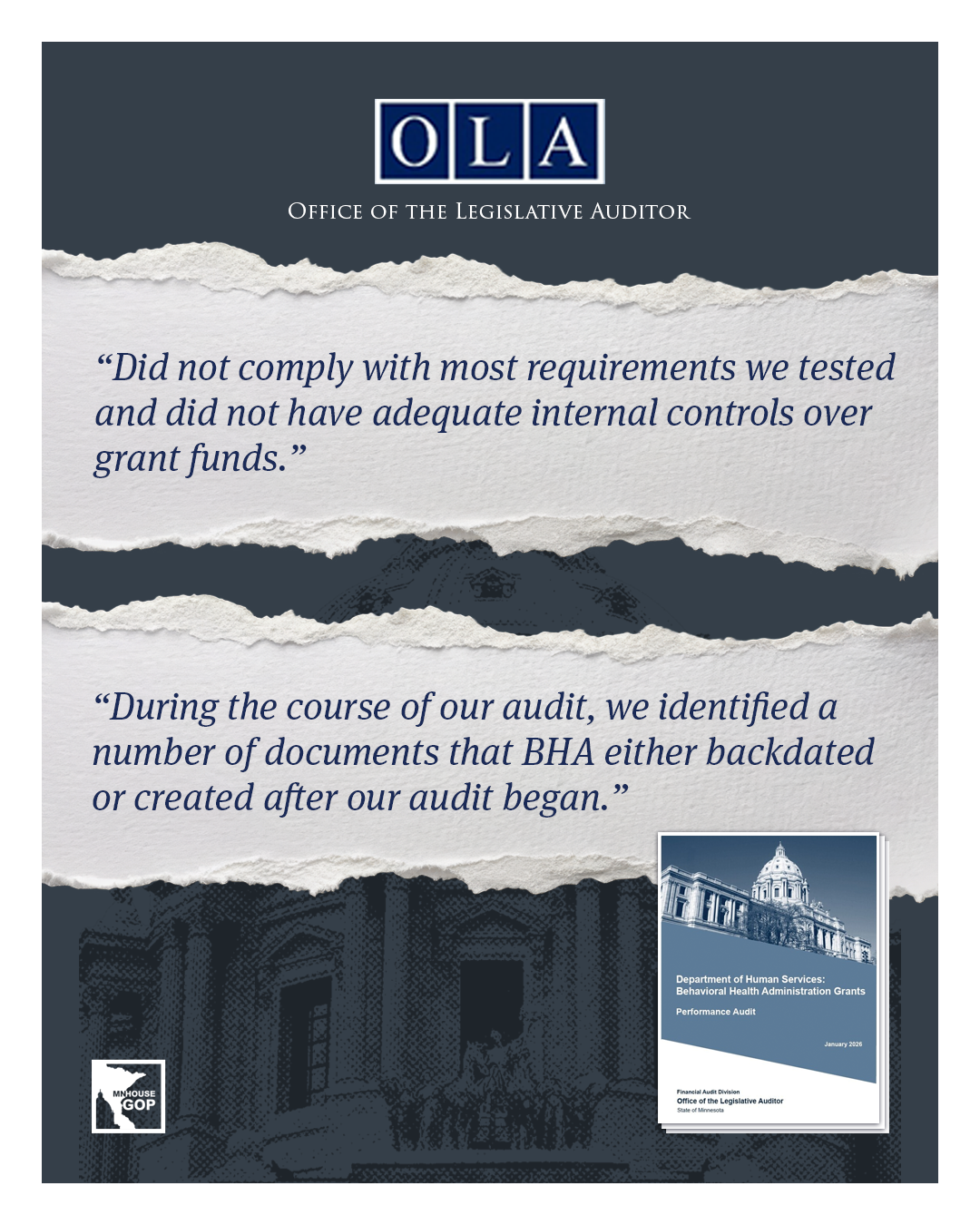
The audit of the Department of Human Services’ Behavioral Health Administration found that nearly $200 million in grant funding was administered without basic safeguards. Auditors documented missing records, weak internal controls, and, most concerning, instances where documents were fabricated or altered to give the appearance that required steps had been completed.
These were not clerical errors. The creation and use of forged or backdated documents undermines the integrity of the entire grant process and raises serious questions about internal accountability. When documentation is falsified, oversight is no longer possible, and taxpayer dollars are placed at significant risk.
The Office of the Legislative Auditor exists to provide independent oversight. Findings of this nature demand more than explanations. They require corrective action, transparency, and consequences where appropriate.
Minnesotans expect state agencies to follow the law, maintain accurate records, and be honest in their dealings. Anything less erodes public trust and invites further abuse.
Agriculture Policy Summit: Learning From Other States
Earlier this month, I attended the 2026 Legislative Summit hosted by State AG and Rural Leaders (SARL) in New Orleans.
The summit brought together state legislators and rural leaders from across the country to discuss agriculture priorities and share what policies are working in some states and creating problems in others. Much of the focus was on reducing unnecessary regulatory burdens, improving how agriculture policy is implemented, and ensuring producers are not weighed down by rules that add cost without delivering real benefit.
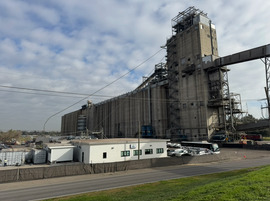
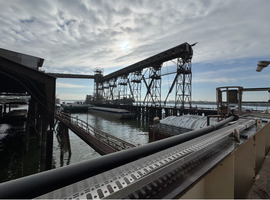
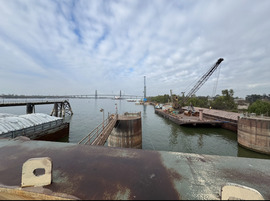
While attending the summit, I toured the ADM Export Elevator along the Mississippi River. The visit reinforced how important reliable river infrastructure and efficient export systems are to agriculture, especially when transportation costs and margins matter.
I also visited the AgriAquaculture Center of Excellence, where discussions focused on workforce development, education, and innovation in agriculture. Seeing how other states are preparing the next generation of ag workers provides useful perspective as Minnesota evaluates its own policies.
These discussions and site visits reinforced the need for practical, producer-focused policies that remove unnecessary hurdles and allow agriculture and rural communities to remain strong.
|