In This Issue
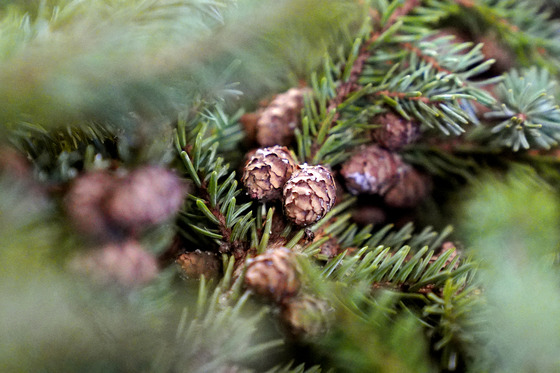 The Minnesota Department of Natural Resources’ State Forest Nursery is seeking individuals to collect black spruce cones this winter. The DNR uses the gathered cones to directly seed public lands and grow seedlings at the State Forest Nursery, which is near Akeley. In 2025, the DNR reforested nearly 1,200 acres of state land using almost 70,000 black spruce seedlings and 40 pounds of black spruce seed – which is the equivalent of roughly 25 million seeds.
“Collecting tree seeds and cones isn’t easy work. It often means hiking through the woods in cold weather, identifying the right trees, and gathering cones for several hours,” said Sarah Ebert, DNR State Forest Nursery manager. “But for Minnesotans who enjoy being outdoors, it’s a great way to play a hands-on role in restoring and replanting forests across the state.”
The DNR pays collectors $200 per bushel for clean, closed, ripe, black spruce cones. Of note, collecting seeds and cones from yard trees is not recommended. Many yard trees are cultivars or nonnative varieties. Also, the DNR doesn’t accept cones from non-native species such as blue or Norway spruce, or open cones collected from the ground with stems, leaves and debris. Individuals should contact their local DNR Forestry office (mndnr.gov/contact/locator.html) before collecting to confirm if black spruce cones are currently needed and to arrange drop-off.
Knowing how to correctly identify black spruce is an important part of successful cone collection, and the DNR encourages collectors to review identification tips and photos online before heading out. Some characteristics to look for are short, pointed, four-sided needles approximately one-half inch long and cones that are small and purplish black in color.
Black spruce is found primarily in northern Minnesota, and seed drop-off stations are located at Forestry offices in Baudette, Grygla, Wannaska, Bemidji, Cloquet, Deer River, Hibbing, International Falls, Littlefork, Orr, Tower, Two Harbors, Warroad and the State Forest Nursery. For an list of all cone collection offices, see the map on the DNR website (mndnr.gov/forestry/nursery/collection-map.html).
Collectors can find additional identification tips, current prices, collection guidelines, and drop-off locations on the DNR’s seed and cone collection webpage (mndnr.gov/seedcone).
###
The Minnesota Department of Natural Resources is accepting public comments on two proposed off-highway vehicle trail projects under the Grant-in-Aid program. The OHV GIA program is a cost-share partnership between the DNR, local government sponsors and local clubs. The program funds the maintenance and development of trails for all-terrain vehicles, off-highway motorcycles and off-road vehicles.
These proposals are open for public comment:
Lake of the Woods Connector: This proposed 58-mile route in Roseau and Lake of the Woods counties would use existing roads and trails that are currently open to OHV use. The proposed route includes Lake of the Woods County roads, segments along the bank-tops of county judicial ditch rights-of-way, and about one-half mile of private trail. The proposal would formally designate the route under the GIA program, linking existing roads and trail segments. The route would be open to all OHVs including ATVs, ORVs and OHMs.
North Star Connector: This proposed trail would consist of a 28-mile route on the Moose River Dike in Beltrami County. The corridor is currently open to motorized use under existing management protocols. The proposal would formally designate the route under the GIA program and continue to allow Class 1 and Class 2 ATV use. The proposed designation does not change the existing operation of the Moose River Dike Road, including seasonal closures to motorized vehicles.
The DNR will accept written comments until 4:30 p.m. Monday, Feb. 16, 2026. Comments can be submitted by:
- Email to [email protected]. Mention the name of the proposed trail(s) being commented on in the subject line and email body.
- Mail to Karen Cladas, OHV acquisition and development specialist, Parks and Trails Division, Minnesota DNR, 14583 County Highway 19, Detroit Lakes, MN 56501.
A map of the proposed trail segments is at the DNR’s OHV trail plans and proposals webpage (mndnr.gov/input/mgmtplans/ohv/plans/plans.html). For more information, call Karen Cladas at 218-407-7176.
###
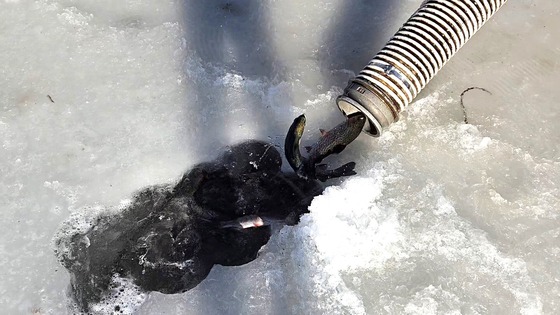 Minnesota Department of Natural Resources staff recently stocked rainbow trout in Hiniker Pond near Mankato, making the fish available to anglers for the winter trout opener and beyond.
The DNR’s Waterville area fisheries office, in partnership with the city of Mankato, started this initiative in January 2024. It was immediately popular with anglers, who harvested nearly 3,000 fish before the ice thawed, and that popularity continued 2025.
Local and visiting anglers can again start fishing for the 2-year-old trout this year’s opener Jan. 17. The trout are raised at the DNR’s Lanesboro Hatchery, one of just four cold water hatcheries in the state. Cool water hatcheries, like the one in Waterville, cannot support trout.
“Winter trout fishing in an urban environment has become very popular,” said Scott Mackenthun, Waterville area fisheries supervisor. “Rainbow trout are colorful, hard-fighting and provide excellent table fare.”
Hiniker Pond is an 18-acre former gravel pit uniquely situated in the middle of a large urban area (Mankato) with easy public access. It is one of only two winter trout fishing locations in DNR’s Southern Region. The other is Little Mud Lake in Meeker County, which has been stocked for more than 30 years.
“We don’t have a lot of winter trout angling opportunities in southern Minnesota,” Mackenthun said. “There are some locations scattered in central Minnesota, but most winter trout angling opportunities in lakes are in northern and especially northeast Minnesota. The scarcity of options helps make the Hiniker opportunity popular.”
This is a “put and take” opportunity, meaning the fish are stocked for anglers to harvest and enjoy. The DNR is not attempting to establish a breeding population in the pond year-round, as trout cannot survive warm waters. The goal is to see all the stocked trout caught before the winter season ends.
Anglers must have a valid fishing license (mndnr.gov/buyalicense) and trout stamp to catch and keep the fish. Trout stamp requirements and exceptions are listed on page 25 of the Minnesota Fishing Regulations book (mndnr.gov/regulations/fishing). The daily and possession limits on trout is five fish per person.
###
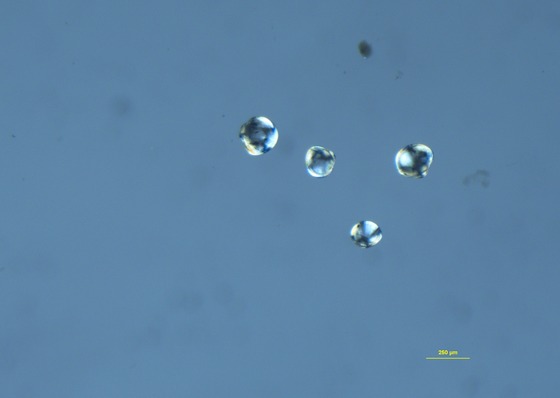 The Minnesota Department of Natural Resources has confirmed the presence of zebra mussel larvae in Tanners Lake, abutting the town of Landfall in Washington County.
Recent DNR analysis of Tanners Lake water samples showed 12 zebra mussel larvae, called veligers. While the DNR has not found adult zebra mussels in Tanners Lake, the presence of veligers suggests reproducing zebra mussel populations. Tanners Lake will be listed as infested with zebra mussels.
Whether or not a lake has any invasive species, Minnesota law requires people to:
-
Clean watercraft, trailers and equipment to remove aquatic plants and prohibited invasive species.
-
Drain all water and leave drain plugs out during transport.
-
Dispose of unwanted bait in the trash.
-
Never release bait, plants or aquarium pets into Minnesota waters.
-
Dry docks, lifts and rafts for 21 days before moving them from one water body to another.
These additional steps reduce the risk of spreading aquatic invasive species:
-
Decontaminate watercraft and equipment – find free stations on the courtesy decontamination page of the DNR website (mndnr.gov/decon).
-
Spray watercraft and equipment with high-pressure water or rinse with water if high-pressure water is not available.
-
Dry watercraft and equipment for at least five days before using in another water body.
People should contact a Minnesota DNR aquatic invasive species specialist (mndnr.gov/invasives/ais/contacts.html) if they think they have found zebra mussels or any other invasive species that was not already known to be in the water body.
More information is available on the aquatic invasive species page of the DNR website (mndnr.gov/ais).
###
|