|
 |
The Case For and Against the Maduro Operation
Intercollegiate Review | Conservatism's sharpest voices, curated weekly. ISI's weekly newsletter brings you the best in serious conservative thought.
|

| |||||||||||||||


Ends, Means, and Maduro
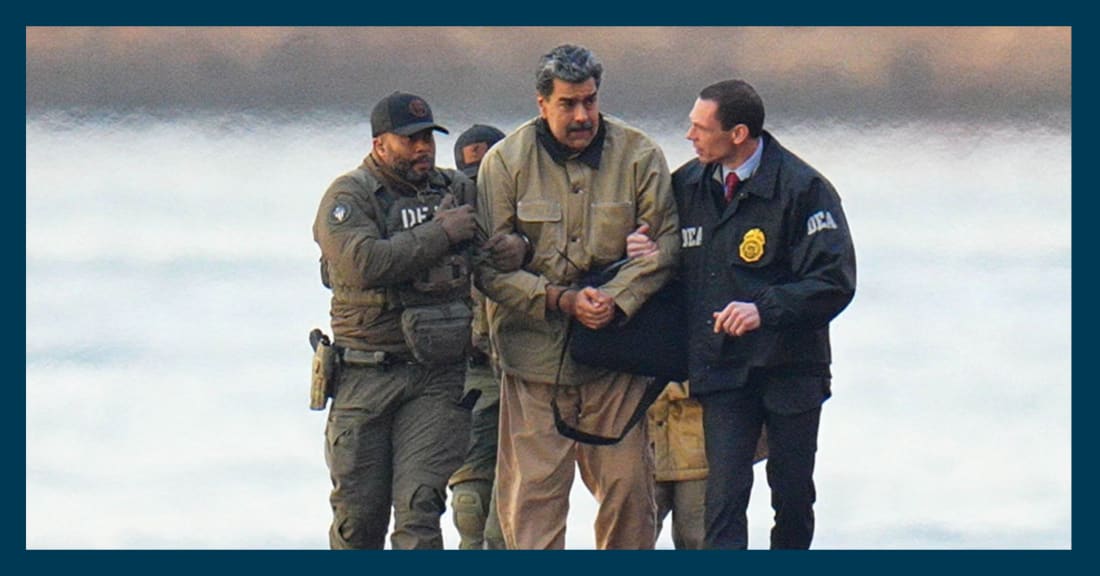 |
The U.S. military’s capture of Venezuelan president Nicolás Maduro at the start of January has caused a stir at home and abroad. Some critics have condemned President Trump’s operation as an unlawful act of war, while others have praised it as a decisive move against an unjust and dictatorial regime.
In his Substack, Edward Pentin assesses whether the capture of Maduro was justified according to traditional just war theory. He interviews Catholic philosopher Edward Feser, who evaluates the operation through the lens of this theory articulated by Ambrose and Augustine. Feser argues that removing a tyrant can be a legitimate just war objective, but only if there is a realistic hope of success. At present, he says, it is unclear whether the Trump administration has a viable plan for securing lasting political stability in post-Maduro Venezuela.
Feser also observes that the Trump administration hasn’t given a consistent justification for its actions and has engaged in irresponsible rhetoric that casts the operation more as an act of vengeance than of just war. Ultimately, Feser concludes that the Maduro operation has not accorded with just war principles in practice, though it could be just in theory.
Read the rest of Pentin’s interview with Feser here.
Defending Honor
 |
While some commentators have criticized President Trump’s handling of the situation in Venezuela, others view the boldness of the Maduro operation as a signal of his strength as an international leader.
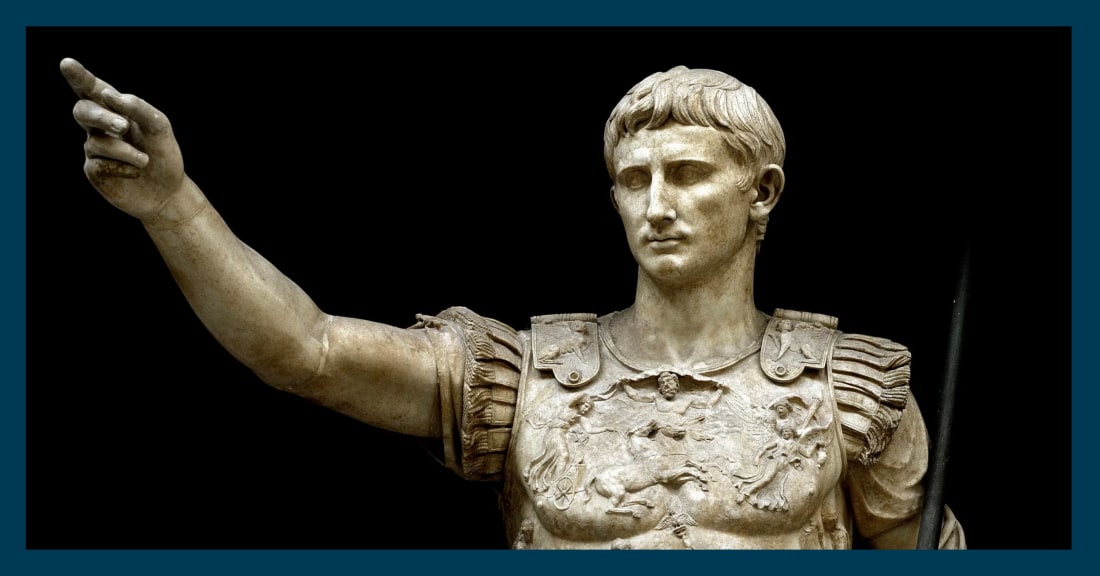
Writing for Engelsberg Ideas, Joshua Treviño argues that the capture of Maduro was a public triumph for both President Trump and the United States. Treviño suggests that the personalized nature of the conflict between Trump and Maduro echoes an older form of statecraft rooted in the classical concept of dignitas. In antiquity, a leader’s dignitas was understood as inseparable from the honor of the nation itself; an insult to the ruler was an insult to every citizen.
Tracing this idea from the era of Caesar through the presidency of George Washington and beyond, Treviño contends that Americans long regarded dignitas as essential until the cultural shifts of the Clinton years. Since then, he argues, the erosion of a shared sense of presidential honor has been keenly felt. By decisively responding to Maduro’s challenge to his dignitas, Treviño says, President Trump has vindicated not only his own honor but that of America itself.
Read the rest of Treviño’s essay here.
|
Compendium
Every article we feature here is available to read for free. Articles from paywalled publications are available through gift links.
T. Greer on the rise and fall of WASP “Eastern Establishment” elites in The Scholar’s Stage.
Zachary Davis on the leading thinkers bringing forth modern re-enchantment in Wayfare.
Iain McGilchrist interviews Carrie Gress on the consequences of modern feminism on the family and American culture in The Matter with Things.
Shai Goldman on activism replacing scholarship in higher education in First Things.
Ted Gioia on the death of publishing in The Honest Broker.
Paul Sagar on the proliferation of student disability accommodations in UnHerd.
David C. Rose on a new defense for pro-Americanism in Civitas Outlook.
 |
Upcoming ISI Events
If you enjoy what you’re reading here, we invite you to engage with ISI at one of our upcoming in-person events.
43rd Annual Evening of Viennese Waltzing | February 7 | Washington, DC
Join the Intercollegiate Studies Institute on Saturday, February 7, at The Organization of American States for the 43rd Annual Evening of Viennese Waltzing! This annual event brings together over 200 couples for a luxurious recreation of the sumptuous balls of turn-of-the-century Vienna.America 500 Gala for Western Civilization | April 30 | Washington, DC
The America 500 Gala for Western Civilization is the flagship event of ISI’s America 500 Campaign that celebrates America’s 250th anniversary. Join us at the Andrew W. Mellon Auditorium on Thursday, April 30, 2026, for an elegant evening with inspiring speakers.Conservative Book of the Year Award Ceremony and Luncheon | May 1 | Washington, DC
ISI’s annual Conservative Book of the Year Award Ceremony honors a distinguished nonfiction work that has contributed to the advancement of conservative thought. Join us on May 1 for a luncheon buffet, award ceremony, and panel discussion in Washington, DC.
Visit our events page on our website to see all upcoming events.
Thanks for reading Intercollegiate Studies Institute! Subscribe for free to receive new posts.

This week, from the Collegiate Network:
ISI’s Collegiate Network supports over 80 student-run publications across the country, empowering students to run independent college newspapers, magazines, and journals that report on important issues ignored by the mainstream media.
A Defense of Greek Life: Aristotle, Virtue and Friendship via Cogitare Magazine
An Aristotelian argument for Greek life that sees it as a structured environment that fosters friendships and meaningful community on campus.
Regime Change in Venezuela is America First via The American Postliberal
A claim that Venezuelan regime change is consistent with an “America First” realist strategy, because Venezuela’s real threat is its deep alignment with a great-power rival, China.
Venezuelan Migrants Share their Stories with The Thinker and Celebrate Maduro’s Removal via The Chicago Thinker
A profile of Venezuelan exiles who recount the hardships they fled under Nicolás Maduro’s rule and express relief and optimism at his recent capture by U.S. forces.
Visit our Student Journalism section to read more from the Collegiate Network.
Theodore Roosevelt Reincarnate?
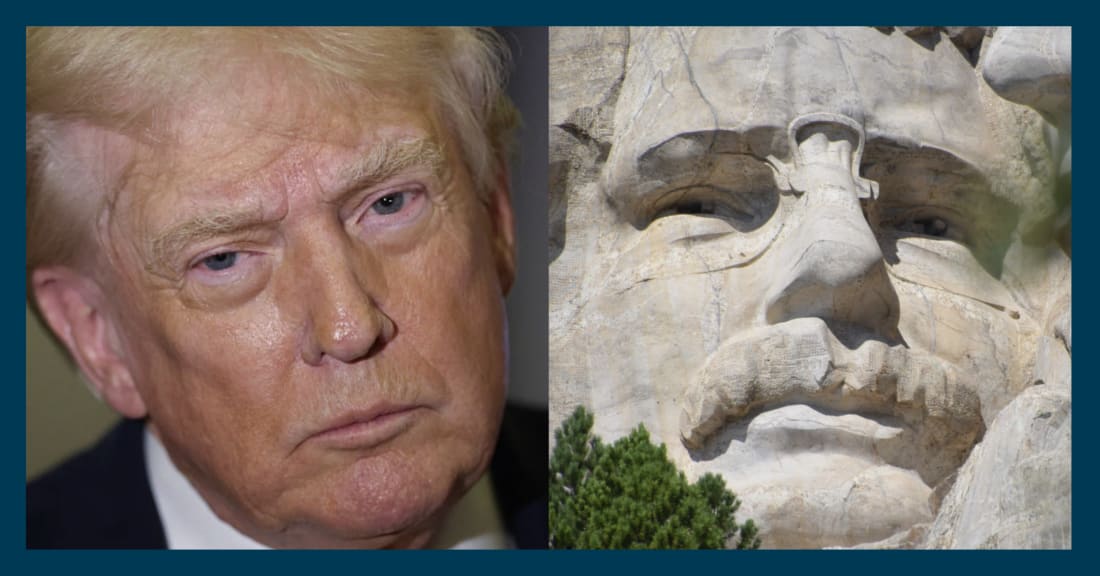 |
No matter what you think of President Trump’s foreign policy strategy, one thing is clear: He wants to project American strength on the global stage. In that respect, he follows in the footsteps of earlier presidents who sought to demonstrate U.S. power. Take, for instance, Theodore Roosevelt, who famously sent more than a dozen American battleships on a worldwide tour to showcase the nation’s might.
In this week’s Modern Age article, Francis P. Sempa argues that Trump’s foreign policy approach bears a striking resemblance to Roosevelt’s. Both presidents have prioritized America’s national interests, and both seem to operate under the principle of peace through strength.
The two presidents also share some personal traits: Sempa points out that both Roosevelt and Trump have “larger-than-life personalities” and “enjoy being the center of attention.” They were also both born-and-bred New Yorkers. Most significantly for global affairs, Roosevelt developed a reputation for never bluffing, and Sempa argues that this has become a defining feature of Trump’s leadership as well.
Read the rest of Sempa’s comparison between President Trump and Theodore Roosevelt’s foreign policy here.
Modern Age is ISI’s flagship publication. Visit modernagejournal.com and subscribe to receive a free daily newsletter.
“Speak softly and carry a big stick; you will go far.”
–Theodore Roosevelt
Celebrate America’s semiquincentennial with ISI and help shape the next 250 years of our country. Your support of the America 500 Education Fund will help ISI reach, teach, and launch the next generation of conservative leaders. Visit isi.org/america500 to learn more.
| ||||||||||

