Lately, people who lead keep saying some version of this: I am tired in a way rest does not fix.
What they are experiencing is more than just personal burnout. It is the weight of responsibility while the political, economic, ecological, and technological ground keeps shifting.
Many people are moving through what we call a Winter in their leadership. Energy is low for anything that involves holding others, facilitating conversations, conducting meetings, or making complex decisions. Emotions feel closer to the surface. The highs and lows are sharper. Even small responsibilities can feel heavy, and what once felt meaningful can start to feel impossible to sustain.
For those in social change work, this often comes with another emotion: guilt. You might know you do not want to leave the work, but you also know you cannot keep doing it in the same way. You try to simplify, to take on only what you can hold, but it feels disorienting to step back when so many crises are unfolding simultaneously.
Many of us carry the story that we should be able to push through. Just this one campaign, this one event, this one deadline, this one emergency, then I will rest. But the emergencies keep coming. When we finally cannot push anymore, we often blame ourselves, even though what we are experiencing is deeply shaped by the conditions around us.
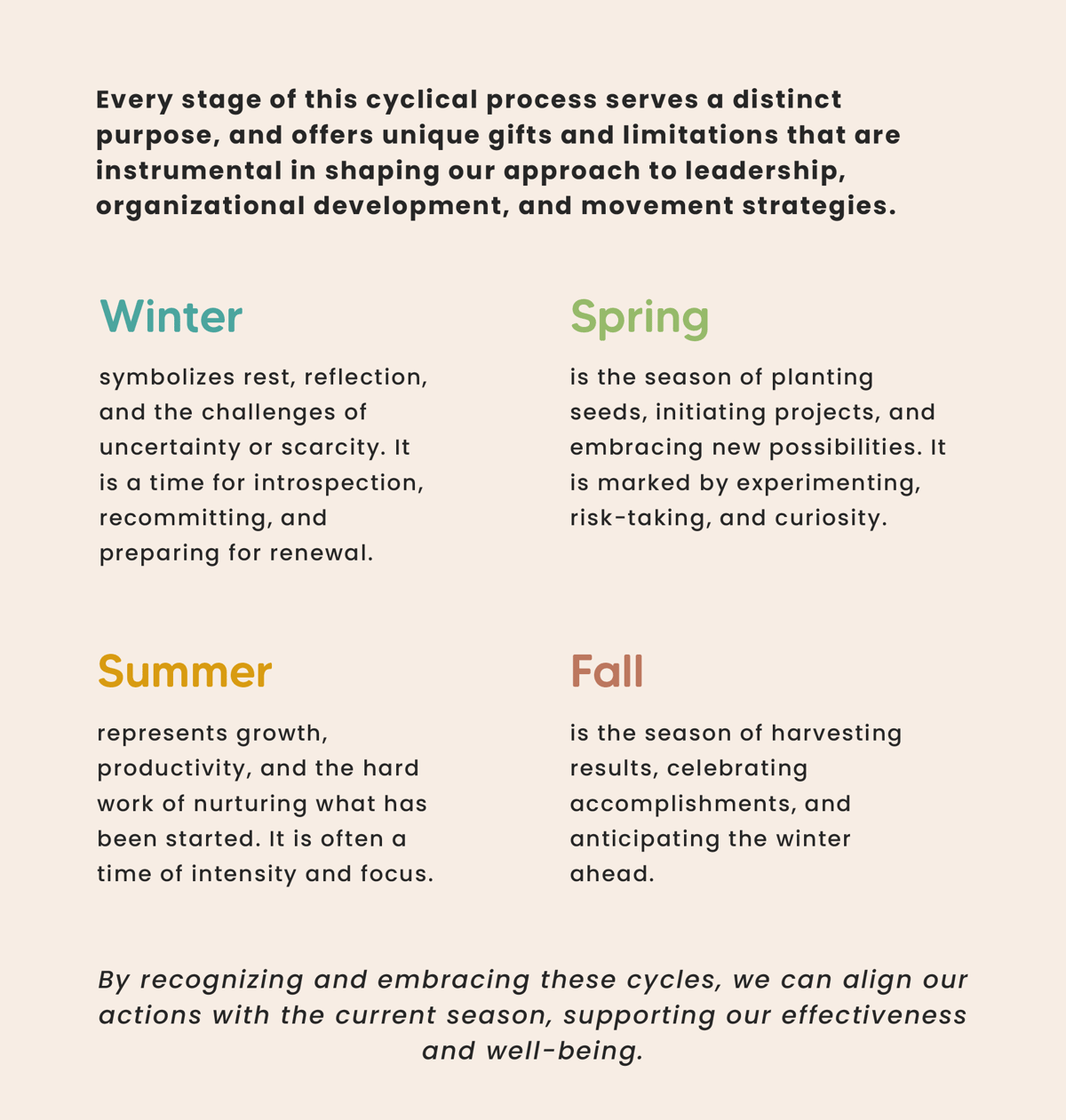
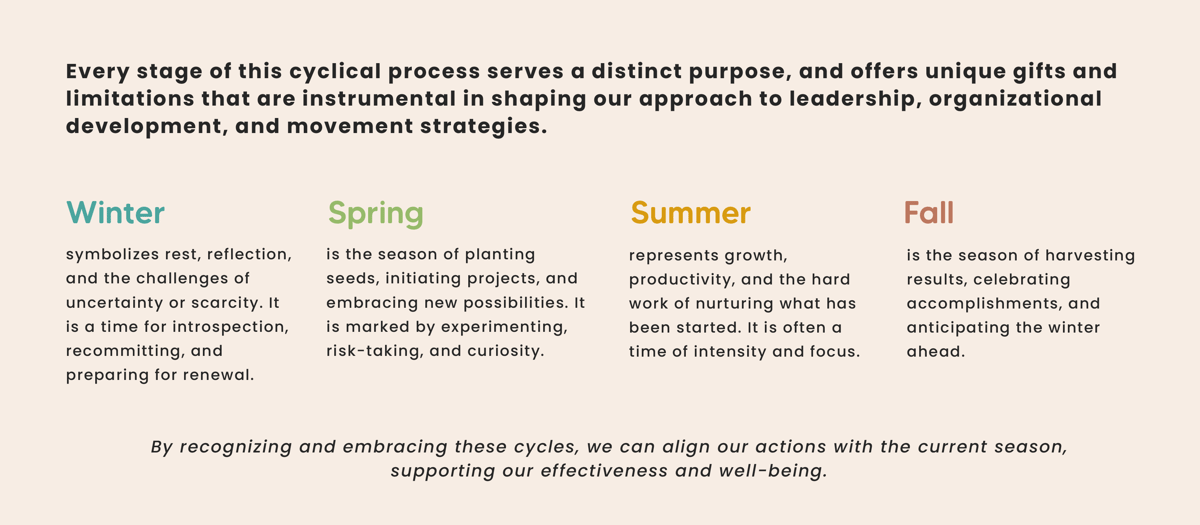
This is part of why Ayni teaches the Seasons of Leadership framework. It offers a way to orient, not just to push harder.
The Seasons framework is drawn from spiritual and Indigenous traditions, and it helps leaders recognize recurring patterns across their lives, organizations, and movements. Instead of constantly asking “What should I do next?” it invites a different question: What is this moment asking of us, and what becomes possible if we meet it honestly?
The Seasons framework gives us a shared language for what is happening so we can make clearer decisions, protect relationships, and choose strategies that fit the moment instead of forcing what no longer works.
When we misread the season we are in, leadership becomes exhausting and unsustainable. When we learn to align with it, clarity and steadiness tend to follow.